
Side-by-Side IQ Profile: Pointer vs. Toy Poodle
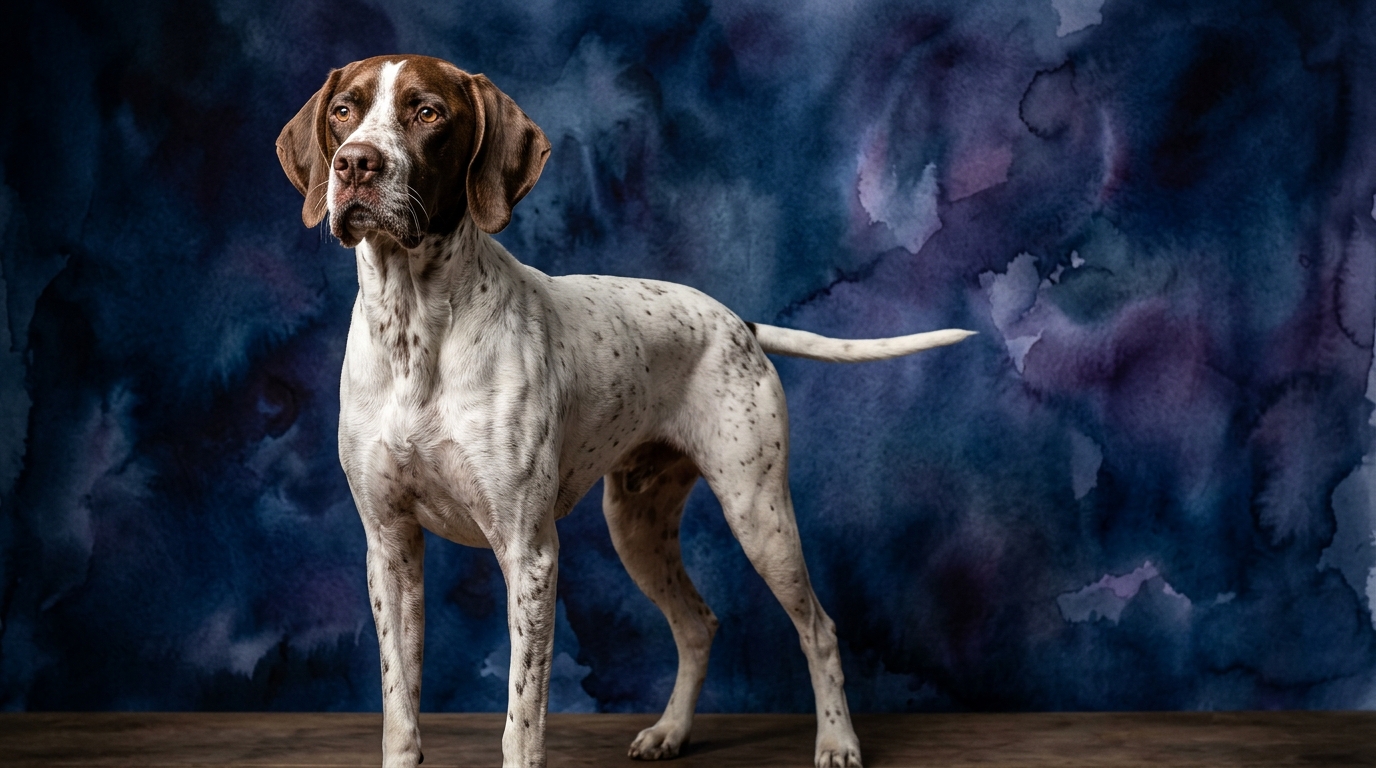
The Cosmic Pet Pet IQ Lab employs five key dimensions to evaluate canine intelligence, offering a granular view of each breed's cognitive architecture. For the Pointer, a breed celebrated for its field work, we observe a consistent performance across the board: Problem Solving at 3/5, Training Speed at 3/5, Social Intelligence at 3/5, Instinctive Drive at 3/5, and Memory also at 3/5. This profile suggests a dog with solid, reliable cognitive abilities, well-suited to its historical role requiring sustained focus and practical application in the field. Pointers demonstrate a pragmatic approach to learning and environmental interaction, relying on a balanced blend of instinct and learned experience.
In contrast, the Toy Poodle presents a strikingly different cognitive landscape, reflecting its Coren rank of #2, a testament to its exceptional adaptive intelligence. Its Problem Solving ability soars to 5/5, indicating a remarkable capacity for creative solutions and understanding complex tasks. Training Speed also reaches 5/5, signifying an eagerness and quickness to grasp new commands and routines. Memory is equally impressive at 5/5, allowing for rapid retention and recall of learned behaviors and experiences. Interestingly, its Social Intelligence and Instinctive Drive mirror the Pointer's at 3/5, suggesting a similar baseline capacity for understanding human cues and inherent motivations, though perhaps expressed through different activities than a traditional hunting dog.
The Pointer's 3/5 in Problem Solving indicates a dog capable of navigating challenges within its established framework, such as finding game or overcoming minor environmental obstacles, but perhaps less inclined towards abstract puzzles or novel scenarios without direct purpose. Its 3/5 Training Speed means it learns at a steady, moderate pace, requiring consistent, clear instruction to master new skills. The 3/5 in Social Intelligence reflects a dog that can read human emotions and intentions adequately, forming strong bonds, while its 3/5 Instinctive Drive points to a moderate but persistent internal motivation, often channeled into scent work and prey drive.
The Toy Poodle's 5/5 in Problem Solving highlights a dog that actively seeks out solutions, often surprising owners with its ingenuity in figuring out how things work or achieving desired outcomes. Its 5/5 Training Speed means it can pick up new tricks and commands with startling rapidity, often needing fewer repetitions than many other breeds. The 5/5 in Memory ensures that once a lesson is learned, it is rarely forgotten, contributing to its reputation for consistent performance. While its 3/5 Social Intelligence and Instinctive Drive are not exceptional, they are perfectly adequate for a companion animal, showing a typical level of empathy and internal motivation for play, interaction, or specific tasks.
Where the Pointer Excels Cognitively
While the Toy Poodle boasts higher scores in several cognitive dimensions, the Pointer's intelligence is uniquely tailored for sustained, purposeful work, particularly in outdoor environments. Its 3/5 Instinctive Drive, combined with its physical stamina, means it excels at tasks requiring prolonged focus and independent decision-making in the field. A Pointer's problem-solving, even at 3/5, is often highly practical and efficient when it comes to scenting, tracking, and pointing game. This isn't about solving a puzzle box for a treat, but rather intelligently navigating complex terrain, wind patterns, and game movement over hours.
The Pointer's balanced 3/5 in Memory and Training Speed, when coupled with its specific drives, allows for the development of highly reliable and consistent working behaviors. It can remember vast areas of territory, recall specific scents, and maintain learned commands even under the distracting conditions of a hunt. This cognitive profile means a Pointer can make independent judgments in dynamic, real-world situations, showing a robust, applied form of intelligence that is essential for its heritage as a sporting dog.
Where the Toy Poodle Shines Cognitively
The Toy Poodle's cognitive strengths are evident in its exceptional scores across Problem Solving (5/5), Training Speed (5/5), and Memory (5/5), positioning it as a highly adaptable and quick-witted companion. Its superior Problem Solving allows it to quickly assess new situations and devise effective strategies, whether it's figuring out how to open a cabinet or understanding the nuances of a complex trick. This mental agility translates into a dog that enjoys mental challenges and can often outthink its human counterparts in playful scenarios.
With a Training Speed of 5/5, the Toy Poodle absorbs new information and commands at an accelerated pace, making it an ideal candidate for advanced obedience, agility, or even specialized roles. This rapid acquisition of skills is further supported by its 5/5 Memory, ensuring that once a concept is understood, it is retained for the long term. This combination makes the Toy Poodle remarkably consistent in its learned behaviors and capable of building a vast repertoire of commands and tricks throughout its life, demonstrating a broad and flexible form of adaptive intelligence.
Which Is Easier to Train and Why?
Based on their respective IQ profiles, the Toy Poodle is generally easier to train than the Pointer. The Toy Poodle's 5/5 in Training Speed means it requires fewer repetitions to grasp new commands and behaviors, making training sessions highly efficient and rewarding. Its 5/5 in Problem Solving allows it to understand the 'why' behind a command more quickly, and its 5/5 Memory ensures that lessons stick. This combination leads to a dog that is not only quick to learn but also consistent in its performance, often anticipating cues and eager to engage in mental exercises.
In contrast, the Pointer's 3/5 in Training Speed and Memory means that while capable, it will require more consistent reinforcement and patience during training. Pointers learn at a moderate pace, and their problem-solving is often geared towards their instinctive drives rather than abstract concepts. While they can achieve high levels of obedience, particularly in tasks related to their sporting heritage, they might not pick up novel tricks or complex sequences with the same alacrity as a Toy Poodle. Their behavioral differences manifest in the Toy Poodle's general eagerness for mental engagement and quick comprehension, versus the Pointer's more methodical and purpose-driven learning style.
Which Suits Active Owners vs. Relaxed Owners?
For owners with an active lifestyle, particularly those who enjoy outdoor pursuits, hunting, or long hikes, the Pointer is an excellent fit. Its moderate 3/5 Instinctive Drive, combined with its physical build as a sporting dog, means it thrives on consistent physical activity and mental engagement related to its natural aptitudes. Pointers require a substantial outlet for their energy and their practical problem-solving skills, making them ideal companions for owners who can provide opportunities for exploration, scent work, or participation in dog sports that mimic their historical roles.
Conversely, the Toy Poodle, with its exceptional cognitive agility but moderate 3/5 Instinctive Drive, can be a superb companion for both active and more relaxed owners, provided its mental needs are met. While it enjoys physical exercise, its smaller size means it can be adequately exercised with daily walks and indoor play. Its high Problem Solving and Training Speed mean it genuinely enjoys mental stimulation in the form of puzzles, learning new tricks, or engaging in interactive games. This makes the Toy Poodle adaptable to various living situations, thriving with owners who prioritize consistent mental enrichment, whether through training sessions or engaging play, rather than purely strenuous physical activity.
The Verdict
Choose a Pointer if you seek a dedicated, practical companion for outdoor adventures and field work, valuing a robust, purpose-driven intelligence over rapid abstract learning.
Opt for a Toy Poodle if you desire a quick-witted, highly trainable dog that excels in problem-solving and memory, ideal for engaging in complex training and thriving on consistent mental stimulation.
🧠 Find Your Pet's IQ Score
Our Pet IQ Lab assessment covers 25+ tests across 5 cognitive dimensions — personalized to your breed.
Take the Full IQ Test →Frequently Asked Questions
Do Pointers require a lot of mental stimulation?
Yes, Pointers benefit from regular mental stimulation, especially activities that engage their scenting abilities and instinctive drives. While their problem-solving is practical, they thrive when given tasks that allow them to utilize their natural working intelligence, such as tracking games or structured training.
Are Toy Poodles good for first-time dog owners?
Toy Poodles can be excellent for first-time dog owners due to their high trainability and eagerness to please. Their quick learning and strong memory make them relatively easy to teach, though their need for consistent mental engagement means owners must be prepared to provide ongoing training and enrichment.
How do their social intelligence scores compare?
Both the Pointer and the Toy Poodle have a Social Intelligence score of 3/5, indicating they possess a comparable capacity for understanding human cues and forming bonds. While their expressions of social intelligence might differ, both breeds are capable of strong attachments and responsive interactions with their human families.