
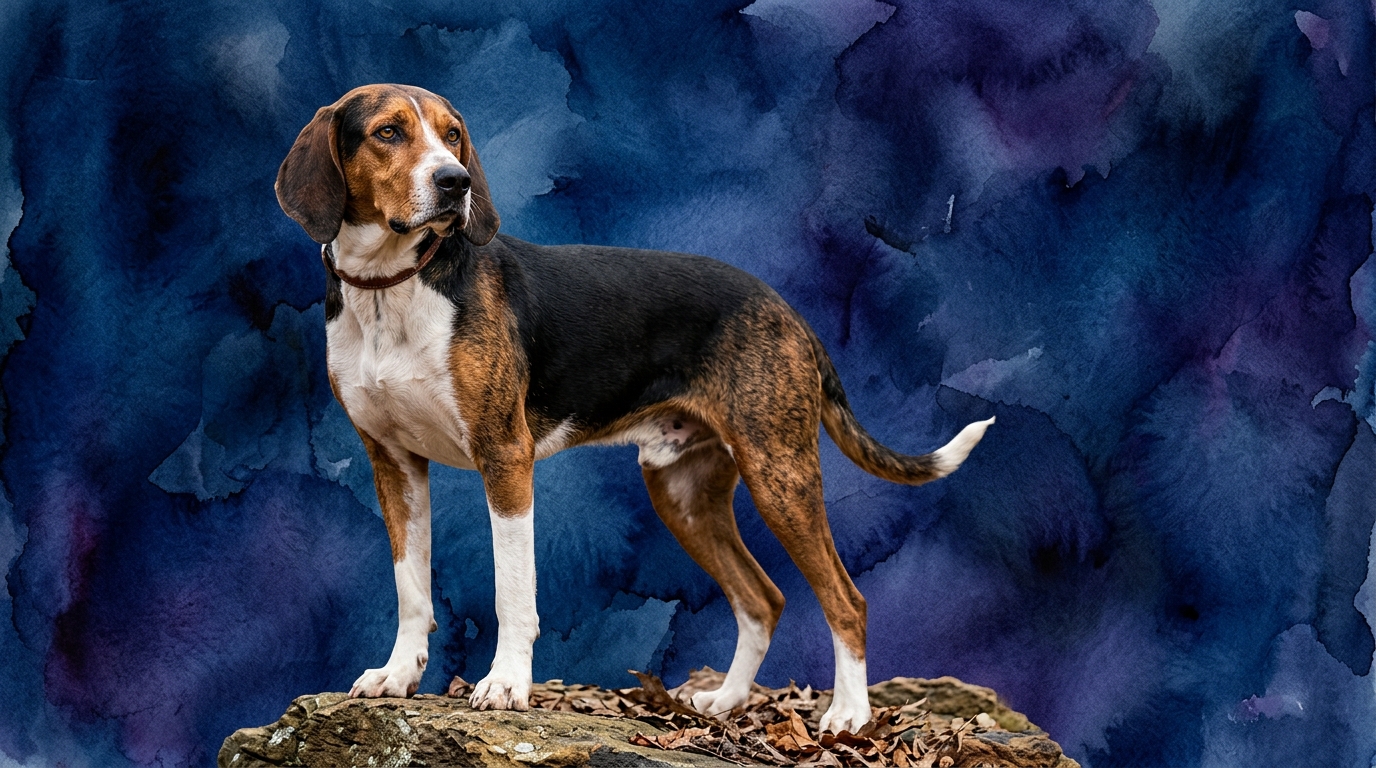
Side-by-Side Cognitive Profile
Despite sharing a '3/5' rating across the board, the Pointer and Treeing Walker Coonhound apply their cognitive abilities in distinct ways, shaped by centuries of specialized breeding. Understanding these nuances is key to appreciating their individual brilliance.
For the **Pointer**, their **Problem Solving (3/5)** demonstrates a moderate ability to navigate complex field scenarios, such as precisely locating elusive game birds, managing wind direction for scent, and adapting to varying terrain while maintaining a disciplined point. Their problem-solving is often refined towards precision and strategy within a controlled hunting environment. Their **Training Speed (3/5)** shows a moderate pace in acquiring new commands and routines, particularly those related to their sporting purpose; they respond well to consistent, positive reinforcement, learning to associate specific cues with desired actions like 'whoa' or 'retrieve' with a steady, focused approach. In **Social Intelligence (3/5)**, they exhibit moderate understanding of human cues and social dynamics, often forming strong bonds with their primary handlers, reading subtle body language and vocal tones crucial for cooperative hunting and harmonious family living. Their **Instinctive Drive (3/5)** possesses a moderate but highly specialized prey drive, primarily directed towards birds, manifesting as an intense desire to locate, point, and sometimes retrieve game, channeling their energy into a focused pursuit. Lastly, their **Memory (3/5)** displays moderate recall for learned commands, routines, and the topography of hunting grounds, remembering scent patterns and locations where game was previously found, aiding efficient field work.
Conversely, the **Treeing Walker Coonhound**'s **Problem Solving (3/5)** shows moderate capacity for solving challenges encountered during a hunt, including deciphering intricate scent trails across varied and often difficult terrain, overcoming obstacles like fences or water, and strategically cornering prey up a tree; their problem-solving is highly practical and persistent. Their **Training Speed (3/5)** means they learn at a moderate rate, especially when training aligns with their innate drives; while they pick up basic obedience, their independent nature demands patience and creative methods to keep them engaged, particularly when competing with a compelling scent. In **Social Intelligence (3/5)**, they exhibit moderate social awareness, capable of forming strong bonds with their human family and historically working effectively within a pack, communicating needs and intentions through a range of vocalizations and body language, often seeking interaction and companionship. Their **Instinctive Drive (3/5)** possesses a moderate yet extremely powerful and focused scent drive, dedicated to trailing and 'treeing' raccoons or other small game; this drive is a core part of their identity, compelling them to follow a track for extended periods with unwavering determination and vocal enthusiasm. Finally, their **Memory (3/5)** demonstrates moderate recall, particularly for complex scent patterns and the specific locations of successful hunts, remembering intricate trail routes and the distinct smells of their quarry, vital for their specialized hunting activities.
Where the Pointer Excels Cognitively
While both breeds exhibit a '3/5' in problem-solving, the Pointer's cognitive strengths shine particularly in scenarios demanding precision and disciplined focus within a structured environment. Their problem-solving ability is finely tuned to the intricate dance of bird hunting: precisely locating game via subtle scent cues, interpreting wind direction, and holding a steadfast point without flushing the birds. This requires a nuanced application of their intelligence, prioritizing strategic waiting and controlled execution over relentless pursuit.
Their social intelligence, also rated 3/5, often manifests as a keen awareness of their handler's subtle signals, enabling a highly cooperative and quiet partnership in the field. This nuanced responsiveness, combined with their specialized instinctive drive for birds, allows them to excel in tasks requiring elegant restraint and a deep understanding of human direction for a shared objective.
Where the Treeing Walker Coonhound Excels Cognitively
The Treeing Walker Coonhound, despite identical scores, demonstrates a distinct cognitive advantage in tasks demanding unwavering persistence, independent decision-making, and exceptional endurance in the face of complex environmental challenges. Their problem-solving (3/5) is geared towards the relentless pursuit of a scent trail, often over vast and rugged terrain, requiring them to independently navigate obstacles, differentiate subtle scent changes, and strategize to corner prey. This calls for a robust, practical application of their intelligence where self-reliance is paramount.
Their instinctive drive (3/5) for trailing and treeing is not just strong, but incredibly resilient, pushing them to overcome fatigue and distraction. Furthermore, their memory (3/5) excels in recalling intricate scent patterns and the topography of successful hunting grounds, enabling them to thrive in scenarios where sustained, independent effort and a powerful nose are the primary drivers of success.
Which Is Easier to Train and Why
Both the Pointer and the Treeing Walker Coonhound share a '3/5' rating for training speed, indicating they learn at a moderate pace. However, their inherent behavioral differences significantly impact the perception of their trainability. The Pointer, bred for close cooperative work with a human handler in the field, typically exhibits a stronger desire to please and a natural inclination to be responsive to commands.
Their focus, while intense on game, is often easily redirected by a handler, making them generally more biddable for general obedience and household manners. Their social intelligence allows them to quickly grasp the nuances of human expectations, leading to a smoother training experience for many owners. In contrast, the Treeing Walker Coonhound's historical role emphasizes independence and relentless pursuit of a scent. While they are capable learners, their powerful instinctive drive can make them appear more 'stubborn' or less attentive when a compelling scent is present; their independent problem-solving on the trail means they are less accustomed to constant human direction.
Training a Coonhound often requires an owner to understand and work with their deep-seated drives, rather than against them, making them potentially more challenging for those unfamiliar with hound temperament. Therefore, for general obedience and a more 'compliant' companion, the Pointer often feels easier to train due to its handler-centric focus, whereas the Treeing Walker Coonhound demands a more specialized and patient approach tailored to its independent, scent-driven nature.
Suitability for Active vs. Relaxed Owners
When considering suitability for owner lifestyles, neither the Pointer nor the Treeing Walker Coonhound is a match for relaxed owners. Both breeds possess substantial energy levels and instinctive drives that demand significant daily engagement and physical exertion. The Pointer, while often more content indoors after a vigorous workout, still requires extensive exercise, such as long runs, hikes, or field training sessions, to satisfy its sporting heritage and maintain mental well-being.
They thrive with owners who enjoy structured outdoor activities and can provide consistent mental stimulation. The Treeing Walker Coonhound, on the other hand, possesses an almost boundless reservoir of energy and a relentless desire to explore with its nose. They require even more vigorous and prolonged exercise, ideally involving scent work or expansive outdoor adventures where they can utilize their natural tracking abilities. Owners must be prepared for long walks, runs, or secure off-leash opportunities in suitable environments. These are not breeds that will be content with a short stroll around the block; both demand a truly active lifestyle from their human companions.
The Verdict
Choose the Pointer if you seek a cooperative, active companion who excels in structured activities, enjoys close interaction, and offers a somewhat more biddable temperament for general living, provided their extensive exercise needs are consistently met.
Opt for the Treeing Walker Coonhound if you desire an incredibly driven, independent, and resilient companion who thrives on intense scent work, long adventures, and an owner who appreciates their vocal nature and independent problem-solving on the trail.
🧠 Find Your Pet's IQ Score
Our Pet IQ Lab assessment covers 25+ tests across 5 cognitive dimensions — personalized to your breed.
Take the Full IQ Test →Frequently Asked Questions
Do Pointers need a lot of mental stimulation?
Yes, Pointers, with their 3/5 problem-solving and memory, benefit greatly from mental challenges beyond physical exercise. Activities like puzzle toys, advanced obedience training, or scent games can engage their minds and prevent boredom, channeling their intelligence constructively.
Are Treeing Walker Coonhounds good family dogs despite their hunting drive?
Treeing Walker Coonhounds can be devoted family members, exhibiting their 3/5 social intelligence within their household. However, their intense instinctive drive and vocal nature require dedicated training and socialization from a young age to ensure they integrate well and manage their hunting instincts appropriately in a home environment.
How do their '3/5' instinctive drives differ in practice?
While both have a 3/5 instinctive drive, the Pointer's drive is specialized for pointing and retrieving birds, often working closely with a handler. The Treeing Walker Coonhound's drive is for independently trailing and treeing small game, characterized by relentless pursuit and vocalization, making them more prone to follow their nose regardless of human commands.