Side-by-Side Cognitive Profiles
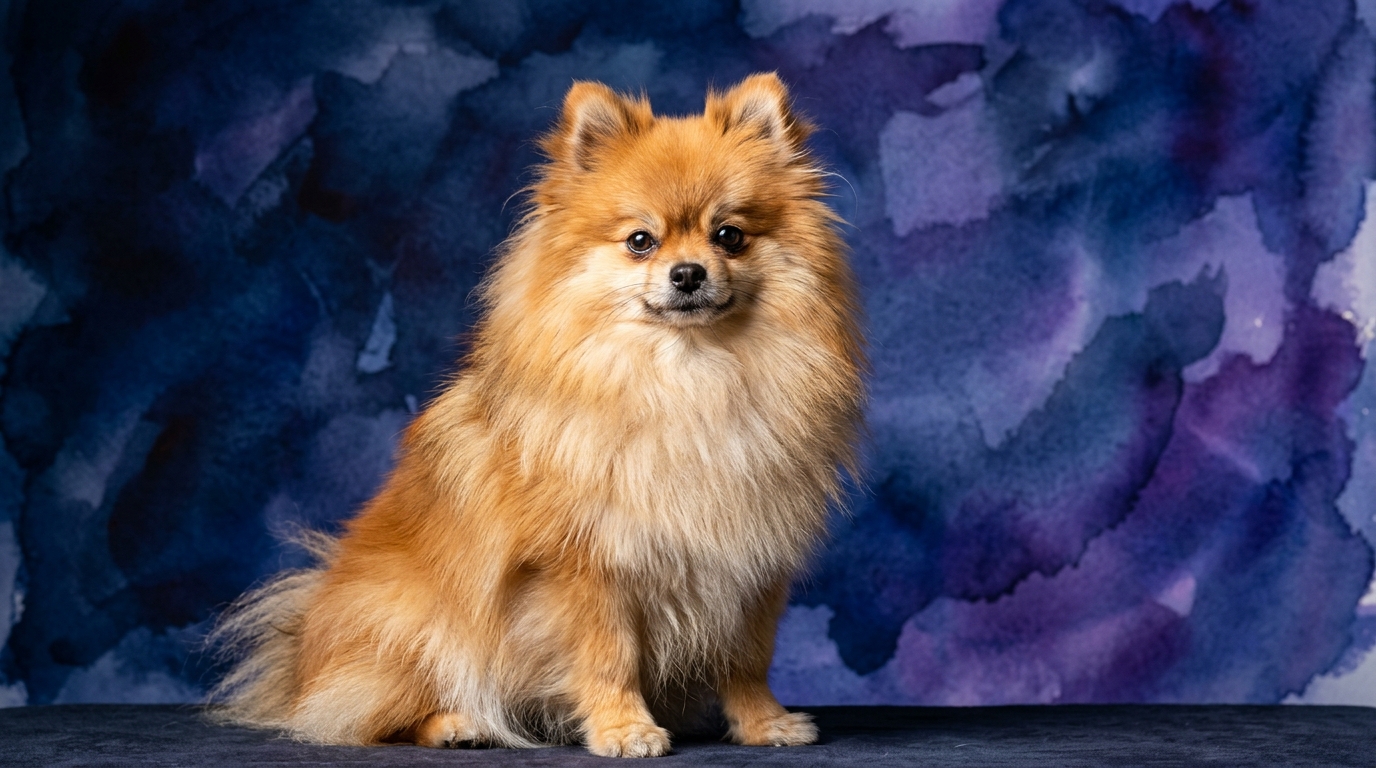
The Pomeranian, a spirited Toy breed, holds a respectable Coren rank of #23, indicating a solid capacity for working and obedience intelligence. Our Pet IQ Lab assessment reveals a balanced cognitive profile: Problem Solving 4/5, Training Speed 4/5, Social Intelligence 4/5, Instinctive Drive 3/5, and Memory 4/5. This suggests a dog that is adept at understanding complex situations, quick to learn new commands, highly attuned to human social cues, possesses a moderate level of inherent drive, and retains information effectively.
A Pomeranian's 4/5 in Problem Solving often manifests in their ability to quickly figure out how to manipulate puzzle toys for treats, or creatively navigate household obstacles to reach a desired spot. Their 4/5 Training Speed means they typically grasp new commands within a few repetitions, often showing enthusiasm for learning new tricks and routines. The high 4/5 in Social Intelligence highlights their strong ability to read human emotions and intentions, making them exceptionally responsive companions who often seem to anticipate their owner's needs. While their Instinctive Drive is 3/5, they might display a moderate prey drive towards small, fast-moving objects, but it's generally tempered by their companion nature. Their 4/5 Memory ensures they recall learned behaviors, routines, and familiar faces with ease.
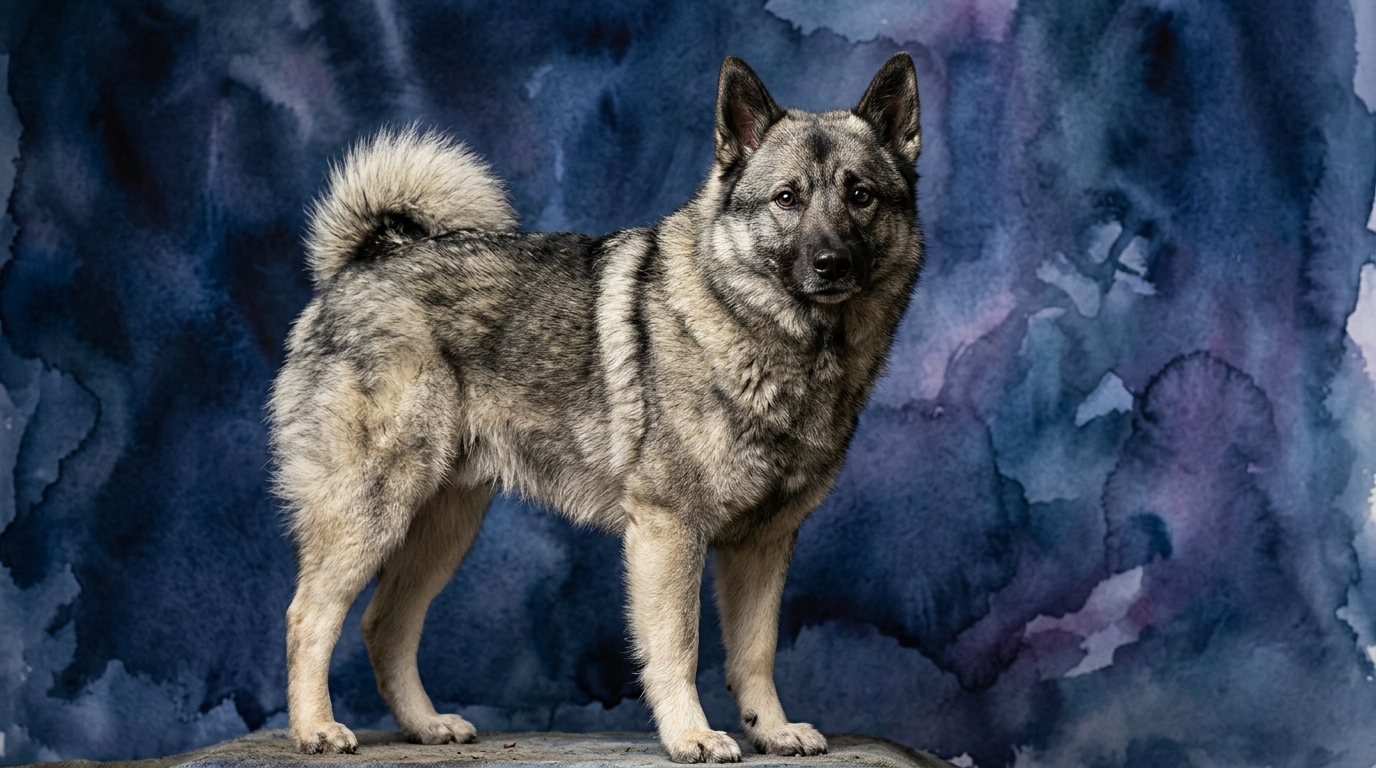
In contrast, the Norwegian Elkhound, a robust Hound breed, sits at Coren rank #36. Its IQ profile is also strong, though with some key differences: Problem Solving 4/5, Training Speed 4/5, Social Intelligence 3/5, Instinctive Drive 3/5, and Memory 4/5. This indicates a dog that is equally capable of solving problems and learning quickly, but with a slightly more independent social approach and a similar level of instinctive drive, coupled with excellent memory.
The Elkhound's 4/5 in Problem Solving is typically applied to tasks requiring independent thought and navigation, such as tracking a scent over varied terrain or finding solutions to outdoor challenges, reflecting their heritage as hunting dogs. Their 4/5 Training Speed means they are quick to understand commands, though their independent nature might sometimes lead to a slower *execution* without proper motivation. A Social Intelligence score of 3/5 suggests they form strong bonds but might be less overtly people-pleasing than a Pomeranian, often preferring to engage on their own terms. Their 3/5 Instinctive Drive is strongly tied to their powerful sense of smell and sustained tracking abilities, requiring outlets for this inherent need. Like the Pomeranian, their 4/5 Memory ensures they remember trails, learned commands, and established routines effectively.
Where the Pomeranian Excels Cognitively
The Pomeranian's most notable cognitive edge lies in its superior Social Intelligence, scoring 4/5 compared to the Elkhound's 3/5. This translates into an exceptional ability to interpret human social cues, emotions, and intentions. Pomeranians are often observed mirroring their owners' moods, offering comfort when sensing distress, or engaging playfully when encouraged. This high level of social attunement makes them incredibly responsive and adaptable companions within a human household.
This heightened social cognition also contributes to their remarkable adaptability to structured, human-centric environments. Their capacity to quickly grasp household rules, understand complex social dynamics within a family unit, and integrate seamlessly into daily routines is a direct result of their keen social awareness. They excel at understanding what is expected of them in a domestic setting, often anticipating commands or desires based on subtle non-verbal cues.
Furthermore, while both breeds score 4/5 in Training Speed, the Pomeranian's higher social intelligence often means they are more readily motivated by praise and human interaction during training. This eager-to-please disposition, combined with their problem-solving skills, allows them to pick up complex tricks and obedience commands with an impressive alacrity, making them star pupils in many training scenarios where human approval is the primary reward.
Where the Norwegian Elkhound Shines Cognitively
While both breeds share a 4/5 rating in Problem Solving, the Norwegian Elkhound's cognitive strength in this area is distinctly geared towards independent, environmental challenges, reflecting its ancestral role. Their problem-solving prowess is particularly evident in tasks requiring spatial reasoning, navigating complex outdoor terrains, and strategizing to overcome obstacles during tracking or exploration. This isn't about solving a puzzle toy, but rather figuring out the most efficient path through dense underbrush or locating a hidden scent source.
The Elkhound's Instinctive Drive, rated at 3/5, while numerically equal to the Pomeranian's, manifests in a profoundly different way that showcases a unique cognitive strength. This drive is intrinsically linked to their powerful olfactory senses and their ability to sustain focus on a scent trail for extended periods. This requires immense mental stamina and a singular-minded dedication to a task, a trait honed over centuries of hunting. Their cognitive system is wired for persistent, self-directed work in challenging environments.
This independence and drive contribute to their exceptional memory for locations and scents. A Norwegian Elkhound can remember a specific trail or the lingering scent of an animal long after the fact, a testament to their strong memory (4/5) applied to their primary instinctive behaviors. This specific application of memory and problem-solving makes them highly capable in activities like tracking, search and rescue, or extensive outdoor exploration.
Training Dynamics: Elkhound vs. Pomeranian
When it comes to ease of training, the Pomeranian generally presents a more straightforward experience due to its higher social intelligence and inherent desire to please. Their 4/5 Training Speed, coupled with a strong motivation for human approval, means they are quick to connect actions with rewards and are often eager participants in training sessions. They respond well to positive reinforcement, clicker training, and short, engaging lessons that keep their attention. Their small size also makes them physically easier to manage during early training stages.
The Norwegian Elkhound, despite also scoring 4/5 in Training Speed, presents a different set of considerations. While they learn quickly, their independence and strong hound instincts can introduce challenges. An Elkhound might understand a command perfectly but choose not to execute it if a compelling scent or an interesting environmental stimulus captures their attention. Their problem-solving skills might even lead them to find 'loopholes' in commands if not consistently reinforced.
Successful training for an Elkhound requires consistency, patience, and methods that acknowledge their independent, scent-driven nature. Early socialization and consistent boundary setting are crucial to channel their instinctive drives constructively. While both breeds benefit from positive reinforcement, an Elkhound might require higher-value rewards or more engaging, active training scenarios to maintain focus against their strong natural inclinations. Their cognitive makeup demands a trainer who understands how to work with, rather than against, their inherent hound characteristics.
Lifestyle Match: Active vs. Relaxed Owners
The Pomeranian's cognitive profile makes it a highly adaptable companion, suitable for a range of owner lifestyles. While they certainly enjoy walks, playtime, and mental enrichment activities that engage their problem-solving and memory skills, their moderate instinctive drive (3/5) means they don't *require* intense, sustained outdoor activity to remain content. Their high social intelligence (4/5) ensures they thrive on interaction and can be equally happy cuddling on a couch or participating in short bursts of energetic play.
For relaxed owners, a Pomeranian offers a delightful presence that is content with indoor living, provided they receive regular, albeit moderate, exercise and consistent mental stimulation through toys and interaction. Active owners, however, will find their intelligence and agility make them excellent candidates for dog sports like obedience, rally, or even agility, where their quick training speed and memory truly shine. Their versatility is a hallmark of their cognitive makeup.
The Norwegian Elkhound, conversely, is unequivocally suited for active owners. Their history as robust hunting dogs means their cognitive and physical needs are intertwined with a demand for significant outdoor engagement. Their problem-solving skills are best utilized in environments that challenge them, and their instinctive drive (3/5) is geared towards sustained exploration and scent work. A relaxed, sedentary lifestyle will quickly lead to boredom and potential behavioral issues for an Elkhound.
Owners who enjoy hiking, running, or participating in dog sports like tracking and canicross will find the Elkhound to be an enthusiastic and capable partner. Providing regular, vigorous exercise combined with mental stimulation through scent games or training is crucial to satisfy their cognitive and physical requirements. An Elkhound thrives when given a 'job' that engages its sharp mind and robust body, making them a poor fit for owners unable to commit to an active, engaging routine.
The Verdict
Choose the Pomeranian if you seek a highly socially attuned companion who thrives on interaction, adapts readily to indoor living, and is eager to learn tricks in short, engaging sessions.
Opt for the Norwegian Elkhound if you lead an active, outdoor lifestyle, appreciate an independent thinker with a strong drive for exploration and scent work, and are prepared to provide consistent, engaging training.
🧠 Find Your Pet's IQ Score
Our Pet IQ Lab assessment covers 25+ tests across 5 cognitive dimensions — personalized to your breed.
Take the Full IQ Test →Frequently Asked Questions
Do Pomeranians or Norwegian Elkhounds bark more?
Pomeranians are known for being more vocal, often barking at strangers or perceived threats, a trait stemming from their watch dog tendencies. Norwegian Elkhounds can also be vocal, using a distinct "bay" during hunting, but may bark less frequently in a domestic setting unless bored or guarding.
Are Pomeranians good with children?
With their high social intelligence, Pomeranians can be good with older, respectful children who understand how to interact gently with a small dog. Their delicate size makes them less suitable for very young children who might accidentally injure them.
What kind of mental stimulation does a Norwegian Elkhound need?
Norwegian Elkhounds thrive on activities that engage their powerful sense of smell and problem-solving skills, such as scent work, tracking games, interactive puzzle toys, and exploring new environments on long hikes. Regular training sessions also provide vital mental exercise.