Side-by-Side Cognitive Profiles: Pomeranian vs. Tibetan Mastiff
At The Cosmic Pet Pet IQ Lab, we delve beyond mere obedience to understand the multifaceted nature of canine cognition. Our framework evaluates five key dimensions: Problem Solving, Training Speed, Social Intelligence, Instinctive Drive, and Memory. Comparing the Pomeranian and Tibetan Mastiff using these metrics illuminates their specialized mental architectures.
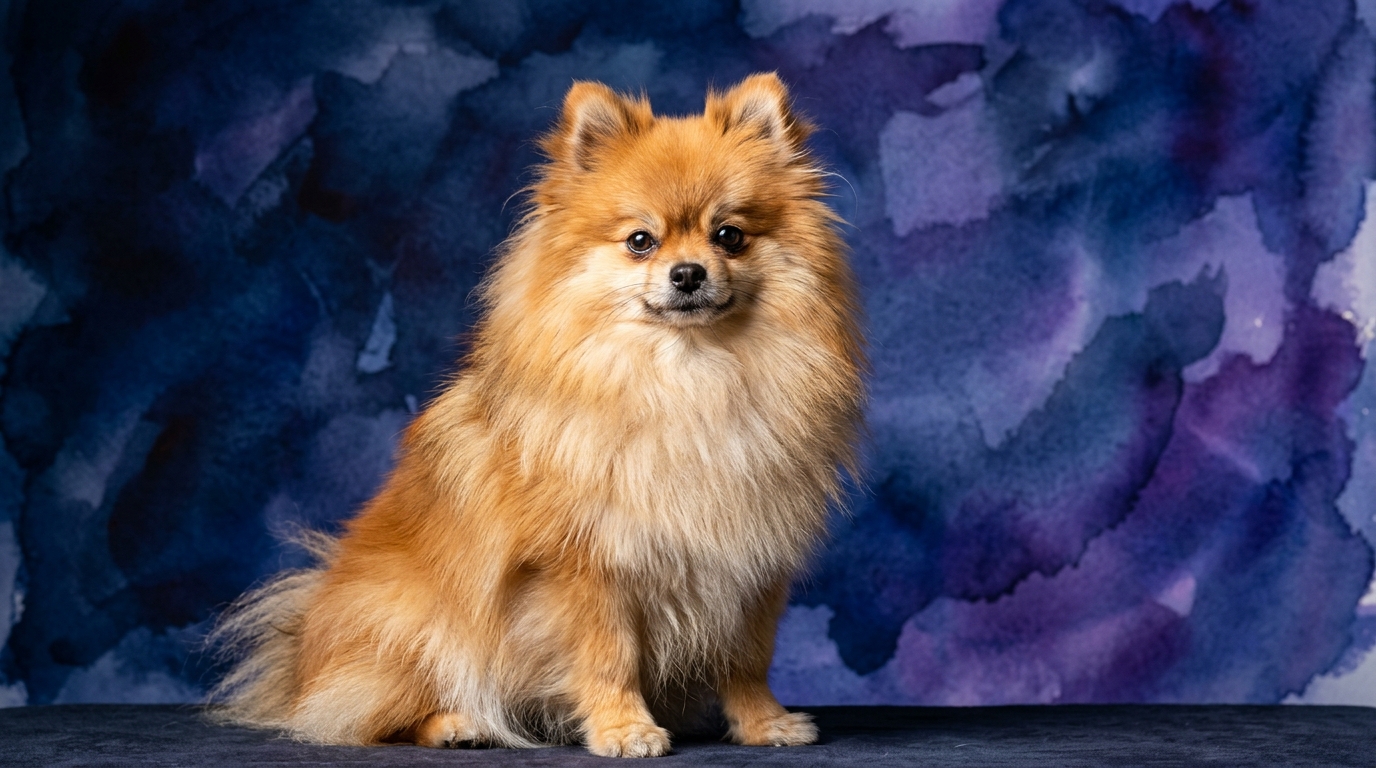
The **Pomeranian**, a lively Toy breed, consistently scores high across most cognitive dimensions. It boasts a Problem Solving score of 4/5, indicating a nimble mind capable of quickly assessing new situations and devising solutions, whether it's figuring out a puzzle toy or navigating a complex home environment. Its Training Speed is also 4/5, meaning these dogs require fewer repetitions to grasp new commands or tricks, often eager to participate in learning sessions. Social Intelligence at 4/5 highlights their adeptness at reading human emotions and social cues, making them highly responsive and emotionally attuned companions. Their Instinctive Drive registers at 3/5, suggesting a moderate expression of inherent behaviors like vocal guarding or curiosity, which is generally manageable. Finally, a Memory score of 4/5 ensures excellent recall, allowing them to retain commands, routines, and even names over extended periods, a significant asset to their trainability and adaptability. It's worth noting the Pomeranian holds a respectable Coren rank of #23, reflecting its strong capacity for obedience and working intelligence.
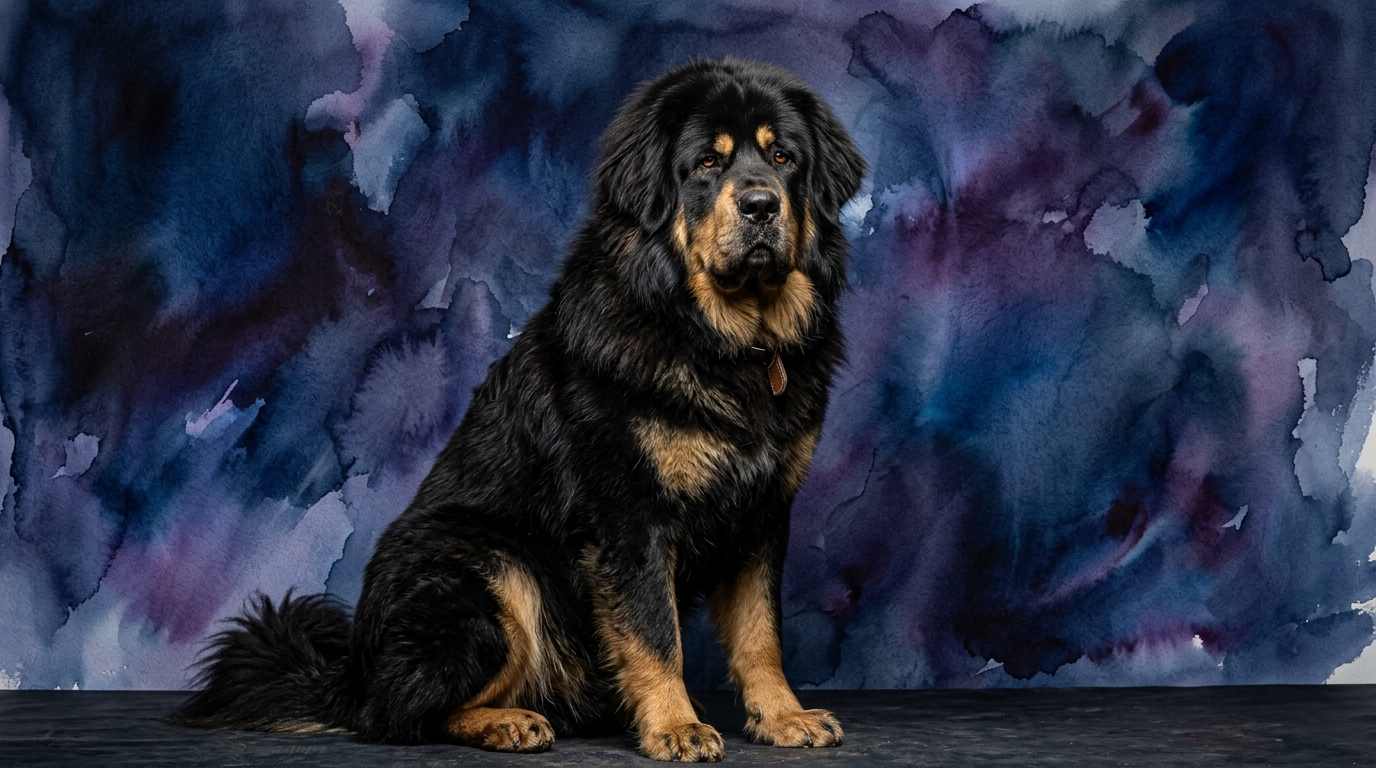
In contrast, the **Tibetan Mastiff**, a powerful Working breed, presents a different cognitive blueprint, scoring 3/5 across all five dimensions. Its Problem Solving at 3/5 reflects a cognitive style geared towards independent assessment rather than human-directed tasks. These dogs are capable of solving problems, particularly those related to their environment or perceived threats, but they often do so on their own terms, relying on their inherent judgment. The Training Speed of 3/5 indicates that learning for a Tibetan Mastiff requires immense patience and consistency; while they can learn, they often need more repetitions and a clear understanding of the 'why' behind a command, rather than simply complying for compliance's sake.
The Tibetan Mastiff's Social Intelligence, also 3/5, manifests as a reserved yet profound loyalty. They form deep, protective bonds with their immediate family, reading their cues acutely, but are typically aloof and wary of strangers, not seeking broad social interaction beyond their trusted circle. Their Instinctive Drive, at 3/5, is powerfully channeled into territorial guarding and protection, a sophisticated instinct that involves constant environmental monitoring and threat assessment. Lastly, a Memory score of 3/5 means they possess functional recall, remembering routines, people, and boundaries. However, their memory might be selectively applied, influenced by their independent nature and whether they perceive a command as relevant to their immediate purpose or role. Notably, the Tibetan Mastiff is not Coren-ranked, which underscores that their intelligence is often expressed in ways not captured by traditional obedience metrics.
Where the Pomeranian's Cognition Shines Brighter
The Pomeranian's cognitive strengths lie in its exceptional adaptability and eagerness to engage with its human companions. Its 4/5 Problem Solving score means it's often quick to grasp new concepts, whether it’s learning a complex trick sequence or figuring out how to retrieve a toy from a tight spot. This mental agility makes them highly responsive to novel situations and environments, allowing them to adjust with remarkable ease.
Furthermore, the Pomeranian's superior Training Speed (4/5) and Social Intelligence (4/5) create a synergistic effect, making them profoundly receptive to human instruction and interaction. They are not merely learning commands; they are actively seeking to understand and respond to their owners' intentions and moods. This allows for rapid acquisition of a vast repertoire of commands and behaviors, making them excellent candidates for advanced obedience, trick training, or even agility sports where quick thinking and responsiveness are paramount. Their strong memory further solidifies these gains, ensuring that learned behaviors are retained with minimal refreshers.
The Tibetan Mastiff's Unique Cognitive Strengths
While the Tibetan Mastiff's scores might appear lower on a general scale, their cognitive profile represents a specialized form of intelligence honed for their ancient purpose. Their 3/5 in Problem Solving, for instance, isn't about solving human-devised puzzles but about independent, critical assessment of their environment. This manifests as an innate ability to evaluate potential threats, discern friend from foe, and make autonomous decisions regarding the safety of their territory and family, often without direct human command.
The Tibetan Mastiff's Instinctive Drive (3/5), though numerically modest, is profoundly powerful in its application. This drive is almost entirely dedicated to guarding, demanding an advanced cognitive process involving constant spatial awareness, acute sensory perception, and a strong memory for what constitutes 'normal' within their domain. Their Social Intelligence (3/5), while not outwardly demonstrative, signifies a deep, unwavering loyalty and protective instinct towards their chosen family, reading their specific human's cues with intense focus, making them formidable and dedicated guardians. This unique blend of independent problem-solving and focused instinctive drive makes them exceptionally self-reliant and purposeful within their specific role.
Training Dynamics: Eagerness vs. Independence
When considering ease of training, the Pomeranian clearly holds an advantage due to its higher scores in Training Speed (4/5), Problem Solving (4/5), and Social Intelligence (4/5). These traits culminate in a dog that is typically eager to please, highly responsive to positive reinforcement, and quick to form associations between commands and actions. Pomeranians thrive on mental engagement and human interaction, often viewing training as a fun, collaborative activity. Their smaller size also makes managing their focus and physical presence during training sessions relatively straightforward, enabling owners to teach a wide array of commands and tricks with relatively few repetitions.
In stark contrast, training a Tibetan Mastiff requires a profound understanding of their independent and guardian-oriented psychology. Their 3/5 Training Speed means they require more repetitions and a consistent, patient approach. Unlike the Pomeranian's eagerness to please, a Tibetan Mastiff often needs to understand the 'why' behind a command or perceive its relevance to their role or well-being before complying. Their 3/5 Problem Solving manifests as a tendency to question directives or make their own decisions, especially if they conflict with their innate guarding instincts (a strong component of their Instinctive Drive). Training a Tibetan Mastiff is less about rapid compliance and more about building a respectful partnership based on trust and clear, consistent communication, often taking significantly longer to achieve reliable responses.
Matching Breeds to Lifestyles: Active vs. Relaxed Owners
The Pomeranian's adaptability makes it a versatile companion for a range of owners. For active owners, a Pomeranian can be a delightful partner in dog sports like agility, obedience, or rally, thriving on the mental and physical challenges these activities provide. Their quick wits and eagerness to learn make them excel in environments that offer consistent mental stimulation. For more relaxed owners, a Pomeranian is equally content with regular walks, indoor play, and being a close companion on the couch, provided they receive consistent attention and mental engagement through puzzle toys or short, daily training sessions. They are small enough to adapt well to apartment living, making them suitable for urban dwellers who can commit to their daily exercise and mental needs.
The Tibetan Mastiff, however, is unequivocally suited for highly experienced, active owners who are prepared for the unique demands of a powerful, independent guardian breed. 'Active' in this context doesn't necessarily mean intense physical exercise, but rather active, consistent management, comprehensive early socialization, and the provision of a secure, spacious environment. Owners must be proactive in understanding and channeling their strong guarding instincts appropriately, requiring a deep commitment to training and boundary setting. They are absolutely not for the 'relaxed' owner seeking a low-maintenance companion; their needs for consistency, secure containment, and understanding their complex psychology are immense, and a lack of proper management can lead to significant behavioral challenges. Their ideal owner appreciates their formidable presence and unwavering loyalty.
The Verdict
For individuals seeking a highly adaptable, responsive, and quick-witted companion eager to engage in various mental and social activities, the Pomeranian is an excellent choice.
The Tibetan Mastiff is ideal for dedicated, experienced owners who appreciate a fiercely loyal, independent guardian, capable of complex territorial assessment and requiring consistent, patient guidance.
🧠 Find Your Pet's IQ Score
Our Pet IQ Lab assessment covers 25+ tests across 5 cognitive dimensions — personalized to your breed.
Take the Full IQ Test →Frequently Asked Questions
Does Coren's ranking fully capture a breed's intelligence?
Coren's ranking primarily assesses 'obedience and working intelligence,' measuring a dog's ability to learn and execute commands from humans. It doesn't fully encompass other cognitive dimensions like problem-solving, social understanding, or innate drives, which are crucial to a dog's overall intelligence profile.
Can a Tibetan Mastiff be trained to be as obedient as a Pomeranian?
While a Tibetan Mastiff can learn commands, its independent nature and strong guardian instincts mean it will likely never achieve the same level of eager, rapid obedience as a Pomeranian. Training a TM requires immense patience and understanding of its specific motivations, focusing on cooperation rather than absolute compliance.
Which breed requires more mental stimulation?
Both breeds benefit from mental stimulation, but in different ways. Pomeranians thrive on varied training, puzzle toys, and social interaction. Tibetan Mastiffs require mental engagement that respects their independent problem-solving and territorial instincts, such as patrolling their secure space or engaging in scent work that aligns with their natural drives.