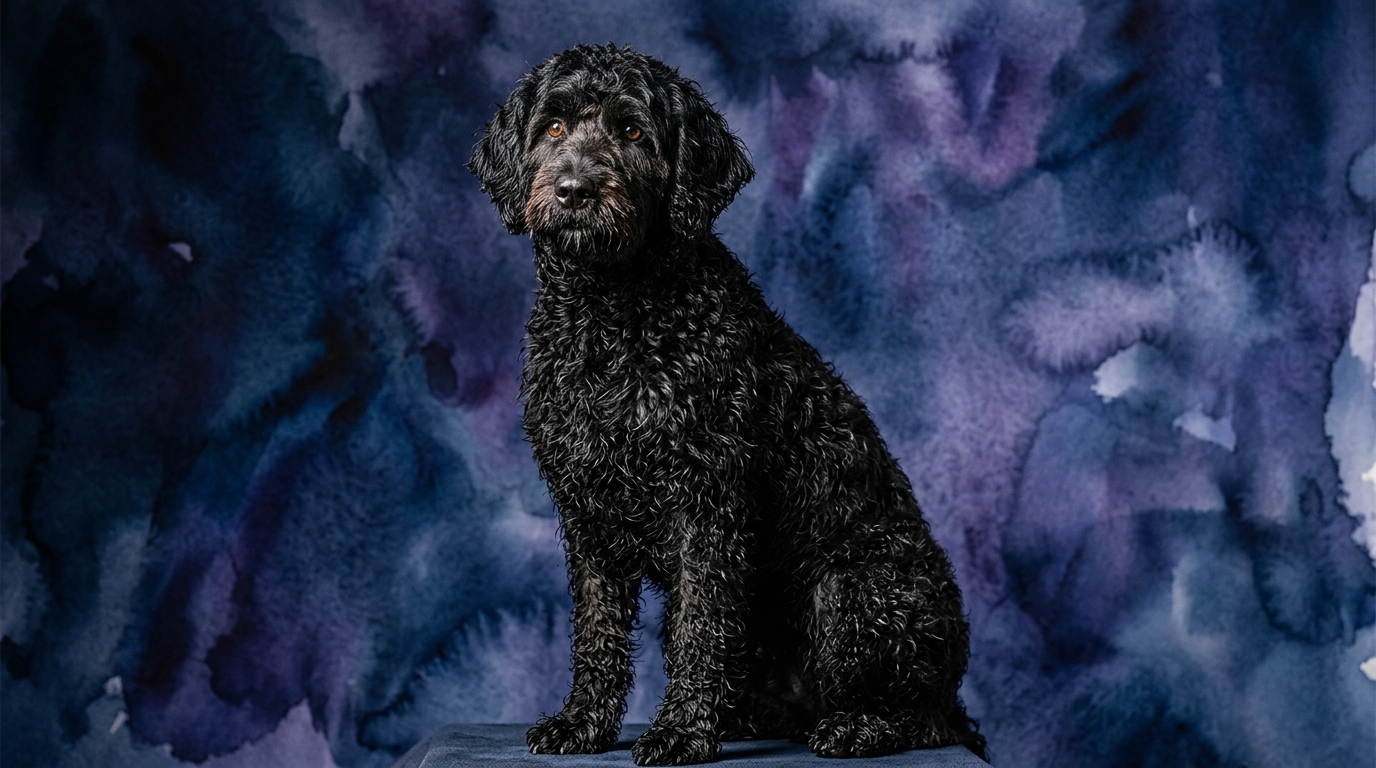

Side-by-Side IQ Profile: Understanding Identical Scores
At first glance, the IQ profiles for both the Portuguese Water Dog and the Miniature Pinscher appear remarkably similar, each scoring a consistent 3/5 across problem Solving, training Speed, social Intelligence, instinctive Drive, and memory. However, these identical numerical ratings do not imply identical cognitive expression; rather, they reflect a moderate capacity in each area, interpreted through the lens of each breed's unique heritage and temperament. A 3/5 score indicates a solid, functional capacity that, while not at the highest extreme, is perfectly capable of engaging with complex tasks and learning new behaviors.
For the **Portuguese Water Dog (PWD)**, a breed from the Working group, these 3/5 scores manifest in a practical, task-oriented manner. Their problem-solving at 3/5 speaks to their capacity for navigating complex water environments and understanding multi-step commands, necessary for their historical role as fishermen's companions. Their training speed, also 3/5, reflects a willingness to learn and retain commands, often driven by a desire to participate and a robust work ethic rather than an immediate, lightning-fast grasp of new concepts. Social intelligence at 3/5 underlines their ability to form strong bonds with their human handlers and respond to cues within a cooperative working relationship. The instinctive drive, rated 3/5, largely points to their deep-seated urge to retrieve, herd, and swim, requiring outlets for these natural behaviors. Finally, their memory at 3/5 supports their ability to recall intricate routines and commands over time, crucial for consistency in their working tasks.
The **Miniature Pinscher (Min Pin)**, hailing from the Toy group, also registers 3/5 across the board, but these scores are interpreted through a lens of alertness, independence, and spirited self-preservation. Their problem-solving at 3/5 suggests a cleverness in navigating their environment, finding ways to achieve their desires, or outsmarting perceived obstacles, rather than solving cooperative, human-directed puzzles. Training speed at 3/5 signifies a capacity to learn, but often tempered by a strong-willed nature that requires engaging motivation and consistency to overcome their independent streak. Social intelligence at 3/5 highlights their keen awareness of their surroundings and family dynamics, often expressed through their vigilant nature and discerning interactions, rather than a broad, eager sociability. The 3/5 instinctive drive is largely rooted in their historical role as ratters, manifesting as a strong prey drive, territoriality, and a confident, sometimes bold, demeanor. Their memory, also 3/5, allows them to remember routines, boundaries, and past experiences, contributing to their consistent character.
Where the Portuguese Water Dog Excels Cognitively
Despite identical numerical scores, the Portuguese Water Dog exhibits a particular cognitive strength in the application of its problem-solving and social intelligence within a collaborative, physically demanding context. Their 3/5 problem-solving ability, combined with their 3/5 instinctive drive for water work and retrieving, means they particularly shine when faced with practical, real-world tasks that require sustained effort and a clear objective. For instance, a PWD might excel at figuring out how to retrieve a specific buoy from a complex water current, or systematically searching a large area for a hidden object, utilizing their physical prowess as an extension of their mental engagement. Their cognitive strengths are often best observed in scenarios where a human-dog team is working towards a shared, tangible goal, leveraging their desire to please and their robust physicality.
Their 3/5 social intelligence, when paired with their working heritage, translates into a capacity for intricate communication within a partnership. PWDs are often attuned to subtle human body language and vocal inflections, allowing them to anticipate commands or adjust their actions in a dynamic environment. This isn't just about obedience; it's about a nuanced understanding of their role within a team, making them particularly adept at activities like competitive obedience, agility, or even service work where precise, responsive interaction is paramount. Their memory, also 3/5, reinforces this by enabling them to store and recall complex sequences of actions or cues that are part of a larger collaborative task.
Where the Miniature Pinscher Excels Cognitively
The Miniature Pinscher, with its 3/5 scores, demonstrates a distinct cognitive advantage in areas requiring sharp situational awareness, quick independent decision-making, and a tenacious spirit within a smaller physical package. Their 3/5 problem-solving often manifests as cleverness in navigating domestic environments or outmaneuvering perceived threats. A Min Pin might quickly figure out how to access a forbidden treat, or how to alert their owners to an unfamiliar sound outside, using their wits and agility to achieve their ends. This isn't necessarily about complex, multi-step puzzles, but rather effective, rapid solutions to immediate, often self-serving, challenges.
Their 3/5 social intelligence is expressed through their keen observational skills and their ability to discern subtle changes in their household's routine or the presence of strangers. This makes them exceptional watchdogs, as they are quick to notice and react to anything out of the ordinary, relying on their alert nature rather than brute force. The Min Pin's 3/5 instinctive drive, rooted in their ratter history, means they excel at tasks requiring focus and determination in pursuit of a 'prey' item, whether it's a squeaky toy or a perceived intruder. Their memory, at 3/5, supports their consistent vigilance and their ability to recall which situations warrant a bark or a chase, making them very reliable in their guardian roles.
Which Breed is Easier to Train and Why?
When considering ease of training, the Portuguese Water Dog generally presents a more straightforward experience for most handlers, despite both breeds having a 3/5 training speed score. The PWD's working group background instills a strong desire to engage with tasks and a natural inclination towards partnership. Their 3/5 problem-solving and social intelligence are often applied to understanding and executing human commands, driven by an inherent eagerness to please and a robust work ethic. While they may not grasp every concept instantaneously, their persistence and motivation to collaborate mean they are often receptive to consistent, positive reinforcement training, making the process feel more cooperative and less like a battle of wills. They thrive on having a job and will typically apply their cognitive abilities to fulfilling their handler's directives.
The Miniature Pinscher, conversely, can present a greater training challenge, not because of a lack of cognitive capacity (their training speed is also 3/5), but due to their independent and sometimes stubborn nature. Their problem-solving at 3/5 is often directed towards their own agenda, and their spirited instinctive drive can lead them to prioritize self-interest or perceived threats over immediate obedience. Training a Min Pin requires a highly engaging approach, significant patience, and unwavering consistency to overcome their tendency towards independence. While they are capable of learning a wide array of commands and tricks, their handlers must work harder to maintain their focus and convince them that compliance is more rewarding than their own pursuits. Their social intelligence at 3/5 means they are aware of their handler's expectations, but their strong will often dictates whether they choose to comply.
Suitability for Active Owners vs. Relaxed Owners
For owners with an active lifestyle, the Portuguese Water Dog is an exceptional match. Their 3/5 instinctive drive, particularly for retrieving and water activities, combined with their moderate problem-solving and training speed, means they require consistent physical and mental engagement. They thrive on long walks, runs, swimming, and structured training sessions like agility or obedience. An owner who enjoys outdoor adventures and is prepared to incorporate their dog into daily activities that challenge both body and mind will find a PWD to be a fulfilling companion. Their cognitive abilities are best honed when regularly put to use in dynamic, engaging situations, preventing boredom and channeling their substantial energy constructively.
The Miniature Pinscher, while small, is far from a sedentary lapdog and requires more than a relaxed owner might initially assume. Their 3/5 instinctive drive, expressed as high energy and a keen prey drive, means they need regular, albeit shorter, bursts of activity and mental stimulation. They are well-suited for owners who are active but perhaps prefer shorter, more intense play sessions, puzzle toys, and consistent training to channel their quick wit and independent spirit. While they don't demand the endurance of a PWD, a truly relaxed owner who neglects their need for engagement might find their Min Pin's problem-solving skills applied to undesirable behaviors like excessive barking or destructive chewing. They need an owner who can consistently provide structure and engaging mental outlets to thrive.
The Verdict: When to Choose Each Breed
The Verdict
Choose the Portuguese Water Dog if you seek a highly engaged, collaborative canine partner for an active outdoor lifestyle, valuing a dog that thrives on shared tasks and sustained physical and mental challenges. They are a good fit for owners prepared to dedicate time to structured training and who appreciate a dog's eagerness to participate in family activities.
Opt for the Miniature Pinscher if you appreciate a spirited, vigilant, and independent companion who offers bursts of energetic play and intelligent interaction, suitable for an owner who can provide consistent, engaging mental stimulation and firm, patient training. They are ideal for those who admire a dog with a big personality in a compact form, capable of guarding their home with discerning alertness.
🧠 Find Your Pet's IQ Score
Our Pet IQ Lab assessment covers 25+ tests across 5 cognitive dimensions — personalized to your breed.
Take the Full IQ Test →Frequently Asked Questions
Do identical IQ scores mean both breeds are equally easy to live with?
No, identical IQ scores primarily indicate a similar level of cognitive capacity in each dimension, but the *expression* of these capacities varies greatly by breed. The Portuguese Water Dog's working drive makes them eager collaborators, while the Miniature Pinscher's independence requires more patient, consistent handling, influencing daily living significantly.
How does 'instinctive drive' differ between these two breeds with the same score?
For the Portuguese Water Dog, a 3/5 instinctive drive often manifests as a strong urge for retrieving, swimming, and herding, tied to their water-working heritage. For the Miniature Pinscher, the same 3/5 score points to a strong prey drive, territoriality, and vigilance, stemming from their history as ratters and watchdogs.
Can a Miniature Pinscher perform complex tasks like a Portuguese Water Dog?
While both breeds have 3/5 problem-solving and memory, the Miniature Pinscher's cognitive application tends towards independent, quick-witted solutions in their environment, rather than sustained, cooperative complex tasks. A PWD's working background better prepares them for intricate, multi-step human-directed activities like advanced obedience or service work.