Side-by-Side Cognitive Profile: PWD vs. Elkhound
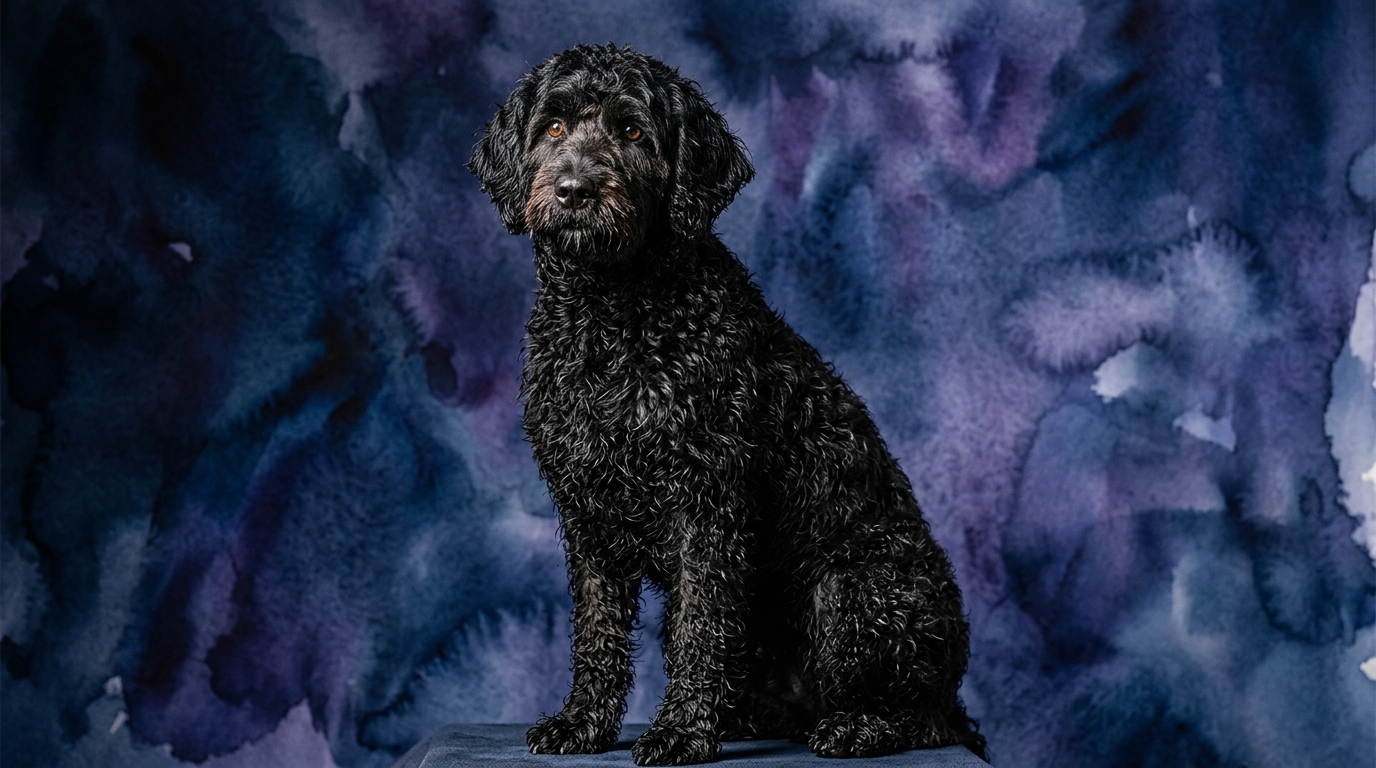
The Cosmic Pet Pet IQ Lab categorizes canine intelligence across five key dimensions, offering a nuanced view beyond simple obedience. For the Portuguese Water Dog (Working Group), these scores are consistent: Problem Solving (3/5), Training Speed (3/5), Social Intelligence (3/5), Instinctive Drive (3/5), and Memory (3/5). These scores reflect a balanced, practical intelligence geared towards collaborative tasks.
PWDs excel in practical, task-oriented problem-solving, particularly involving water retrieval or navigating physical obstacles to accomplish a defined goal. Their solutions are generally direct and effective, driven by their inherent desire to complete a given task, rather than complex abstract reasoning. PWDs learn new commands at a consistent pace, responding well to engaging, positive reinforcement. Their eagerness to cooperate aids training, but their independent streak means sessions benefit from variety to sustain focus. PWDs exhibit good social awareness within their family unit, adept at interpreting human cues and adapting to household dynamics. They form strong attachments and are responsive to their immediate social environment, though their social acumen is more about cooperative interaction than navigating complex social nuances with strangers. Their moderate instinctive drive stems from their working heritage, manifesting as a strong inclination for retrieving, herding, and water-based activities. This drive is manageable and can be effectively channeled into various dog sports or purposeful tasks. PWDs possess a solid memory for learned commands, established routines, and past experiences. While generally reliable in retaining behaviors, they may benefit from periodic refreshers for less frequently practiced cues, and their recall for highly intricate, sequential tasks might not be their primary strength.
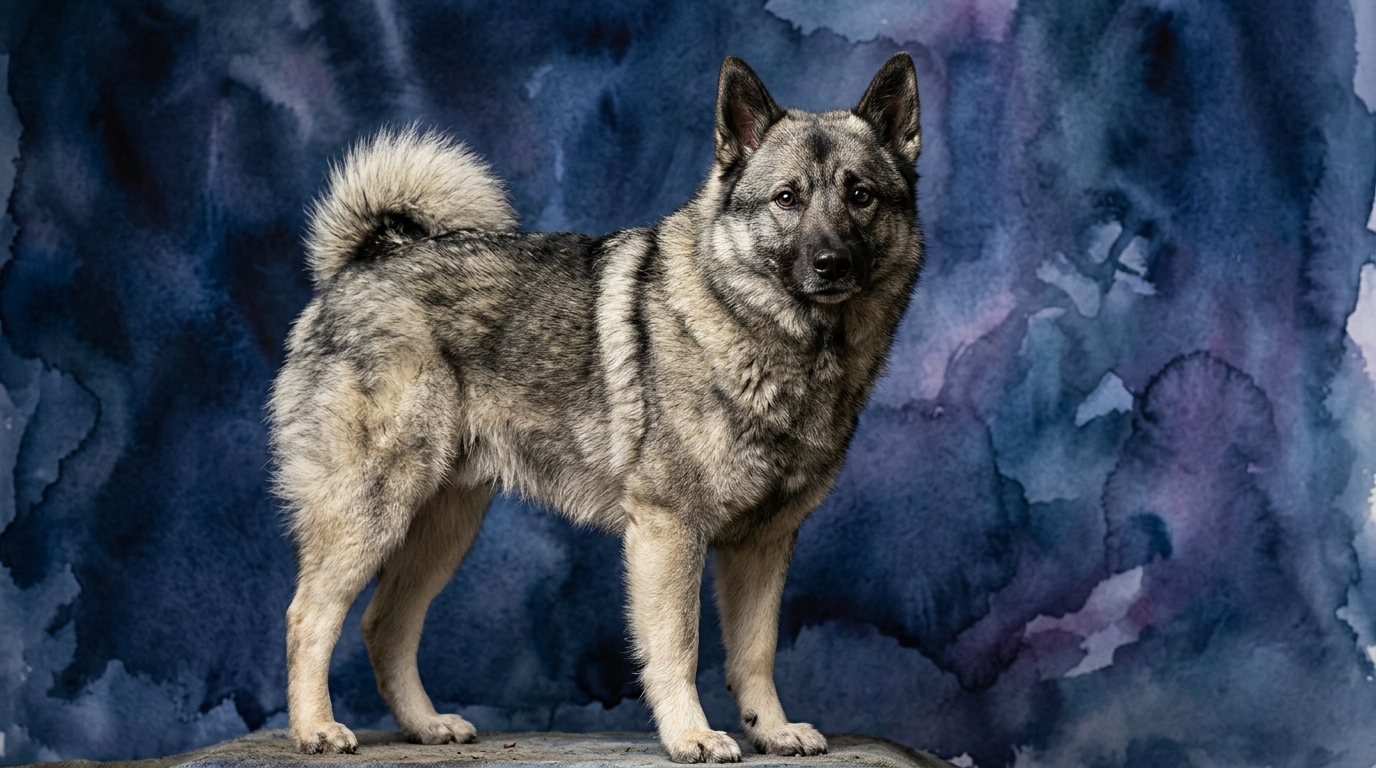
In contrast, the Norwegian Elkhound (Hound Group), with a Coren ranking of #36, shows a distinct cognitive profile: Problem Solving (4/5), Training Speed (4/5), Social Intelligence (3/5), Instinctive Drive (3/5), and Memory (4/5). These scores highlight a capacity for independent thought and rapid learning, characteristic of their hunting background.
Norwegian Elkhounds demonstrate superior problem-solving, often employing strategic thinking in independent scenarios. Their hunting legacy required assessing complex situations, tracking intricate scent trails, and making autonomous decisions. This translates to an ability to navigate challenging environments and devise solutions, sometimes in self-directed, resourceful ways. Elkhounds typically learn new commands and concepts with remarkable speed, often grasping ideas with fewer repetitions than many breeds. However, their inherent independence, characteristic of hounds, means they require compelling motivation and a clear purpose to ensure consistent compliance. Elkhounds display a good understanding of social dynamics within their established family, observing their surroundings and gauging situations with a reserved demeanor. While devoted to their family, their social interactions are often less overtly demonstrative, valuing their independence within the pack structure. The Elkhound's instinctive drive is characterized by persistent tracking, scenting, and endurance, geared towards methodical, sustained pursuit. This strong, purposeful drive, rooted in their long-distance hunting role, can be effectively channeled into scent work, hiking, or other activities requiring sustained focus. Elkhounds possess a strong memory, particularly for complex scent patterns, established routes, and learned behaviors. This superior recall was vital for remembering hunting territories and returning to handlers. They retain commands and routines effectively, making subsequent training for previously acquired tasks highly efficient.
Where the Portuguese Water Dog Cognitively Excels
The Portuguese Water Dog's cognitive strengths lie in its dynamic, water-centric problem-solving and its exceptional capacity for collaborative tasks. While not scoring highest in raw problem-solving, their practical intelligence is highly attuned to partnership, shining when a task requires direct human interaction, communication, and immediate responsiveness to direction. This makes them adept at complex routines involving continuous feedback and adjustment.
Their social intelligence, while rated 3/5, is particularly effective in fostering deep, cooperative bonds, enabling them to anticipate handler intentions during active, physical tasks. This cognitive advantage allows for fluid teamwork in activities like dock diving, agility, or intricate retrieving games, where their willingness to engage and adapt to their human partner is paramount.
Where the Norwegian Elkhound Cognitively Excels
The Norwegian Elkhound demonstrates superior cognitive abilities in independent problem-solving and robust memory, particularly for complex sensory data. Their higher problem-solving score (4/5) reflects a capacity for strategic thinking and autonomous decision-making, honed by their history of tracking big game without constant human guidance. This allows them to navigate intricate environments and find solutions to obstacles creatively.
Furthermore, their strong memory (4/5) for scent patterns, routes, and learned behaviors is a significant advantage. This allows them to process and retain complex spatial and olfactory information over extended periods, making them exceptional in activities requiring sustained focus and precise data retention, such as tracking or advanced scent work.
Training Dynamics: Elkhound's Speed vs. PWD's Collaboration
When considering ease of training, the Norwegian Elkhound's higher scores in Training Speed (4/5) and Memory (4/5) suggest a quicker acquisition of new commands and concepts, often with fewer repetitions. They retain information well, making subsequent training sessions efficient. However, their independent hound nature means they require compelling motivation and a clear understanding of the 'why' behind a command to ensure consistent compliance, rather than simply obeying out of a desire to please. Training an Elkhound involves channeling their self-reliance effectively.
The Portuguese Water Dog, while having slightly lower scores (3/5) in these areas, often brings a strong intrinsic desire to work collaboratively with their handler. Their eagerness to engage and their responsive nature can make the training process smoother in terms of willingness to participate, even if it takes a few more repetitions for a command to solidify. PWDs thrive on positive interaction and mental engagement, making them highly responsive to reward-based methods and less prone to independent 'checking out' during sessions, provided the activities are stimulating and varied. Therefore, 'easier' depends on whether an owner prefers quick assimilation with an independent streak or steady, collaborative effort.
Activity Preferences: Dynamic PWD vs. Enduring Elkhound
Both the Portuguese Water Dog and the Norwegian Elkhound are active breeds demanding significant engagement, but their preferred types of activity differ. The Portuguese Water Dog thrives on varied physical and mental stimulation, particularly enjoying water-based activities, retrieving games, and dog sports like agility. They are ideal companions for owners who enjoy dynamic outdoor adventures and can provide consistent, interactive mental challenges through training and puzzle toys. Their need for purposeful engagement means a sedentary lifestyle is unsuitable, as boredom can manifest in undesirable behaviors.
The Norwegian Elkhound also requires substantial daily activity, but their preference leans towards endurance-based exercises, long hikes, and scent-driven work. Owners who enjoy exploring nature, long-distance walking, or engaging in tracking sports will find a compatible partner in an Elkhound. While they appreciate companionship, their independent nature means they can be content with sustained, purposeful activity rather than requiring constant, direct human interaction during exercise. They are not suited for owners seeking a relaxed, low-maintenance companion, as their energy and drive demand a consistent outlet.
The Verdict
Choose the Portuguese Water Dog if you seek a highly interactive, collaborative partner for dynamic activities like water sports and agility, valuing a dog that thrives on working closely with you and responding fluidly to direction.
Opt for the Norwegian Elkhound if you appreciate a more independent, discerning companion for endurance activities, scent work, and long hikes, and are prepared to engage with a dog that learns quickly but requires strong motivation and strategic channeling of its self-reliant nature.
🧠 Find Your Pet's IQ Score
Our Pet IQ Lab assessment covers 25+ tests across 5 cognitive dimensions — personalized to your breed.
Take the Full IQ Test →Frequently Asked Questions
Do Portuguese Water Dogs bark a lot?
Portuguese Water Dogs can be vocal, using barks to communicate excitement, alert their owners, or express boredom. Consistent training from a young age can help manage excessive barking by teaching them appropriate times and situations for vocalization. Their communication is often a reflection of their engagement and alertness.
Are Norwegian Elkhounds good with children?
Norwegian Elkhounds can be excellent family dogs and are generally good with children, especially when raised with them. Their patient and loyal nature makes them protective and tolerant, though their independent streak means they may not always seek out constant interaction. Supervision is always recommended, as with any breed, to ensure respectful interactions.
How much exercise does a Portuguese Water Dog need daily?
Portuguese Water Dogs require significant daily exercise, typically an hour or more of vigorous activity, including walks, runs, swimming, or dog sports. They also benefit greatly from mental stimulation through training and puzzle toys to prevent boredom and channel their energy constructively. Their working background means they thrive on having a 'job'.