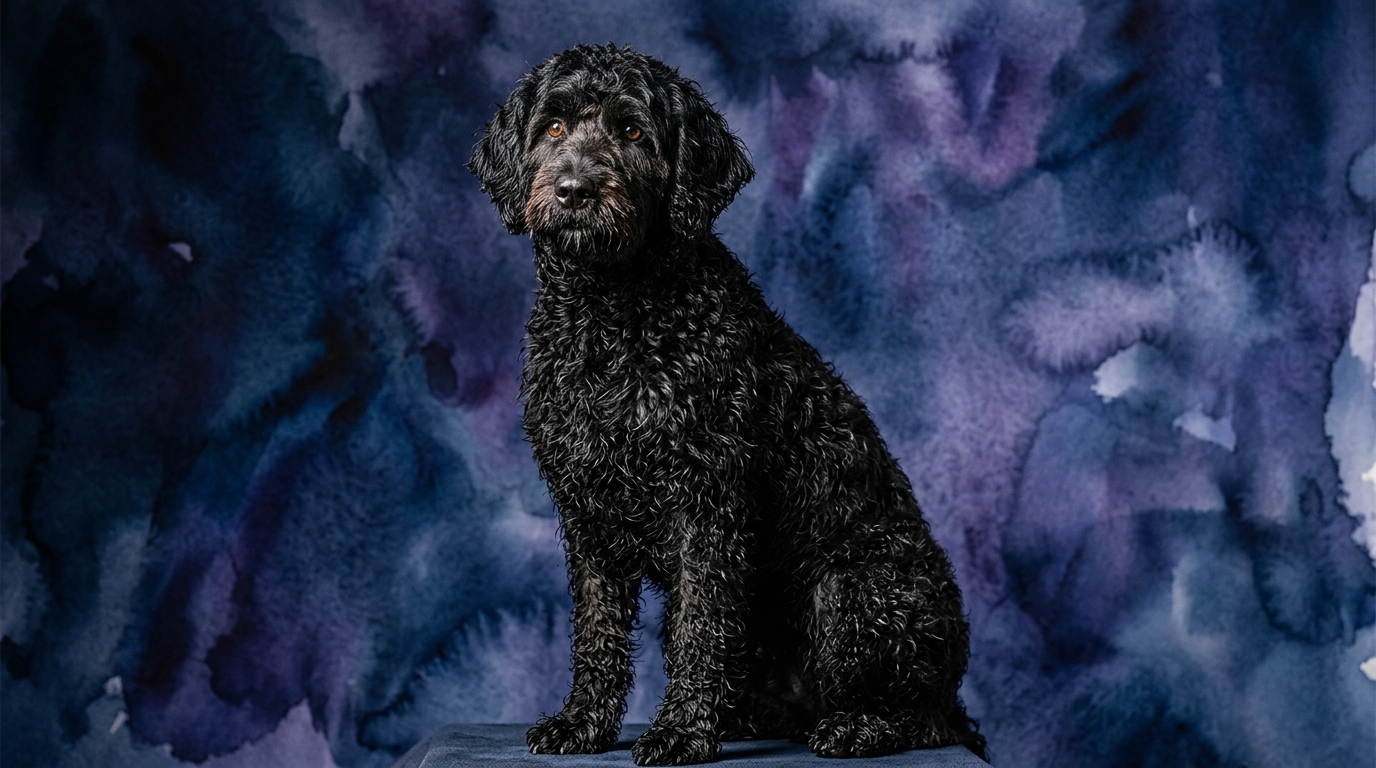
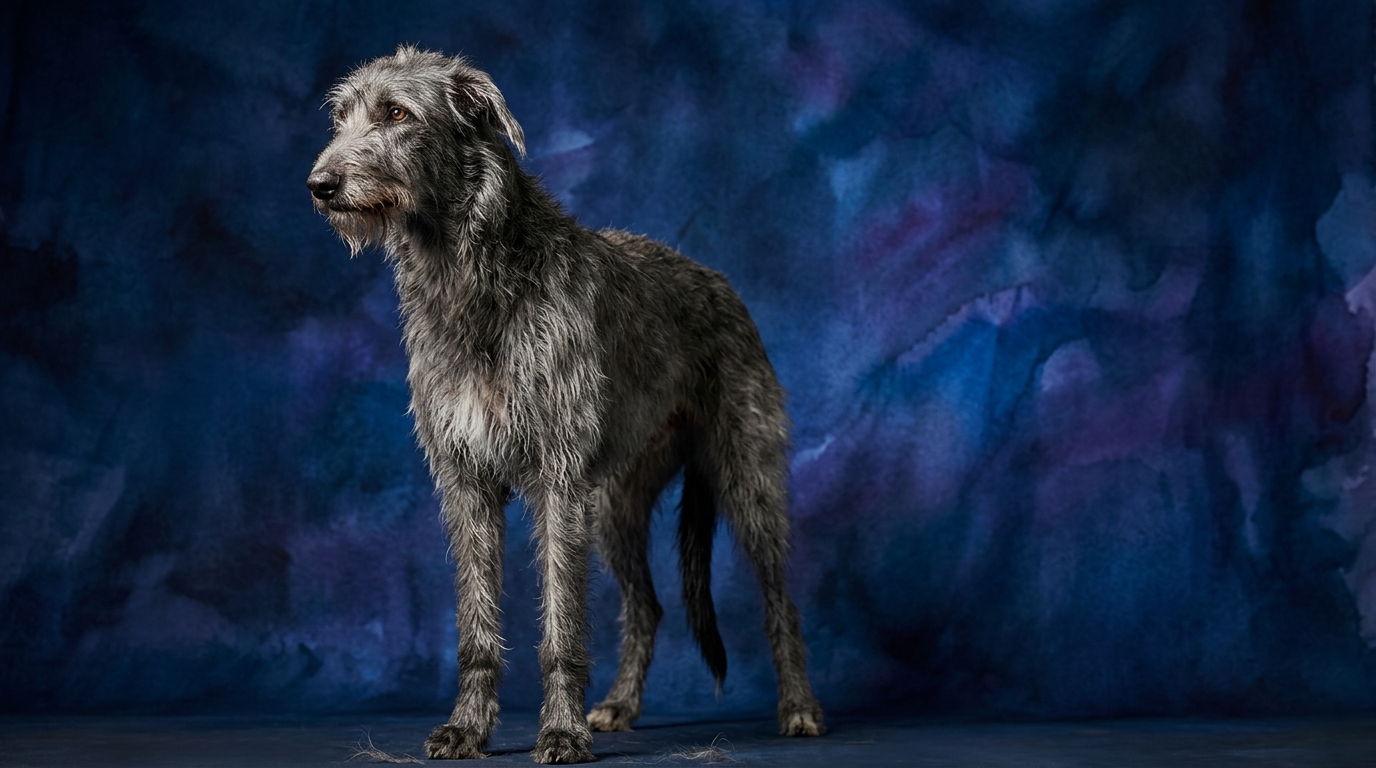
Side-by-Side IQ Profile: Portuguese Water Dog vs. Scottish Deerhound
**Portuguese Water Dog - Problem Solving (3/5):** PWDs exhibit practical, task-oriented problem-solving, adept at retrieving objects or navigating obstacles to achieve goals for their human partners. Their solutions are often collaborative, focused on a desired outcome within a structured context.
**Scottish Deerhound - Problem Solving (3/5):** Deerhounds demonstrate independent problem-solving, such as strategizing optimal paths during pursuit or assessing terrain for speed. Their solutions are self-directed, aimed at satisfying their inherent hunting drive rather than handler instruction.
**Portuguese Water Dog - Training Speed (3/5):** PWDs grasp new commands at a moderate pace, showing enthusiasm for learning in engaging, structured environments. Their desire to work alongside humans makes them receptive to consistent, positive reinforcement, benefiting from repetition to solidify behaviors.
**Scottish Deerhound - Training Speed (3/5):** Deerhounds learn new commands moderately quickly, yet their application can be nuanced. They understand instructions but may comply only when aligned with their interests or strong motivation, requiring patience due to their independent nature.
**Portuguese Water Dog - Social Intelligence (3/5):** PWDs show a solid understanding of social cues, adapting behavior to situations and forming perceptive bonds with families. Their social acumen translates into being highly attuned, capable, and nuanced companions.
**Scottish Deerhound - Social Intelligence (3/5):** Deerhounds possess quiet social intelligence, expressed through calm demeanor and selective affection. Observant of family emotions, they form deep, though sometimes reserved, bonds, sensitive to their environment and people.
**Portuguese Water Dog - Instinctive Drive (3/5):** The PWD's drive is rooted in its water dog history, manifesting as a strong desire to retrieve, swim, and engage in herding-like activities. This drive is often directed towards tasks and interaction with human partners.
**Scottish Deerhound - Instinctive Drive (3/5):** The Deerhound's drive is overwhelmingly tied to its sighthound heritage: a powerful, visually-triggered urge to chase. This dictates much outdoor behavior, making off-leash control challenging due to their deep-seated hunting instincts.
**Portuguese Water Dog - Memory (3/5):** PWDs demonstrate good memory for commands, routines, and object locations. They recall complex actions and training cues over time, especially with consistent reinforcement, aiding multi-step task performance.
**Scottish Deerhound - Memory (3/5):** Deerhounds possess good memory for people, safe spaces, and routines. They recall past training, but their independent streak might override commands when faced with stronger instincts. They remember places and paths well.
Where the Portuguese Water Dog Wins Cognitively
The Portuguese Water Dog often shows a cognitive advantage in scenarios demanding sustained focus on human-directed tasks. Their working background fostered a specific cognitive nimbleness, making them more receptive to intricate obedience or agility challenges where human partnership is key. Their problem-solving is less about independent pursuit and more about collaborative achievement, consistently engaging in training for desired outcomes.
Where the Scottish Deerhound Wins Cognitively
Conversely, the Scottish Deerhound shines in cognitive areas requiring independent assessment and rapid, self-directed action. Their legacy as deer hunters cultivated an acute ability to process visual information quickly, make split-second decisions, and navigate terrain efficiently without constant human intervention. This demonstrates a unique cognitive strength in autonomous, instinctive brilliance for dynamic pursuit.
Which is Easier to Train and Why?
The Portuguese Water Dog is generally considered easier to train in conventional obedience due to its inherent desire to collaborate and strong work ethic. Their background means they find satisfaction in pleasing their handler and completing tasks. The PWD's 'why' for learning is rooted in partnership, making them consistently engaged and less distracted. The Scottish Deerhound, while capable of learning quickly, requires understanding its independent sighthound nature. Their primary motivation is often self-satisfaction or the thrill of the chase, which can override commands, especially outdoors. Training a Deerhound involves more persuasion, high-value rewards, and acknowledging their powerful prey drive.
Which Suits Active Owners vs. Relaxed Owners?
For owners thriving on consistent activity and structured work or sports, the Portuguese Water Dog is an excellent match. Their instinctive drive demands regular mental and physical exercise like agility or dock diving, requiring an owner ready to channel their energy. The Scottish Deerhound, while athletic, presents a different profile. They need bursts of intense exercise, like sprinting in a secure area, but are often quiet indoors. They suit owners who appreciate a dignified companion at home but are prepared for vigorous, less frequent outdoor activity in a safe, enclosed space.
The Verdict
Choose the Portuguese Water Dog if you seek a highly engaged, collaborative canine partner eager for consistent mental and physical challenges, thriving on joint activities and a strong working bond.
Opt for the Scottish Deerhound if you appreciate a calm, dignified companion indoors who requires specific, intense bursts of exercise in secure areas and whose independent spirit and profound chase instinct you understand and respect.
🧠 Find Your Pet's IQ Score
Our Pet IQ Lab assessment covers 25+ tests across 5 cognitive dimensions — personalized to your breed.
Take the Full IQ Test →Frequently Asked Questions
Do Portuguese Water Dogs and Scottish Deerhounds have similar exercise needs?
While both are athletic, PWDs require consistent, interactive daily exercise and mental stimulation, often enjoying water activities. Deerhounds need opportunities for intense, short bursts of running in a safe, enclosed space, but are typically calm indoors.
Are either of these breeds good for first-time dog owners?
Both breeds are a significant commitment. The PWD's energy and need for consistent engagement can challenge a novice, though their biddability helps. The Deerhound's independent nature and strong prey drive require understanding sighthound traits, a steep learning curve for first-timers.
How do their grooming requirements compare?
The PWD has a non-shedding, hypoallergenic coat requiring regular grooming and professional clipping every 6-8 weeks to prevent matting. The Deerhound has a wiry, low-maintenance coat that sheds minimally and needs weekly brushing and occasional hand-stripping.