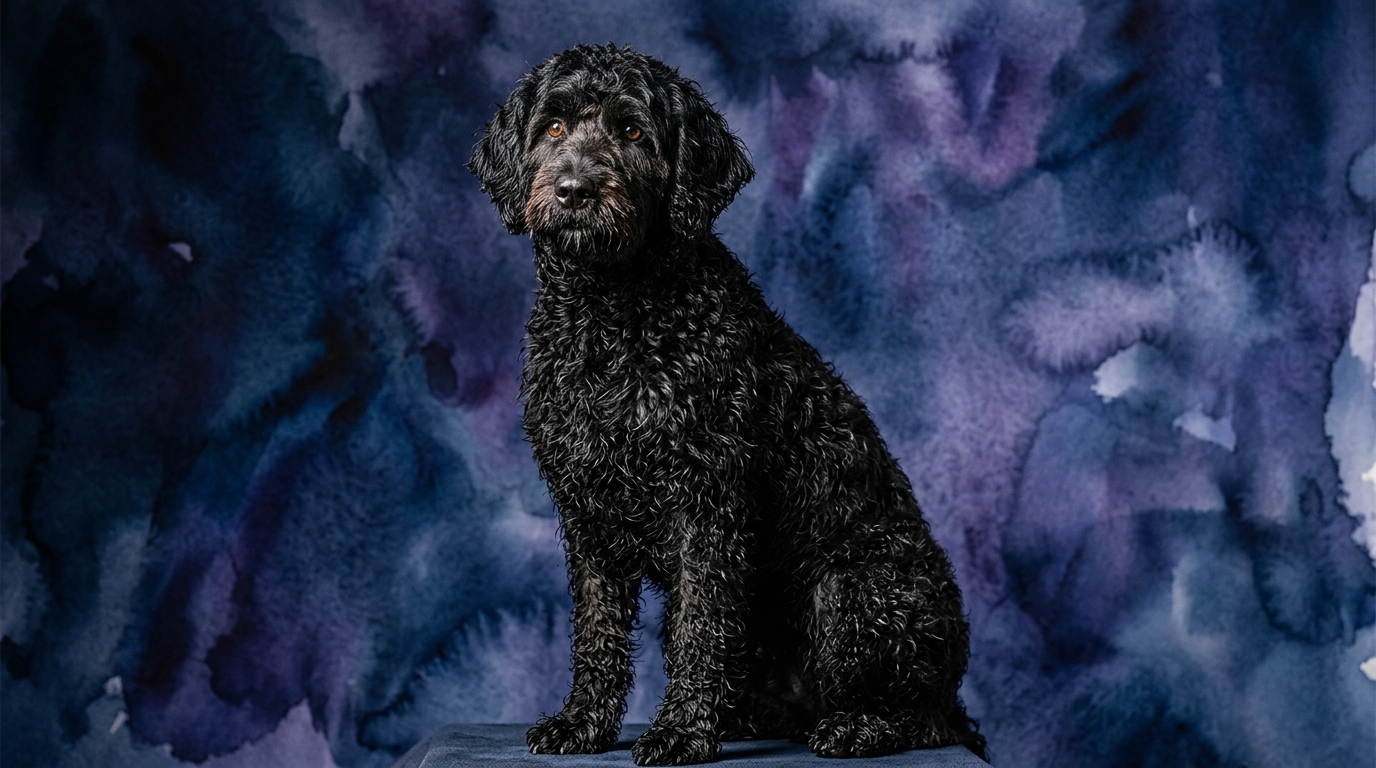
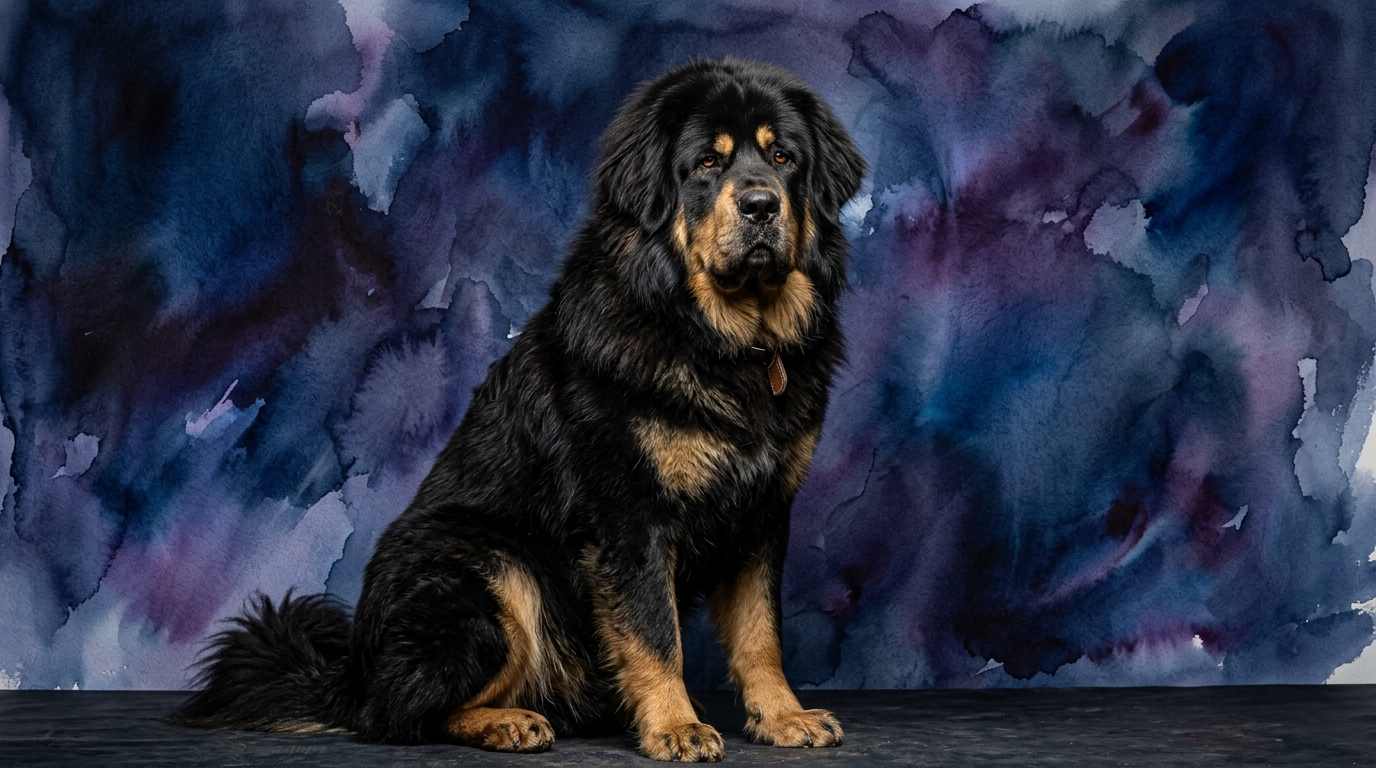
Side-by-Side IQ Profile: PWD vs. Tibetan Mastiff
The Cosmic Pet Pet IQ Lab assesses five key cognitive dimensions, and intriguingly, both the Portuguese Water Dog and the Tibetan Mastiff score an identical 3/5 across the board. This numerical parity, however, belies a fascinating divergence in how these abilities are expressed and utilized by each breed.
For the **Portuguese Water Dog**, a 3/5 in **Problem Solving** suggests a capable mind adept at navigating complex tasks, often involving their environment or specific objects. They might quickly ascertain the best route to retrieve a floating item or figure out how to manipulate a gate latch to access a desired area, showcasing an adaptable, hands-on approach to challenges. Their **Training Speed** at 3/5 indicates a willingness and capacity to learn new commands and routines at a steady pace, especially when engaged in cooperative activities. **Social Intelligence** at 3/5 means they are generally responsive to human cues and capable of understanding social dynamics within their family unit, often seeking interaction and feedback. An **Instinctive Drive** of 3/5 highlights their heritage as working dogs, particularly their strong inclination towards water-based retrieving, herding, and companionship. Finally, their **Memory** score of 3/5 reflects an ability to retain complex sequences of tasks, remember specific locations of items, and recall learned behaviors over time.
The **Tibetan Mastiff**, also with 3/5 across these dimensions, applies its cognitive assets in a distinctly different manner. Their **Problem Solving** at 3/5 manifests as an independent, strategic approach to guarding and territorial management. They excel at assessing potential threats, determining optimal patrol routes, and making autonomous decisions to protect their space and family, often without direct human instruction. A 3/5 in **Training Speed** signifies they can certainly learn, but their pace might be influenced by whether the task aligns with their inherent protective instincts or requires sustained, repetitive engagement not directly tied to their guarding role. Their **Social Intelligence** at 3/5 is deeply rooted in understanding their immediate family and discerning friend from foe; they are astute observers of their human pack but often less inclined to seek constant social interaction outside their inner circle. The **Instinctive Drive** of 3/5 is profoundly centered on protection, territoriality, and vigilance, a powerful internal compass guiding their actions. Their **Memory** at 3/5 is particularly strong for territories, routines, and the identity of those who belong versus those who are perceived as outsiders, forming a bedrock for their guardianship role.
Where the Portuguese Water Dog Wins Cognitively
The Portuguese Water Dog's cognitive strengths shine brightest in scenarios demanding active cooperation and versatility. While both breeds share a 3/5 in Problem Solving, the PWD's expression of this is often more collaborative and task-oriented, particularly in human-directed activities. They demonstrate a superior capacity for understanding intricate multi-step commands and adapting their problem-solving skills to novel situations that require engagement with equipment or complex environments, such as agility courses or retrieving specific items from challenging locations. Their social intelligence, while numerically equal, tends towards a greater eagerness to please and a more overt responsiveness to human feedback, making them highly attuned partners in various endeavors. This combination of cooperative problem-solving and social engagement allows them to excel in roles where direct partnership with a human is paramount, such as service work, competitive dog sports, or as a highly engaged family companion.
Where the Tibetan Mastiff Wins Cognitively
The Tibetan Mastiff's cognitive advantages are rooted in its profound independence and self-sufficiency, particularly in matters of protection and territorial management. Their 3/5 in Problem Solving is not about fetching a ball, but about strategic vigilance: assessing a perimeter, identifying subtle changes in their environment, and making autonomous decisions regarding potential threats without needing constant human direction. This breed displays a remarkable internal compass for maintaining order and security. Their memory, also a 3/5, is exceptionally robust when it comes to long-term recall of their territory, the faces of family members, and those who are considered part of their 'flock' versus strangers. This deep, unwavering recall underpins their consistent and reliable guarding behavior. The Tibetan Mastiff's social intelligence, while not overtly demonstrative to outsiders, is keenly tuned to the subtle dynamics within its immediate family and is critical for its role as a watchful, independent guardian. They possess a unique cognitive framework that prioritizes self-reliance and protective strategy over eager compliance.
Which Is Easier to Train and Why
Despite both breeds scoring 3/5 in Training Speed, the Portuguese Water Dog generally presents as an easier breed to train in traditional obedience and complex tasks. This difference stems not from raw learning capacity, but from their inherent motivational structure and instinctive drives. PWDs possess a strong desire to work alongside their humans and a natural enthusiasm for engaging in cooperative activities. Their instinctive drive for retrieving and interaction makes them highly receptive to positive reinforcement methods and eager to learn new commands that involve collaboration. They tend to be more forgiving of handler mistakes and more persistent in attempting to understand what is being asked of them.
The Tibetan Mastiff, on the other hand, while capable of learning, can be significantly more challenging for conventional training. Their 3/5 in Training Speed is tempered by their deep-seated independence and strong guarding instincts. They are not naturally inclined to follow commands purely for the sake of pleasing a human, especially if a task doesn't align with their protective duties or seems arbitrary to them. Training a Tibetan Mastiff often requires immense patience, consistency, and a profound understanding of their unique motivations. They respond best to methods that respect their autonomy and tap into their natural desire to protect, rather than demanding blind obedience. What they learn, they often remember, but the path to that learning requires a different approach, prioritizing trust and mutual respect over eager compliance.
Which Suits Active Owners vs. Relaxed Owners
The choice between these two breeds depends heavily on an owner's lifestyle and expectations for canine companionship. The Portuguese Water Dog is an excellent fit for active owners who seek a highly engaged and participatory canine partner. Their robust physical and mental energy demands consistent outlets, including daily vigorous exercise, structured training sessions, and opportunities for mental stimulation through puzzles or water work. Owners who enjoy hiking, swimming, dog sports like agility, or simply want a dog to be an active part of their daily adventures will find the PWD an eager and enthusiastic companion. They thrive on interaction and can become bored or destructive if left under-stimulated, making them unsuitable for truly relaxed or sedentary lifestyles.
Conversely, the Tibetan Mastiff is better suited for owners who appreciate a more independent and watchful presence, and who understand the specific needs of a guardian breed. While they require ample space and regular, moderate exercise to maintain physical health, their mental stimulation often comes from patrolling their territory and observing their surroundings, rather than constant human-initiated games or training. They are not a breed for owners seeking a dog to accompany them on every jog or to constantly engage in playful antics. Instead, they suit owners who can provide a secure, spacious environment, value a calm yet vigilant presence, and are prepared for a dog whose primary activity might be thoughtful observation and protection. A 'relaxed' owner for a Tibetan Mastiff means one who isn't seeking a high-energy playmate, but rather a steadfast, independent guardian.
The Verdict: When to Choose Each Breed
The Verdict
Choose the Portuguese Water Dog if you desire an active, cooperative canine partner eager to engage in diverse activities and training, thriving on direct human interaction and collaborative problem-solving.
Opt for the Tibetan Mastiff if you seek an independent, vigilant guardian, valuing their self-reliant protective instincts and appreciating a breed whose cognitive strengths are focused on territorial oversight and discerning loyalty.
🧠 Find Your Pet's IQ Score
Our Pet IQ Lab assessment covers 25+ tests across 5 cognitive dimensions — personalized to your breed.
Take the Full IQ Test →Frequently Asked Questions
Do Portuguese Water Dogs require grooming?
Yes, Portuguese Water Dogs have a single coat that does not shed but requires regular grooming to prevent matting. This typically involves brushing several times a week and professional clipping every 6-8 weeks to maintain their coat's health and appearance.
Are Tibetan Mastiffs good family dogs?
Tibetan Mastiffs can be devoted family dogs, forming strong bonds with their immediate human family, including children they are raised with. However, their protective instincts mean they are often wary of strangers and require early, extensive socialization to ensure they are well-adjusted and safe in various social situations.
What kind of living environment do these breeds need?
Portuguese Water Dogs adapt well to various living situations, including apartments if their significant exercise and mental stimulation needs are met. Tibetan Mastiffs, due to their size and territorial instincts, generally require a large, securely fenced yard or property to thrive and fulfill their guarding duties effectively.