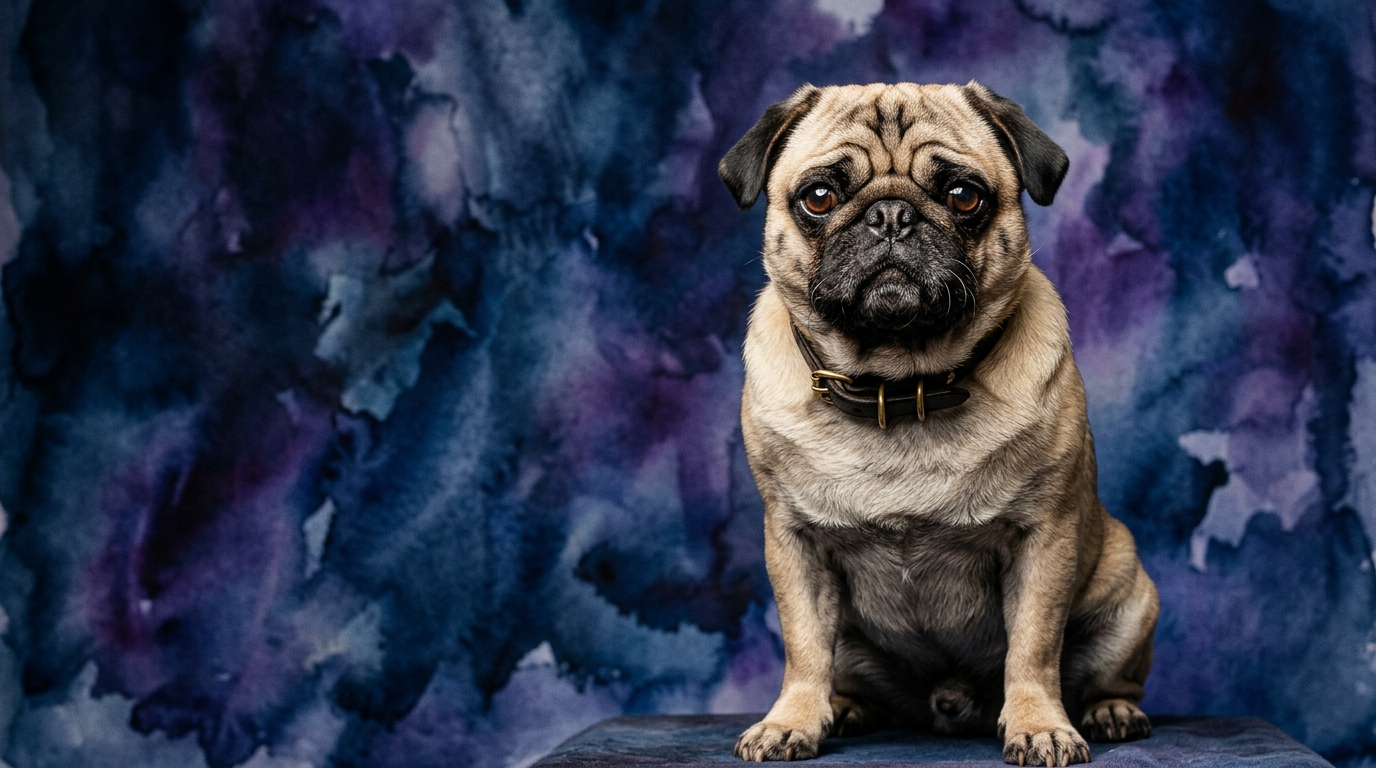
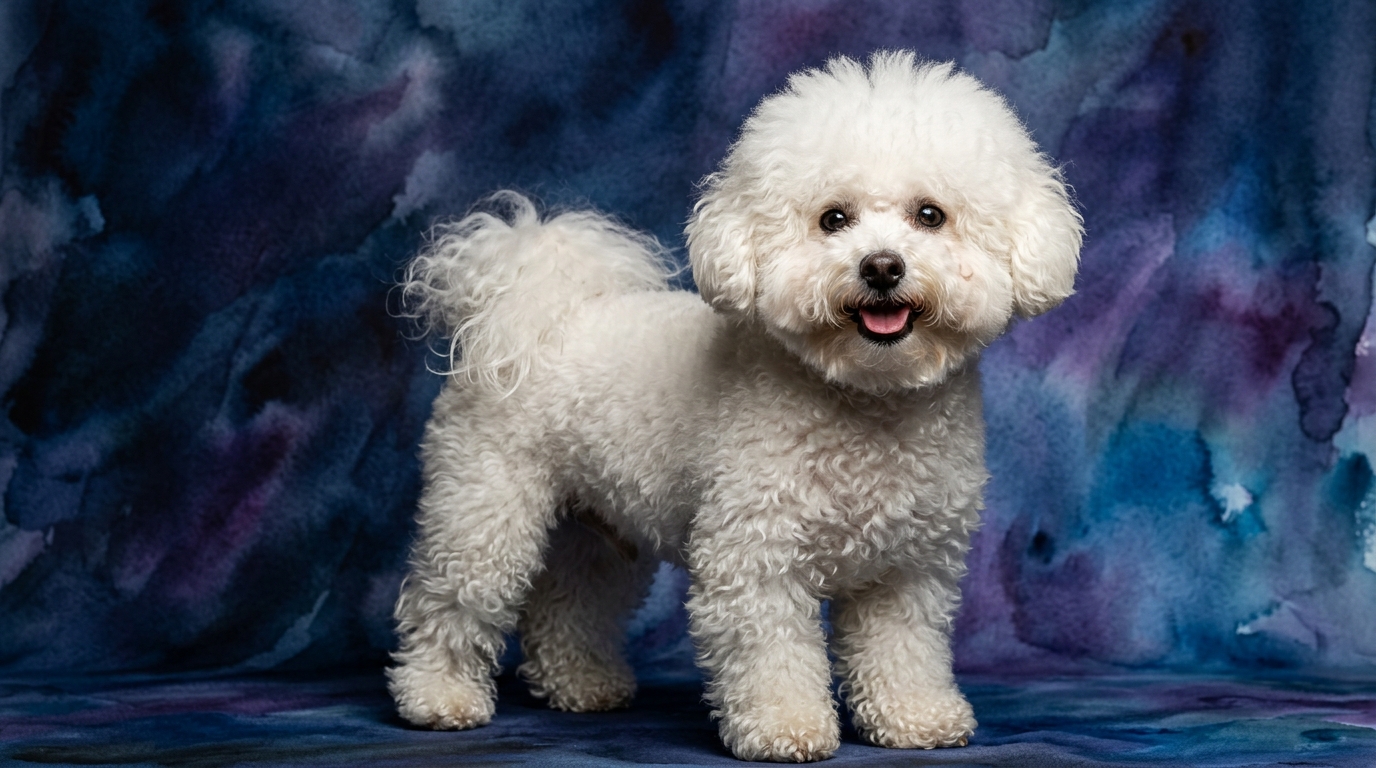
Side-by-Side Cognitive Profiles: Pug vs. Bichon Frisé
The Cosmic Pet Pet IQ Lab employs a comprehensive five-dimensional framework to assess canine intelligence, offering a nuanced view beyond simplistic 'smart' labels. For the Pug, a member of the Toy group with a Coren ranking of #57, its cognitive blueprint reveals a unique blend of traits: Problem Solving at 2/5, Training Speed at 2/5, Social Intelligence at an impressive 5/5, Instinctive Drive at 2/5, and Memory at 3/5. This profile paints a picture of a dog whose mental strengths lie primarily in connection rather than complex task mastery.
In contrast, the Bichon Frisé, a Non-Sporting group dog ranking #45 on the Coren scale, presents a slightly different cognitive architecture. Its scores are: Problem Solving at 3/5, Training Speed at 3/5, Social Intelligence matching the Pug at 5/5, Instinctive Drive at 2/5, and Memory also at 3/5. While both breeds share high social acumen and moderate memory, the Bichon Frisé shows a discernible edge in its ability to navigate novel challenges and absorb new information, suggesting a more active engagement with its environment through learning.
Breaking down these dimensions further, Problem Solving evaluates a dog's capacity to overcome obstacles or figure out new situations independently. A Pug's 2/5 indicates they might prefer to rely on their human companions for solutions rather than persistent independent experimentation, whereas a Bichon's 3/5 suggests a greater inclination to explore and manipulate their surroundings to achieve a goal. Training Speed measures how quickly a dog associates a command with an action; the Pug's 2/5 means more repetition might be needed, while the Bichon's 3/5 implies a slightly faster grasp of new cues.
Social Intelligence, a critical factor for companion animals, assesses a dog's ability to understand human emotions, gestures, and intentions. Both breeds score a perfect 5/5 here, highlighting their profound capacity for emotional connection and their adeptness at fitting into human families. Instinctive Drive, scored 2/5 for both, refers to their inherent urges for hunting, herding, or guarding; these low scores mean neither breed is typically driven by strong working instincts. Finally, Memory at 3/5 for both suggests a moderate ability to retain learned behaviors and past experiences over time, allowing them to build routines and remember familiar faces and places effectively.
Where the Pug's Cognition Shines Brightest
The Pug's cognitive strength is undeniably its exceptional Social Intelligence, scoring a perfect 5 out of 5. This isn't merely about being friendly; it reflects a deep, intuitive capacity to read human cues, mirror emotions, and form profound bonds. A Pug excels at understanding subtle shifts in tone of voice, body language, and even facial expressions, making them extraordinarily empathetic companions. They are masters of emotional resonance, often seeming to anticipate their owner's moods and offering comfort or companionship precisely when needed.
This high social intelligence means that Pugs thrive on interaction and connection. They are adept at integrating themselves into the family unit, often becoming the emotional center of the home. While their problem-solving and training speed scores are lower, their social acumen allows them to navigate complex social dynamics with ease, often charming their way through situations where other breeds might rely on strict obedience. Their ability to connect on such a profound level is a cognitive advantage that fosters strong, lasting human-animal relationships, making them unparalleled emotional support animals in a purely social context.
The Bichon Frisé's Cognitive Edge
The Bichon Frisé demonstrates its cognitive superiority in areas involving learning and environmental interaction, particularly in Problem Solving and Training Speed, both scoring 3 out of 5. This slightly higher aptitude compared to the Pug means a Bichon is often quicker to grasp new commands and more inclined to figure out how to manipulate its environment to achieve a desired outcome. For instance, a Bichon might more readily learn to open a specific cabinet or strategically retrieve a toy from under furniture, showcasing a modest but distinct level of independent thought and experimentation.
Their elevated training speed suggests they can form associations between commands and actions with fewer repetitions, making them generally more responsive to novel training exercises. This translates into a dog that might enjoy learning a wider array of tricks or participating in activities that require a quicker mental uptake, such as basic agility or scent work games. While sharing the Pug's high social intelligence, the Bichon complements this with a more active cognitive engagement with tasks and puzzles, indicating a greater intrinsic motivation for mental stimulation beyond purely social interaction.
Training Dynamics: Pug vs. Bichon Frisé
When it comes to training, the differences in Problem Solving and Training Speed between the Pug and the Bichon Frisé become quite apparent. The Bichon Frisé, with its 3/5 in both dimensions, generally presents an easier and faster training experience. They are often more motivated by the challenge of learning and quicker to understand what is being asked of them. This means they can pick up basic obedience commands, house-training protocols, and even complex tricks with relatively fewer repetitions, making training sessions feel more productive and rewarding for both dog and owner.
The Pug, scoring 2/5 in both Problem Solving and Training Speed, typically requires a more patient and consistent approach. They may take longer to connect a verbal cue with the desired action, and their problem-solving nature means they might not independently try to figure out what you want. Training a Pug often benefits from positive reinforcement methods that emphasize motivation through treats and praise, coupled with shorter, more frequent sessions to maintain engagement. While they may not be the quickest learners of complex routines, their high social intelligence means they are eager to please and will respond well to training that strengthens their bond with their human, even if it takes a bit more time for the concepts to solidify.
Matching Canine Cognition to Owner Lifestyles
Considering their cognitive profiles, both the Pug and Bichon Frisé can adapt to various owner lifestyles, but their subtle differences might make one a better fit than the other for specific preferences. For owners seeking a truly relaxed companion whose primary role is emotional connection and presence, the Pug is an excellent choice. Their high social intelligence and lower scores in problem-solving and instinctive drive mean they are content to be close to their humans, mirroring their moods and providing unwavering companionship without demanding constant mental tasks or physical exertion. They are ideal for individuals or families who value a calm, affectionate presence and are happy to provide consistent, patient guidance during training.
Conversely, the Bichon Frisé, with its slightly higher scores in problem-solving and training speed, might appeal more to owners who enjoy engaging in regular mental stimulation with their pet. While still possessing the Pug's exceptional social intelligence, a Bichon will likely appreciate and thrive on learning new tricks, participating in puzzle toys, or even dabbling in dog sports that require a bit more cognitive effort. They suit owners who want an affectionate companion but also relish the opportunity to teach and interact through structured play and learning, making them a good match for those who enjoy an active, but not necessarily high-intensity, intellectual partnership with their dog.
The Verdict
Choose a Pug if you prioritize an unparalleled emotional connection and a calm, empathetic presence above rapid obedience or complex task learning. They are perfect for owners seeking a devoted, socially intelligent companion who thrives on affection and closeness.
Opt for a Bichon Frisé if you desire a socially intelligent companion with a bit more cognitive spark for training and mental engagement. They are well-suited for owners who enjoy teaching new things and appreciate a dog that can pick up commands a little more quickly, while still offering profound affection.
🧠 Find Your Pet's IQ Score
Our Pet IQ Lab assessment covers 25+ tests across 5 cognitive dimensions — personalized to your breed.
Take the Full IQ Test →Frequently Asked Questions
Are Pugs difficult to train?
Pugs are not inherently difficult to train, but their lower Training Speed (2/5) means they may require more patience and repetition than some other breeds. They respond best to positive reinforcement and consistency, thriving in environments where training strengthens their bond with their owner rather than feeling like a chore.
Do Bichon Frisés need a lot of mental stimulation?
While not requiring intense mental challenges, Bichon Frisés benefit from regular mental stimulation due to their 3/5 Problem Solving and Training Speed scores. Engaging them with puzzle toys, learning new tricks, and varied training sessions will keep them happy and prevent boredom, complementing their affectionate nature.
Which breed is more affectionate, Pug or Bichon Frisé?
Both Pugs and Bichon Frisés score a perfect 5/5 in Social Intelligence, indicating they are exceptionally affectionate and deeply bonded with their human families. The difference lies not in their capacity for affection, but perhaps in how they express it, with Pugs often being more overtly cuddly and Bichons showing their love through playful engagement and eagerness to please.