Side-by-Side Cognitive Profiles
The Cosmic Pet Pet IQ Lab employs a five-dimensional framework to assess canine intelligence, offering a nuanced understanding of how breeds perceive and interact with their environment. Here's how the Pug and the Coton de Tuléar measure up:
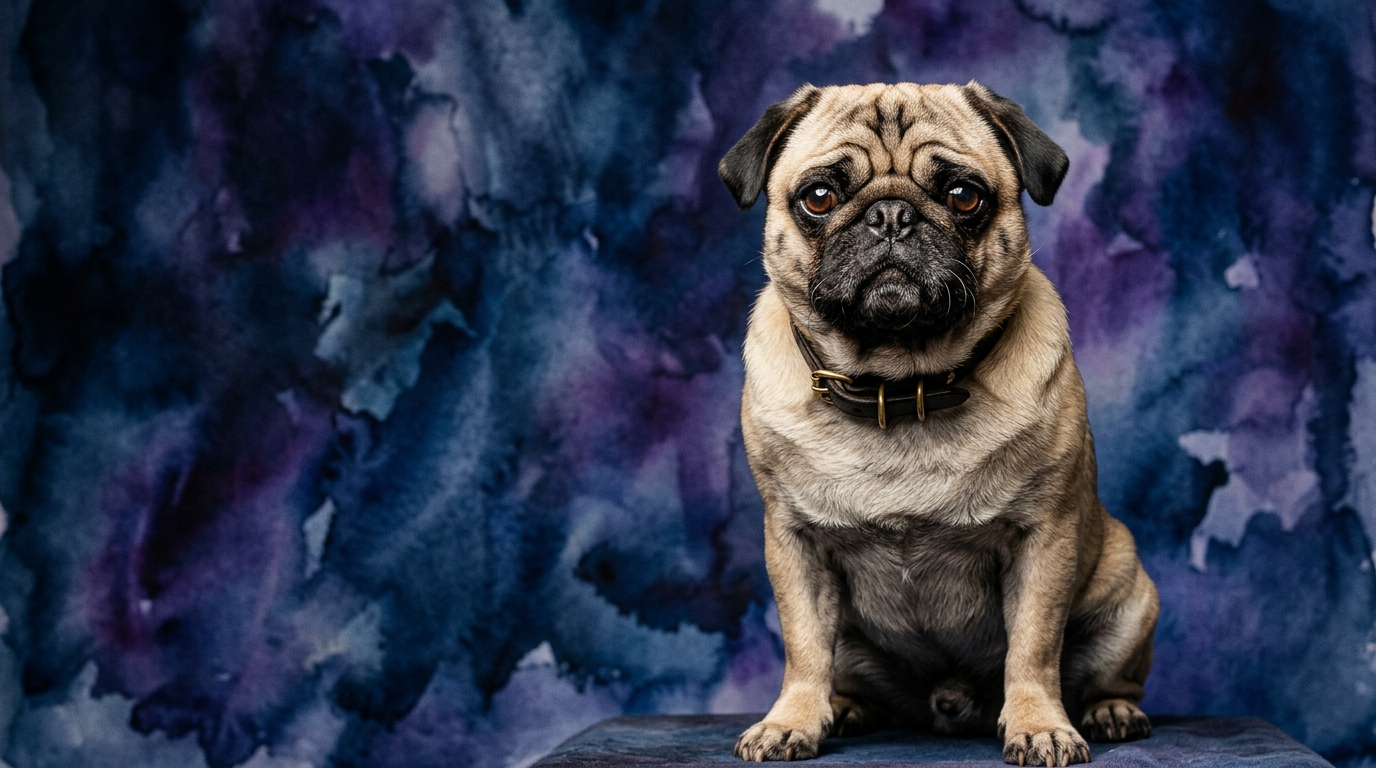
**Pug (Toy Group, Coren Rank #57):**
**Problem Solving (2/5):** Pugs typically approach novel situations with limited independent strategic thinking, often relying on established routines or human guidance rather than devising new solutions to obstacles. Their method is more about persistence or charm.
**Training Speed (2/5):** While capable, Pugs often require significant repetition and patience. Their motivation can fluctuate, and they are easily distracted, sometimes appearing to prioritize their own agenda over quick command execution.
**Social Intelligence (5/5):** This is the Pug's peak. They possess an exceptional ability to read and respond to human emotions and social cues, often anticipating needs or offering comfort without explicit prompts. Their strong desire for companionship drives their deep social attunement.
**Instinctive Drive (2/5):** Pugs generally exhibit low innate working drives. Their original purpose was companionship, reflected in minimal inclination for tasks like herding, tracking, or guarding, and low predatory instincts.
**Memory (3/5):** Pugs demonstrate an average capacity for retaining information. They can remember commands, routines, and people over time, especially with consistent reinforcement, sufficient for daily living and learned behaviors.
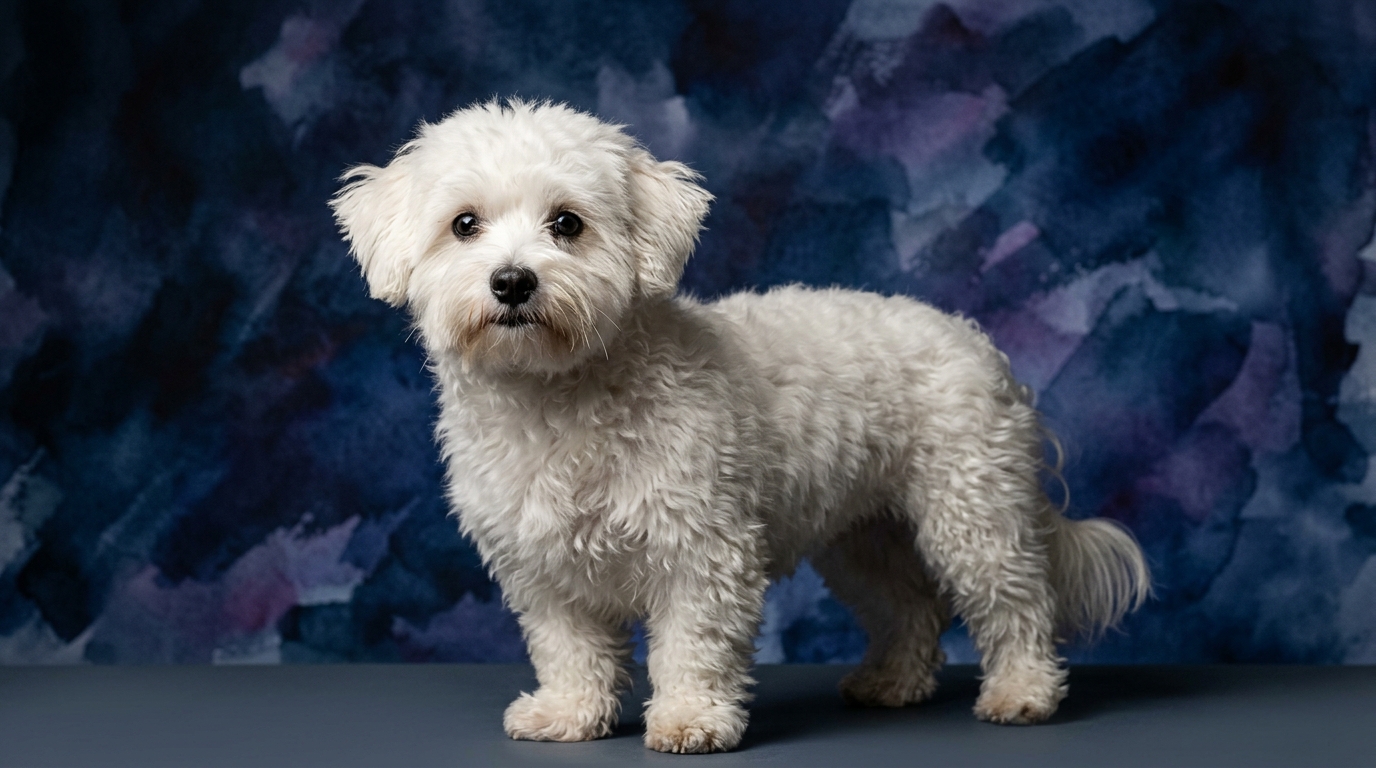
**Coton de Tuléar (Non-Sporting Group, Not Coren-Ranked):**
**Problem Solving (3/5):** Cotons show a moderate capacity for problem-solving. They are curious and often experiment with approaches to minor challenges, like retrieving a toy from under furniture, exhibiting a willingness to engage with their environment.
**Training Speed (3/5):** Cotons typically learn at a moderate pace, responding well to engaging, positive reinforcement methods. They grasp new commands within a reasonable number of repetitions, aided by a generally better attention span.
**Social Intelligence (3/5):** Cotons possess a solid level of social intelligence, connecting well with humans and reading basic emotional cues. While they enjoy companionship, their social attunement is not as singularly focused or deeply intuitive as a Pug's, showing a touch more independence.
**Instinctive Drive (3/5):** Cotons exhibit a moderate level of instinctive drive. Primarily companion dogs, they retain natural curiosity and a playful inclination, which can manifest as a moderate prey drive for toys or a desire to explore.
**Memory (3/5):** Cotons have an average memory capacity, effectively remembering learned behaviors, routines, and familiar faces. This supports their moderate training speed and allows them to adapt with reasonable ease.
Where the Pug Wins Cognitively
The Pug's cognitive strength is overwhelmingly centered around its social intelligence, scoring a perfect 5/5. This isn't merely about enjoying human company; it's a sophisticated ability to interpret subtle human cues, emotional states, and intentions. A Pug might anticipate a family member's sadness and offer comfort by gently nudging or resting its head, not because of training, but due to genuine perception of emotional distress. They excel at forming deep, empathetic bonds, often acting as intuitive emotional support within the home. This exceptional social attunement means they are acutely aware of their role, often adjusting behavior to maintain harmony or elicit desired interactions. They learn exactly which facial expressions or vocal tones signal an impending walk or a treat, demonstrating a finely tuned understanding of human communication beyond simple commands. Their social prowess allows them to navigate complex household dynamics with remarkable grace, often charming their way into favorable situations by simply 'being' rather than 'doing'.
Where the Coton de Tuléar Wins Cognitively
The Coton de Tuléar demonstrates superior cognitive performance in both problem-solving and training speed, each scoring 3/5 compared to the Pug's 2/5. This means a Coton is generally more inclined to independently assess and devise strategies for navigating minor environmental challenges. For example, if a favorite toy rolls under furniture, a Coton is more likely to experiment with pawing, nudging, or even using its nose to retrieve it, rather than immediately deferring to human intervention. This proactive engagement suggests a slightly higher degree of cognitive flexibility and initiative. In training, their quicker grasp of new commands stems from better focus and an adaptable learning style. They are often more receptive to varied techniques and can string together multiple commands with less repetition. Their mental agility allows them to process and internalize new information more efficiently, making them capable of learning a broader repertoire of behaviors and participating in activities like basic agility or trick training with greater enthusiasm and success.
Which Is Easier to Train and Why?
Based on their cognitive profiles, the Coton de Tuléar is generally easier to train than the Pug. The Coton's training speed of 3/5 and problem-solving ability of 3/5 indicate a dog more attentive and receptive to instruction. They are less prone to 'stubborn' or 'distracted' labels during sessions, engaging with the trainer and attempting to understand tasks. Their moderate instinctive drive allows motivation through play and exploration, offering diverse training tools. In contrast, the Pug's 2/5 training speed and problem-solving often demand significantly more patience and repetition. While Pugs aim to please, their attention spans can be shorter, and independent reasoning for tasks less developed. Training a Pug requires short, fun, highly rewarding sessions to maintain engagement, as they respond primarily to social gratification or food rather than intrinsic task satisfaction.
Which Suits Active Owners vs. Relaxed Owners?
The cognitive makeup of these breeds aligns them with different owner lifestyles. The Coton de Tuléar, with its moderate problem-solving, training speed, and instinctive drive, is better suited for owners who enjoy moderate, active engagement. These dogs appreciate mental stimulation through training games, puzzle toys, and exploring new environments. They thrive with opportunities to learn new tricks or participate in light dog sports, tapping into their natural curiosity and adaptability. An owner who enjoys consistent, interactive training and provides varied daily activities will find the Coton a rewarding companion. Conversely, the Pug, with its unparalleled social intelligence and lower scores in problem-solving and instinctive drive, is an ideal match for more relaxed owners. Their primary cognitive need is deep social connection and companionship. Pugs are content with shorter, leisurely walks and extensive cuddling. They excel in environments where their human family is frequently present and available for interaction, as their cognitive strength lies in bonding and providing emotional warmth. Owners who value a constant, intuitive companion, rather than a partner for complex tasks or strenuous activities, will find the Pug's cognitive profile perfectly aligned.
The Verdict
Choose a Pug if your priority is an exceptionally socially attuned companion who offers intuitive emotional support and thrives on deep, affectionate bonds, even if it means slower training progress.
Choose a Coton de Tuléar if you desire a moderately trainable, curious dog capable of engaging in varied mental stimulation and enjoying a more active, interactive lifestyle.
🧠 Find Your Pet's IQ Score
Our Pet IQ Lab assessment covers 25+ tests across 5 cognitive dimensions — personalized to your breed.
Take the Full IQ Test →Frequently Asked Questions
Are Pugs difficult to train because of their intelligence?
Pugs aren't 'difficult' due to a lack of intelligence, but their cognitive profile shows lower training speed and problem-solving. This means they often require more repetition, shorter sessions, and highly motivating rewards compared to some other breeds, making training a test of human patience and consistency.
Do Coton de Tuléars need a lot of mental stimulation?
Coton de Tuléars benefit from moderate mental stimulation. Their moderate problem-solving and instinctive drive mean they enjoy learning new things, engaging with puzzle toys, and exploring. Providing these outlets helps prevent boredom and supports their cognitive well-being.
How does social intelligence differ between these two breeds?
The Pug excels with a 5/5 in social intelligence, meaning they are incredibly attuned to human emotions and social cues, forming exceptionally deep, empathetic bonds. The Coton de Tuléar has a solid 3/5, offering good companionship and connection but without the same level of intuitive emotional responsiveness seen in the Pug.