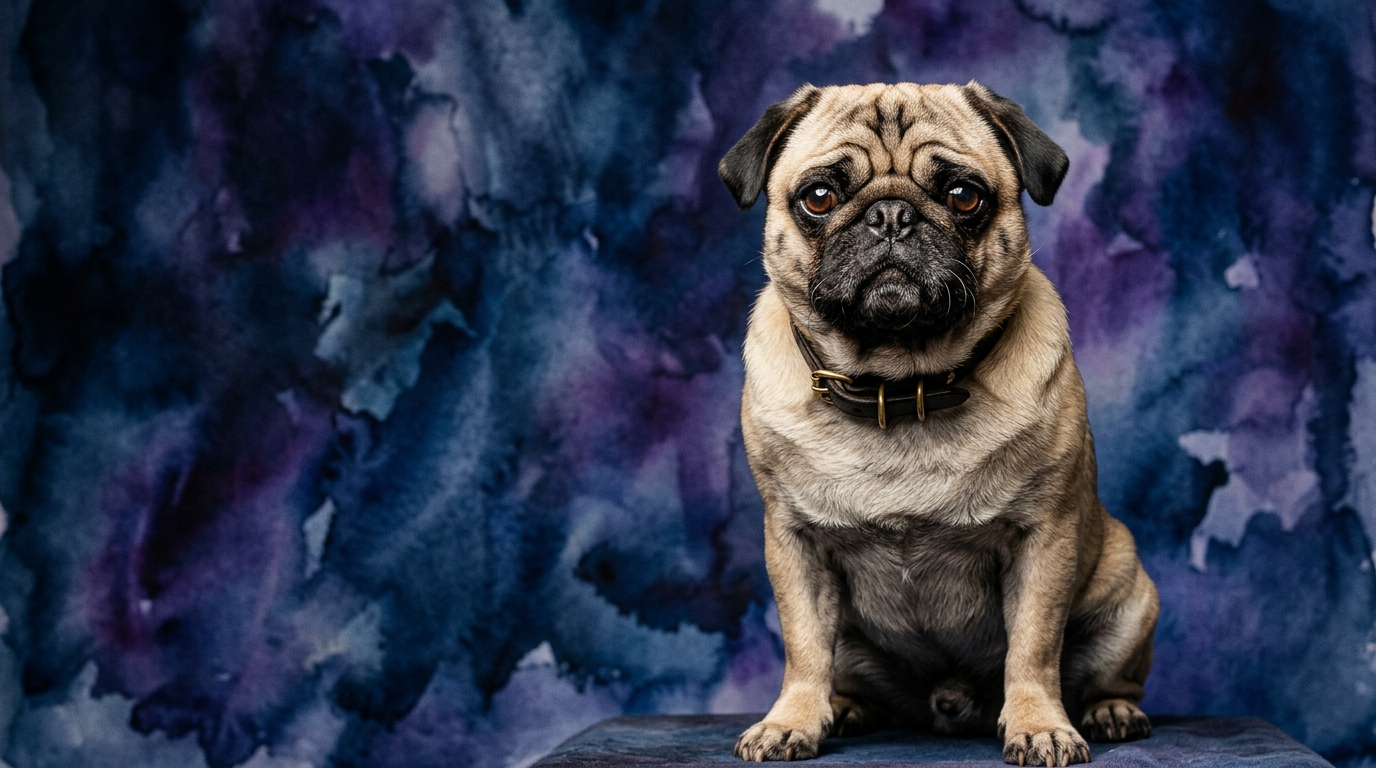
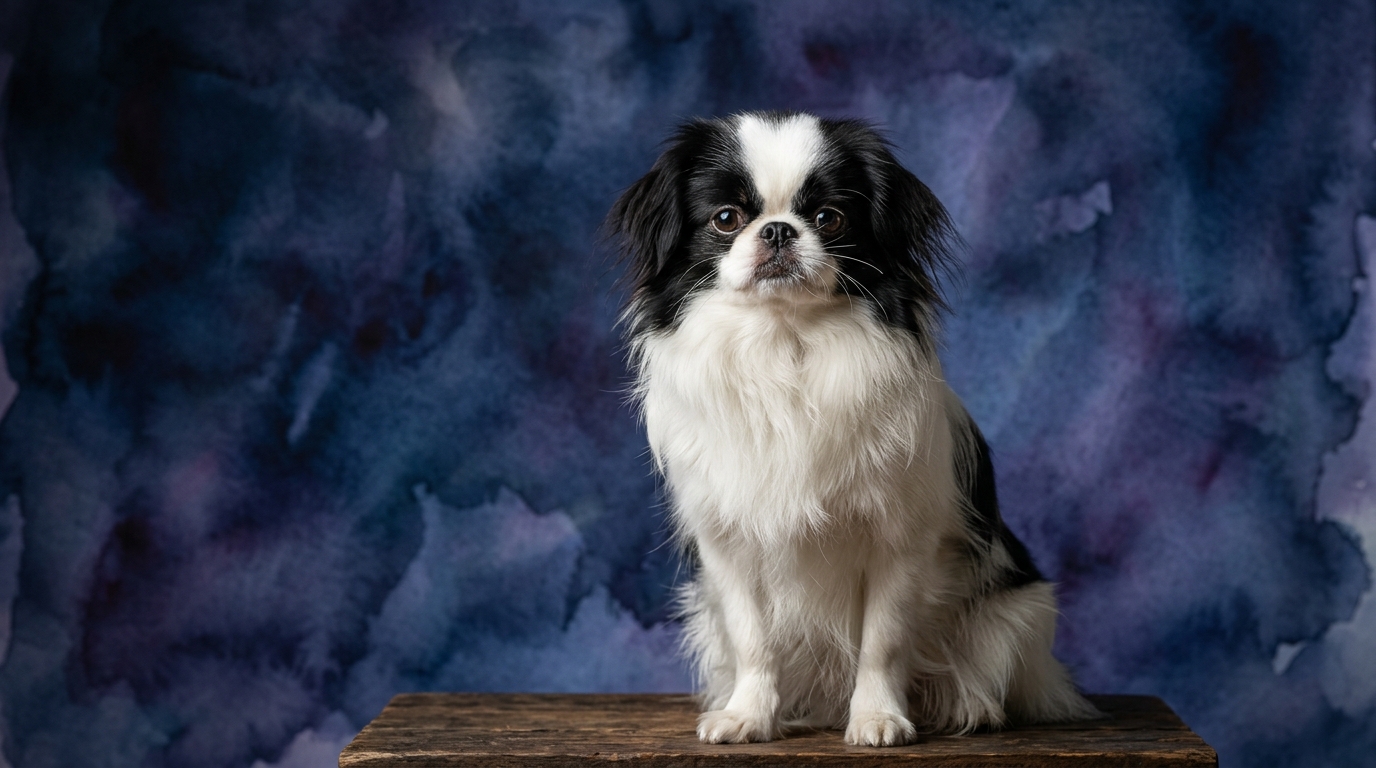
Side-by-Side IQ Profile: Pug vs. Japanese Chin
The Cosmic Pet Pet IQ Lab employs five distinct dimensions to evaluate canine intelligence, offering a granular view beyond simplistic labels. For the Pug, we observe a problem-solving aptitude of 2/5, indicating they typically approach novel challenges with less independent strategy and often look to their human for solutions. Their training speed, also rated at 2/5, suggests that while they are certainly capable of learning, the process generally requires more repetition and patience, with new commands solidifying over a longer period. However, the Pug truly shines in social intelligence, earning a perfect 5/5; this reflects an exceptional ability to read and respond to human emotions and social cues, fostering profound bonds. Instincive drive is low at 2/5, meaning Pugs generally lack a strong inherent desire for tasks like hunting, herding, or guarding, preferring companionship. Finally, their memory stands at 3/5, an average capacity for recalling routines and learned commands within familiar contexts.
In contrast, the Japanese Chin presents a more balanced cognitive landscape. Their problem-solving score of 3/5 suggests a greater inclination to independently explore solutions to environmental puzzles, demonstrating a moderate level of ingenuity when faced with minor obstacles. Correspondingly, their training speed is also rated 3/5, indicating they tend to grasp new commands and routines at an average pace, responsive to consistent positive reinforcement. While their social intelligence at 3/5 is certainly robust, allowing them to form strong affectionate bonds, it might not possess the same intuitive depth of emotional attunement as the Pug. The Japanese Chin’s instinctive drive, also 3/5, points to a moderate curiosity and a greater willingness to engage with their surroundings and initiate playful interactions. Their memory, like the Pug's, is rated 3/5, ensuring they retain learned behaviors and established routines effectively over time.
Where the Pug Wins Cognitively
The Pug's unrivaled cognitive strength is undeniably its social intelligence, scoring a perfect 5/5 in our assessment. This breed possesses an extraordinary capacity for emotional attunement, often anticipating human moods and responding with remarkable precision. They don't just follow commands; they seem to intuitively grasp the underlying emotional context of a situation, offering comfort during distress or initiating play during moments of joy. This profound understanding of human social dynamics allows them to integrate into family life with exceptional fluidity, often acting as intuitive emotional anchors. Their ability to read subtle cues—a sigh, a change in posture, a shift in vocal tone—enables them to respond appropriately without explicit verbal instruction, simply by sensing the desire for closeness or the need for a comforting presence. This isn't about solving physical puzzles, but rather navigating the intricate, often unspoken, social puzzles of human interaction with unparalleled finesse, making them exceptionally empathetic and devoted companions. Their low instinctive drive further channels their focus almost entirely onto this human connection, solidifying their role as master social interpreters.
Where the Japanese Chin Wins Cognitively
The Japanese Chin demonstrates a distinct cognitive edge in areas requiring more independent thought and adaptability, particularly in problem-solving and a broader engagement with their environment. With a 3/5 in problem-solving, the Chin shows a greater propensity for figuring out moderately challenging situations independently, such as devising a way to retrieve a favorite toy from a tight spot or navigating a slightly altered household setup without immediate human guidance. This suggests a capacity for learning through active exploration and trial-and-error, rather than solely relying on direct instruction or human cues. Their 3/5 instinctive drive further supports this, indicating a moderate intrinsic curiosity and a willingness to investigate novel objects or situations. This cognitive drive contrasts with the Pug's lower score in this dimension; the Chin is more likely to initiate playful exploration or engage with its surroundings out of inherent interest. This makes them more prone to spontaneous, self-directed play and a broader curiosity about their immediate world, showcasing a cognitive independence that the Pug, while socially brilliant, might not prioritize.
Which is Easier to Train and Why
When evaluating ease of training, the Japanese Chin generally offers a more streamlined experience, largely attributable to its balanced cognitive attributes, especially its 3/5 scores in both training speed and problem-solving. A Chin is typically more receptive to learning new commands and establishing routines, demonstrating a moderate eagerness to cooperate and grasp concepts. Their slightly higher problem-solving ability allows them to more readily connect cause and effect, understanding that performing a desired action will lead to a positive outcome, such as a treat or praise. This cognitive link makes positive reinforcement highly effective, as they can quickly generalize learned behaviors. They approach training with a curious and somewhat independent mindset, which can translate into quicker acquisition of skills.
The Pug, in contrast, with its 2/5 in training speed, often demands significantly more patience and creative motivation from its human counterpart. While undeniably eager to please their beloved people—a direct result of their exceptional social intelligence—their capacity for rapidly acquiring complex new behaviors is not their primary cognitive strength. They might require more repetitions, clearer cues, and a more consistent approach over a longer duration for commands to become truly ingrained. Their lower instinctive drive also means they may not be as inherently motivated by task-oriented challenges or intricate training drills, often preferring the simple joy of companionship over rigorous learning sessions. Therefore, while both breeds are trainable and can become well-behaved companions, the Chin's cognitive makeup typically facilitates a quicker and more fluid training process, whereas training a Pug often becomes a more gradual journey built on deep affection, understanding, and consistent, gentle encouragement.
Suitability for Active vs. Relaxed Owners
The ideal match between these two breeds and an owner's lifestyle is largely dictated by their distinct cognitive profiles and associated behavioral tendencies. For the truly relaxed owner, one who values deep emotional connection and a low-key companion primarily interested in shared affection, the Pug stands out. Their low instinctive drive (2/5) means they have minimal inherent need for complex activities, extensive outdoor adventures, or demanding mental puzzles. The Pug's highest cognitive strength, its 5/5 social intelligence, perfectly aligns with a lifestyle centered on companionship, lap-sitting, and intuitive emotional support. They thrive on human presence, are content with short, leisurely strolls, and prefer indoor play that involves their human. Their cognitive focus is almost entirely directed towards understanding and engaging with their human family, making them superb companions for those seeking an emotionally attuned, low-maintenance canine presence.
Conversely, the Japanese Chin, with its moderate instinctive drive (3/5) and problem-solving (3/5) scores, is better suited for an owner who appreciates a bit more interactive engagement and a dog with a moderate independent streak. While still a toy breed, the Chin enjoys more varied activities, including short bursts of playful exploration, engaging with simple puzzle toys, or even learning fun tricks that require a bit of thought. They adapt well to a moderately active lifestyle that includes daily walks, opportunities for sniffing and exploring, and mental stimulation beyond just cuddling. Owners who enjoy gentle, engaging play sessions, short and rewarding training bursts, or who desire a dog that shows a bit more initiative in investigating its environment will find the Chin's cognitive makeup more rewarding. They offer a delightful balance, being affectionate and devoted without being solely reliant on human emotional input for their fulfillment, possessing a touch more self-directed curiosity.
The Verdict
Choose a Pug if your primary desire is an exceptionally empathetic, emotionally intuitive companion who thrives on deep human connection and requires minimal cognitive stimulation beyond social interaction.
Opt for a Japanese Chin if you seek a moderately independent, playful companion with a balanced cognitive profile, capable of engaging in varied activities and learning new things at a steady pace.
🧠 Find Your Pet's IQ Score
Our Pet IQ Lab assessment covers 25+ tests across 5 cognitive dimensions — personalized to your breed.
Take the Full IQ Test →Frequently Asked Questions
Are Pugs difficult to train because of their problem-solving score?
Pugs aren't "difficult" in the sense of being defiant, but their 2/5 problem-solving and training speed scores mean they require more patience and consistency. They learn best through positive reinforcement and making training a bonding experience, rather than a rapid skill acquisition process, often thriving on the social aspect of learning with their human.
Does the Japanese Chin's moderate instinctive drive mean it needs a lot of exercise?
While the Japanese Chin has a moderate instinctive drive (3/5), it's still a toy breed, meaning its exercise needs are modest, typically satisfied with daily walks and indoor play. This drive translates more into a willingness for playful engagement and curiosity about its surroundings, rather than a demand for strenuous physical activity or complex tasks.
How does social intelligence manifest differently in these two breeds?
The Pug's 5/5 social intelligence means it's profoundly attuned to human emotions, often anticipating needs for comfort or play with uncanny accuracy, acting as an intuitive emotional support. The Japanese Chin's 3/5 indicates a good social connection and enjoyment of interaction, but perhaps less intense emotional mirroring or intuitive depth compared to the Pug's exceptional empathetic focus.
Can a Pug learn tricks despite its lower training speed?
Absolutely, Pugs can and do learn tricks, though it may take more time and repetition due to their 2/5 training speed. Their high social intelligence means they are often motivated by pleasing their human, making positive reinforcement and patient, consistent practice very effective for teaching them a variety of fun behaviors.
Is the Japanese Chin's problem-solving ability comparable to working breeds?
No, while the Japanese Chin has a respectable 3/5 in problem-solving for a toy breed, it's not comparable to the specialized cognitive abilities seen in working breeds bred for complex tasks. Their problem-solving relates more to navigating household challenges and engaging with simple puzzles, rather than intricate multi-step tasks or independent decision-making in a "job" context.