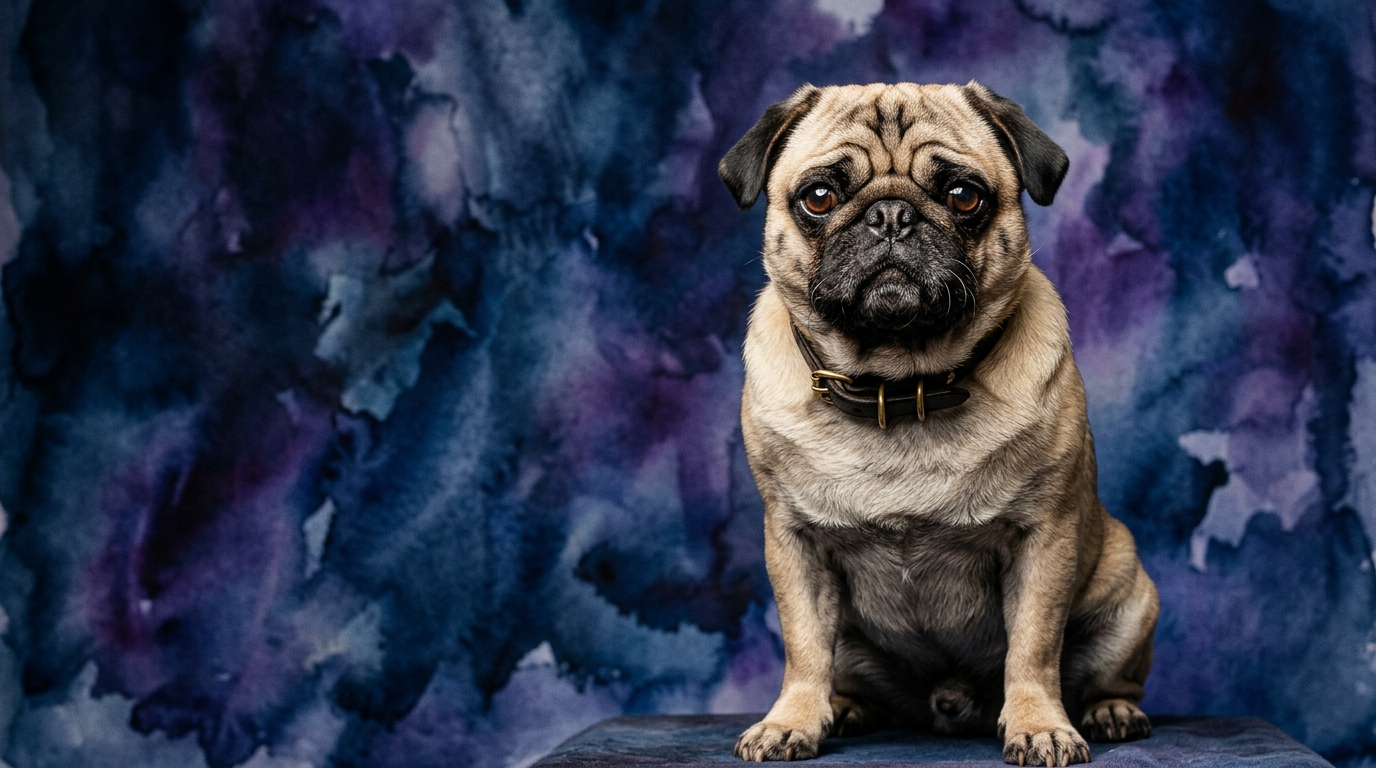
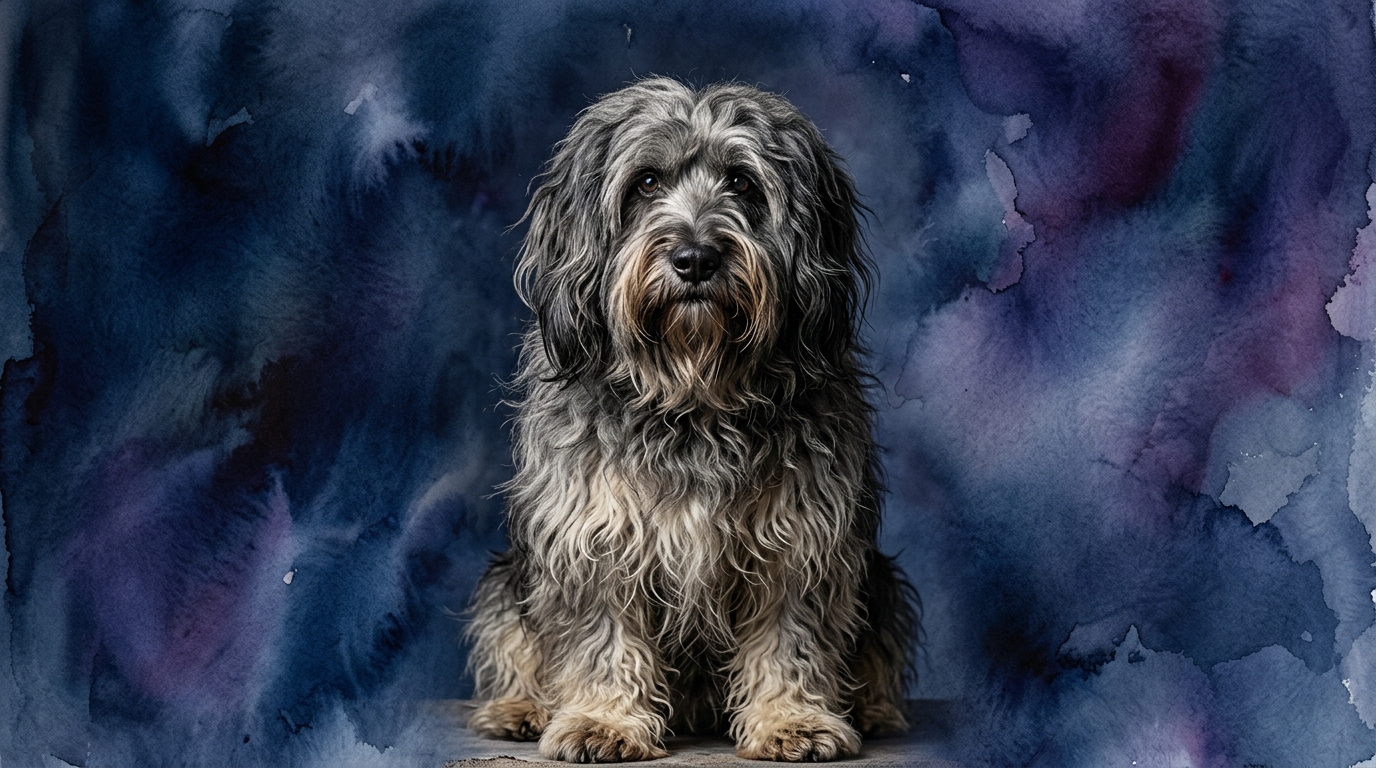
Side-by-Side IQ Profile: Pug vs. Polish Lowland Sheepdog
Our Cosmic Pet IQ Lab framework assesses five key dimensions of canine intelligence, offering a nuanced understanding beyond simple rankings. For the Pug, a breed often celebrated for its endearing personality and Coren rank #57, its cognitive strengths lie in areas very different from its working dog counterparts. The Polish Lowland Sheepdog, or PON, though not Coren-ranked, presents a profile typical of its herding lineage, valuing independent thought and task orientation.
The Pug’s Problem Solving is rated at 2/5, indicating it is not typically inclined to tackle complex environmental puzzles independently; rather, it often looks to its human companions for solutions. Its Training Speed, also at 2/5, suggests that while Pugs are capable of learning, they may require more repetition and patience, sometimes displaying a charming stubborn streak or being easily distracted. Where the Pug truly shines is in Social Intelligence, earning a perfect 5/5. This breed is exceptionally attuned to human emotions, subtle cues, and thrives on intimate companionship, often anticipating its owner’s needs and moods. Instinctive Drive for the Pug is 2/5, meaning it possesses minimal inherent drives for activities like herding, guarding, or hunting, aligning with its role as a devoted companion. Finally, its Memory stands at 3/5, an average score reflecting its ability to retain commands and routines with consistent reinforcement.
In contrast, the Polish Lowland Sheepdog exhibits a more balanced cognitive profile across the board, reflecting its heritage. Its Problem Solving ability is rated at 3/5, signifying a dog capable of moderate independent thought and figuring out how to navigate obstacles or achieve goals, often requiring mental engagement to prevent boredom. Training Speed for the PON is 3/5, indicating a breed that generally learns new commands and tasks at a moderate pace, responding well to consistent and engaging training methods. Social Intelligence for the Polish Lowland Sheepdog is 3/5; while deeply bonded with its family, it can be more reserved with strangers and possesses a keen awareness of its household dynamics without the Pug's overt emotional expressiveness. The Instinctive Drive of a PON is 3/5, reflecting its moderate herding tendencies—it may try to 'gather' family members—and a natural alertness that makes it an effective watchdog. Its Memory also scores a 3/5, suggesting a good capacity to recall learned information and build upon past experiences, which is crucial for a working breed.
Where the Pug Wins Cognitively
The Pug’s undeniable cognitive strength lies in its exceptional Social Intelligence, scoring a rare 5/5. This isn't just about being friendly; it's about an acute ability to perceive, interpret, and respond to human emotions and social dynamics. A Pug can sense a shift in your mood, offer comforting presence without explicit prompting, and adapt its behavior to fit the household's emotional climate. This profound attunement makes Pugs unparalleled emotional support companions, often forming incredibly deep, intuitive bonds with their owners. They excel at integrating seamlessly into human family structures, not by performing complex tasks, but by being master communicators of affection and companionship through subtle cues and unwavering devotion. This high social IQ means a Pug is often perfectly content to simply be near you, understanding the unspoken language of shared space and quiet presence, a quality that fosters immense comfort and connection.
Where the Polish Lowland Sheepdog Wins Cognitively
The Polish Lowland Sheepdog demonstrates its cognitive advantages across several dimensions, particularly in Problem Solving (3/5), Training Speed (3/5), and Instinctive Drive (3/5). Unlike the Pug, the PON possesses a greater inherent capacity for independent thought and action, a necessity for a breed historically tasked with managing livestock. This means a PON is more likely to assess a situation and devise its own solution, whether it's figuring out how to open a gate or retrieve a hidden toy. Its moderate training speed allows it to pick up new commands and more complex sequences with reasonable efficiency, making it a capable student in obedience or dog sports. The PON's instinctive drive, while not as intense as some herding breeds, provides a foundational motivation for activity and purpose. This manifests as a natural inclination to 'work,' whether it's herding family members, patrolling the yard, or engaging in mentally stimulating games. These combined attributes suggest a dog that thrives on engagement, challenge, and the opportunity to use its mind and body in purposeful ways, making it a more versatile candidate for various canine activities beyond pure companionship.
Which Is Easier to Train and Why?
When it comes to ease of training, the Polish Lowland Sheepdog generally presents a smoother path for owners due to its 3/5 Training Speed compared to the Pug's 2/5. The PON’s moderate instinctive drive and problem-solving abilities mean it often possesses a greater intrinsic motivation to learn and engage in tasks. They tend to grasp new concepts more readily and are often eager to please, especially when training taps into their natural herding intelligence, making them responsive to consistent, positive reinforcement. Their ability to retain information and build on past experiences also contributes to more efficient learning progression.
The Pug, with its 2/5 Training Speed, requires a different approach. While not untrainable, Pugs can be prone to stubbornness or distraction, and their primary motivation is often human companionship rather than task completion. Training a Pug often necessitates more patience, shorter sessions, and a heavy reliance on positive reinforcement, particularly food rewards or enthusiastic praise that leverages their high social intelligence. Their lower instinctive drive means they aren't inherently driven to perform complex obedience routines, but their desire to be close to their human can be a powerful motivator when channeled correctly. Owners might find that while a PON learns a new trick in fewer repetitions, a Pug might require more creative and persistent methods, but will ultimately learn if the training is consistent and enjoyable.
Which Suits Active Owners vs. Relaxed Owners?
The choice between a Pug and a Polish Lowland Sheepdog largely depends on an owner's lifestyle and their capacity for providing mental and physical engagement. For relaxed owners seeking a devoted, low-key companion, the Pug is often the ideal match. Its low instinctive drive and moderate problem-solving needs mean it is perfectly content with short, leisurely walks and ample cuddle time on the sofa. Pugs thrive in environments where their primary role is to be a beloved family member, offering emotional support and companionship without demanding extensive physical or mental exertion. Their high social intelligence ensures they are happy simply being near their people, making them excellent companions for those with a less active lifestyle or smaller living spaces. They require minimal structured activity beyond basic house training and socialization, making them wonderfully adaptable to a more sedentary routine.
Conversely, the Polish Lowland Sheepdog is better suited for active owners who can meet its higher demands for physical activity and mental stimulation. With its 3/5 ratings in problem-solving, training speed, and instinctive drive, a PON needs a 'job' to do, even if it's participating in dog sports like agility, obedience, or herding trials, or simply engaging in challenging puzzle toys and structured training sessions. Their moderate herding instincts mean they appreciate having a purpose and can become bored or restless without sufficient outlets for their energy and intellect. Owners who enjoy long walks, hikes, or consistent training will find the PON to be an enthusiastic and capable partner. This breed flourishes when given opportunities to think, learn, and expend energy, making it a rewarding choice for individuals or families committed to an engaged, active lifestyle.
The Verdict
Choose the Pug if you prioritize unparalleled emotional connection and a low-maintenance companion happy with a relaxed pace of life.
Opt for the Polish Lowland Sheepdog if you seek an intelligent, engaging partner for an active lifestyle, ready for mental challenges and consistent training.
🧠 Find Your Pet's IQ Score
Our Pet IQ Lab assessment covers 25+ tests across 5 cognitive dimensions — personalized to your breed.
Take the Full IQ Test →Frequently Asked Questions
Do Pugs enjoy learning new tricks?
Yes, Pugs can certainly enjoy learning new tricks, especially when training is made fun and incorporates positive reinforcement like treats and praise. While their training speed is 2/5, their high social intelligence means they appreciate the attention and interaction that comes with learning, even if it takes more repetition.
What kind of mental stimulation does a Polish Lowland Sheepdog need?
A Polish Lowland Sheepdog thrives on mental stimulation that challenges its 3/5 problem-solving abilities and instinctive drive. This can include puzzle toys, advanced obedience training, dog sports like agility or rally, and even engaging in 'jobs' around the house, like helping to gather laundry or find hidden items.
How does social intelligence differ between these two breeds?
The Pug has a 5/5 social intelligence, demonstrating an exceptional ability to read and respond to human emotions and social cues, often forming deep, intuitive bonds. The Polish Lowland Sheepdog, at 3/5, is devoted to its family and aware of household dynamics but is generally more reserved with strangers and expresses its social connection in a less overtly emotional manner than a Pug.