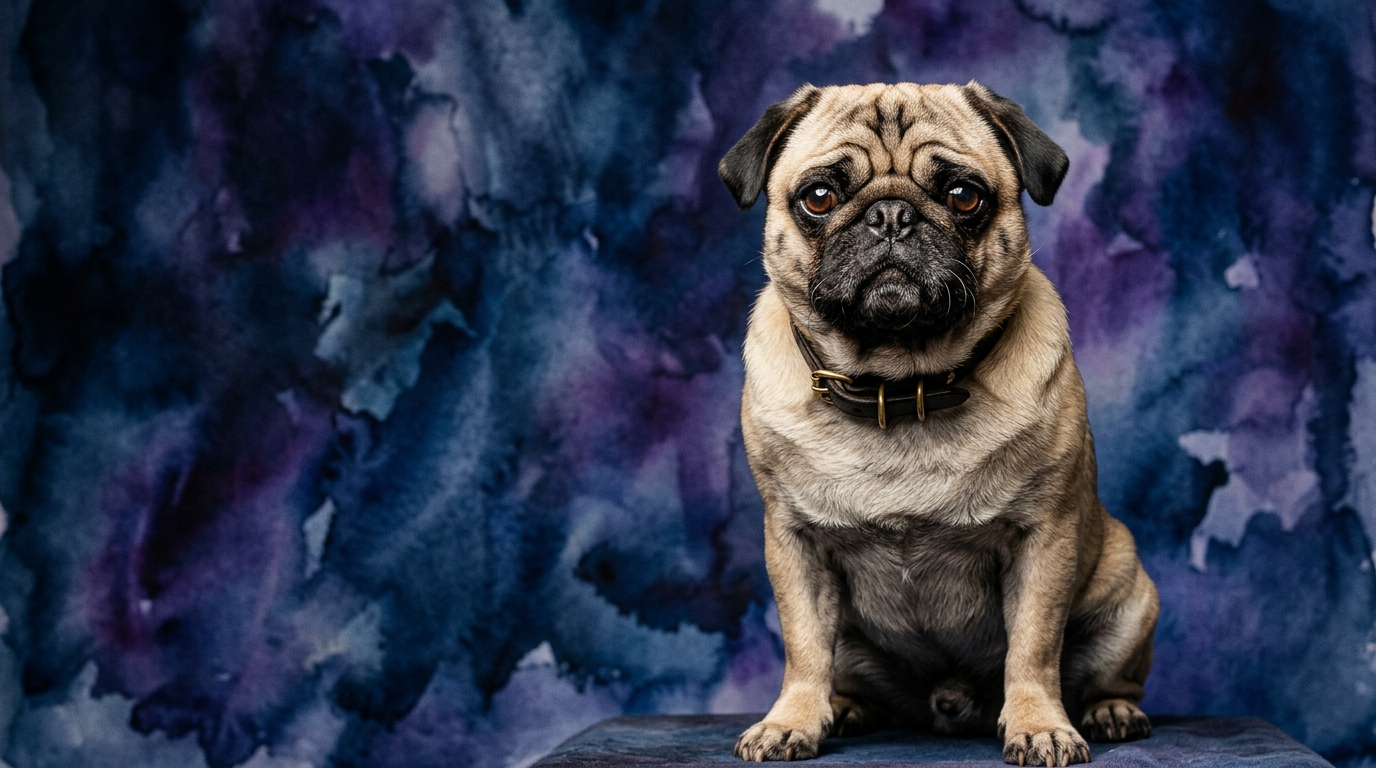
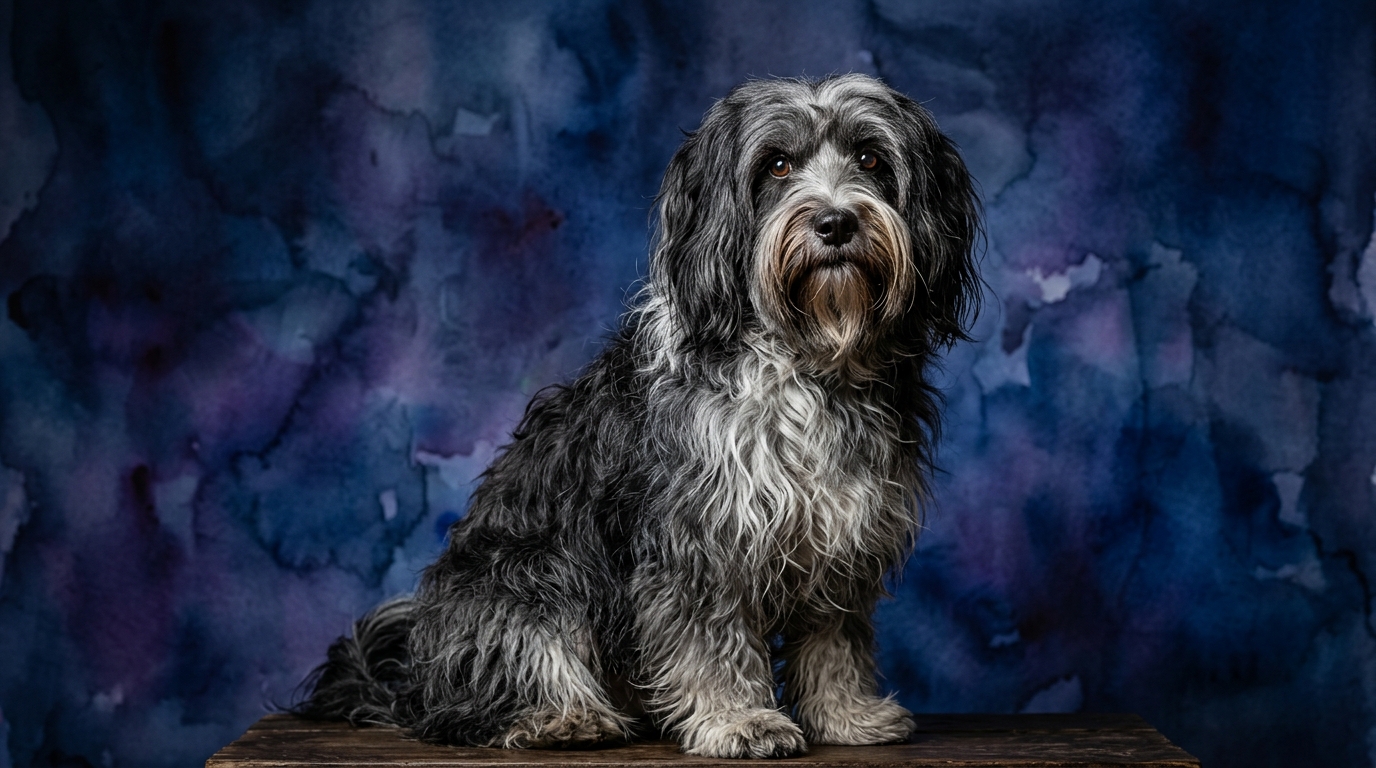
Side-by-Side Cognitive Profiles: Pug vs. Tibetan Terrier
The Pug, classified in the Toy group with a Coren rank of #57, exhibits a cognitive profile deeply rooted in companionship and emotional attunement. Their Problem Solving is rated 2/5, indicating a preference for straightforward approaches rather than complex independent strategizing. Training Speed is also 2/5, meaning they require consistent, patient, and highly rewarding methods to grasp new commands effectively. However, their Social Intelligence soars at a perfect 5/5, showcasing an exceptional capacity for reading human emotions and forming profound bonds. Their Instinctive Drive is low at 2/5, reflecting a contentedness with a more relaxed lifestyle, while their Memory stands at a moderate 3/5, allowing for retention of routines and familiar experiences.
In contrast, the Tibetan Terrier, from the Non-Sporting group and ranked #63 by Coren, presents a more balanced and versatile cognitive makeup. Their Problem Solving is rated 3/5, suggesting a thoughtful curiosity and resourcefulness when faced with novel challenges. Training Speed is also 3/5, indicating they are generally responsive and capable of learning a variety of commands with engaging instruction. Their Social Intelligence is a solid 3/5, demonstrating strong family bonds while maintaining a degree of independence. A moderate Instinctive Drive of 3/5 means they possess an inherent desire for purposeful activity and exploration. Finally, their Memory aligns with the Pug's at 3/5, enabling them to recall learned behaviors and adapt to different contexts.
Where the Pug's Cognition Excels
The Pug's exceptional social intelligence, rated a perfect 5/5, is their undeniable cognitive superpower, setting them apart in the canine world. This isn't just about being friendly; it's a deep-seated ability to interpret human emotions, body language, and vocal inflections with remarkable accuracy. A Pug often seems to instinctively know when their human is sad, offering a comforting presence without being prompted, or can gauge the mood of a room with uncanny precision. This profound empathy allows them to integrate seamlessly into family life, becoming more than just a pet but an emotional anchor. Their cognitive strength lies in understanding the complex nuances of human-canine social structures, using their charm and expressive faces to communicate their needs and desires effectively. While they may not be solving complex puzzles, their mastery of social dynamics makes them unparalleled companions for those seeking a deeply connected canine friend. They excel at mirroring human emotional states and providing unconditional, intuitive support, a cognitive feat often overlooked in traditional intelligence metrics.
Where the Tibetan Terrier's Cognition Shines
The Tibetan Terrier, with its balanced cognitive profile, particularly excels in areas requiring a blend of problem-solving, moderate training speed, and instinctive drive. Their 3/5 rating in problem-solving means they are more inclined to independently assess and navigate novel situations, often employing a thoughtful, methodical approach. This manifests in their ability to figure out how to access a toy under the couch or strategically maneuver around obstacles in their path. Unlike the Pug, who might rely on their human for intervention, the Tibetan Terrier often enjoys the mental exercise of cracking a puzzle on their own. Their moderate instinctive drive (3/5) further enhances this, providing a natural curiosity and desire to engage with their environment beyond mere observation. This drive encourages exploration and interaction, making them more proactive learners and participants in their surroundings. Combined with their 3/5 training speed, they are capable of learning a wider array of complex commands and tricks, often retaining them more readily due to their inherent engagement with the learning process. Their cognitive strengths lie in their adaptability, resourcefulness, and a balanced drive to interact intelligently with the world around them.
Training Dynamics: Pug vs. Tibetan Terrier
When it comes to training, the Pug (Training Speed 2/5) generally presents a different set of considerations compared to the Tibetan Terrier (Training Speed 3/5). Pugs, while possessing a strong desire for human affection and approval due to their high social intelligence, can be slower to grasp new commands. Their independent, sometimes stubborn, streak combined with a tendency towards being easily distracted means training sessions need to be short, highly engaging, and heavily reliant on positive reinforcement, particularly food rewards. They might require more repetitions to solidify a command, and consistency is paramount to prevent them from "forgetting" previously learned behaviors. For instance, house-training a Pug often demands extra patience and meticulous scheduling due to their lower instinctive drive to 'hold it' or signal their needs.
In contrast, the Tibetan Terrier’s moderate training speed and problem-solving abilities make them generally more responsive and quicker to pick up new skills. They enjoy the mental stimulation of learning and are often more eager to participate in structured training sessions. Their moderate instinctive drive also means they are less likely to be completely oblivious to their environment, allowing for more focused learning. While they can still have an independent streak, their engagement makes them more adaptable students, capable of progressing to more complex tasks like agility or advanced obedience with relative ease.
Ideal Lifestyle Fit: Active vs. Relaxed Owners
Considering their distinct cognitive profiles, the Pug and the Tibetan Terrier naturally gravitate towards different owner lifestyles. The Pug, with its low instinctive drive (2/5) and unparalleled social intelligence (5/5), is an ideal match for relaxed owners who prioritize companionship and indoor comfort over strenuous outdoor activities. Their moderate memory (3/5) means they thrive on consistent routines and familiar environments, appreciating a predictable schedule that involves plenty of cuddle time and gentle strolls. They are content to be a constant, comforting presence, requiring minimal physical exertion but immense emotional engagement. Owners who enjoy quiet evenings, short walks, and a dog whose primary goal is to be near them will find a Pug to be a perfect fit.
Conversely, the Tibetan Terrier, boasting moderate scores across problem-solving, training speed, and instinctive drive (all 3/5), is better suited for more active owners. These dogs thrive on mental stimulation and physical engagement, enjoying activities that challenge their intellect and utilize their natural curiosity. Owners who are keen on regular walks, engaging in interactive games, or even exploring dog sports like agility or obedience will find the Tibetan Terrier to be an enthusiastic partner. Their adaptability and resourcefulness mean they can handle varied environments and enjoy new experiences, making them excellent companions for those who lead a dynamic, engaging lifestyle.
The Verdict
Choose a Pug if your primary desire is an emotionally intuitive, deeply affectionate companion who excels at social bonding and thrives in a relaxed, comfort-oriented home environment.
Opt for a Tibetan Terrier if you seek a resourceful, adaptable partner for moderate activities and enjoy engaging in mental challenges and consistent training, appreciating their thoughtful independence.
🧠 Find Your Pet's IQ Score
Our Pet IQ Lab assessment covers 25+ tests across 5 cognitive dimensions — personalized to your breed.
Take the Full IQ Test →Frequently Asked Questions
Do Pugs enjoy learning tricks?
Pugs can learn tricks, but their 2/5 training speed means it requires patience, short sessions, and high-value rewards. They are motivated more by pleasing their human and getting treats than by the challenge itself.
Are Tibetan Terriers good for first-time dog owners?
Tibetan Terriers can be suitable for first-time owners who are committed to consistent training and mental stimulation. Their moderate intelligence makes them trainable, but their independent streak requires a firm yet gentle hand.
How do their social needs differ?
Pugs have exceptionally high social needs (5/5), thriving on constant human interaction and connection, often becoming "velcro" dogs. Tibetan Terriers have moderate social needs (3/5), enjoying family time but also appreciating their own space and independence.