Side-by-Side IQ Profile: Pug vs. Toy Poodle
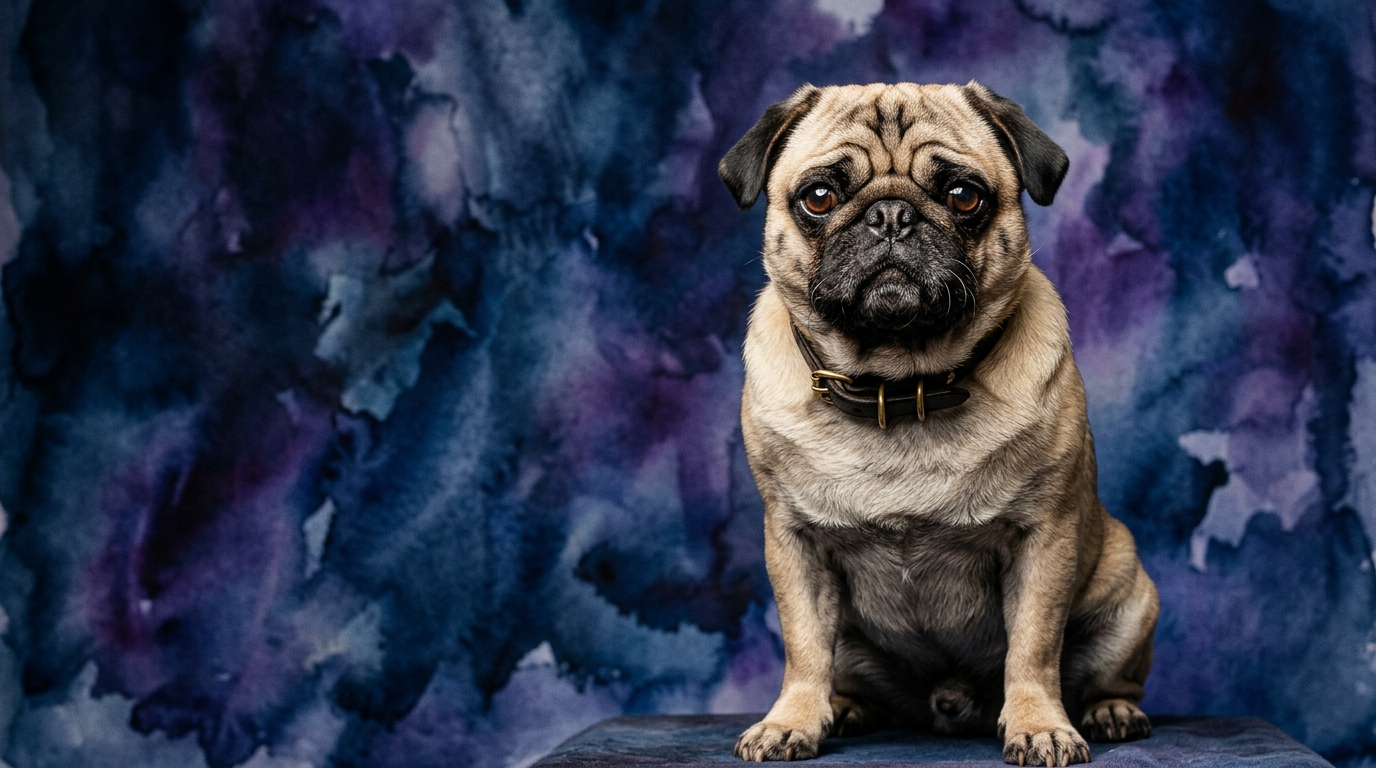
When we evaluate canine cognition, we look beyond simple obedience to understand the intricate workings of a breed's mind. For the Pug, ranked #57 by Coren, its cognitive profile paints a picture of a devoted companion. Their problem-solving ability scores a 2/5, indicating they may find complex, novel tasks challenging and prefer predictable routines. Training speed also sits at 2/5, suggesting a need for patience and consistent repetition to master new commands. Where the Pug truly shines is in social intelligence, earning a perfect 5/5; they are profoundly attuned to human emotions and social cues, making them exceptional emotional support animals. Instinctive drive is low at 2/5, reflecting their role primarily as companions rather than working dogs. Their memory is moderate at 3/5, capable of recalling learned behaviors and familiar faces but perhaps requiring occasional refreshers.
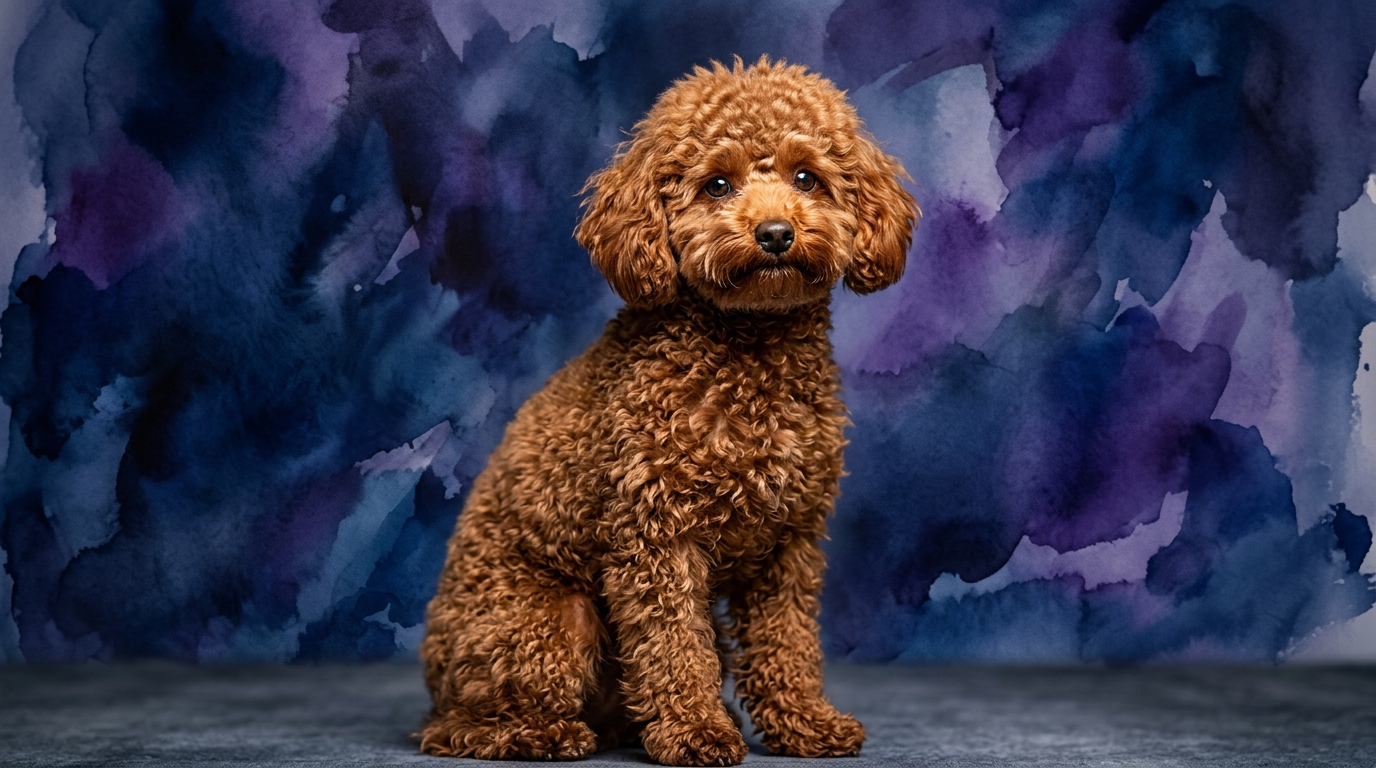
The Toy Poodle, a breed revered for its mental agility, holds a Coren rank of #2, reflecting a starkly different cognitive blueprint. Their problem-solving ability is a remarkable 5/5, demonstrating a keen capacity to navigate new challenges and devise solutions independently. Training speed matches this at 5/5, meaning they grasp new concepts with astonishing rapidity and often enjoy the learning process itself. Social intelligence, while present, is a moderate 3/5; they connect with their humans but might not possess the same depth of emotional attunement as the Pug. Instinctive drive is rated 3/5, reflecting their historical use as water retrievers and a moderate inclination for activity. Their memory is exceptional at 5/5, allowing them to retain vast amounts of information and learned behaviors over long periods.
Where the Pug Wins Cognitively
The Pug's undisputed cognitive strength lies in its profound social intelligence. Scoring a perfect 5/5, they are masters of understanding and responding to human emotional states. This isn't merely about recognizing a command; it’s about sensing a shift in mood, offering comfort when their human is distressed, or mirroring joy during happy moments. A Pug’s mind is wired for connection, making them extraordinarily empathetic companions.
They excel at integrating seamlessly into family life, not just as pets, but as active participants in the emotional rhythm of the household. Their cognitive processing prioritizes relational cues, making them adept at forming deep, intuitive bonds that transcend simple owner-pet dynamics. This capacity for emotional resonance means they often anticipate needs for affection or proximity without explicit prompting, a truly specialized form of intelligence.
Where the Toy Poodle Wins Cognitively
Conversely, the Toy Poodle's cognitive prowess is centered around its extraordinary capacity for information processing, learning, and application. With a 5/5 in problem-solving, 5/5 in training speed, and 5/5 in memory, their minds are built for intellectual engagement. They demonstrate an impressive ability to analyze novel situations, strategize solutions, and execute complex sequences of actions.
This breed doesn't just learn commands; they often understand the underlying concept, allowing for rapid generalization of skills to new contexts. Their memory ensures that once a task is learned, it is retained with remarkable fidelity, enabling them to build an extensive repertoire of behaviors and tricks. This makes them outstanding candidates for intricate obedience routines, agility courses, and even service dog work, where precise execution and adaptability are paramount. Their intellect is not just about raw processing power but also an eagerness to apply it, consistently seeking mental stimulation.
Which is Easier to Train and Why
When it comes to training ease, the Toy Poodle presents a significantly more straightforward experience for most owners. Their high training speed and exceptional memory mean they pick up new commands and routines with remarkable efficiency, often requiring only a few repetitions to solidify a behavior. They are typically eager to please and find the mental engagement of training to be inherently rewarding, which further accelerates the learning process. Their problem-solving skills also mean they can often figure out what is expected of them even with subtle cues.
The Pug, while endearing, offers a different training journey. Their 2/5 training speed and problem-solving can translate into a need for immense patience and consistent, positive reinforcement. Pugs are easily distracted and can exhibit a charming stubbornness, often preferring to do things on their own terms or for a highly motivating reward. While they are socially intelligent, their cognitive focus is less on mastering complex tasks and more on maintaining companionship. Training a Pug often involves breaking down commands into much smaller, manageable steps and celebrating every tiny success, leveraging their desire for social interaction and praise rather than their drive for task mastery. Real behavioral differences include the Toy Poodle's innate drive to perform and solve, versus the Pug's preference for comfort and connection, making the former a more naturally compliant and responsive student.
Which Suits Active Owners vs. Relaxed Owners
The cognitive profiles of these two breeds naturally align with different owner lifestyles. The Toy Poodle, with its high problem-solving ability, rapid training speed, and excellent memory, thrives with active owners who can provide consistent mental and physical stimulation. These dogs require more than just a walk; they need engaging activities like puzzle toys, advanced obedience training, agility, or even canine sports to keep their sharp minds occupied. An owner who enjoys teaching new skills and participating in interactive play will find the Toy Poodle an enthusiastic and capable partner. Without sufficient mental engagement, a Toy Poodle's intellect can lead to boredom-related behaviors or mischief.
Conversely, the Pug's profound social intelligence and lower instinctive drive make them an ideal match for more relaxed owners. While they enjoy short, leisurely strolls, their primary need is for companionship and close proximity to their people. Their cognitive strength lies in their ability to be present and emotionally supportive, making them content with extensive cuddle sessions on the sofa or simply being near their human throughout the day. Owners who prioritize a warm, affectionate, and relatively low-energy companion will find the Pug's disposition perfectly suited to their lifestyle, as their mental needs are largely met through social interaction rather than complex tasks.
The Verdict
Choose a Pug if your primary desire is an emotionally intuitive companion who thrives on close social connection and a relaxed pace of life, valuing cuddles over complex commands.
Opt for a Toy Poodle if you seek an agile-minded partner eager for mental challenges, capable of learning extensive repertoires, and ready to engage in dynamic activities.
🧠 Find Your Pet's IQ Score
Our Pet IQ Lab assessment covers 25+ tests across 5 cognitive dimensions — personalized to your breed.
Take the Full IQ Test →Frequently Asked Questions
Do Pugs learn tricks easily?
Pugs can certainly learn tricks, but their training speed (2/5) means it requires consistent repetition and high-value rewards. They often respond best to tricks that involve social interaction and praise rather than complex, multi-step problem-solving.
Are Toy Poodles good for first-time dog owners?
Toy Poodles can be excellent for first-time owners who are prepared for their significant mental and physical exercise needs. Their exceptional trainability (5/5) makes them responsive, but their sharp minds require consistent engagement to prevent boredom and potential behavioral issues.
Which breed is more adaptable to apartment living?
Both breeds can adapt well to apartment living, but for different reasons. Pugs are content with less space and lower physical activity, while Toy Poodles, despite their size, need regular mental stimulation and physical outlets, which can be managed with dedicated indoor play and walks.