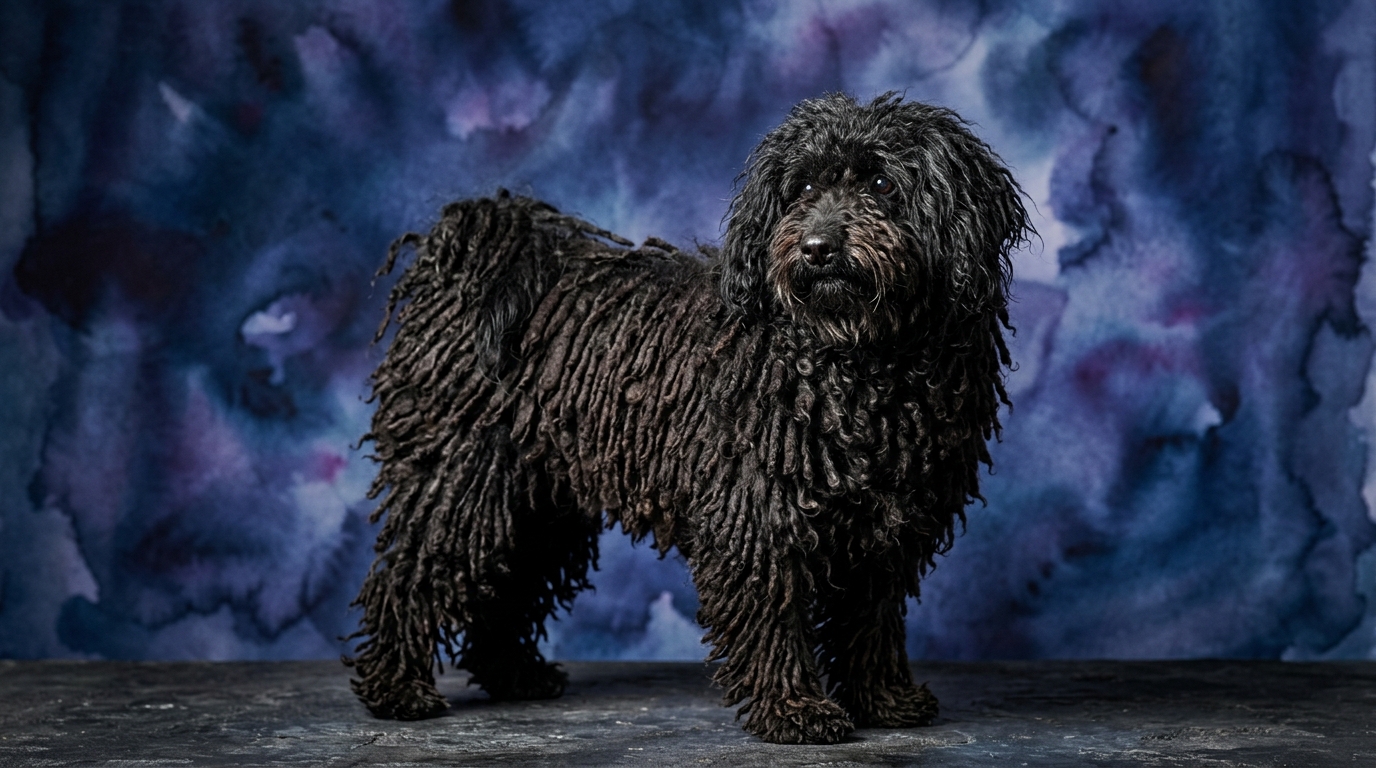
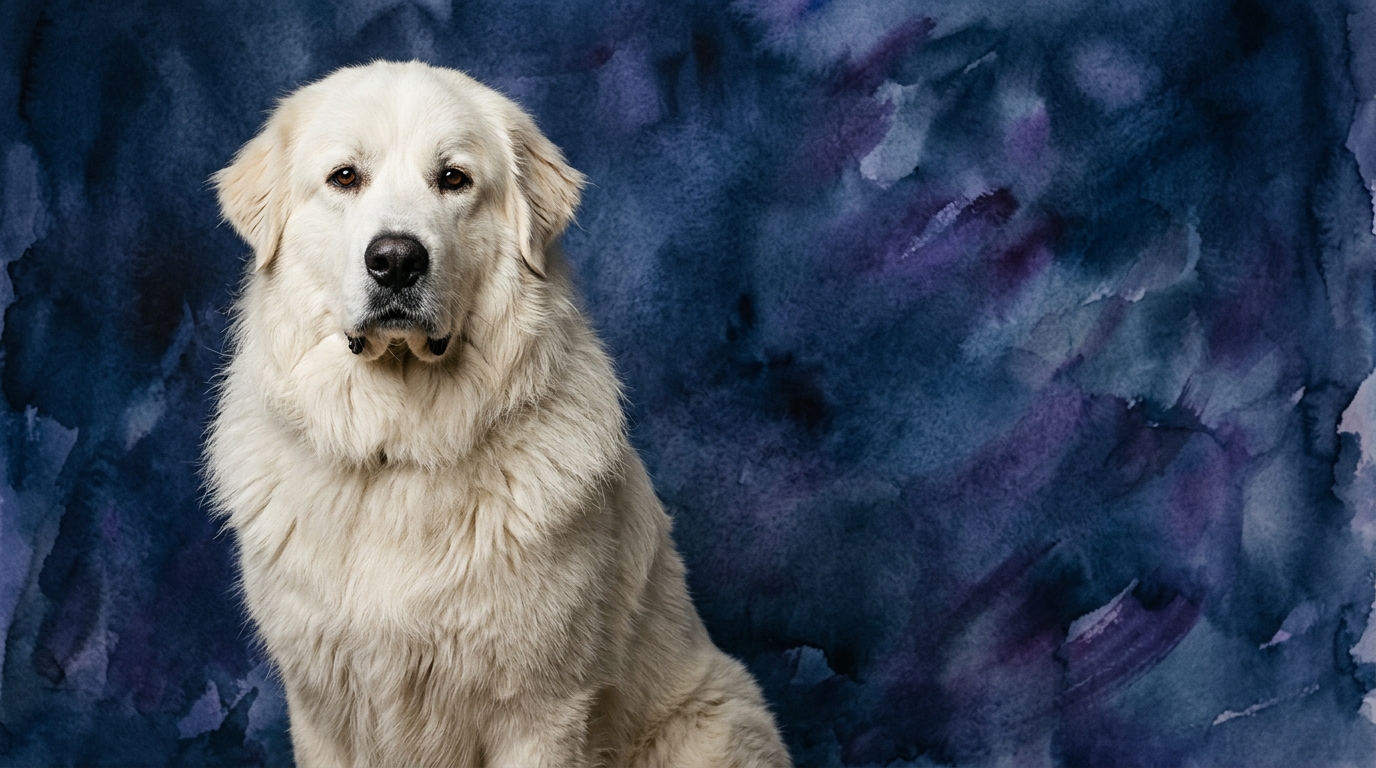
Side-by-Side IQ Profiles: Puli vs. Great Pyrenees
The Cosmic Pet Pet IQ Lab employs a multi-faceted approach to canine intelligence, assessing five key dimensions: Problem Solving, Training Speed, Social Intelligence, Instinctive Drive, and Memory. These metrics, alongside the Coren rank, offer a nuanced view of a breed's cognitive strengths.
The Puli, a Hungarian herding dog, holds an impressive Coren rank of #25. Its Problem Solving is rated 4/5, indicating an aptitude for devising clever solutions to dynamic challenges, crucial for managing livestock. Training Speed is also 4/5, reflecting its eagerness to learn and quick grasp of new commands. Social Intelligence stands at 3/5; Pulis form deep bonds with their families but can be reserved with strangers, focusing their social acumen on their immediate 'flock.' Their Instinctive Drive is 3/5, primarily manifesting as a strong herding impulse and protective loyalty. Memory is rated 4/5, enabling them to retain complex routines and specific learned behaviors over time.
In contrast, the Great Pyrenees, an ancient livestock guardian from the Pyrenees mountains, has a Coren rank of #64. Its Problem Solving is 3/5, demonstrating an ability for independent decision-making, particularly in assessing threats and protecting its charges without direct human instruction. Training Speed is 3/5, suggesting a moderate pace of learning often tempered by its inherent independence. Social Intelligence is 3/5; they are profoundly devoted to their families and exhibit a calm understanding of their pack's dynamics, yet maintain a dignified aloofness with unfamiliar individuals. Their Instinctive Drive is 3/5, powerfully geared towards guarding and territorial protection. Memory is rated 3/5, sufficient for retaining commands and routines, though their independent nature means recall might be situational rather than automatic.
Where the Puli Excels Cognitively
The Puli's cognitive strengths are deeply rooted in its herding heritage, demanding a canine partner capable of rapid assessment and execution. Its superior Problem Solving (4/5) means a Puli is more inclined to creatively navigate obstacles, such as figuring out how to direct a stubborn sheep or finding an alternative path around a barrier. This isn't just about simple obedience; it's about strategic thinking under pressure, an attribute less pronounced in breeds primarily focused on static guarding.
Furthermore, the Puli's higher Training Speed (4/5) translates directly into a dog that picks up new commands and complex sequences with greater alacrity. They enjoy the mental engagement of learning and are often motivated by the opportunity to work collaboratively with their human. This quick uptake makes them particularly suitable for advanced obedience, agility, or other dog sports where precision and swift understanding are paramount. Their 4/5 Memory reinforces this, allowing them to consistently recall a vast repertoire of commands and intricate routines, making long-term training more efficient and enjoyable.
Where the Great Pyrenees Excels Cognitively
The Great Pyrenees' cognitive profile, while different, is perfectly adapted to its millennia-old role as a livestock guardian. Its problem-solving, rated 3/5, shines in scenarios requiring autonomous judgment. Unlike a herder that takes cues, a Pyrenees excels at independently assessing threats, distinguishing between a harmless hiker and a genuine predator, and reacting appropriately without human intervention. This specialized intelligence is about strategic vigilance and protective self-reliance.
A unique cognitive advantage for the Great Pyrenees lies in its capacity for sustained, calm observation and independent decision-making over long periods. Its Instinctive Drive (3/5) is less about active engagement and more about a steady, watchful presence, allowing it to remain alert for hours, weighing environmental cues. This deep-seated stability and self-sufficiency, while sometimes misinterpreted as stubbornness in training, is a sophisticated form of situational awareness and emotional regulation crucial for its guarding duties, enabling it to act decisively when truly necessary, yet remain composed otherwise.
Training Dynamics: Puli vs. Great Pyrenees
When it comes to ease of training, the Puli generally presents a more straightforward path. Their 4/5 Training Speed and 4/5 Problem Solving mean they are inherently predisposed to learn quickly and enthusiastically from human instruction. Pulis historically worked in close partnership with shepherds, constantly receiving and responding to cues, which ingrained a desire for collaborative tasks. They typically thrive on positive reinforcement and mental challenges, quickly understanding what is expected and enjoying the process of mastering new skills. This translates to a dog that's often eager to please and relatively compliant, making them excellent candidates for various dog sports and advanced obedience.
The Great Pyrenees, with its 3/5 Training Speed and 3/5 Problem Solving, offers a different training experience. Their independence, a core aspect of their historical role as solo guardians, means they are less inclined to unquestioning obedience. A Pyrenees might 'consider' a command, weighing it against its own assessment of the situation or its protective instincts, rather than immediately complying. Training a Great Pyrenees requires immense patience, consistency, and a deep understanding of their motivations. They respond best to positive reinforcement and a strong, trusting bond, but owners must be prepared for a dog that sometimes makes its own choices, particularly if it perceives a task as unimportant or conflicting with its guardian duties. Their goal isn't necessarily to please you, but to protect their flock, a behavioral difference that profoundly impacts their trainability.
Matching Canine Minds to Lifestyles: Active vs. Relaxed Owners
For owners with an active lifestyle and a desire for an engaging canine partner, the Puli is often an ideal match. Their quick minds and energetic bodies demand regular mental and physical stimulation. A Puli thrives on having a 'job' to do, whether it's participating in agility, advanced obedience, herding trials, or simply long, varied walks that offer new sights and smells. Without sufficient outlets for their cognitive and physical energy, a Puli can become bored, potentially leading to undesirable behaviors. They are perfect for individuals or families who enjoy training and want a dog that can keep pace with an energetic routine, constantly learning and interacting.
Conversely, the Great Pyrenees is better suited for owners who appreciate a more relaxed, yet watchful, companion. While they still require regular exercise to maintain health, this often takes the form of patrolling a secure yard or steady, moderate walks rather than intense, high-impact activities. Their energy level is generally lower, and their patrolling nature means they are often content observing their surroundings. However, 'relaxed' does not mean 'absent'; they still need consistent companionship and a strong bond with their family. They are well-suited for owners who appreciate an independent, calm presence and are prepared to provide a secure environment where their guardian instincts can be expressed appropriately without excessive physical demands.
The Verdict
Choose a Puli if you seek an interactive, quick-learning companion eager for mental challenges and structured activities like dog sports or advanced obedience, thriving on collaborative tasks.
Opt for a Great Pyrenees if you value an independent, watchful guardian with a calm demeanor, requiring patient, consistent training and a secure environment to fulfill its protective instincts.
🧠 Find Your Pet's IQ Score
Our Pet IQ Lab assessment covers 25+ tests across 5 cognitive dimensions — personalized to your breed.
Take the Full IQ Test →Frequently Asked Questions
Do Pulis bark a lot?
Pulis are known to be vocal, using their barks to alert their owners to new situations or perceived threats, a remnant of their herding and guarding heritage. Early training can help manage excessive barking, but their instinct to communicate vocally remains strong.
Are Great Pyrenees good with other pets?
Great Pyrenees often get along well with other animals, especially those they are raised with, due to their ingrained protective instincts towards their 'flock.' However, proper introductions and supervision are always important, particularly with smaller, unfamiliar animals.
How much grooming do these breeds require?
Both breeds require significant grooming, though for different reasons. The Puli's corded coat needs careful attention to prevent matting and maintain its unique structure, while the Great Pyrenees' thick double coat sheds profusely and needs regular brushing to prevent tangles and keep it healthy.