Side-by-Side IQ Profile: Puli vs. Tibetan Mastiff
At The Cosmic Pet Pet IQ Lab, we delve into five key dimensions of canine intelligence to provide a nuanced understanding of each breed's mental landscape. For the Puli and the Tibetan Mastiff, these dimensions illuminate their inherent aptitudes and behavioral tendencies.
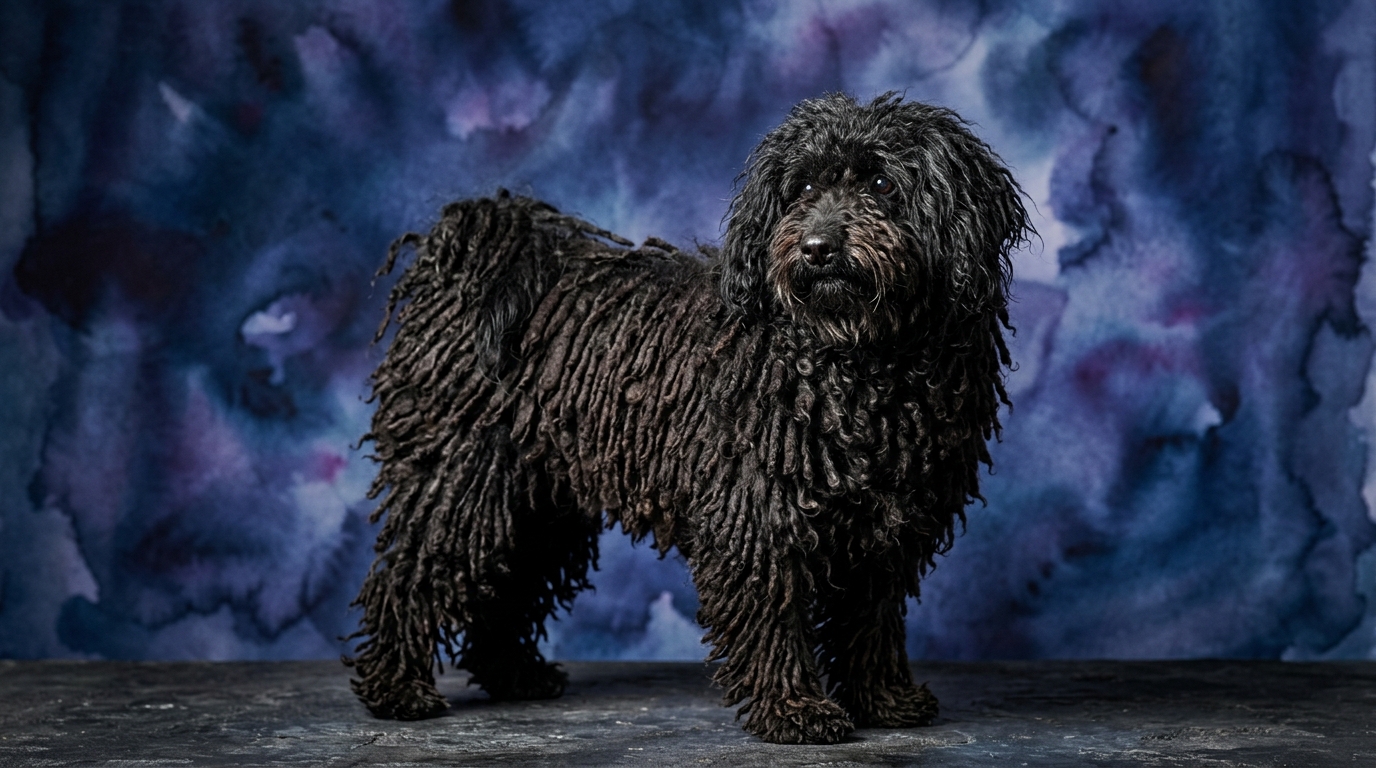
The Puli, a Hungarian herding dog, holds a respectable Coren rank of #25 among breeds, indicating a strong capacity for understanding new commands quickly and obeying them consistently. Its problem-solving score is 4/5, suggesting a quick-thinking mind capable of adapting to dynamic situations. Training speed is also rated 4/5, reflecting its responsiveness to learning new tasks. Social intelligence stands at 3/5, indicating an ability to form deep bonds within its family while often being reserved with strangers. Its instinctive drive is 3/5, primarily focused on its herding heritage, and memory is a robust 4/5, enabling retention of complex sequences and experiences.
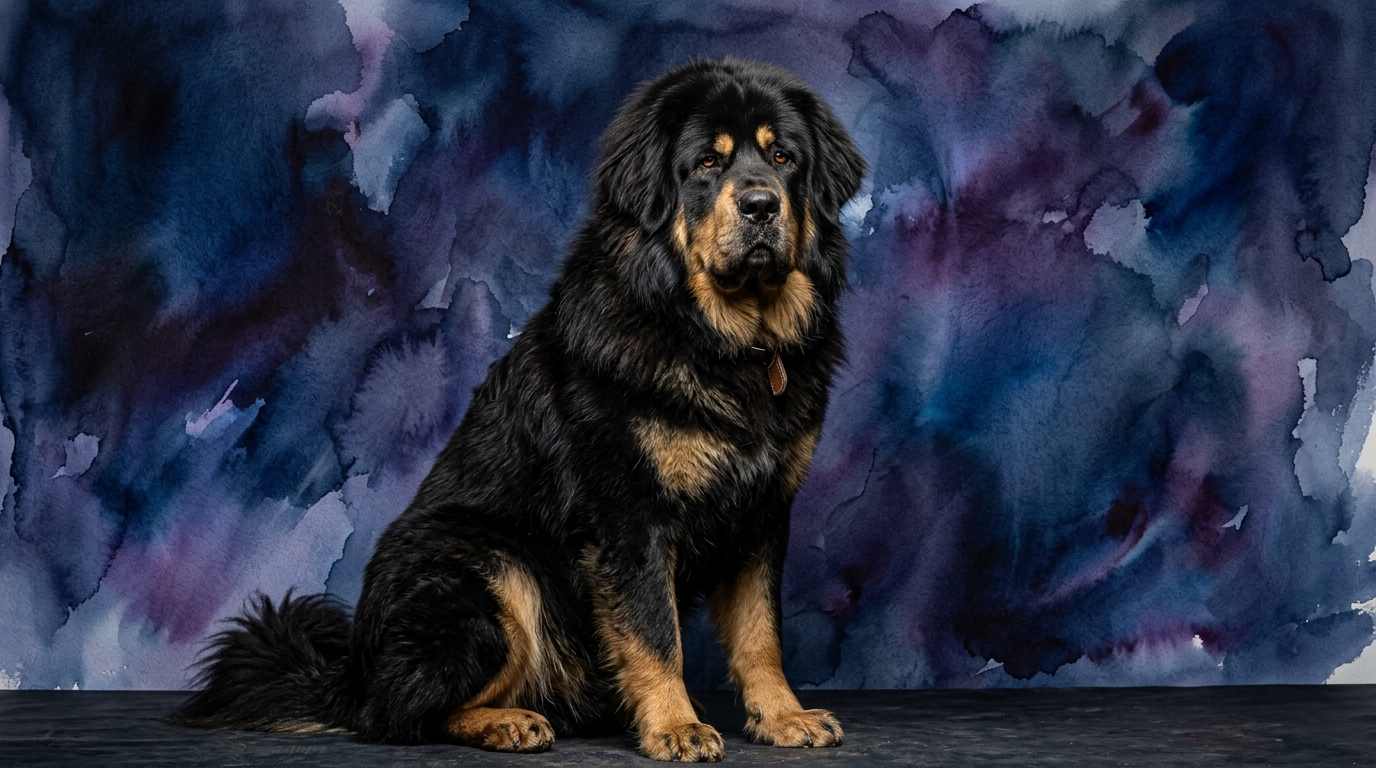
In contrast, the Tibetan Mastiff, an ancient guardian from the Himalayan regions, is not Coren-ranked, which is typical for breeds whose primary role necessitated independent judgment over immediate obedience. Its problem-solving ability is rated 3/5, showing a deliberate, self-reliant approach to assessing situations. Training speed is 3/5, meaning it learns steadily but often requires more patience due to its independent nature. Social intelligence is 3/5, characterized by deep loyalty to its family but a guarded, discerning attitude towards outsiders. The instinctive drive is 3/5, powerfully centered on its guardianship role, and its memory is 3/5, reliable for retaining crucial information related to its protective duties.
Where the Puli Wins Cognitively
The Puli clearly excels in areas requiring rapid learning and adaptability, a direct consequence of its herding heritage. Their problem-solving score of 4/5 indicates a breed that can quickly assess dynamic situations, such as managing a flock or navigating an agility course, and devise effective solutions on the fly. This contrasts with the more deliberate approach of guardian breeds. Furthermore, their training speed rating of 4/5 means they grasp new commands and concepts with fewer repetitions, making them highly responsive partners in structured activities. This efficiency in learning, coupled with their strong memory (4/5), allows them to build a vast repertoire of behaviors and respond consistently to cues. For tasks demanding quick mental processing and flexible responses, the Puli’s cognitive design offers a distinct advantage.
Where the Tibetan Mastiff Wins Cognitively
The Tibetan Mastiff’s cognitive strengths are rooted in its centuries-old role as an independent guardian, emphasizing discernment, vigilance, and a profound sense of responsibility. While not ranking higher in pure 'problem-solving' or 'training speed' in a conventional sense, their intelligence is uniquely tailored for their purpose. Their problem-solving (3/5) and instinctive drive (3/5) combine to create a dog that independently assesses threats and makes judgment calls about territorial integrity, without constant human direction. This involves complex environmental awareness and a nuanced understanding of potential dangers. Their social intelligence (3/5), while not outwardly effusive, is deeply focused on the safety and well-being of their inner circle, allowing them to read subtle shifts in family dynamics and potential external threats with keen perception. Their memory (3/5) is excellent for retaining information crucial to their protective duties, remembering who belongs and who doesn't, and the boundaries of their domain. This specific set of cognitive traits positions them as unparalleled in their ability to act as watchful, self-sufficient protectors.
Ease of Training: Puli vs. Tibetan Mastiff
The Puli generally presents as the easier breed to train, primarily due to its higher scores in training speed (4/5) and problem-solving (4/5), coupled with its Coren ranking of #25. Pulis were bred to work closely with humans, responding to commands to manage livestock, which instilled a strong desire to cooperate and a quick uptake of new information. Their inherent eagerness to engage and their capacity for forming quick associations mean they often require fewer repetitions to master a new skill, making positive reinforcement highly effective. For instance, a Puli might learn a multi-step obedience routine in a fraction of the time it takes a Tibetan Mastiff.
The Tibetan Mastiff, with a training speed of 3/5, learns steadily but often requires more patience and consistency. Their historical role as independent guardians meant they were expected to make decisions without constant human oversight. This translates into a dog that processes commands but may pause to consider if the command aligns with its own judgment or perceived duty. They are not necessarily disobedient, but rather independent thinkers who need to respect their trainer and understand the 'why' behind a command. A Puli is often motivated by pleasing its owner and the joy of participation, whereas a Tibetan Mastiff might be more motivated by a clear purpose or a strong, consistent relationship built on mutual respect. Therefore, for owners seeking a highly responsive and quickly trainable companion for activities like obedience or agility, the Puli holds a distinct advantage.
Matching Breeds to Owner Lifestyles
The Puli, with its heritage as an active herding dog, is a better match for active owners. Their mental and physical needs demand engagement. Owners who enjoy dog sports like agility, herding trials, or even long, brisk walks and interactive play will find the Puli a willing and enthusiastic partner. Their problem-solving and training speed scores reflect a mind that thrives on challenges and consistent activity. A Puli who isn't adequately stimulated can become bored and potentially destructive or vocal. They need a job, even if that job is just learning new tricks or participating in daily structured exercise.
In contrast, the Tibetan Mastiff, while requiring regular exercise for health, generally suits a more relaxed but highly responsible owner. Their role as a guardian means they excel at observation and patrolling their territory, rather than high-octane physical exertion. They are content with a secure yard to oversee and a calm, predictable daily routine. While they enjoy walks, they are not typically candidates for intense endurance activities. Their independence and protective instincts mean they need an owner who understands and respects their inherent nature, providing consistent leadership and a stable environment, without demanding constant interaction or high-energy play. A relaxed owner who appreciates a vigilant, loyal, and somewhat self-sufficient companion will find the Tibetan Mastiff to be a rewarding presence, provided they can manage their strong guarding tendencies.
The Verdict
Choose a Puli if you seek a highly trainable, agile, and mentally sharp companion eager for engaging activities like dog sports or complex obedience, and you can provide consistent mental and physical stimulation.
Choose a Tibetan Mastiff if you desire a steadfast, discerning guardian with a profound loyalty to its family, and you are prepared for an independent thinker requiring patient, consistent leadership and a secure environment.
🧠 Find Your Pet's IQ Score
Our Pet IQ Lab assessment covers 25+ tests across 5 cognitive dimensions — personalized to your breed.
Take the Full IQ Test →Frequently Asked Questions
Is a Puli good for first-time dog owners?
Pulis can be good for first-time owners who are committed to consistent training and providing ample mental and physical stimulation. Their quick learning makes them responsive, but their herding instincts require guidance to prevent nipping or controlling behaviors.
How much exercise does a Tibetan Mastiff need?
Tibetan Mastiffs require moderate, consistent exercise, such as daily walks and secure yard time, to maintain their physical health and mental well-being. They prefer patrolling their territory over intense, prolonged activity.
Do Pulis get along with other pets?
Pulis can get along well with other pets, especially if socialized from a young age. Their herding drive might lead them to try and 'manage' other animals, so supervision and proper introductions are key.