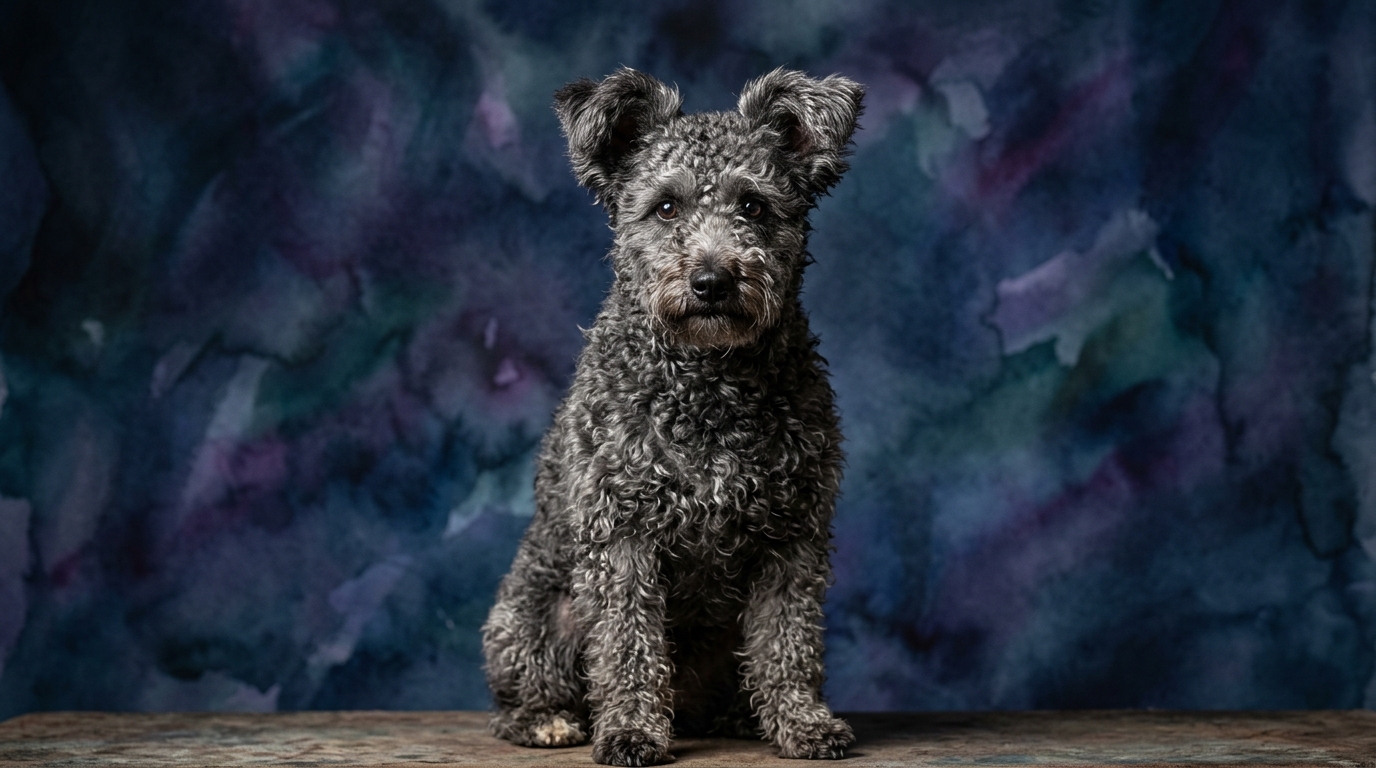
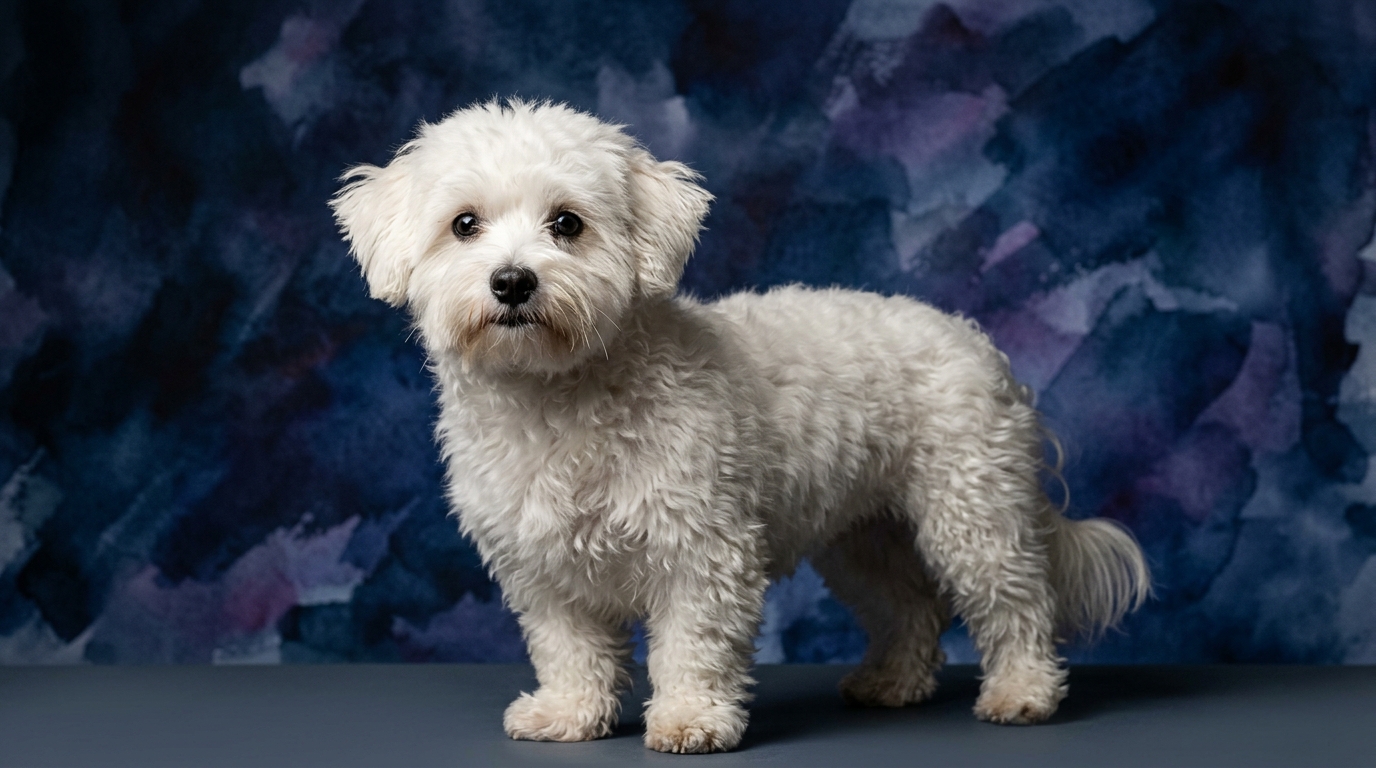
Side-by-Side IQ Profile: Pumi vs. Coton de Tuléar
Despite both breeds scoring a consistent 3/5 across all five cognitive dimensions – Problem Solving, Training Speed, Social Intelligence, Instinctive Drive, and Memory – the manifestation of these traits is profoundly shaped by their distinct histories and primary purposes. Understanding these nuances is crucial for appreciating their unique cognitive styles.
The Pumi, originating from Hungary as a versatile herding dog, exhibits a cognitive profile geared towards active, independent work. Its intellect is forged in the demands of managing livestock, requiring quick thinking and adaptability in dynamic environments. The Coton de Tuléar, a beloved companion breed from Madagascar, displays a cognitive style centered around human interaction and domestic harmony, applying its intellect to social dynamics and personal comfort.
**Pumi: The Agile Herding Mind**
**Problem Solving (3/5):** The Pumi's problem-solving prowess is deeply tied to its herding heritage. This breed exhibits a cognitive agility that allows it to quickly assess dynamic situations, such as maneuvering a flock or navigating an agility course. They are adept at figuring out spatial puzzles, devising strategies to overcome physical barriers, or inventing new ways to engage with their environment. Their approach is often active and exploratory, learning through direct interaction and trial-and-error.
**Training Speed (3/5):** Pumis are generally quick studies, particularly when training sessions are engaging, varied, and tap into their natural drives. They absorb new commands and routines with efficiency, but their herding background means they thrive on purpose-driven tasks. Repetitive, unstimulating drills might lead to boredom, prompting them to seek out more interesting (and sometimes mischievous) mental challenges. Consistent, positive reinforcement with clear objectives yields the best results.
**Social Intelligence (3/5):** While not purely bred for companionship, the Pumi's social intelligence is robust, particularly within the context of their "flock"—their human family. They are perceptive to their handler's moods and intentions, understanding subtle cues necessary for effective teamwork in herding. They form strong bonds and are attuned to the social hierarchy and dynamics within their home, often acting as diligent guardians who are aware of their family's emotional states.
**Instinctive Drive (3/5):** This dimension is a core component of the Pumi's cognitive makeup. Their herding instinct is strong, manifesting as a desire to gather, control movement, and organize. This drive translates into a natural inclination for activities like chasing, fetching, and engaging in dog sports. It's a powerful motivator that, when channeled constructively, fuels their enthusiasm for learning and activity, but can lead to "herding" children or other pets if not managed.
**Memory (3/5):** Pumis possess a good memory, crucial for recalling complex command sequences, remembering specific routes during herding, and retaining learned behaviors over time. They are efficient at storing and retrieving information related to tasks, routines, and the dynamics of their environment, allowing them to perform consistently and adapt based on past experiences.
**Coton de Tuléar: The Empathetic Companion's Intellect**
**Problem Solving (3/5):** The Coton de Tuléar applies its problem-solving skills within a more domestic and social framework. Their cognitive efforts often focus on understanding human routines, figuring out how to gain attention or access desired objects (like a treat hidden in a puzzle toy), and navigating social dynamics within the household. They might subtly "problem-solve" how to get comfortable on the best spot on the couch or how to initiate a play session, often using charm and persistence rather than brute force.
**Training Speed (3/5):** Cotons are eager and responsive learners, excelling in training that emphasizes positive reinforcement, praise, and strengthens the human-animal bond. They pick up new tricks and obedience commands with relative ease, motivated by the desire to please their owners and be the center of attention. Their quick grasp of concepts makes them a joy to train, responding well to gentle, consistent methods and enjoying the interactive nature of learning.
**Social Intelligence (3/5):** This is a standout characteristic for the Coton de Tuléar. Their social intelligence is finely tuned to human emotions and subtle social cues. They excel at "reading the room," understanding shifts in tone of voice, body language, and even anticipating their owner's needs or moods. This allows them to integrate seamlessly into family life, offering comfort or initiating play at just the right moment, fostering deep and intuitive bonds.
**Instinctive Drive (3/5):** Unlike the Pumi's task-oriented drive, the Coton's instinctive drive is primarily centered around companionship and social interaction. They are driven to be near their human family, participating in activities, and seeking affection. Their play drive is strong, but it's often directed towards interactive games with people rather than independent tasks. This intrinsic motivation for connection makes them incredibly devoted and adaptable family members.
**Memory (3/5):** Cotons exhibit a strong memory for people, places, and routines. They remember specific commands, where their favorite toys are stored, and the daily schedules of their family members. This memory contributes significantly to their adaptability and their ability to quickly learn and adhere to household rules, making them predictable and well-adjusted companions.
Where the Pumi Wins Cognitively
The Pumi's 3/5 instinctive drive, coupled with its problem-solving and training speed, gives it a distinct edge in tasks requiring independent thought within a structured, dynamic goal. Their cognitive strengths are profoundly geared towards real-time, task-oriented challenges, particularly those involving movement, spatial reasoning, and adapting to changing environmental stimuli. They excel at processing complex sequences of actions and making on-the-spot decisions, a direct inheritance from their herding lineage. For instance, in an agility course, a Pumi might intuitively find the most efficient path between obstacles, demonstrating a blend of learned behavior and independent strategic thinking that reflects their working background.
Where the Coton de Tuléar Wins Cognitively
The Coton de Tuléar's 3/5 social intelligence, combined with its problem-solving and training speed, makes it superior in tasks demanding a nuanced understanding of human emotions and social dynamics. They can "read the room" exceptionally well, responding to subtle shifts in mood, attention, or household routines with remarkable accuracy. Their cognitive strengths are geared towards fostering interpersonal relationships and adapting their behavior to maintain harmony and engagement within a family setting. A Coton might intuitively offer comfort when detecting sadness or initiate a playful interaction when sensing an opening, showcasing an intuitive grasp of human-animal bonding that is a hallmark of a dedicated companion breed.
Which is Easier to Train and Why
While both breeds score a 3/5 in training speed, the *nature* of their trainability differs significantly. The Pumi, with its strong herding drive and independent spirit, is easier to train for complex, multi-step commands, especially those involving movement, problem-solving, and a clear purpose. They thrive on mental challenges and can become bored quickly if training is repetitive or lacks a meaningful objective. This means a Pumi might occasionally test boundaries or try to "outsmart" the trainer if not consistently engaged and motivated through varied, purposeful tasks.
The Coton de Tuléar, on the other hand, is often perceived as easier to train for obedience, tricks, and behaviors that strengthen the bond or gain attention. Their eagerness to please, combined with their strong social intelligence, makes them highly motivated by praise, affection, and positive reinforcement. They are very responsive to their owner's mood and cues, often leading to a more compliant and seemingly intuitive training experience. A Coton is less likely to challenge instructions through independent action and more likely to follow directions to maintain positive interaction and receive affirmation.
Which Suits Active Owners vs. Relaxed Owners
For owners with an active lifestyle, the Pumi is an ideal match. Their 3/5 instinctive drive and problem-solving skills demand consistent physical and mental engagement. They are best suited for individuals or families who enjoy dog sports such as agility, herding trials, or flyball, as well as long hikes, challenging puzzle toys, and complex training sessions. A Pumi thrives on having a "job" and will channel its considerable energy and intellect into constructive activities; without sufficient activity and mental stimulation, they can become bored, restless, and potentially destructive.
Conversely, the Coton de Tuléar is better suited for relaxed or moderately active owners. While playful and energetic in bursts, their needs are more focused on companionship and moderate, consistent activity. They enjoy daily walks, interactive playtime with their family, and being involved in household activities. A Coton adapts well to various living situations, including apartments, as long as their profound social needs are met and they receive regular, albeit not exhaustive, daily exercise. They are excellent companions for those who prioritize close family interaction and indoor comfort over rigorous outdoor adventures.
The Verdict
Choose the Pumi if you are an experienced, active owner seeking a task-oriented companion for dog sports or a working role, who appreciates a dog that thinks independently and thrives on dynamic challenges.
Opt for the Coton de Tuléar if you desire a devoted, socially attuned companion who excels at charming their way into your heart, thrives on close family interaction, and enjoys a more moderate pace of life.
🧠 Find Your Pet's IQ Score
Our Pet IQ Lab assessment covers 25+ tests across 5 cognitive dimensions — personalized to your breed.
Take the Full IQ Test →Frequently Asked Questions
Do Pumi and Coton de Tuléar have similar trainability?
While both score 3/5 in training speed, the Pumi excels with task-oriented, active training, thriving on purpose-driven tasks. The Coton de Tuléar, conversely, thrives on bond-building, attention-driven learning, making them seem more compliant due to their eagerness to please and social responsiveness.
Which breed is better for a first-time dog owner?
The Coton de Tuléar is generally more forgiving for a first-time owner due to their strong desire for companionship and adaptability to various lifestyles, provided their social needs are met. The Pumi's herding drive and need for consistent, challenging mental and physical engagement can be overwhelming for those new to dog ownership.
How do their problem-solving skills differ despite the same score?
The Pumi's problem-solving (3/5) is rooted in practical, environmental challenges typical of herding, often involving strategic thinking and physical manipulation within dynamic settings. The Coton de Tuléar's problem-solving (3/5) is more focused on navigating social situations, manipulating their environment for comfort or attention, and understanding human routines and emotional cues.