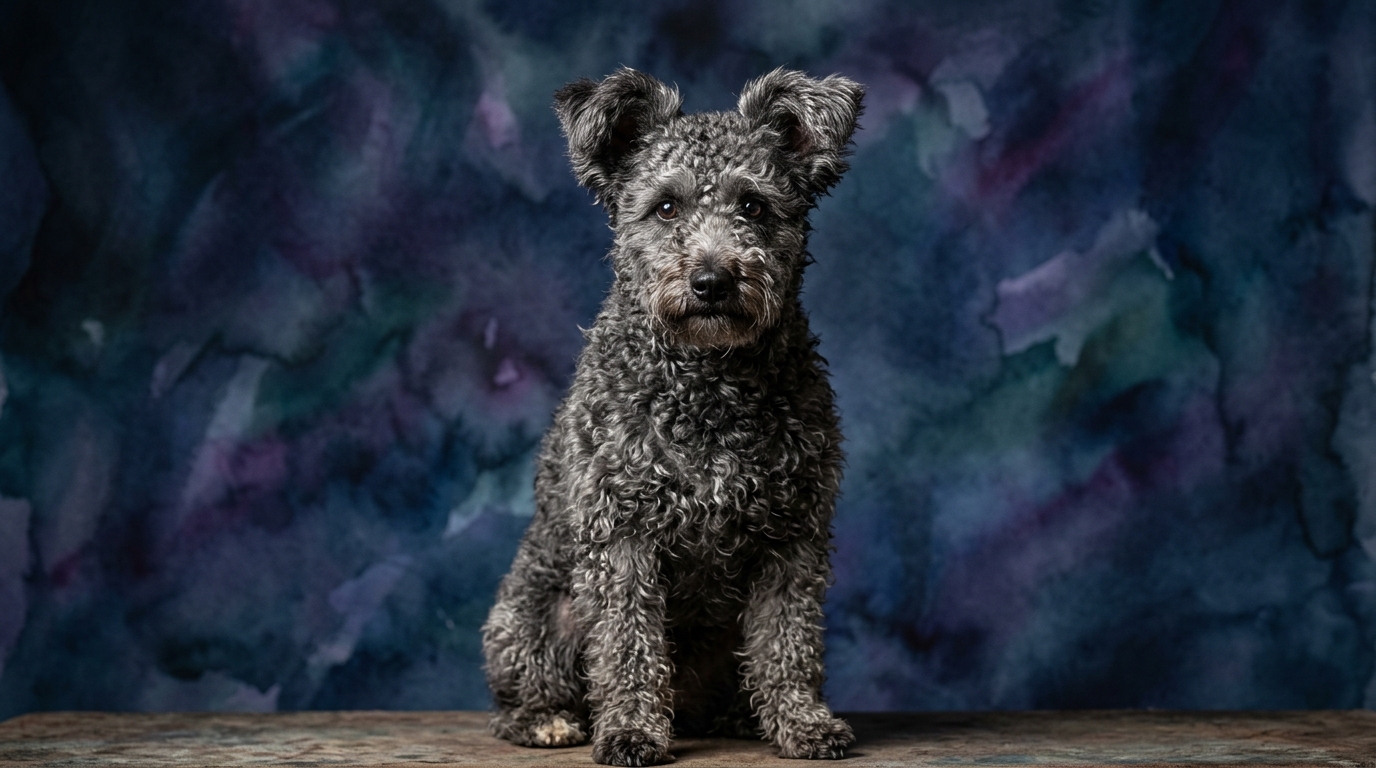
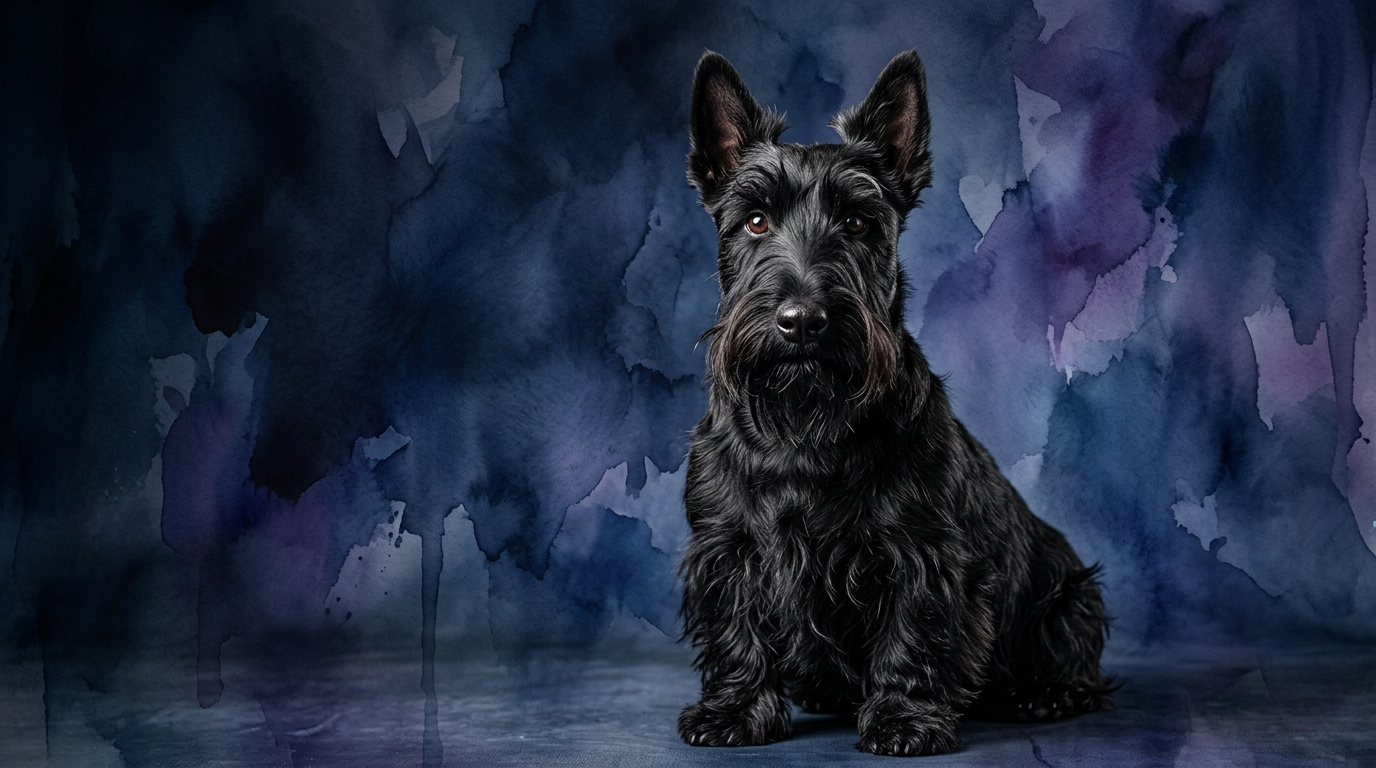
Side-by-Side Cognitive Profiles: Herding Wit vs. Terrier Tenacity
At first glance, the Pumi and Scottish Terrier share identical 3/5 ratings across The Cosmic Pet Pet IQ Lab's dimensions: Problem Solving, Training Speed, Social Intelligence, Instinctive Drive, and Memory. However, these scores manifest in profoundly different ways, shaped by centuries of selective breeding for specific tasks. The Pumi, a Hungarian herding dog, embodies a versatile intelligence geared towards collaboration and dynamic situations, while the Scottish Terrier, a tenacious Scottish hunter, displays a more independent and resolute form of cognitive ability.
For the Pumi, a 3/5 in Problem Solving often translates to an aptitude for navigating complex environments, such as orchestrating the movement of livestock or quickly adapting to changes in terrain or flock behavior. Their training Speed, also 3/5, benefits from a deep-seated desire to work in tandem with a human, picking up intricate commands and sequences with eager responsiveness. Social Intelligence at 3/5 for a Pumi means a keen awareness of their handler's cues, subtle shifts in group dynamics, and an ability to respond appropriately within a working partnership. Their Instinctive Drive, rated 3/5, is centered on herding, vigilance, and vocal communication, making them alert and proactive guardians. Finally, a 3/5 in Memory allows Pumis to retain complex routines, remember specific livestock patterns, and recall past successful strategies in their work.
In contrast, the Scottish Terrier's 3/5 in Problem Solving shines in its determined pursuit of a goal, often involving solitary strategizing to outwit prey or navigate challenging underground burrows. Their 3/5 Training Speed indicates they are capable learners, but their independent terrier spirit means they often require strong motivation and a clear understanding of 'what's in it for them' to comply consistently. Social Intelligence, also 3/5, for a Scottie typically manifests as a discerning observation of their immediate human family, often displaying a reserved and sometimes aloof demeanor towards strangers, but possessing a deep understanding of their inner circle's routines and moods. Their Instinctive Drive, rated 3/5, is powerfully geared towards hunting, digging, and protecting their territory with unwavering resolve. A 3/5 in Memory for a Scottish Terrier enables them to recall successful hunting tactics, remember specific routes to favored spots, and retain a strong sense of routines and boundaries within their environment. The Scottie's Coren rank of #65 further underscores their respectable capacity for understanding and obeying commands, albeit filtered through their unique terrier temperament.
Where the Pumi Excels Cognitively
The Pumi's cognitive strengths lie in their capacity for dynamic, real-time decision-making and their collaborative spirit. Their Problem Solving at 3/5 is particularly effective in fluid situations, such as anticipating the unpredictable movements of a flock or quickly assessing a new obstacle in an agility course. This isn't just about raw processing power, but about the *application* of that power in a highly responsive, cooperative manner. A Pumi can quickly adjust its strategy based on handler feedback or environmental changes, demonstrating a cognitive flexibility that is paramount in herding work.
Furthermore, their 3/5 Social Intelligence is uniquely tuned for partnership. They are adept at reading subtle body language and vocal cues from their human counterparts, making them exceptionally responsive in tasks requiring close teamwork. This translates into a dog that isn't just learning commands, but is actively engaging in a cognitive dialogue with their handler. Their Memory (3/5) supports this by allowing them to store and retrieve intricate sequences of commands and patterns, building upon past experiences to refine their responses in future collaborative efforts. This collaborative cognitive framework is a distinct advantage for the Pumi.
Where the Scottish Terrier Holds a Cognitive Edge
The Scottish Terrier's cognitive prowess, despite the identical 3/5 scores, is rooted in their profound independence and tenacity. Their 3/5 Problem Solving shines brightest in situations demanding self-reliance and unwavering focus on a singular objective. A Scottie isn't waiting for a human directive to figure out how to get to a perceived 'prey' or how to navigate a complex environment; they are driven by an internal motivation to achieve their goal, often employing clever, if sometimes stubborn, strategies. This might involve persistent digging to reach a scent or finding an unconventional route around a barrier.
Their Instinctive Drive (3/5) fuels this independent problem-solving, giving them the mental fortitude to stick with a task long after other breeds might give up. This isn't just physical endurance; it's a cognitive stubbornness that allows them to mentally 'chew' on a problem until a solution is found, often with impressive ingenuity. Their 3/5 Social Intelligence, while appearing reserved, allows them to keenly observe and assess situations and individuals, making them discerning judges of character and skilled at navigating their personal social landscape on their own terms. This self-contained cognitive approach gives the Scottie a unique advantage in tasks requiring singular focus and an unyielding will.
Training Dynamics: Pumi's Eagerness vs. Scottie's Resolve
When considering ease of training, the behavioral differences between these breeds become quite pronounced, despite their matching 3/5 Training Speed scores. The Pumi, with its herding background, generally approaches training with an eager-to-please attitude and a strong desire to engage with its handler. Their 3/5 Social Intelligence and Instinctive Drive to work collaboratively mean they often thrive on positive reinforcement and enjoy the mental stimulation of learning new tasks. They are typically quick to grasp complex command sequences and are motivated by the partnership aspect of training, making them generally more straightforward to guide through obedience or sports like agility. A Pumi is often looking to its handler for direction and purpose, making the training process a shared cognitive endeavor.
The Scottish Terrier, on the other hand, while possessing a 3/5 Training Speed, often presents a different set of challenges. Their independent nature and strong will mean they learn quickly, but their compliance is often conditional. A Scottie needs to be convinced that a command is worth their effort or aligns with their own interests. Their 3/5 Instinctive Drive, focused on independent hunting, means they are less inclined to simply 'obey' without question. Training a Scottie requires patience, consistency, and a deep understanding of their terrier mindset, often employing highly motivating rewards and making training sessions feel like a game they choose to play, rather than a task they are compelled to perform. Their Problem Solving (3/5) might even be applied to figuring out how to get what they want *instead* of what you're asking, requiring a handler to be equally clever.
Ideal Companions: Active Partners vs. Dignified Dependents
The Pumi and Scottish Terrier cater to distinct owner lifestyles, largely dictated by how their cognitive profiles manifest in daily behavior. The Pumi is an ideal match for active owners who seek a highly engaged and intelligent partner in their daily lives. Their 3/5 Problem Solving and Social Intelligence make them excellent candidates for dog sports like agility, obedience, flyball, or even continued herding work, where their quick thinking and responsiveness are assets. They require significant physical and mental exercise to channel their 3/5 Instinctive Drive and can become restless or destructive if under-stimulated. Owners who enjoy teaching new tricks, engaging in interactive games, and spending ample time outdoors will find the Pumi to be a fulfilling and energetic companion, thriving on shared cognitive experiences and a busy schedule.
Conversely, the Scottish Terrier suits owners who appreciate a more self-possessed and dignified companion. While they benefit from regular walks and mental stimulation, their 3/5 Instinctive Drive for independent activities like digging and chasing means they don't necessarily require constant, high-intensity interaction in the same way a Pumi does. They are content to observe their surroundings and enjoy quiet time with their family, though they will certainly appreciate a good romp or a puzzle toy that engages their 3/5 Problem Solving. Relaxed owners who value a loyal, independent, and sometimes opinionated companion, and who can provide clear boundaries and consistent, patient training, will find the Scottie to be a charming and devoted member of the family. They are not necessarily 'lap dogs' but enjoy being close, often on their own terms.
The Verdict: Choosing Your Canine Cognitive Counterpart
Choosing between a Pumi and a Scottish Terrier, despite their identical IQ scores, hinges entirely on the type of cognitive partnership you seek and the lifestyle you lead. Both breeds offer unique expressions of intelligence, shaped by their historical roles and inherent temperaments.
For those who envision an active, collaborative partner eager to engage in complex tasks and thrive on shared activities, the Pumi stands out. Its cognitive strengths lie in dynamic responsiveness, eager cooperation, and an adaptable mind ready for continuous learning and teamwork. This breed will flourish with an owner who can match its energy and channel its herding instincts into productive, mentally stimulating outlets.
If your preference leans towards a discerning, independent companion with a strong will and a tenacious approach to life, the Scottish Terrier is an excellent choice. Its cognitive advantages are found in its self-reliant problem-solving, unwavering determination, and dignified observation of the world. This breed will connect deeply with an owner who respects its individuality, provides consistent leadership, and appreciates a loyal presence that operates on its own terms.
The Verdict
Choose the Pumi if you desire an energetic, highly responsive partner for dog sports, advanced training, and continuous interactive engagement, thriving on collaborative cognitive challenges.
Opt for the Scottish Terrier if you appreciate a dignified, independent companion with a tenacious spirit, enjoying structured routines and a keen observer who solves problems on their own terms.
🧠 Find Your Pet's IQ Score
Our Pet IQ Lab assessment covers 25+ tests across 5 cognitive dimensions — personalized to your breed.
Take the Full IQ Test →Frequently Asked Questions
Do Pumis bark a lot due to their herding instincts?
Yes, Pumis often utilize barking as part of their 3/5 Instinctive Drive for herding and guarding, making them effective alert dogs. Consistent training can help manage excessive vocalization, but their alert nature means they are prone to expressing themselves vocally.
Are Scottish Terriers good with other pets, given their hunting drive?
Scottish Terriers, with their 3/5 Instinctive Drive for hunting, can have a strong prey drive towards smaller animals. Early socialization and careful introductions are crucial, and they often do best in homes where they are the only pet or with larger, calm canine companions.
How much mental stimulation do these breeds need daily?
Both breeds require significant mental stimulation to prevent boredom and destructive behaviors. Pumis need interactive games and training sessions to engage their collaborative 3/5 Problem Solving, while Scottish Terriers benefit from puzzle toys and opportunities to 'hunt' for treats, engaging their independent 3/5 Problem Solving.