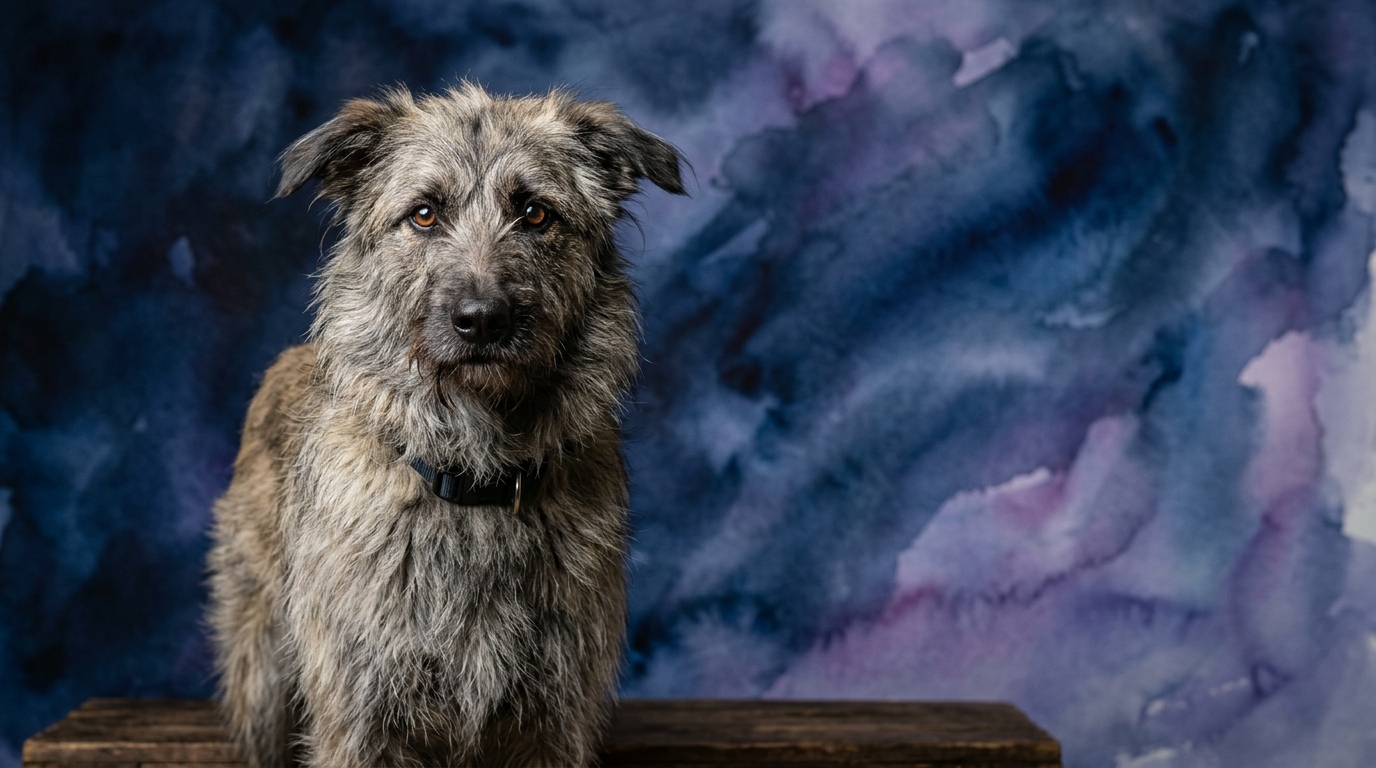
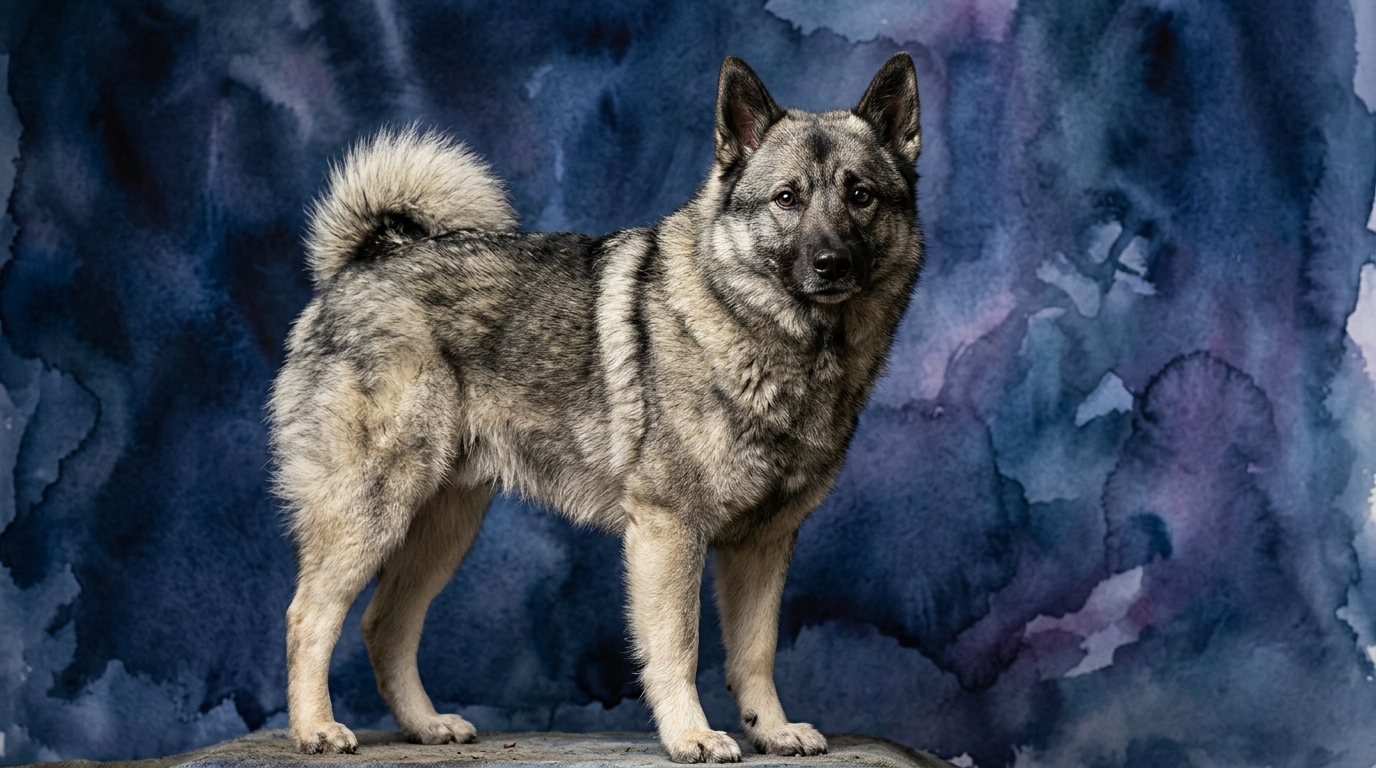
Side-by-Side Cognitive Profiles: Pyrenean Shepherd vs. Norwegian Elkhound
The Pyrenean Shepherd, a spirited herding dog, presents a balanced cognitive profile reflecting its historical role. Its Problem Solving is rated 3/5, indicative of an adaptable mind capable of making quick decisions within a structured task like flock management. Training Speed is also 3/5, suggesting a responsive learner who grasps concepts at a steady pace, particularly when engaged in cooperative tasks. Social Intelligence, at 3/5, highlights their attunement to human cues and the dynamics of their 'flock.' An Instinctive Drive of 3/5 underscores their innate desire to work and manage, while Memory, also 3/5, supports their ability to retain complex patterns and commands relevant to their duties. This breed's intelligence is geared towards active collaboration and immediate environmental response.
In contrast, the Norwegian Elkhound, a robust hound, exhibits a cognitive makeup tailored for independent hunting and tracking. Its Problem Solving stands at an impressive 4/5, reflecting a capacity for strategic thinking and autonomous decision-making in complex environments. Training Speed is rated 4/5, indicating a quick learner who can assimilate new information efficiently, though their independent nature might influence application. Social Intelligence is 3/5, suggesting a companionable dog that is less reliant on constant human direction than a herding breed. An Instinctive Drive of 3/5 points to their strong prey drive and tracking prowess. Notably, their Memory is 4/5, crucial for retaining elaborate scent trails and navigating vast terrains over extended periods. This profile speaks to a dog capable of independent thought and sustained focus on a task.
Where the Pyrenean Shepherd Excels Cognitively
The Pyrenean Shepherd’s cognitive strengths are most apparent in dynamic, cooperative scenarios. While its problem-solving score is 3/5 compared to the Elkhound's 4/5, the Pyrenean Shepherd excels at problems requiring rapid assessment and adjustment within a partnership. Their herding instinct means they are adept at understanding and influencing group movement, whether it’s a flock of sheep or a family of humans. This manifests as a keen ability to anticipate a handler's next move and react almost instantaneously, making them superb partners in agility or obedience where split-second decisions and fluid communication are paramount.
Furthermore, the Pyrenean Shepherd’s 3/5 social intelligence, combined with its herding drive, allows for a nuanced understanding of social dynamics. They are often described as 'reading' their handlers, picking up on subtle body language and vocal cues that might be overlooked by a more independent breed. This capacity for deep connection and responsive interaction gives them an edge in activities that demand tight synchronicity and a strong working bond, where the dog is expected to be an extension of the handler's will rather than an independent operator. Their cognitive processes are deeply intertwined with their desire to collaborate and maintain order within their perceived 'flock.'
Where the Norwegian Elkhound Holds a Cognitive Edge
The Norwegian Elkhound’s superior Problem Solving (4/5) and Memory (4/5) are direct reflections of its heritage as a big-game hunter. These dogs were bred to track elk for miles through challenging terrain, a task demanding profound strategic thinking and navigational recall. An Elkhound must solve complex environmental puzzles independently: how to cross a stream, bypass a fallen log, or interpret faint scent variations to maintain the trail. This level of self-directed problem-solving, without constant human input, is where their cognitive prowess truly shines, requiring them to devise and execute their own solutions to environmental challenges.
Their enhanced memory score is critical for sustaining long hunts, allowing them to recall the nuances of a scent path, the topography of a vast forest, or the location of a specific tree where a scent was strongest. This isn't just about remembering commands; it's about storing and retrieving complex sensory information over extended periods and distances. The Elkhound's cognitive architecture supports a sustained, independent focus on a single, long-term objective, making them particularly adept at scent work, tracking sports, or any activity that requires prolonged, self-motivated investigation and recall.
Training Dynamics: Responsiveness vs. Independence
When it comes to ease of training, the Norwegian Elkhound's 4/5 Training Speed and 4/5 Memory suggest a faster initial grasp of commands and a better retention rate for learned behaviors. They can quickly pick up new tasks or sequences. However, their independent problem-solving nature means they might question the *purpose* of a command or prefer to solve a situation their own way if it conflicts with their drive. This can translate into a need for consistent, clear motivation and a patient approach that acknowledges their self-reliant streak. Training an Elkhound often requires making the desired behavior more rewarding than their independent inclination.
The Pyrenean Shepherd, with a 3/5 Training Speed and 3/5 Memory, might take slightly longer to solidify new concepts, but their 3/5 social intelligence and strong desire to work in partnership can make them *feel* easier to train for cooperative tasks. They are often more eager to please and more attuned to their handler's wishes, which translates into a higher willingness to comply and less resistance to direction. While an Elkhound might learn 'sit' faster, a Pyrenean Shepherd might be more consistent in performing it in a distracting environment because of their inherent desire to collaborate and maintain order within their 'flock' dynamic with their owner. Real behavioral differences stem from the Elkhound's self-directed problem-solving versus the Pyrenean Shepherd's collaborative problem-solving.
Lifestyle Match: Active Engagement vs. Purposeful Adventure
For active owners seeking a highly engaged, collaborative partner, the Pyrenean Shepherd is an excellent match. Their balanced 3/5 scores across most cognitive dimensions, particularly their social intelligence and instinctive drive, mean they thrive on constant interaction and purposeful work alongside their human. They are not content with mere physical exercise; they require mental stimulation through dog sports, herding activities, or intricate training sessions that tap into their desire to collaborate and solve problems in partnership. Owners who enjoy teaching complex routines or participating in high-energy dog sports will find the Pyrenean Shepherd a rewarding and responsive companion, always ready for the next challenge.
The Norwegian Elkhound, while certainly active, suits owners who appreciate a dog with strong endurance and a desire for purposeful, often independent, outdoor adventures. Their 4/5 problem-solving and memory, combined with their instinctive drive, make them ideal for hiking, long-distance tracking, or exploring varied terrains. They are capable of sustained effort and can be given a task and allowed to execute it with less immediate supervision than a herding dog might require. While they enjoy companionship, they might be more content to settle down after a long, stimulating walk or tracking session, rather than requiring the constant, intricate engagement that a Pyrenean Shepherd often seeks. They excel with owners who can provide outlets for their independent, scent-driven nature.
The Verdict: Choosing Your Canine Companion
Ultimately, the choice between a Pyrenean Shepherd and a Norwegian Elkhound hinges on the owner's lifestyle and what kind of cognitive partnership they seek. Both breeds offer unique intellectual strengths that are deeply rooted in their historical purposes.
If you seek a highly cooperative, intensely engaged partner for dog sports, intricate training, or an active family life where your dog is deeply attuned to your every move, the Pyrenean Shepherd’s collaborative intelligence will be a perfect fit. Their desire to work alongside you makes them a dynamic and responsive companion. If you value an independent, strategic thinker for outdoor adventures, long hikes, or scent work, and appreciate a dog capable of solving problems autonomously while also enjoying your companionship, the Norwegian Elkhound’s robust problem-solving and memory will resonate with your lifestyle. Their self-reliant nature makes them an enduring and capable explorer.
The Verdict
Choose the Pyrenean Shepherd if you desire a highly collaborative, responsive partner for complex, cooperative activities and a dog deeply attuned to your guidance.
Opt for the Norwegian Elkhound if you appreciate an independent, strategic thinker for outdoor adventures and scent work, capable of autonomous problem-solving and long-distance navigation.
🧠 Find Your Pet's IQ Score
Our Pet IQ Lab assessment covers 25+ tests across 5 cognitive dimensions — personalized to your breed.
Take the Full IQ Test →Frequently Asked Questions
Is the Pyrenean Shepherd good for first-time dog owners?
The Pyrenean Shepherd's intense desire for collaboration and high energy can be a lot for a first-time owner. They require consistent training, mental stimulation, and an owner who understands their herding instincts and need for a job, making them better suited for experienced individuals.
How much exercise does a Norwegian Elkhound need daily?
Norwegian Elkhounds require significant daily exercise, ideally at least an hour of vigorous activity such as long walks, runs, or hikes. Their strong instinctive drive means they also benefit from purposeful activities like tracking or scent games to keep them mentally stimulated and prevent boredom.
Are Pyrenean Shepherds and Norwegian Elkhounds good with children?
Both breeds can be good with children, but require proper socialization and supervision. Pyrenean Shepherds might try to 'herd' children, while Elkhounds are generally tolerant but prefer respectful interactions. Introducing either breed to children early and teaching both boundaries is crucial for a harmonious household.