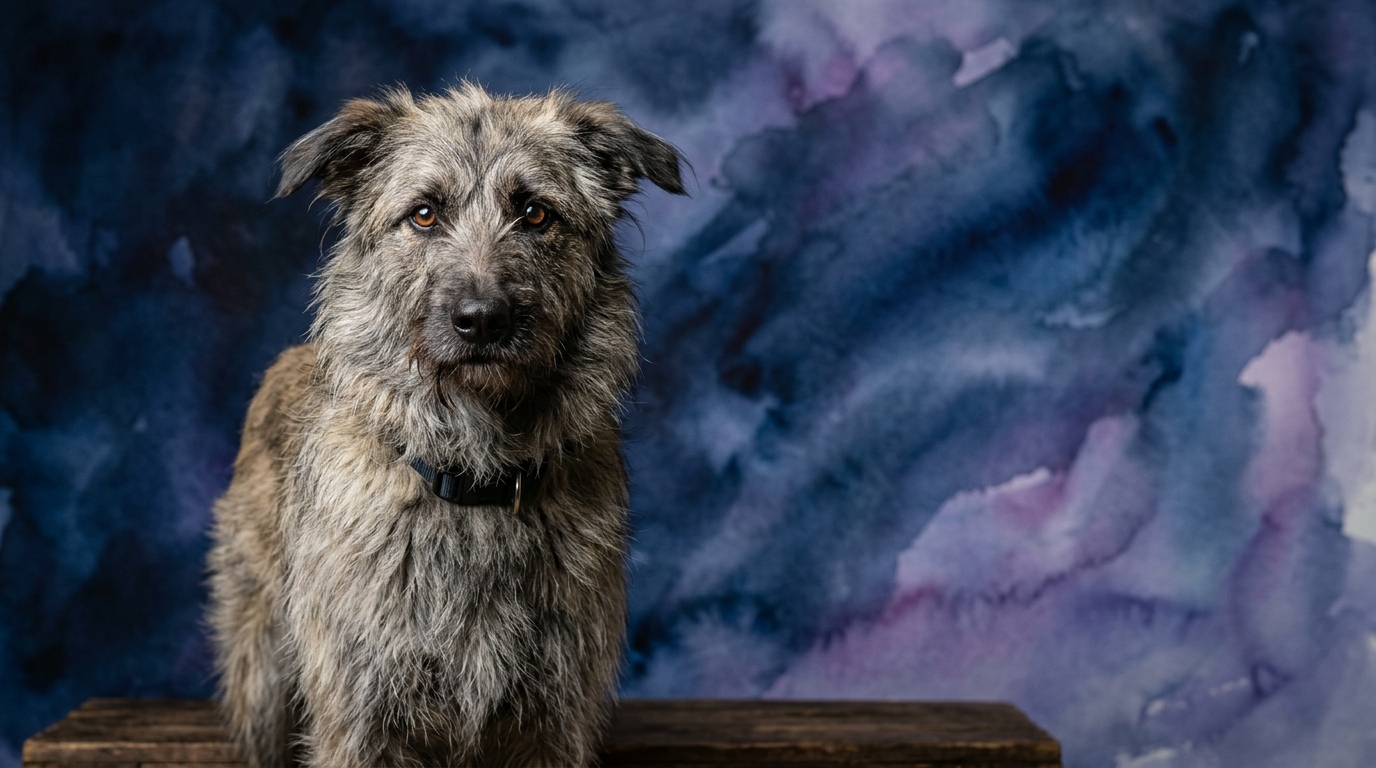
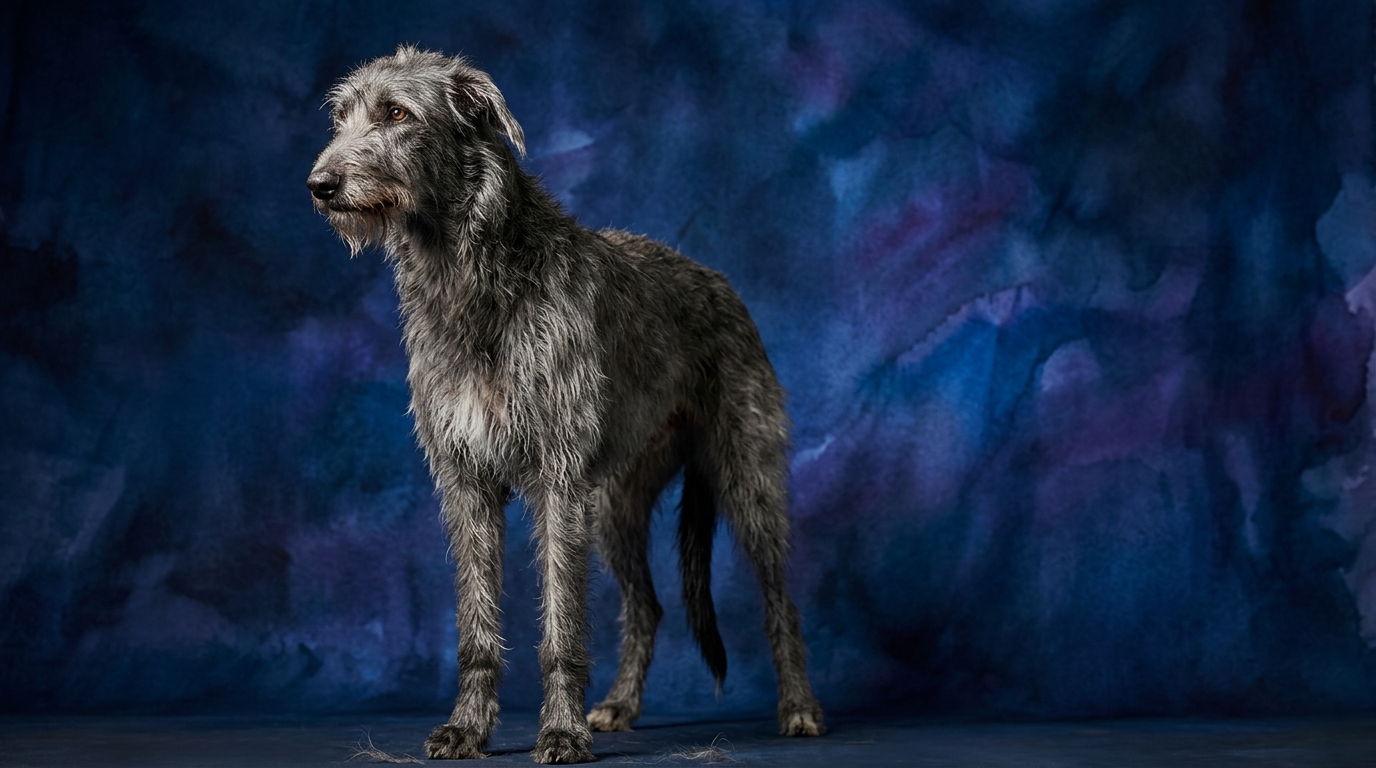
Side-by-Side Cognitive Profiles: Decoding the 3/5 Score
At The Cosmic Pet Pet IQ Lab, we assess canine intelligence across five key dimensions, and interestingly, both the Pyrenean Shepherd and the Scottish Deerhound register a consistent 3 out of 5 across the board. This identical numerical rating, however, belies distinct manifestations of these cognitive traits, deeply rooted in their historical purposes and intrinsic drives.
For **Problem Solving (3/5)**, the Pyrenean Shepherd demonstrates this by independently managing livestock, adapting to unpredictable flock movements, and anticipating potential threats without constant human directives. Their intelligence shines in dynamic, real-time decision-making within a complex social system. The Scottish Deerhound, conversely, applies its problem-solving acumen to the hunt, strategizing pursuit, navigating varied terrain, and making rapid choices during a chase. Their focus is on efficient, autonomous action to achieve a specific goal.
Regarding **Training Speed (3/5)**, the Pyrenean Shepherd can grasp new commands quickly, driven by a desire to work in partnership, but their inherent independence means they might question or offer alternative solutions if not fully engaged. Their learning speed is coupled with a discerning mind. The Scottish Deerhound also learns efficiently, yet their sighthound nature often requires strong motivation and positive reinforcement; they might not repeat a behavior if it lacks clear purpose or immediate reward, or if their attention is captured by movement.
Their **Social Intelligence (3/5)** differs in focus. The Pyrenean Shepherd forms a deep, observant bond with their primary handler, understanding subtle cues and intentions, and can be reserved with strangers due to protective instincts. Their social awareness centers on collaboration and guardianship. The Scottish Deerhound, while gentle and tolerant within their family unit, is often more aloof with strangers. Their social intelligence emphasizes harmonious co-existence within a trusted circle, rather than broad, active engagement.
The **Instinctive Drive (3/5)** is perhaps the most defining differentiator. For the Pyrenean Shepherd, this is their powerful herding instinct – an innate desire to gather, control, and protect, manifesting as a strong work ethic. For the Scottish Deerhound, it’s their sighthound prey drive – an intense impulse to spot, chase, and capture, characterized by incredible focus on moving targets.
Finally, **Memory (3/5)** in the Pyrenean Shepherd is evident in their recall of complex routines, past experiences with livestock, and intricate command sequences, allowing them to apply past solutions to novel situations. The Scottish Deerhound's memory excels in spatial awareness, remembering optimal pursuit routes, locations of past prey, and successful strategies for their specific hunting endeavors.
Where the Pyrenean Shepherd Shines Cognitively
Despite identical numerical scores, the Pyrenean Shepherd's cognitive strengths distinctly shine in collaborative, dynamic environments. Their problem-solving isn't just about finding a solution, but about *managing* a fluid situation, such as maneuvering a flock of sheep across varied terrain or anticipating a predator's approach. This requires a nuanced understanding of cause and effect, rapid assessment of multiple variables, and the ability to make independent decisions that benefit the group. Their 3/5 social intelligence, while not overly effusive, is deeply attuned to their handler's subtle signals and emotional states, fostering a profound working partnership. This makes them exceptional at tasks requiring intricate communication and responsive action. Furthermore, their memory is particularly robust for sequential tasks and complex learned behaviors, enabling them to execute multi-step commands and adapt previously learned strategies to new contexts with remarkable fluidity. They are masters of proactive engagement and adaptive problem-solving within a shared objective.
Where the Scottish Deerhound Shows Cognitive Prowess
The Scottish Deerhound's cognitive prowess is showcased in a different realm: that of independent, focused pursuit and efficient action. Their 3/5 problem-solving is less about managing a group and more about optimizing an individual objective – the chase. This involves rapid spatial reasoning, evaluating the most efficient route, and making split-second decisions to outmaneuver prey. Their memory is particularly keen for topographical details, remembering successful hunting grounds, and recalling the nuances of specific chase patterns. While their social intelligence is also rated 3/5, it manifests as a calm, dignified presence, often more self-contained than the Pyrenean Shepherd's. They are adept at understanding boundaries and maintaining a peaceful coexistence, rather than constantly seeking active collaboration. Their cognitive strengths are rooted in specialized sensory processing, intense concentration, and autonomous execution, making them highly effective in tasks demanding singular focus and independent strategic thought in open spaces.
Training Dynamics: Which Breed is Easier and Why?
Given their identical 3/5 training speed, neither breed can be labeled as universally 'easy' to train; instead, their trainability is shaped by their inherent motivations and drives. The Pyrenean Shepherd, with its strong herding instincts and desire for a 'job,' often responds well to training that provides mental stimulation and a clear purpose. They are eager to please their chosen person, but their independence and capacity for autonomous thought mean they might offer alternative solutions or become 'stubborn' if training is repetitive, unengaging, or if they don't perceive its value. Successful training with a Pyrenean Shepherd requires variety, positive reinforcement, and a patient approach that respects their discerning nature, turning their thoughtfulness into an asset rather than a challenge. They thrive when their active minds are consistently engaged in meaningful tasks, making them quick to generalize learned behaviors across different situations.
The Scottish Deerhound presents a different set of training considerations. While capable of learning quickly, their sighthound heritage means their primary drive is often self-rewarding – the thrill of the chase. This can make traditional obedience, which might seem arbitrary to them, less intrinsically motivating. They are easily distracted by movement and possess a 'what's in it for me?' attitude. Training a Deerhound demands immense patience, consistent positive reinforcement, and a deep understanding of their prey drive. They excel when training incorporates elements of pursuit or uses high-value rewards. While they grasp concepts swiftly, their willingness to perform can be situational; they may choose not to comply if their interest wanes or if a more compelling stimulus (like a squirrel) appears. Owners should anticipate a partnership built on mutual respect and understanding of their independent spirit, rather than expecting unquestioning obedience. For both, understanding their unique cognitive lens is paramount to effective training.
Matching Lifestyles: Active Owners vs. Relaxed Owners
When considering lifestyle compatibility, the distinctions between these two breeds become even clearer. The Pyrenean Shepherd is unequivocally suited for active owners who are prepared to provide not only significant physical exercise but also consistent, engaging mental stimulation. Their 3/5 instinctive drive, rooted in herding, means they possess an inherent need for a 'job' or purposeful activity. Without adequate outlets for their problem-solving and work ethic, they can become anxious, destructive, or develop unwanted behaviors. They thrive in households that can commit to daily rigorous exercise, advanced obedience training, agility, herding trials, or other dog sports that challenge both their bodies and their sharp minds. These dogs are partners in adventure, requiring an owner who delights in consistent interaction and complex engagement.
In contrast, the Scottish Deerhound, while requiring bursts of intense activity, is often better suited for owners who appreciate a more relaxed indoor companion. Despite their powerful sighthound instincts and need for secure, spacious areas to gallop and satisfy their chase drive, they are renowned for their calm and dignified demeanor inside the home. They are not dogs that require constant 'work' in the same way a herding breed does. An owner who can provide dedicated opportunities for safe, off-leash running – perhaps at a dog park, a large fenced yard, or through lure coursing – will satisfy their primary exercise needs. After these exhilarating sprints, the Scottish Deerhound is typically content to recline on the couch, observing their surroundings with a quiet grace. They suit owners who value a peaceful home life punctuated by exhilarating outdoor adventures, rather than continuous activity.
The Verdict
Choose the Pyrenean Shepherd if you seek an active, collaborative partner who thrives on mental challenges and a deep working bond, ready to engage in complex tasks and outdoor adventures.
Opt for the Scottish Deerhound if you appreciate a noble, calm companion indoors who enjoys dedicated bursts of intense exercise and values an independent spirit with strong sighthound instincts.
🧠 Find Your Pet's IQ Score
Our Pet IQ Lab assessment covers 25+ tests across 5 cognitive dimensions — personalized to your breed.
Take the Full IQ Test →Frequently Asked Questions
Do Pyrenean Shepherds bark a lot?
Yes, Pyrenean Shepherds can be vocal, using their barks to communicate warnings or express excitement, a trait stemming from their herding and guardian roles. Early training can help manage this tendency, but expect them to be alert communicators.
Are Scottish Deerhounds good with other pets?
Scottish Deerhounds can live peacefully with other pets, especially if raised with them, but their strong prey drive means small, fast-moving animals might trigger their chasing instinct. Careful introductions and supervision are essential.
What kind of mental stimulation do these breeds need?
Both breeds benefit from mental challenges. Pyrenean Shepherds thrive on puzzle toys, advanced obedience, and 'jobs' like agility or herding games, while Scottish Deerhounds enjoy scent work, lure coursing, and problem-solving games that engage their keen senses.