Side-by-Side Cognitive Profiles
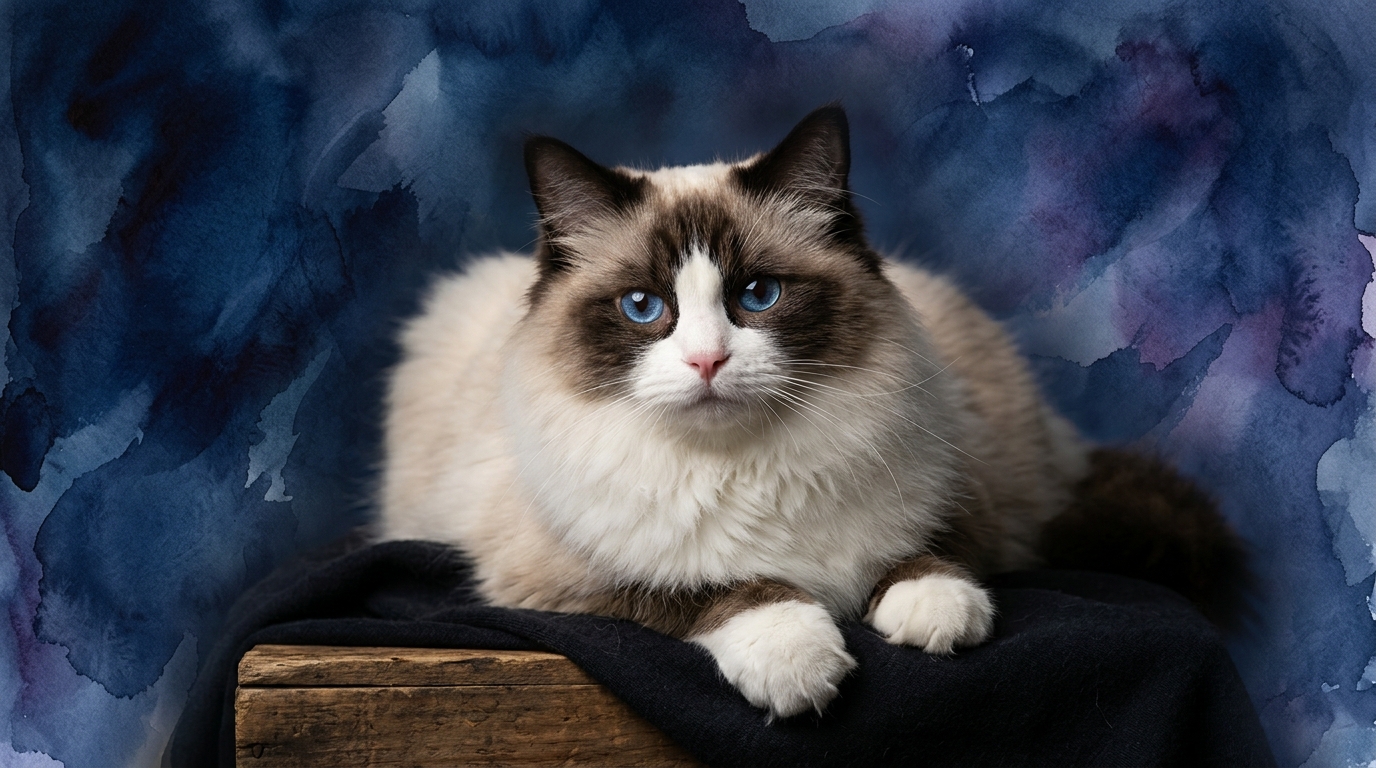
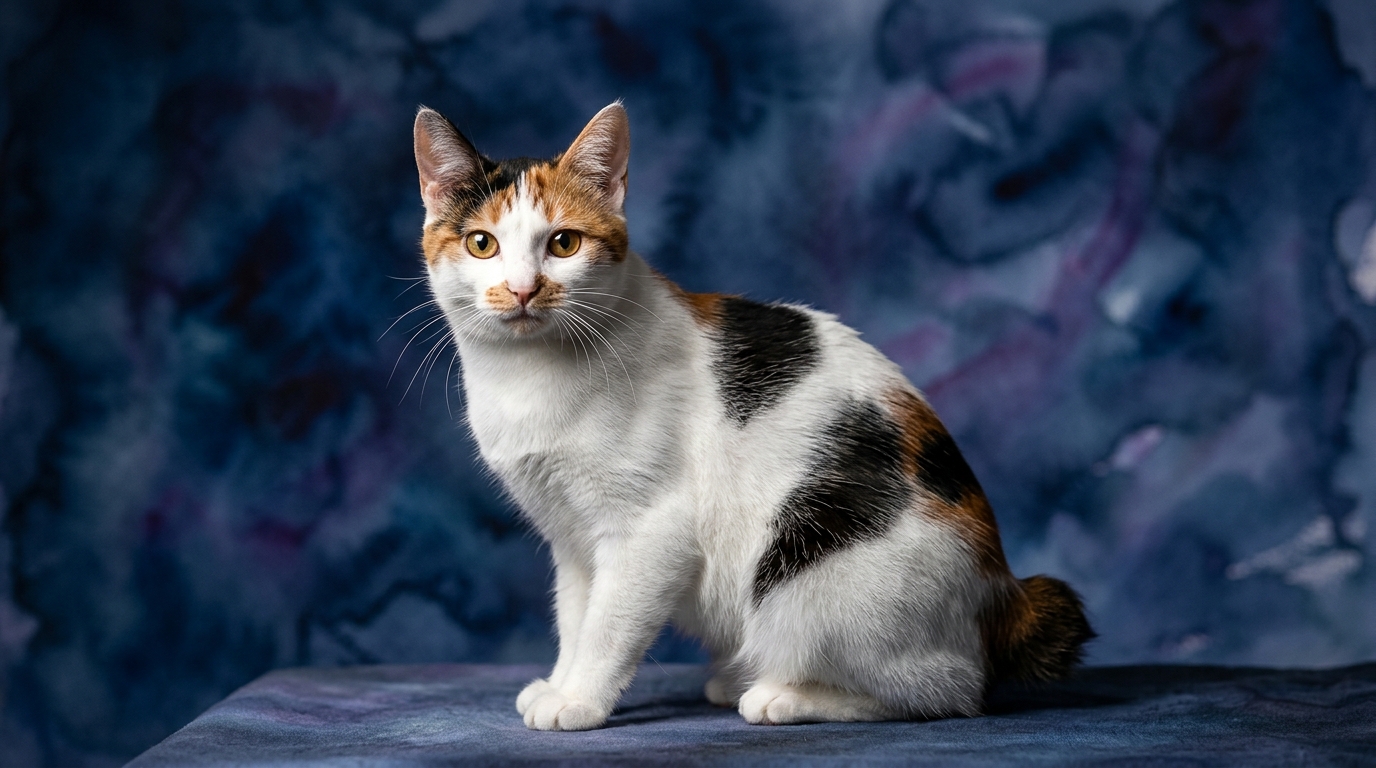
At The Cosmic Pet Pet IQ Lab, we delve into five key dimensions of feline intelligence to provide a nuanced understanding of each breed's mental makeup. For the Ragdoll, we observe a balanced intellect with a distinct social emphasis, while the Japanese Bobtail presents a well-rounded and moderately driven cognitive landscape.
The Ragdoll's IQ profile shows a Problem Solving capacity of 3/5, indicating competence in navigating moderately complex puzzles or figuring out how to access desired spaces with a methodical approach. Their Training Speed is also 3/5, meaning they acquire new behaviors at a steady, receptive pace when consistent, positive reinforcement is applied. A standout dimension for the Ragdoll is their Social Intelligence, rated at an exceptional 5/5, reflecting a profound understanding of human emotions and social cues. Their Instinctive Drive is lower at 2/5, suggesting less emphasis on intense hunting or exploration, and their Memory stands at 3/5, reliable for routines and learned associations.
Conversely, the Japanese Bobtail exhibits a consistent cognitive strength across several dimensions. Their Problem Solving ability matches the Ragdoll at 3/5, demonstrating a solid capacity for overcoming environmental challenges through observation and trial-and-error. Their Training Speed is also 3/5, indicating they learn new commands and tricks at a comparable rate, processing new information efficiently. The Japanese Bobtail's Social Intelligence is rated 3/5, signifying an affectionate and companionable nature, though perhaps not with the intense focus seen in the Ragdoll. Their Instinctive Drive is 3/5, suggesting a moderate inclination for natural predatory and exploratory behaviors, and their Memory is 3/5, allowing for effective retention of environmental and social information.
Where the Ragdoll Wins Cognitively
The Ragdoll's unequivocal cognitive strength lies in its unparalleled Social Intelligence, scoring a rare 5/5. This isn't merely about being friendly; it signifies a deep, sophisticated ability to interpret and respond to human emotions, body language, and vocal tones. A Ragdoll often acts as an empathetic companion, capable of sensing a family member's mood and adjusting its behavior accordingly, whether offering comfort or maintaining a quiet presence. This superior social processing allows them to integrate seamlessly into complex household dynamics, often becoming a calming and deeply bonded presence. Their lower Instinctive Drive (2/5) further channels their focus inward, reinforcing their commitment to social harmony and interaction within their human 'colony' rather than external environmental pursuits.
Where the Japanese Bobtail Wins Cognitively
While the Japanese Bobtail's scores are consistently balanced, its slightly higher Instinctive Drive (3/5 compared to the Ragdoll's 2/5) gives it a distinct advantage in active engagement with its environment. This translates to a more pronounced natural curiosity and a greater propensity for exploratory play and simulated hunting. A Japanese Bobtail is more likely to actively 'hunt' toys, investigate new smells, or scale cat trees with purposeful intent, driven by an innate desire for discovery. This drive often fuels their practical problem-solving, as they might be more inclined to figure out how to access a high shelf or manipulate a puzzle toy to satisfy their inherent need for engagement and novelty beyond purely social interaction.
Which is Easier to Train and Why
Both Ragdolls and Japanese Bobtails share a Training Speed score of 3/5, suggesting they acquire new behaviors at a similar pace. However, the ease of training can vary based on their dominant motivational drivers. The Ragdoll, with its exceptional 5/5 Social Intelligence, is often considered easier for behaviors that strengthen the human-animal bond. They are highly motivated by praise, petting, and the strong connection with their trainer, making them very receptive to commands like coming when called or leash training, as these activities often mean more time with their beloved human. Their lower instinctive drive also means fewer distractions during indoor training.
The Japanese Bobtail, with a balanced 3/5 for both Social Intelligence and Instinctive Drive, learns efficiently when training is engaging and incorporates elements of play, curiosity, or puzzle-solving. They respond well to clicker training combined with treats and enjoy learning tricks that involve manipulation or agility. While cooperative, their motivation might be less about deep social affirmation and more about the intrinsic fun of the activity or the reward itself. Therefore, while their learning speed is comparable, the *approach* to training might need to cater more to the Bobtail's playful curiosity rather than solely social affirmation.
Which Suits Active Owners vs. Relaxed Owners
For relaxed owners, the Ragdoll is often an ideal match. Their low Instinctive Drive (2/5) means they are generally less demanding of intense physical activity or complex environmental enrichment focused on 'hunting' simulations. Their exceptional Social Intelligence (5/5) means they flourish in environments where they receive consistent companionship, gentle interaction, and plenty of lap time. They are content with quiet companionship and interactive play that emphasizes bonding over intense physical exertion, making them perfect for those seeking a devoted, calm presence and extensive social engagement.
Active owners, on the other hand, might find a more suitable companion in the Japanese Bobtail. Their moderate Instinctive Drive (3/5) indicates a greater need for interactive play, environmental stimulation, and opportunities for exploration. They enjoy games that simulate hunting, such as chasing toys, solving puzzle feeders, and investigating new spaces. Their balanced Social Intelligence (3/5) means they appreciate interaction but are also capable of entertaining themselves independently. They suit owners who enjoy engaging in regular, stimulating play sessions, providing vertical spaces for exploration, and incorporating novelty into their cat's environment, desiring a playful, curious companion that thrives on moderate activity.
The Verdict
Choose a Ragdoll if you prioritize a deeply socially connected feline companion who thrives on close interaction and offers a calm, empathetic presence within a relaxed household setting.
Opt for a Japanese Bobtail if you seek a playful, curious cat that enjoys engaging in interactive games and exploration, fitting well into a moderately active home that values both companionship and independent spirit.
🧠 Find Your Pet's IQ Score
Our Pet IQ Lab assessment covers 25+ tests across 5 cognitive dimensions — personalized to your breed.
Take the Full IQ Test →Frequently Asked Questions
Do Ragdolls or Japanese Bobtails learn tricks faster?
According to The Cosmic Pet Pet IQ Lab, both Ragdolls and Japanese Bobtails have a Training Speed of 3/5, suggesting they acquire new behaviors at a similar, steady pace. However, Ragdolls might appear more cooperative due to their superior social intelligence, while Bobtails respond well to engaging, play-based training.
Which breed is more affectionate, the Ragdoll or Japanese Bobtail?
Ragdolls exhibit a significantly higher Social Intelligence (5/5) compared to Japanese Bobtails (3/5). This means Ragdolls are typically more overtly affectionate, actively seeking companionship, and forming profound, empathetic bonds with their human family members.
How do their problem-solving abilities compare?
Both Ragdolls and Japanese Bobtails share a Problem Solving score of 3/5. This indicates a comparable capacity for navigating environmental challenges, figuring out puzzles, and adapting to new situations, demonstrating a solid, practical feline intellect in both breeds.