
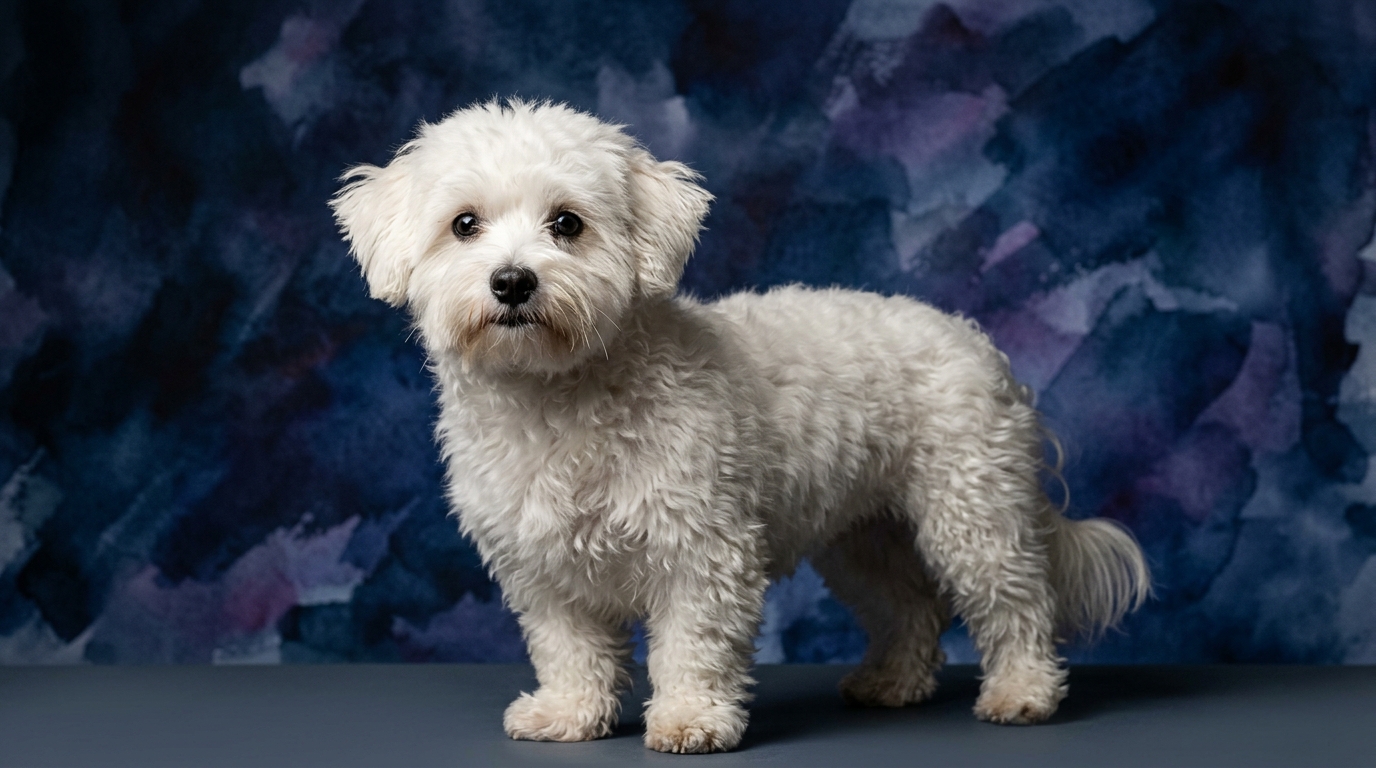
Side-by-Side IQ Profile: Unpacking Identical Scores
At first glance, the Rat Terrier and the Coton de Tuléar share an identical cognitive profile across all five dimensions, each scoring 3 out of 5. This parity, however, belies distinct ways their intellect manifests due to their vastly different historical roles and innate predispositions. For the Rat Terrier, a compact dynamo originally bred for pest control, a '3' in Problem Solving often translates to practical, independent thinking aimed at navigating physical environments to achieve a goal, like locating a hidden toy or figuring out how to get to a perceived 'prey' item. Their '3' in Training Speed reflects a capacity for learning commands efficiently, though often with a terrier's independent streak requiring engaging methods to maintain focus. Social Intelligence at '3' means they can read human cues and adapt to family dynamics, but their primary focus might remain more task-oriented than purely relational. An Instinctive Drive of '3' is clearly rooted in their hunting heritage, meaning a persistent, focused pursuit of small moving objects. Finally, Memory at '3' suggests they retain learned behaviors and routines reliably, especially those tied to their drives or daily structure.
The Coton de Tuléar, by contrast, is a charming companion dog whose intelligence, while rated identically, serves a different purpose. Their '3' in Problem Solving often manifests in social contexts, such as figuring out how to elicit attention, manipulate their environment for comfort, or navigate complex social interactions within a household. A '3' in Training Speed for a Coton typically means they are eager to please and quick to pick up new commands, particularly when positive reinforcement and a strong bond are involved, making them responsive learners. Their Social Intelligence, also a '3', is highly attuned to human emotions and interactions; they are adept at understanding subtle cues and thrive on companionship, often using their intellect to foster stronger bonds. The Instinctive Drive at '3' for a Coton is generally expressed as a playful curiosity or a desire to engage in games, rather than a strong prey drive, focusing more on interaction than independent pursuit. Their Memory, also a '3', allows them to recall routines, people, and learned behaviors, contributing to their adaptability as devoted family members.
Where the Rat Terrier Excels Cognitively
Despite sharing the same numerical IQ scores, the Rat Terrier exhibits distinct cognitive strengths rooted in its working heritage. Their '3/5' in Problem Solving often shines brightest in scenarios demanding independent thought and physical agility. Imagine a Rat Terrier quickly assessing how to navigate a complex set of obstacles to retrieve a dropped item, or persistently working to unearth a buried toy; this isn't just brute force, but an application of spatial reasoning and sequential planning. Their instinctive drive, also a '3/5', fuels a relentless focus when engaged in tasks that mimic their historical role, translating into impressive determination when tracking scents or engaging in earthdog-style activities. This isn't about being 'smarter' overall, but about a specific cognitive channeling that prioritizes practical, self-directed solutions and sustained engagement with a task, often without direct human prompting, in ways that resonate with their breed's historical purpose.
Where the Coton de Tuléar Excels Cognitively
The Coton de Tuléar, while numerically equal in IQ, often demonstrates a different emphasis in its cognitive strengths. Their '3/5' in Social Intelligence is particularly nuanced, allowing them to excel in understanding and responding to the complex emotional landscape of human families. A Coton might quickly learn which family member is most likely to offer a treat, or how to subtly interrupt a tense conversation with an affectionate nudge, showcasing a sophisticated grasp of social dynamics. Their '3/5' in Problem Solving often manifests in creative ways to gain attention or comfort, such as strategically placing themselves in a prime petting spot or figuring out how to open a child-proof gate through observation. This isn't about outsmarting prey, but about mastering the art of companionship through perceptive observation and adaptable social strategies. Their memory, also a '3/5', reliably stores social routines and preferences, making them highly predictable and cherished family members who anticipate daily rhythms and human interactions with remarkable accuracy.
Training Dynamics: Rat Terrier vs. Coton de Tuléar
When it comes to training, both breeds hold a '3/5' for Training Speed, yet their behavioral differences create distinct training experiences. The Rat Terrier, with its independent problem-solving and strong instinctive drive, can be quick to grasp commands but may also choose to prioritize its own agenda if not adequately motivated. Their terrier stubbornness means that training requires consistency, engaging methods that tap into their natural curiosity and drive, and a firm but fair approach. Without clear leadership and stimulation, a Rat Terrier might apply its '3/5' problem-solving to finding its own entertainment, which could include digging or exploring beyond boundaries. Their memory ensures they retain what they learn, but also that they remember inconsistencies.
The Coton de Tuléar, on the other hand, often presents as more overtly eager to please, making their '3/5' training speed feel more straightforward for many owners. Their high social intelligence means they are highly motivated by human interaction and praise, making positive reinforcement exceptionally effective. While they can be sensitive, responding poorly to harsh corrections, their desire to be close to their people means they are generally very biddable. A Coton's '3/5' memory allows them to quickly establish routines and respond reliably to cues, making them excellent candidates for everything from basic obedience to more complex tricks or even therapy work, largely driven by their inherent desire for connection and collaboration with their human companions.
Lifestyle Compatibility: Active vs. Relaxed Owners
The cognitive profiles of these two breeds, even with identical scores, suggest suitability for different owner lifestyles. The Rat Terrier's '3/5' instinctive drive and independent problem-solving mean they thrive with active owners who can provide consistent mental and physical stimulation. They are not content to be couch potatoes; their intellect needs outlets like structured play, puzzle toys, scent work, or agility. An owner who enjoys outdoor activities, provides opportunities for exploration, and engages in consistent, stimulating training will find the Rat Terrier to be a highly rewarding companion. Their cognitive energy needs direction, and without it, they might become restless or channel their problem-solving into less desirable behaviors.
Conversely, the Coton de Tuléar's '3/5' social intelligence and adaptability make them an excellent choice for owners seeking a more relaxed yet engaged companion. While they enjoy play and walks, their primary cognitive need is often social interaction and companionship. They are adept at fitting into various home environments, from apartments to larger homes, as long as they receive ample attention and are included in family activities. Their problem-solving often focuses on social navigation, meaning they are more likely to thrive in homes where they are central to the family's daily life, rather than being left alone for long periods. A relaxed owner who values a close bond and can offer consistent companionship, gentle play, and moderate exercise will find the Coton's cognitive makeup to be a perfect match.
The Verdict
Choose a Rat Terrier if you are an active individual or family seeking a mentally sharp, independent companion for adventures and engaging activities, appreciating their practical problem-solving and focused drive.
Opt for a Coton de Tuléar if you desire a highly social, adaptable, and emotionally perceptive companion who thrives on close family bonds and gentle, consistent interaction.
🧠 Find Your Pet's IQ Score
Our Pet IQ Lab assessment covers 25+ tests across 5 cognitive dimensions — personalized to your breed.
Take the Full IQ Test →Frequently Asked Questions
Do Rat Terriers and Coton de Tuléars learn at the same pace?
While both breeds have a '3/5' training speed, their underlying motivations differ. Rat Terriers learn quickly with engaging, task-oriented methods, while Cotons often learn rapidly due to their eagerness to please and strong social bond with their owner.
Which breed is better at understanding human emotions?
The Coton de Tuléar, with its '3/5' social intelligence, typically demonstrates a more nuanced understanding of human emotions and social cues, often using this perception to strengthen companionship. Rat Terriers also possess social intelligence, but it's often expressed more practically within family dynamics.
Are both breeds good with puzzle toys?
Yes, both breeds can enjoy puzzle toys, but for different reasons. Rat Terriers often engage with puzzles due to their independent problem-solving and instinctive drive to 'work' for a reward, while Cotons might enjoy them as an interactive activity that involves their human companions or provides mental stimulation.