
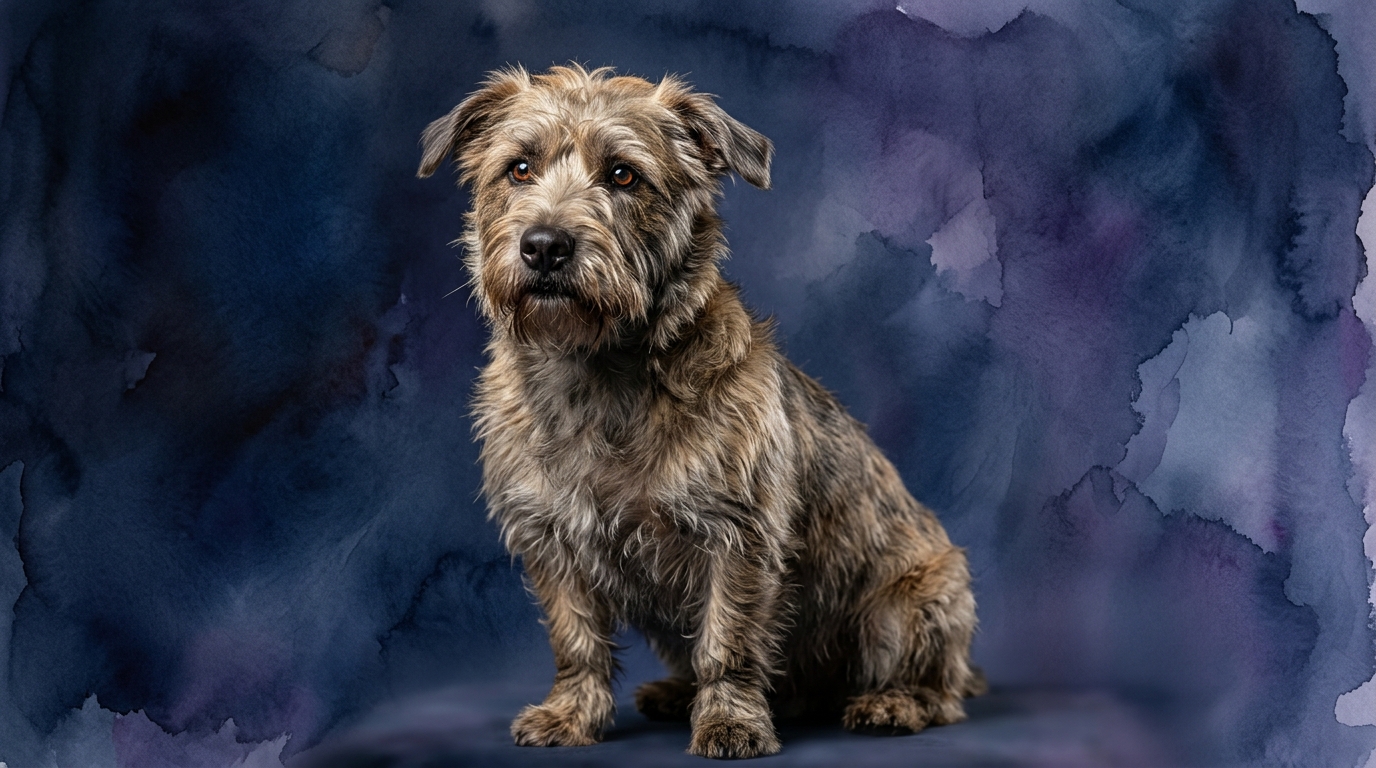
Side-by-Side IQ Profile: Rat Terrier vs. Glen of Imaal Terrier
The Cosmic Pet Pet IQ Lab rates both the Rat Terrier and the Glen of Imaal Terrier with consistent scores across five key cognitive dimensions: Problem Solving (3/5), Training Speed (3/5), Social Intelligence (3/5), Instinctive Drive (3/5), and Memory (3/5). While the numerical scores are identical, the manifestation of these abilities differs significantly between the breeds, shaped by their unique histories and temperaments.
For the Rat Terrier, a Problem Solving score of 3/5 often translates to quick, agile thinking, particularly in navigating complex environments or figuring out how to access hidden objects. They might demonstrate this by rapidly assessing a situation to find the quickest route to a perceived reward or escape. Their Training Speed at 3/5 suggests they grasp new commands and routines with reasonable pace, often motivated by engagement and variety, though their energetic nature can sometimes lead to momentary lapses in focus. Social Intelligence at 3/5 means they are generally adept at reading human cues and adapting to various social settings, often displaying an eager-to-please, though sometimes exuberant, demeanor. Their Instinctive Drive of 3/5 is distinctly geared towards small vermin, manifesting as a sharp focus, quick pursuit, and determined digging, a direct inheritance from their ratting duties. Lastly, their Memory at 3/5 is robust for routines, learned commands, and the layout of familiar territories, allowing for consistent performance once a behavior is established.
The Glen of Imaal Terrier, with the same 3/5 Problem Solving score, tends to approach challenges with a more deliberate, tenacious style. Their problem-solving often involves sustained effort, such as persistently working to uncover a burrow or figuring out how to bypass an obstacle through sheer will. Their Training Speed, also 3/5, reflects a capacity for learning that, while not lightning-fast, is deeply ingrained once understood. They may require more patience and positive reinforcement to overcome their independent streak, but once they commit, they are reliable. Social Intelligence at 3/5 for the Glen typically means they are discerning and observant, taking time to assess new people or situations before offering their trust. Once a bond is formed, however, their loyalty runs deep. Their Instinctive Drive of 3/5 is profoundly rooted in badger and fox work, displaying immense courage, powerful digging, and a readiness to go to ground, often with a quiet, focused determination. Their Memory score of 3/5 indicates a strong recall for the people they love, their established routines, and the specific details of their home environment, contributing to their steadfast nature.
Where the Rat Terrier Wins Cognitively
The Rat Terrier's cognitive strengths often shine in scenarios demanding swift adaptation and high-energy engagement. Their problem-solving, while rated 3/5, frequently involves rapid assessment and agile execution, making them exceptionally good at tasks requiring quick changes in strategy or movement, like agility courses or complex scent work. Their social intelligence, also 3/5, allows for a more immediate and flexible interaction with new people and environments, often displaying a charming eagerness that aids in quick social integration. This makes them particularly adept at roles where they need to respond promptly to human direction in varied public settings or learn new tricks on the fly for entertainment.
Where the Glen of Imaal Terrier Wins Cognitively
The Glen of Imaal Terrier's cognitive prowess is evident in their profound tenacity and independent thought. Their 3/5 problem-solving manifests as a relentless, focused drive to overcome obstacles, particularly when a goal is clearly defined in their mind, such as reaching a buried toy or securing a perceived intruder. This persistence, combined with their 3/5 memory, means they excel at tasks requiring sustained effort and a deep understanding of their environment or a specific skill once learned. Their social intelligence, while more reserved, fosters incredibly deep and stable bonds, allowing them to anticipate the needs and moods of their trusted companions with a quiet, intuitive understanding, proving them excellent, devoted companions in a settled home.
Which Is Easier to Train and Why
When considering ease of training, the Rat Terrier and Glen of Imaal Terrier present distinct challenges and rewards, despite both having a Training Speed of 3/5. The Rat Terrier generally exhibits a quicker initial uptake of commands. Their eager-to-please nature and high energy mean they are often enthusiastic participants in training sessions, learning new behaviors rapidly. However, their strong instinctive drive for chasing and their sometimes-frenzied excitement can lead to easy distraction, requiring consistent reinforcement and engaging methods to maintain focus. They might learn a new trick in a few repetitions but then struggle with reliability if not consistently practiced in varied environments.
The Glen of Imaal Terrier, on the other hand, often requires more patience and a different approach. Their 3/5 training speed is influenced by their inherent independence and robust will. They are not as overtly eager to please as the Rat Terrier and may initially question the necessity of a command. This doesn't mean they are less capable, but rather that trainers must earn their cooperation through positive, fair, and consistent methods. Once a Glen understands and accepts a command, their memory and tenacity ensure it is deeply ingrained and reliably performed. They are less likely to be distracted by external stimuli once committed to a task, making their learned behaviors incredibly solid, even if the initial learning phase takes longer.
Which Suits Active Owners vs. Relaxed Owners
For active owners seeking a canine partner for varied activities, the Rat Terrier is often the more suitable choice. Their cognitive profile, with quick problem-solving, adaptable social intelligence, and a strong instinctive drive for engagement, means they thrive on diverse mental and physical stimulation. They excel in dog sports like agility, flyball, or obedience, and genuinely enjoy hiking, jogging, or exploring new places. Their need for consistent mental engagement and physical outlets aligns well with a dynamic lifestyle, ensuring their intelligent minds are productively channeled.
Conversely, the Glen of Imaal Terrier tends to be a better fit for more relaxed owners who appreciate a steadfast companion and a predictable routine. While they certainly need daily exercise and mental engagement, their cognitive strengths lean towards focused, purposeful tasks and quiet companionship rather than constant high-octane activity. Their tenacious problem-solving is often satisfied with digging opportunities or challenging puzzle toys in a home environment. Their discerning social intelligence and deep memory make them excellent, loyal companions who thrive on a strong bond with their family, content with a good walk and ample cuddle time on the couch.
The Verdict: When to Choose Each
The Verdict
Choose the Rat Terrier if you seek a quick-witted, agile companion eager for varied activities and rapid learning, thriving on dynamic engagement and quick problem-solving.
Opt for the Glen of Imaal Terrier if you prefer a tenacious, independent thinker who forms deep bonds and excels with patient, consistent training and a more settled, purposeful routine.
🧠 Find Your Pet's IQ Score
Our Pet IQ Lab assessment covers 25+ tests across 5 cognitive dimensions — personalized to your breed.
Take the Full IQ Test →Frequently Asked Questions
Are Rat Terriers good apartment dogs?
Rat Terriers can adapt to apartment living if their significant exercise and mental stimulation needs are met daily. Their compact size is suitable, but their energy and quick thinking require owners to be diligent about walks, playtime, and puzzle toys to prevent boredom.
Do Glen of Imaal Terriers get along with other pets?
Glen of Imaal Terriers can coexist with other pets, especially if raised with them from a young age, but their strong instinctive drive means supervision is crucial, particularly with smaller, rodent-like animals. Their discerning social intelligence means they may prefer the company of their established family pets over new introductions.
How much exercise do these terriers need?
Rat Terriers require significant daily exercise, typically 60-90 minutes of vigorous activity like running, agility, or engaging play, alongside mental challenges. Glen of Imaal Terriers need a good 30-60 minutes of focused exercise, including walks and opportunities to dig or engage in purposeful tasks, but are generally less frantic than Rat Terriers.