
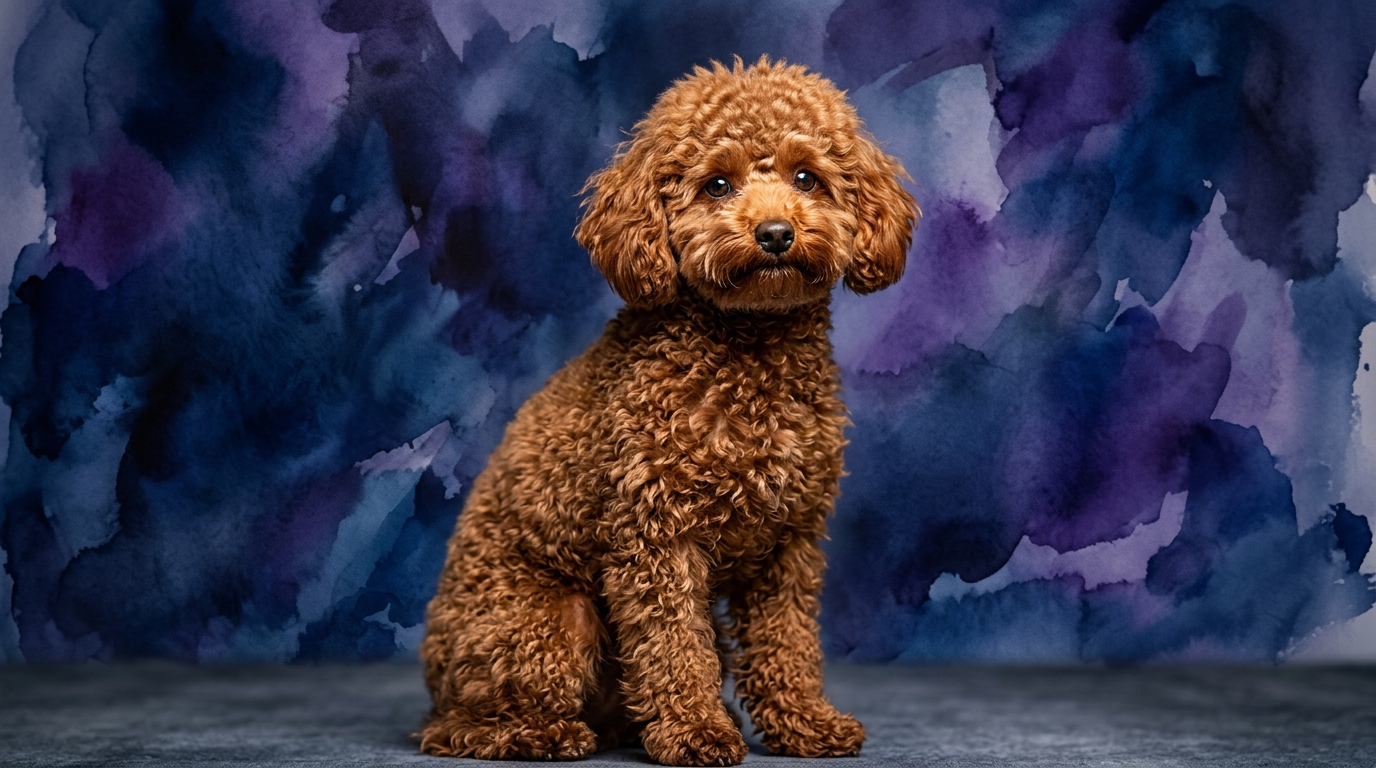
Side-by-Side IQ Profile: Rat Terrier vs. Toy Poodle
At The Cosmic Pet Pet IQ Lab, we assess canine intelligence across five key dimensions. Let's break down how the Rat Terrier and Toy Poodle compare, revealing their unique cognitive architectures.
Problem Solving: The Rat Terrier, with a 3/5 in Problem Solving, exhibits a practical and persistent approach to novel situations. They are capable of figuring out solutions through trial and error, often relying on established routines or previously successful tactics rather than spontaneous, abstract reasoning. This means they can untangle a simple puzzle toy or navigate a familiar environment effectively, but may take longer to adapt to entirely new challenges or complex, multi-step problems. In contrast, the Toy Poodle, achieving a perfect 5/5, showcases exceptional cognitive flexibility and analytical prowess. They readily grasp abstract concepts, quickly assess environmental cues, and devise innovative strategies to overcome obstacles, whether it's manipulating a complex feeder or understanding the mechanics of a new gate latch. Their mental agility allows for rapid hypothesis testing and adaptation, making them adept at processing information and applying learned principles to unfamiliar scenarios.
Training Speed: For the Rat Terrier, a 3/5 in Training Speed means they learn new commands and behaviors at a consistent, moderate pace. They require clear, patient instruction and consistent repetition to solidify new skills, often needing multiple sessions to truly embed a command into their repertoire. While trainable, an owner must be prepared for a steady progression rather than instant mastery. The Toy Poodle, with its 5/5 in Training Speed, demonstrates an astounding capacity for rapid acquisition of new information. They often pick up commands in just a few repetitions, making quick associations between verbal cues, actions, and rewards. This rapid learning curve allows them to advance swiftly through obedience levels and absorb a vast array of tricks and specialized tasks with remarkable efficiency.
Social Intelligence: Both breeds score a 3/5 in Social Intelligence, indicating a solid, functional understanding of their human companions and social environments. They are generally attentive to human moods, vocal inflections, and body language within their established social group, showing appropriate responses like seeking comfort or offering affection. This score suggests they can form strong emotional bonds and integrate well into family dynamics, interpreting basic social cues reliably, though they may not exhibit the profound empathetic depth or nuanced understanding of complex social politics observed in breeds with higher social intelligence scores.
Instinctive Drive: A 3/5 for both Rat Terrier and Toy Poodle in Instinctive Drive signifies a moderate expression of their innate behavioral patterns. For the Rat Terrier, this might manifest as a moderate prey drive, an inclination to chase small animals or dig, reflecting their terrier heritage. For the Toy Poodle, while less overtly predatory, it can appear as a moderate drive for retrieving, water activities, or even a watchful, alert demeanor. These drives are present but typically manageable, meaning they can be channeled through appropriate outlets like structured play or specific training exercises, rather than dominating their behavior.
Memory: The Rat Terrier's 3/5 in Memory indicates a reliable ability to recall learned commands, routines, and past experiences. While they retain information effectively, they might benefit from occasional refreshers for less frequently practiced skills or intricate sequences to maintain peak performance. Their memory is robust enough for daily life and basic obedience. The Toy Poodle, with a 5/5 in Memory, possesses exceptional long-term retention. They can recall a vast array of commands, names, and even complex sequences of actions with impressive accuracy, even after extended periods without practice. This superior recall allows them to build upon a wide foundation of learned behaviors without significant degradation over time, making them capable of mastering and retaining extensive repertoires of skills.
Where the Rat Terrier Wins Cognitively
While the Toy Poodle's profile highlights impressive cognitive agility, the Rat Terrier's balanced 3/5 scores across all dimensions present distinct advantages, particularly for owners seeking a pragmatic and resilient companion. Their problem-solving, though not as rapid or abstract as a Toy Poodle's, is characterized by tenacity and a grounded, systematic approach. A Rat Terrier faced with a new puzzle might not immediately deduce the solution, but they will often persist through various attempts, learning from each failure until they achieve their goal. This persistence makes them excellent candidates for tasks requiring sustained effort and a methodical mindset, such as scent discrimination, tracking simple trails, or repetitive obedience drills where consistency is paramount.
Their moderate instinctive drive (3/5) ensures they are driven enough to engage in these activities but not so overwhelmed by instincts that they become uncontrollable or easily distracted. Furthermore, their consistent memory (3/5) means that once a task is learned through their diligent effort, it is reliably retained, providing a stable foundation of understanding. This cognitive profile fosters a dog that is less prone to overthinking or becoming bored by routine; instead, they offer a predictable and dependable mental presence. They are not constantly seeking novel intellectual challenges to satisfy an insatiable curiosity, making them content with a well-structured routine and familiar forms of engagement. This makes them a strong choice for owners who appreciate a dog that is present, engaged, and dependable in their cognitive responses, without demanding constant, intricate mental gymnastics. Their cognitive framework is built on sturdy, consistent foundations rather than flashy, rapid processing, making them reliable partners in various daily scenarios.
Where the Toy Poodle Wins Cognitively
The Toy Poodle's cognitive strengths are undeniably pronounced, with perfect 5/5 scores in Problem Solving, Training Speed, and Memory. This trifecta of cognitive power positions them as exceptionally versatile and adaptable learners. Their superior problem-solving ability allows them to excel in situations demanding abstract reasoning, strategic planning, and understanding complex causal relationships. They are masters at deciphering intricate puzzle toys, navigating novel environments by quickly identifying advantageous routes, and even learning to manipulate objects for specific outcomes, such as opening cabinets or signaling needs. This mental dexterity makes them ideal for advanced training, where multi-step commands and nuanced responses are required.
Their unparalleled training speed, also a 5/5, means they absorb new information with astonishing rapidity. Owners often report that a Toy Poodle can grasp a new command or trick within just a few repetitions, quickly forming strong associations between cues and actions. This efficiency significantly reduces training time and allows for a vast and continuously expanding repertoire of behaviors, making them standouts in competitive obedience, agility, and trick dog titles. Complementing this is their 5/5 memory, which ensures that once a skill or piece of information is learned, it is retained with remarkable accuracy over long periods. This means less need for constant refreshers and a greater capacity to build upon an extensive foundation of knowledge, from specific object names to complex behavioral chains. These combined cognitive attributes enable Toy Poodles to thrive on mental engagement, making them highly responsive companions capable of understanding and executing intricate instructions, adapting readily to new situations, and consistently demonstrating their profound capacity for processing and applying information in a wide array of contexts.
Which Is Easier to Train and Why
Based on The Cosmic Pet Pet IQ Lab data, the Toy Poodle (Training Speed 5/5) is unequivocally easier to train than the Rat Terrier (Training Speed 3/5). This difference is rooted in their distinct cognitive processing speeds and memory capabilities. The Toy Poodle's exceptional capacity for rapidly forming associations and retaining information means they pick up new commands, routines, and even complex sequences with remarkable efficiency. An owner introducing a new trick to a Toy Poodle might witness proficiency and reliable execution after just a few short, focused sessions. Their mental agility allows them to quickly map a verbal cue or hand signal to a desired action and recall it reliably, often showing an eager anticipation for learning. This makes them exceptionally responsive to advanced obedience, trick training, and even specialized roles where quick, precise learning is crucial.
Conversely, the Rat Terrier, while certainly trainable and intelligent in its own right, requires a more patient and persistent approach. Their moderate training speed means lessons need to be broken down into smaller, manageable steps, and practice sessions should be frequent and highly engaging to prevent boredom or frustration. While they will eventually master commands, the process typically demands more repetitions and a longer duration for skills to become ingrained. Their independent terrier spirit can also play a role; if their attention is captured by an interesting scent or a perceived 'prey' item, their focus on training might momentarily wane, requiring the trainer to be more creative and consistent with motivation. While both breeds benefit immensely from positive reinforcement, the Toy Poodle's inherent cognitive wiring makes the training journey smoother, faster, and often more intrinsically rewarding for both dog and owner, particularly when aiming for high levels of obedience or specialized skill sets. The Rat Terrier, while a willing learner, requires a more dedicated commitment to repetition and consistent reinforcement to achieve similar levels of behavioral fluency.
Cognitive Fit: Active vs. Relaxed Owners
The optimal match between a Rat Terrier or Toy Poodle and an owner's lifestyle hinges significantly on the owner's capacity for providing both mental and physical stimulation. For active owners who relish engaging in diverse and intellectually stimulating activities with their canine companion, the Toy Poodle's cognitive profile makes them an exceptional match. Their perfect 5/5 scores in Problem Solving, Training Speed, and Memory mean they thrive on continuous mental challenges. This includes participation in advanced obedience, agility, rally, complex scent work, or even learning multiple languages and intricate trick repertoires. They are highly adaptable to varied environments and novel experiences, absorbing new rules and skills readily, making them ideal partners for owners who enjoy frequent travel, outdoor adventures that involve problem-solving, or competitive dog sports. A Toy Poodle's substantial need for mental engagement means they require an owner prepared to consistently provide intellectual stimulation alongside vigorous physical exercise to prevent boredom and potential behavioral issues.
Conversely, for owners who prefer a more relaxed yet still engaged companionship, the Rat Terrier's balanced cognitive scores (3/5 across the board) make them a suitable choice. While they certainly enjoy activity and benefit from consistent training and play, their cognitive demands are more moderate compared to the Toy Poodle. They are content with established routines, regular walks, and less intricate mental games. Their steady, predictable cognitive approach means they are less likely to become frustrated or destructive if not constantly challenged with novel intellectual pursuits. An owner who enjoys a dog that is present, responsive, and thrives on consistent, rather than constantly varied, engagement will find the Rat Terrier's mental framework highly compatible. They adapt well to a calmer home environment, but still require daily physical exercise and regular, engaging training sessions to keep their minds sharp and their bodies healthy. They are well-suited for owners who appreciate a dog with a solid, dependable cognitive presence that integrates smoothly into a steady household rhythm without demanding a constant influx of new intellectual puzzles.
The Verdict
Opt for a Rat Terrier if you value a consistent, pragmatic companion with balanced cognitive abilities, ideal for an owner who appreciates steady engagement without constant intellectual novelty.
Select a Toy Poodle if you seek a highly adaptable, rapid learner that thrives on complex mental challenges and excels in diverse training endeavors.
🧠 Find Your Pet's IQ Score
Our Pet IQ Lab assessment covers 25+ tests across 5 cognitive dimensions — personalized to your breed.
Take the Full IQ Test →Frequently Asked Questions
Does the Coren ranking impact these specific IQ scores?
The Coren ranking primarily assesses 'working and obedience intelligence,' aligning closely with training speed and problem-solving. The Toy Poodle's #2 Coren rank reflects its high scores in these areas (5/5), while the Rat Terrier, not Coren-ranked, shows more moderate scores (3/5) across the board, indicating a different cognitive emphasis.
How does 'social intelligence' at 3/5 for both breeds manifest?
A 3/5 social intelligence score means both breeds generally understand and respond to human emotions and social cues within their familiar circle, forming strong bonds. They can interpret body language and vocal tones, but might not possess the exceptional empathetic depth or nuanced understanding of complex social dynamics seen in breeds with higher scores.
What does a 3/5 'instinctive drive' mean for daily life?
A 3/5 instinctive drive indicates a moderate expression of inherent breed-specific behaviors like chasing or digging. For both the Rat Terrier and Toy Poodle, these drives are present but generally manageable, meaning they can be channeled into appropriate activities or managed with consistent training without overwhelming an owner.