Side-by-Side Cognitive Profiles
At The Cosmic Pet Pet IQ Lab, we evaluate canine intelligence across five key dimensions, and it's intriguing to observe how two breeds with such divergent histories can land on the same numerical mark. Both the Rhodesian Ridgeback and the Norwegian Lundehund score 3/5 in Problem Solving, Training Speed, Social Intelligence, Instinctive Drive, and Memory. However, the *expression* of these scores is where their true cognitive individuality shines.
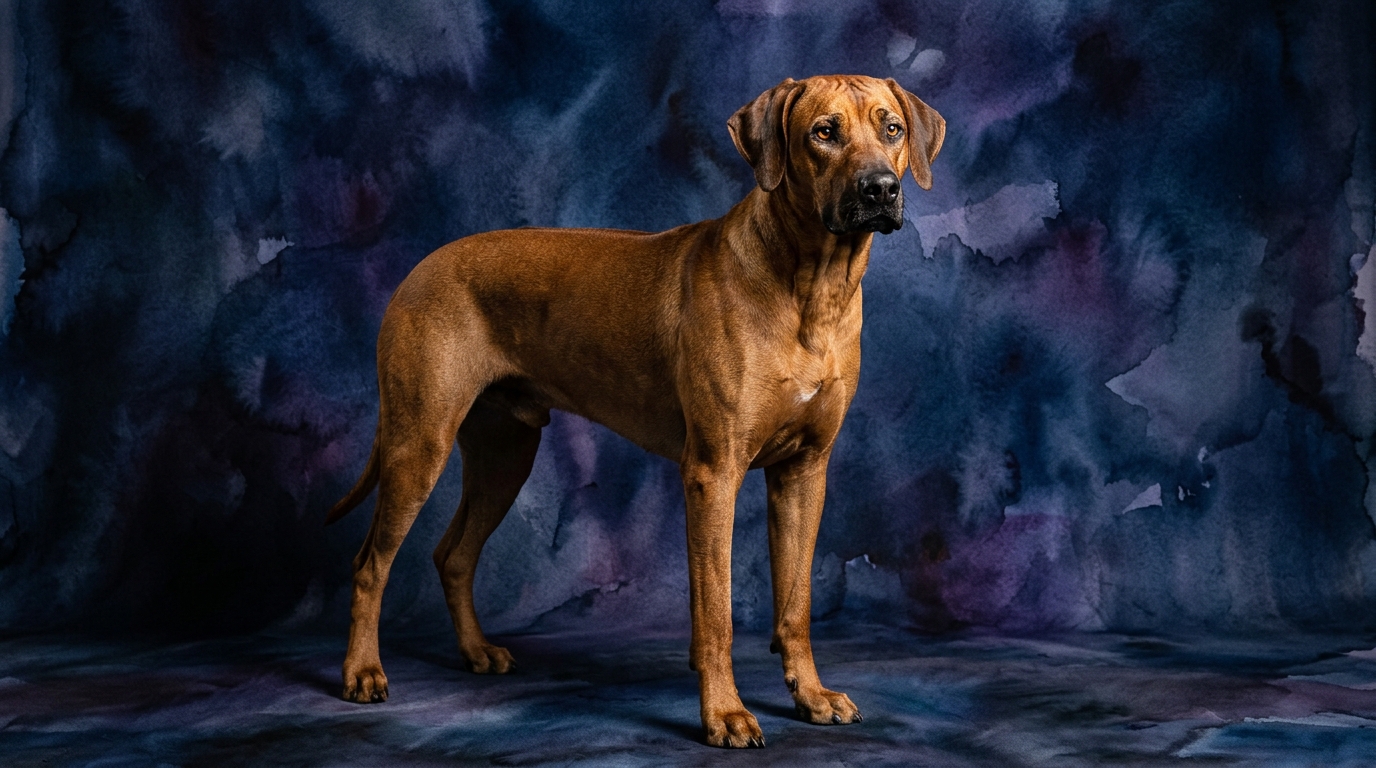
For the **Rhodesian Ridgeback**, a powerful Hound breed ranked #52 by Coren, its 3/5 in Problem Solving reflects its historical role in tracking and holding large game, often lions, in Africa. This isn't about intricate puzzle-solving, but rather strategic navigation of vast landscapes, enduring focus on a scent trail, and making decisions under pressure to corner prey without direct engagement. Its Training Speed of 3/5 indicates a capacity to learn commands at a moderate pace, but often with a strong independent streak characteristic of hounds, requiring consistent and fair leadership. Social Intelligence at 3/5 speaks to its ability to understand pack dynamics within a human family, forming deep bonds while often maintaining a watchful, reserved demeanor with strangers. The Instinctive Drive of 3/5 is pronounced, encompassing a powerful prey drive and a natural protective instinct over its territory and family. Finally, its Memory at 3/5 allows it to recall complex scent paths, routines, and experiences, contributing to its reliability as a companion and guardian.
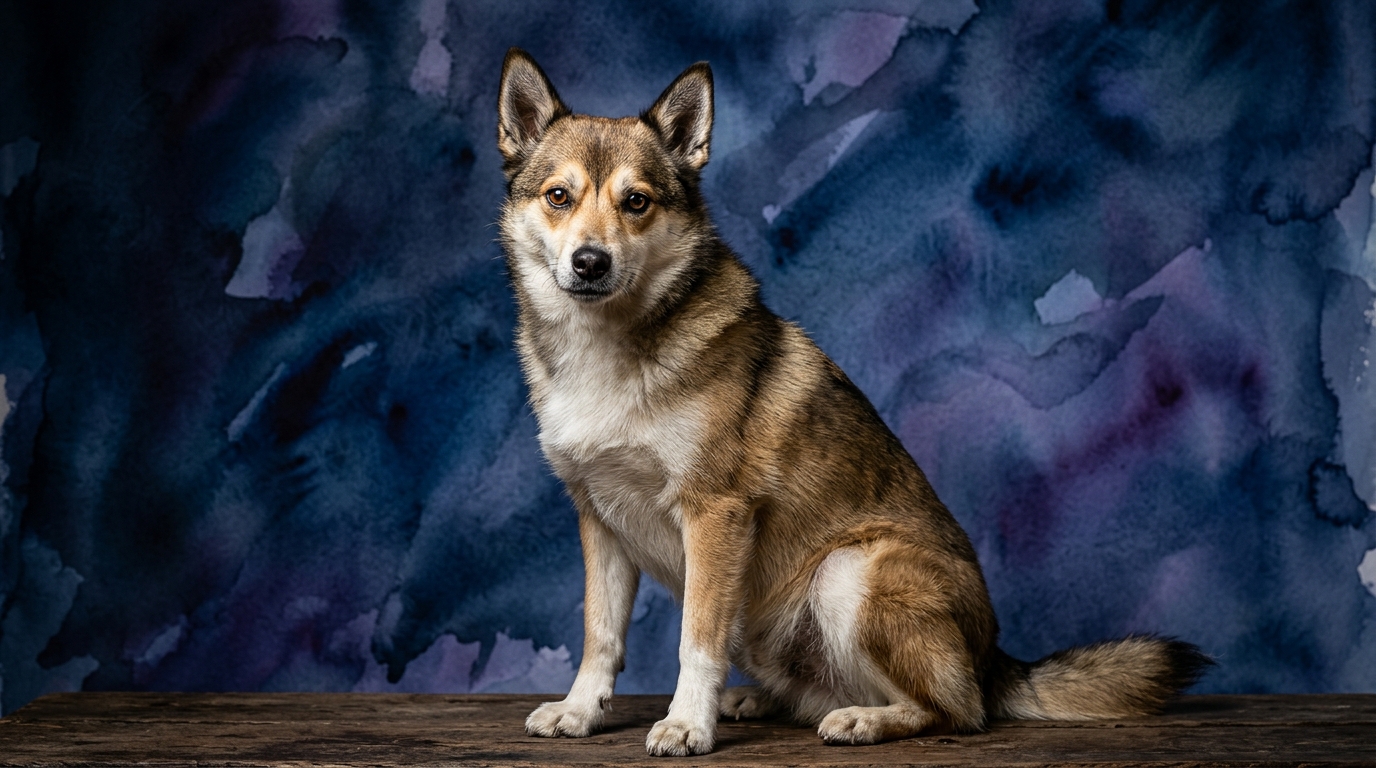
The **Norwegian Lundehund**, a Non-Sporting breed not currently Coren-ranked, also scores 3/5 across the board, but its cognitive expression is shaped by its unique origin as a puffin hunter in the challenging coastal cliffs of Norway. Its Problem Solving at 3/5 is less about open-field strategy and more about intricate spatial reasoning and physical ingenuity. This breed historically navigated narrow crevices and rock formations, requiring the ability to assess complex three-dimensional environments and find novel ways to access tight spaces, leveraging its exceptional joint flexibility. Training Speed at 3/5 suggests a moderate learning curve, but often coupled with an independent and sometimes whimsical nature; they respond well to positive reinforcement and engaging, varied tasks that appeal to their curiosity. Social Intelligence at 3/5 means they are deeply attached to their immediate family, often forming tight, loyal bonds, though they can be quite reserved and watchful around new people or situations, a trait stemming from their isolated island heritage. The Instinctive Drive of 3/5 manifests as a strong urge to explore, climb, and 'hunt' (often small objects or toys), alongside a natural burrowing tendency. Its Memory at 3/5 is particularly adept at recalling complex physical layouts, object locations, and intricate learned sequences, vital for navigating their challenging ancestral environment.
Where the Rhodesian Ridgeback's Cognition Shines
The Rhodesian Ridgeback's cognitive strengths are deeply rooted in its heritage as a silent hunter and protector. Its problem-solving capabilities excel in scenarios demanding sustained focus and strategic endurance. Imagine a Ridgeback tracking a scent over miles, making nuanced decisions about terrain, wind, and the path of its quarry—this requires a sophisticated, long-term cognitive engagement. Their social intelligence, while rated 3/5, allows for a profound understanding of family dynamics, often leading them to assess threats and make protective judgments with remarkable discernment. This isn't just about reacting; it's about anticipating and discerning intent, a subtle form of social problem-solving. Their memory is particularly robust for routines and territory, making them reliable guardians who understand patterns and deviations from the norm, a critical asset for their protective role. The Ridgeback's cognitive prowess is best observed in its ability to commit to a task with unwavering determination, whether it's tracking a scent or standing guard, demonstrating a mental fortitude that underpins its impressive physical capabilities.
Where the Norwegian Lundehund's Cognition Excels
The Norwegian Lundehund, despite identical numerical scores, demonstrates a distinct cognitive brilliance, particularly in areas demanding agility and innovative physical problem-solving. Its historical role necessitated navigating treacherous, confined spaces to hunt puffins, leading to a unique development in spatial reasoning and adaptability. A Lundehund's 3/5 in problem-solving manifests as an uncanny ability to assess and overcome physical obstacles, leveraging its extraordinary flexibility to fit into tight spots or climb challenging surfaces. This involves a rapid assessment of physical dimensions and potential solutions, a form of intelligence that is highly specialized and efficient in its niche. Their memory is finely tuned to recall complex physical environments and the precise movements required to navigate them, allowing for efficient and repeated exploration. Furthermore, their instinctive drive, while also 3/5, is geared towards intricate, exploratory 'hunting' behaviors that involve fine motor skills and persistent investigation, indicating a cognitive capacity for detailed, hands-on engagement with their environment. The Lundehund's intelligence is characterized by its resourcefulness and ingenuity in navigating a physically demanding world.
Training Dynamics: Effort and Engagement
When considering ease of training, both breeds share a 3/5 Training Speed score, yet the *approach* to training differs significantly due to their inherent behavioral patterns. The Rhodesian Ridgeback, with its hound independence, often requires a confident, consistent, and patient trainer. While capable of learning commands, their deep-seated instinctive drive means they can sometimes prioritize a compelling scent or perceived 'mission' over immediate obedience. Training often involves channeling their natural protective and tracking instincts into constructive activities, making them highly responsive when they understand the 'why' behind a command and respect their leader. Their training isn't necessarily harder, but it demands clarity, firmness, and an understanding of their deep motivation. They respond well to structured, routine-based training that builds on their memory and social intelligence, reinforcing their role within the family unit.
The Norwegian Lundehund, despite the same 3/5 Training Speed, can present a different set of training considerations. Their independent, somewhat whimsical nature, combined with a strong exploratory drive, means they can be easily distracted by novelties or their urge to investigate. Training them often requires more creativity, variety, and high-value rewards to keep their interest. They might excel in activities that involve problem-solving, agility, or tasks that leverage their unique physical capabilities, making learning feel like a game. While they are eager to please their family, their historical role of independent hunting means they are not inherently programmed for strict obedience. Trainers must be prepared for a dog that might 'think' for itself and requires engaging, positive reinforcement methods that tap into their curiosity and physical dexterity rather than relying solely on rote commands. Their memory for physical puzzles and learned sequences can be a great asset in trick training or advanced agility.
Lifestyle Match: Active Pursuits vs. Relaxed Companionship
Matching these breeds to an owner's lifestyle requires understanding how their cognitive and physical needs align. The Rhodesian Ridgeback, while not hyperactive indoors, requires substantial physical and mental exertion to thrive. Its instinctive drive and memory for routines mean it benefits immensely from structured activities like long runs, hiking, or advanced obedience and scent work. Owners who are active, enjoy outdoor adventures, and can provide consistent leadership will find a deeply loyal and engaged companion. Their social intelligence makes them excellent family dogs, but their protective nature means they need proper socialization from a young age and a clear understanding of their role within the household hierarchy. They are suited for owners who can commit to regular, challenging physical exercise and consistent mental stimulation that engages their strategic thinking and endurance.
The Norwegian Lundehund, in contrast, suits a different kind of active owner. While they are energetic and enjoy play, their physical activity needs are often met with shorter bursts of intense play, agility courses, or opportunities for climbing and exploring. Their problem-solving skills and memory thrive on puzzle toys, interactive games, and environments that allow them to use their unique physical capabilities, such as navigating a backyard obstacle course. They are less about sustained endurance and more about intricate, mentally stimulating activities. Owners who enjoy engaging in unique dog sports, providing novel challenges, and appreciate a quirky, independent companion will find the Lundehund a delightful match. They can adapt to smaller living spaces more readily than a Ridgeback, provided their mental and physical needs for exploration and problem-solving are met through creative outlets.
The Verdict
Choose the Rhodesian Ridgeback if you seek a steadfast, protective companion for structured outdoor adventures and appreciate a dog with a strong, independent spirit that values routine and clear leadership.
Opt for the Norwegian Lundehund if you desire an agile, unique companion who thrives on intricate problem-solving, enjoys exploring varied environments, and appreciates an owner who engages their curiosity with creative, interactive play.
🧠 Find Your Pet's IQ Score
Our Pet IQ Lab assessment covers 25+ tests across 5 cognitive dimensions — personalized to your breed.
Take the Full IQ Test →Frequently Asked Questions
Do Rhodesian Ridgebacks make good family dogs?
Yes, Rhodesian Ridgebacks can be excellent family dogs. Their social intelligence allows them to form strong bonds with their human 'pack,' and their protective instincts make them devoted guardians. Proper socialization and consistent training are crucial to ensure they are well-adjusted.
Are Norwegian Lundehunds difficult to train due to their independence?
Norwegian Lundehunds, while independent, are not inherently difficult to train, but they do require a creative and patient approach. Their training speed is moderate, and they respond best to positive reinforcement, variety, and activities that stimulate their natural curiosity and unique physical abilities, making it an engaging process.
Which breed is better for first-time dog owners?
Neither breed is typically recommended for first-time dog owners without a strong commitment to understanding their specific needs. Both possess independent streaks and unique cognitive demands that benefit from experienced handling, consistent training, and dedicated engagement to flourish fully.