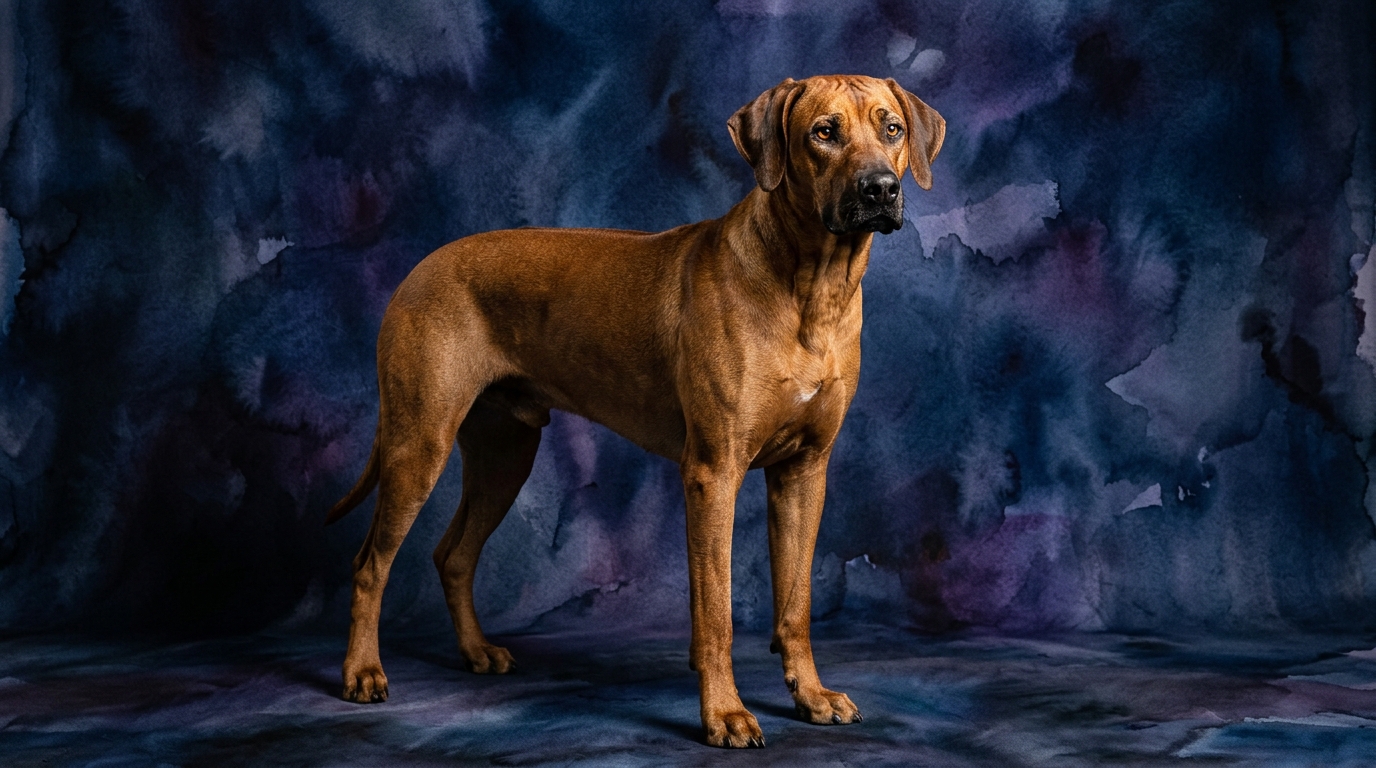

Side-by-Side Cognitive Profile
Despite both the Rhodesian Ridgeback (Coren rank #52) and the Tibetan Spaniel (Not Coren-ranked) sharing identical scores across five key cognitive dimensions, their application and expression of these traits are shaped by their breed histories and purposes. These scores, each rated 3 out of 5, indicate a moderate capability in every area, yet the nuance lies in how each breed leverages these cognitive tools.
For the Rhodesian Ridgeback, a score of 3/5 in Problem Solving reflects a capability for independent thought when faced with challenges, often applied to tasks requiring strategic thinking in pursuit or protection. They aren't typically looking for human direction for every step, preferring to assess and act on their own initiative, which was crucial for tracking quarry. Their Training Speed, also 3/5, suggests a moderate pace of learning new commands; Ridgebacks are capable of absorbing information, but their independent nature means they might require consistent, engaging methods to maintain focus rather than simply complying. Social Intelligence at 3/5 indicates an awareness of their social environment and the dynamics within their human family, allowing them to read cues and understand hierarchy, but their social interactions often carry a degree of self-possession. The Ridgeback’s 3/5 Instinctive Drive is largely channeled towards their historical purpose: tracking, chasing, and protecting, manifesting as a deep-seated inclination to explore, patrol, and engage with their environment in a purposeful, often physically demanding, manner. Finally, a 3/5 in Memory means they retain learned behaviors, routines, and experiences effectively, contributing to their reliability in established roles and their cautious nature with new situations or people.
The Tibetan Spaniel, with identical 3/5 scores, demonstrates these cognitive traits through a different lens. Their 3/5 in Problem Solving often translates to cleverness within a domestic setting; they might figure out how to open cabinets, manipulate situations for attention, or find comfortable vantage points, demonstrating an adaptable and resourceful mind focused on their immediate environment. Training Speed at 3/5 suggests a moderate capacity for learning commands, similar to the Ridgeback, but the Tibetan Spaniel's motivation might stem more from a desire for companionship and comfort, leading to a willingness to learn for rewards or to maintain harmony within their household. Social Intelligence at 3/5 means they are adept at observing and understanding human moods and household dynamics, sensitive to their family's emotions, and able to adapt their behavior to fit the social context, often acting as keen observers from a slightly elevated perch. The Tibetan Spaniel's 3/5 Instinctive Drive is rooted in its historical role as a companion and watchdog in monasteries, manifesting as strong territorial awareness, a desire to be near their people, and an inclination to alert to anything unusual, rather than a drive for physical pursuit or extensive outdoor activity. A 3/5 in Memory means they remember routines, preferred individuals, and past experiences reliably, quickly learning household schedules and who is who, contributing to their consistent behavior and their ability to settle into a predictable home life.
Where the Rhodesian Ridgeback Wins Cognitively
The Rhodesian Ridgeback's cognitive strengths truly shine in scenarios demanding independent decision-making and sustained focus on a task. Their 3/5 problem-solving isn't about figuring out puzzle toys, but rather assessing a large outdoor environment, tracking a scent over varied terrain, or determining the best path to intercept. This breed's instinctive drive, also rated 3/5, is a powerful engine for these activities, giving them the mental stamina to persevere through challenges that would deter many other dogs. While their training speed is a moderate 3/5, once they commit to a task they deem worthwhile, their memory (3/5) ensures they retain complex sequences of actions, making them capable participants in activities like tracking, advanced obedience, or even search and rescue where initiative is prized. Their social intelligence (3/5) allows them to work collaboratively with a handler, understanding expectations without needing constant micro-management, making them particularly effective in roles requiring a partner rather than a subordinate.
Where the Tibetan Spaniel Wins Cognitively
Conversely, the Tibetan Spaniel exhibits distinct cognitive strengths that align with its role as a perceptive companion. Their 3/5 problem-solving often manifests as an astute ability to navigate social situations or manipulate their environment for comfort and attention. This might involve strategically placing themselves for optimal lap access or figuring out how to get a preferred treat. Their social intelligence (3/5) is particularly pronounced in their capacity to observe and interpret human behavior, moods, and routines with remarkable accuracy, often anticipating needs or reacting sensitively to emotional shifts within the home. This observational acumen, combined with their 3/5 memory, allows them to quickly learn household rhythms and the preferences of their family members. While their instinctive drive (3/5) is less about physical exertion, it's acutely focused on vigilance and companionship, making them exceptionally attuned to their immediate surroundings and the well-being of their human family.
Which is Easier to Train and Why
Evaluating which breed is 'easier' to train, despite both having a 3/5 training speed, requires looking beyond the raw score to their underlying motivations and instinctive drives. The Rhodesian Ridgeback, with its independent problem-solving and strong historical drive for autonomous action, often requires a handler who can make training compelling and relevant to their innate desires. They learn, but they might question the 'why' or prefer to apply their own initiative, which can be perceived as stubbornness if not managed with positive reinforcement and clear boundaries. Consistency and making training feel like a partnership or a meaningful challenge are crucial. The Tibetan Spaniel, while also rated 3/5 for training speed, tends to be more motivated by companionship and maintaining harmony within their social group. They might be more eager to please for attention or treats, making them responsive to reward-based training. However, their independent spirit and occasional 'selective hearing,' stemming from their historical role as watchful companions rather than working dogs, means they won't automatically obey every command. They learn quickly when they see the benefit or connection to their social bond, but can be easily distracted if not engaged. Ultimately, neither is inherently 'easier' across the board; it depends on the trainer's approach and understanding of each breed's specific cognitive leanings.
Which Suits Active Owners vs. Relaxed Owners
The choice between a Rhodesian Ridgeback and a Tibetan Spaniel hinges significantly on an owner's lifestyle and energy levels. For active owners, the Rhodesian Ridgeback is often a more fitting companion. Their 3/5 instinctive drive translates into a need for substantial physical activity and mental engagement outdoors. They thrive on opportunities to use their problem-solving skills for tasks like long hikes, tracking games, or participating in dog sports. Their physical stamina and endurance mean they require an owner who can consistently provide outlets for their energy and mental stimulation, preventing boredom and channeling their natural drives constructively. Conversely, the Tibetan Spaniel typically suits more relaxed owners. While they enjoy walks and playtime, their 3/5 instinctive drive is less about sustained physical exertion and more about vigilance and companionship within the home environment. They are content with moderate daily exercise and prefer to spend much of their time observing their surroundings from a comfortable perch, or nestled close to their family. Their cognitive strengths are best utilized in a setting where they can be attentive observers and social participants without the demand for strenuous physical output.
The Verdict
Choose the Rhodesian Ridgeback if you are an active, experienced owner seeking a robust, independent-minded partner for outdoor adventures and structured mental challenges. They excel when given purpose and consistent guidance.
Opt for the Tibetan Spaniel if you desire a perceptive, observant companion who thrives in a relaxed home environment and enjoys close proximity to their family. They offer keen social awareness and subtle charm.
🧠 Find Your Pet's IQ Score
Our Pet IQ Lab assessment covers 25+ tests across 5 cognitive dimensions — personalized to your breed.
Take the Full IQ Test →Frequently Asked Questions
Do Rhodesian Ridgebacks and Tibetan Spaniels have the same intelligence?
While both breeds score 3/5 across all five IQ dimensions, their intelligence manifests differently due to their historical roles. The Ridgeback's cognitive strengths lie in independent problem-solving for physical tasks, while the Tibetan Spaniel excels in social observation and navigating domestic situations.
Is a Rhodesian Ridgeback good for first-time dog owners?
Rhodesian Ridgebacks are generally not recommended for first-time dog owners due to their independent nature and strong instinctive drives. Their 3/5 problem-solving and moderate training speed require consistent, experienced handling to channel their energy and intelligence effectively.
How much mental stimulation does a Tibetan Spaniel need?
A Tibetan Spaniel requires moderate mental stimulation, often satisfied through interactive play, short training sessions, and opportunities for observation. Their 3/5 social intelligence thrives on being involved in family activities and observing household dynamics, rather than demanding complex puzzle work.