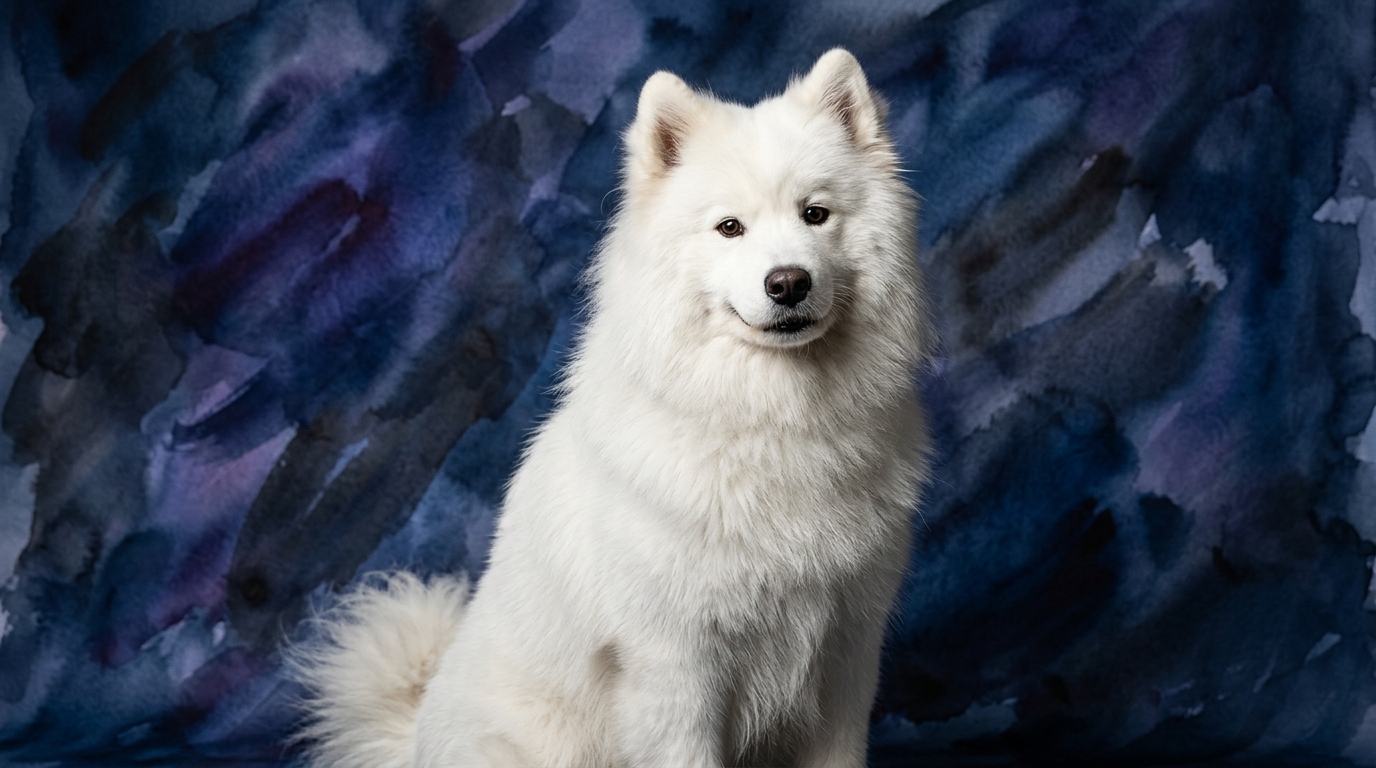
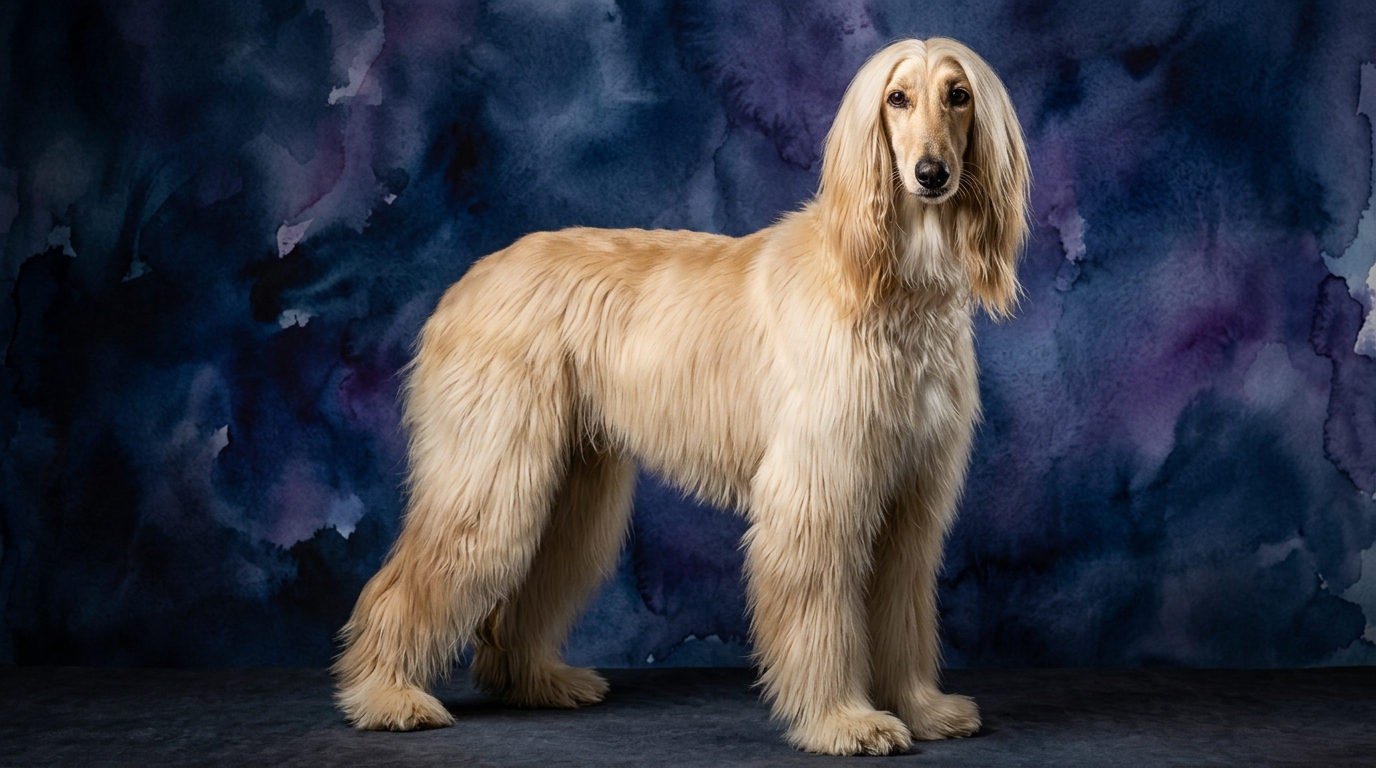
Side-by-Side Cognitive Profile: Samoyed vs. Afghan Hound
At The Cosmic Pet Pet IQ Lab, we dissect canine intelligence across five critical dimensions, offering a nuanced view beyond simple obedience. The Samoyed, a Working group dog, holds a Coren rank of #33, reflecting its capacity for learning human commands.
For the Samoyed, Problem Solving is rated 3/5, indicating an aptitude for navigating tasks within a collaborative framework, often involving human cues in activities like herding or sledding. Their Training Speed, also 3/5, suggests a moderate pace for acquiring new commands, driven by a desire for engagement and positive reinforcement. Social Intelligence, a remarkable 5/5, highlights their exceptional ability to understand social cues, emotional states, and group dynamics, making them highly attuned companions. Their Instinctive Drive, 4/5, manifests as a strong desire to work and contribute, channeling their energy into purposeful activities. Memory stands at 3/5, signifying a solid capacity for recalling learned behaviors and routines.
The Afghan Hound, a member of the Hound group, has a Coren rank of #79, which often surprises those unfamiliar with its independent nature. This ranking primarily reflects their selective compliance rather than a lack of cognitive capacity.
The Afghan Hound excels in Problem Solving, scoring 4/5. This reflects their history as independent hunters, capable of assessing situations and devising autonomous solutions for complex pursuits. Their Training Speed, however, is 1/5, a direct consequence of their profound independence; they process commands but often choose whether to comply based on self-interest. Social Intelligence is 2/5; while affectionate with their chosen family, they are more reserved, observing rather than actively seeking constant interaction. Their Instinctive Drive is a powerful 5/5, dominated by an intense prey drive that dictates much of their behavior. Memory, like the Samoyed, is 3/5, reliable for significant events, locations, and individuals, influencing their responses over time.
Where the Samoyed Wins Cognitively
The Samoyed’s cognitive strengths are deeply rooted in their history as collaborative working dogs. Their paramount advantage lies in their exceptional Social Intelligence (5/5). This isn't just friendliness; it's a profound capacity for understanding human intentions, emotional states, and subtle cues, making them highly responsive partners. A Samoyed is often attuned to its family’s mood, preemptively offering comfort or initiating play.
This social attunement directly enhances their Training Speed (3/5), as they genuinely desire to engage and collaborate, processing commands with a willingness to please. Their Problem Solving (3/5) often manifests within a cooperative framework; they excel at navigating tasks when given direction or when the solution benefits the group. For instance, a Samoyed might figure out how to open a gate not just for personal freedom but to join their human, demonstrating a social motivation for cognitive effort. They thrive in environments where communication and teamwork are valued, becoming deeply integrated and responsive family members.
Where the Afghan Hound Wins Cognitively
The Afghan Hound's cognitive prowess, though often misunderstood due to its training speed score, stems from its ancient role as an independent hunter. Their most significant cognitive advantage lies in their powerful Instinctive Drive (5/5), coupled with an impressive Problem Solving (4/5) ability that operates largely autonomously. Unlike the Samoyed, an Afghan Hound's problem-solving isn't about pleasing a human; it's about achieving a self-determined goal, typically involving the chase or strategic navigation of terrain.
They possess a remarkable capacity for independent thought, making rapid judgments and adapting strategies on the fly when pursuing prey. This translates into a dog that can assess complex situations, identify opportunities, and execute plans without constant human direction. Their Memory (3/5) is particularly noteworthy for spatial awareness and recalling past successes or failures in their hunting pursuits. While their Social Intelligence (2/5) is lower, it manifests as a dignified, selective bond rather than a lack of depth. Their cognitive wins are in their self-sufficiency and the sophisticated machinery dedicated to their ancestral purpose, making them masters of independent action.
Which is Easier to Train and Why
When evaluating ease of training, the Samoyed clearly holds an advantage over the Afghan Hound, a distinction rooted in their fundamental cognitive profiles. The Samoyed's Training Speed (3/5) and exceptional Social Intelligence (5/5) create a highly receptive student. Samoyeds possess an innate desire to engage with and please their human companions, making them eager participants in training sessions. They are motivated by praise, treats, and the sheer joy of working alongside their person, processing commands and associating actions with rewards relatively quickly.
Conversely, the Afghan Hound's Training Speed (1/5) is a direct reflection of their profound independence and less human-centric Social Intelligence (2/5). An Afghan Hound understands commands but often weighs compliance against its own interests or instincts. They were bred to make decisions autonomously, not to blindly follow human direction. This means that while they are capable of learning, their willingness to perform on cue is highly variable. Training an Afghan Hound requires immense patience, consistency, and methods that make them feel like they are choosing to participate. Their high Instinctive Drive (5/5) can also be a significant distraction during training, requiring an environment free of tempting stimuli. For an owner seeking a dog that readily accepts and enjoys traditional obedience, the Samoyed presents a far more straightforward and rewarding training journey.
Which Suits Active Owners vs. Relaxed Owners
Determining which breed suits an active versus a relaxed owner requires a nuanced look at their energy levels, cognitive engagement needs, and social requirements. The Samoyed, with its Instinctive Drive (4/5) rooted in working and herding, coupled with its high Social Intelligence (5/5), is an ideal match for active owners who desire a highly interactive companion. Samoyeds thrive on regular physical activity—think long walks, jogs, hiking, or dog sports like agility and canicross. Beyond physical exertion, they demand significant mental engagement and social interaction; an owner who can incorporate their Samoyed into daily activities will find a truly fulfilled partner.
The Afghan Hound presents a unique profile. While possessing an incredibly powerful Instinctive Drive (5/5) for running and chasing, their daily energy expenditure is often characterized by bursts of intense activity followed by periods of dignified repose. They need opportunities for full-speed sprinting in a securely fenced area, but their overall demand for constant human interaction or structured exercise is lower than a Samoyed's. An active owner who enjoys providing these intense, independent running sessions but doesn't necessarily want a dog constantly at their heels might find an Afghan Hound suitable. For a truly relaxed owner, the Afghan Hound can be a surprisingly good fit, provided they can facilitate those crucial high-speed runs and appreciate a more independent, less demanding companionship.
The Verdict
Choose a Samoyed if you seek a highly cooperative, socially intelligent companion eager to engage in training and share in family activities, thriving on consistent interaction and purposeful work.
Opt for an Afghan Hound if you appreciate an independent, dignified canine with a powerful instinct for running, offering a more reserved companionship but requiring dedicated opportunities for intense physical expression.
🧠 Find Your Pet's IQ Score
Our Pet IQ Lab assessment covers 25+ tests across 5 cognitive dimensions — personalized to your breed.
Take the Full IQ Test →Frequently Asked Questions
Do Afghan Hounds truly struggle with problem-solving despite their low Coren rank?
No, Afghan Hounds possess excellent problem-solving skills (4/5), particularly for independent tasks related to their sighthound heritage like hunting. Their lower Coren rank reflects their selective compliance to human commands rather than a cognitive deficit in general problem-solving.
How does the Samoyed's high social intelligence manifest in daily life?
A Samoyed's 5/5 social intelligence means they are highly attuned to human emotions and intentions, often anticipating needs, seeking interaction, and thriving in family dynamics. They make deeply connected, responsive companions who actively participate in household life.
Can an Afghan Hound be trained for advanced obedience or dog sports?
Yes, an Afghan Hound can be trained, but it requires exceptional patience, consistency, and motivation tailored to their independent nature. They may excel in sports like lure coursing, which taps into their instinctive drive, but traditional obedience will be a slower, more challenging journey compared to many other breeds.