
Side-by-Side Cognitive Profiles
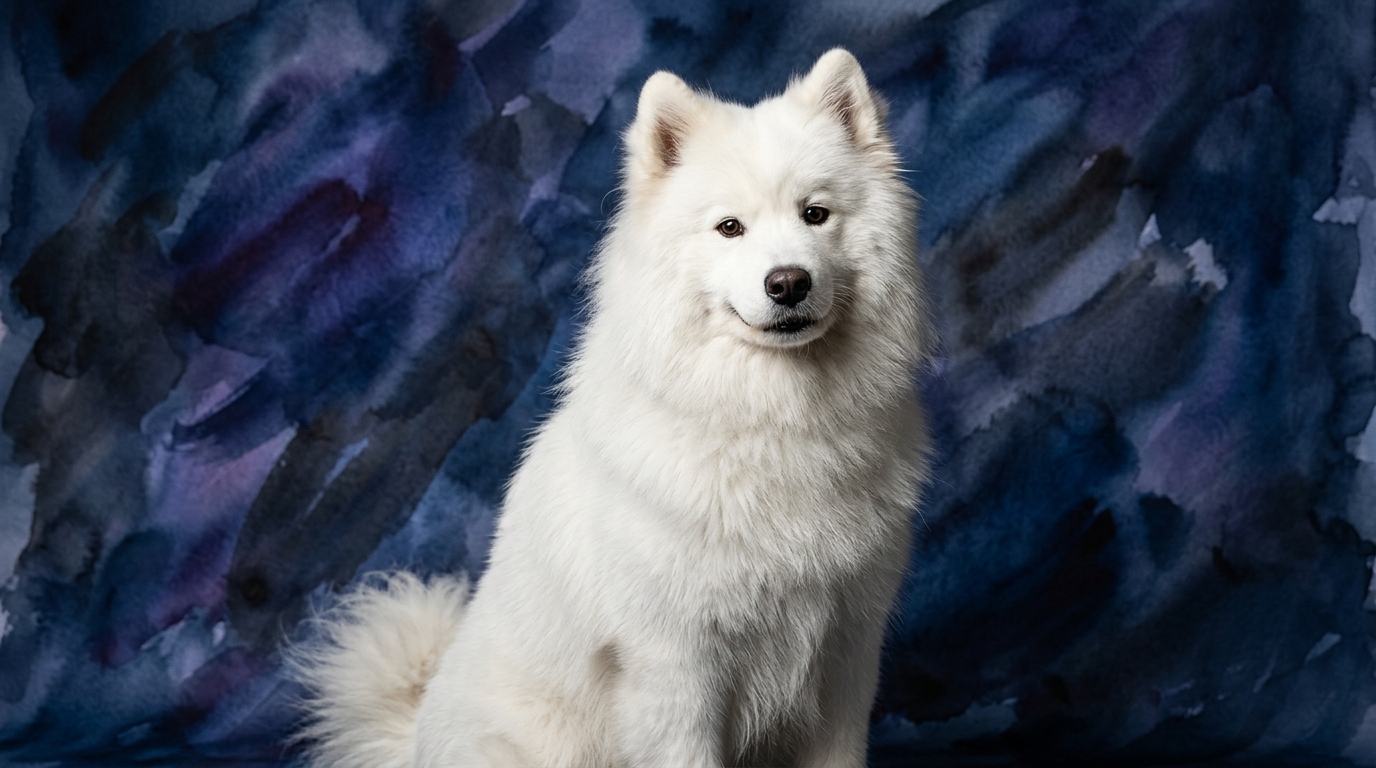
To understand the unique mental strengths of these breeds, The Cosmic Pet Pet IQ Lab employs five distinct dimensions of intelligence. The Samoyed, a Working group dog with a Coren rank of #33, presents a profile emphasizing social connection and practical drive.
Samoyed IQ Breakdown:
Problem Solving (3/5): Samoyeds demonstrate practical intelligence for navigating their environment and tasks, but may not instinctively excel at abstract puzzles or complex, multi-step commands without significant repetition. Their solutions often lean towards efficiency or comfort within their immediate surroundings.
Training Speed (3/5): While capable of learning, Samoyeds often require patience and consistent, positive reinforcement. They can be independent thinkers, meaning they might weigh the immediate reward against the effort, sometimes leading to a slower acquisition of new behaviors.
Social Intelligence (5/5): Exceptionally attuned to human emotions and social cues, Samoyeds thrive on companionship and interaction. They form deep bonds and often seek to integrate themselves fully into their family unit, displaying a natural empathy and desire for connection.
Instinctive Drive (4/5): Driven by their history of working collaboratively in teams, pulling sleds, and herding reindeer, this manifests as a strong desire for purpose and activity, often expressed through pulling, digging, or vocalization.
Memory (3/5): Samoyeds retain learned behaviors and experiences, particularly those associated with positive reinforcement or routine. However, they may not recall complex sequences or infrequently practiced commands with the same precision as breeds with higher memory scores.
The Belgian Sheepdog (Groenendael), a Herding group dog with a Coren rank of #15, showcases a different set of cognitive strengths, particularly in areas requiring focused mental agility and retention.
Belgian Sheepdog (Groenendael) IQ Breakdown:
Problem Solving (5/5): This breed demonstrates exceptional aptitude for complex cognitive tasks, quickly analyzing situations and devising strategies. They excel at understanding intricate commands and adapting to novel challenges, often showing impressive initiative.
Training Speed (5/5): Groenendaels master new commands and behaviors with remarkable speed, often grasping concepts in just a few repetitions. Their intense focus and eagerness to work with their handler contribute significantly to their rapid learning curve.
Social Intelligence (3/5): While forming strong bonds with their primary family members, Groenendaels can be more reserved or discerning with strangers. Their social interactions are often purposeful, focused on their role as a guardian or companion rather than universal amiability.
Instinctive Drive (3/5): Possessing a moderate herding instinct, this can manifest as a desire to gather or control movement, which can be channeled into structured activities. This drive is often balanced by their strong focus on handler direction.
Memory (5/5): Groenendaels exhibit outstanding retention of commands, routines, and experiences, remembering even rarely practiced skills. This strong memory underpins their ability to perform complex sequences and recall specific training cues over long periods.
Where the Samoyed Cognitively Excels
The Samoyed truly shines in the realm of social intelligence, scoring a perfect 5/5. This isn't merely about being friendly; it reflects a profound capacity for emotional attunement and cooperative living. They are deeply integrated into their human families, often anticipating moods and seeking to participate in family activities with an almost intuitive understanding of group dynamics. This cognitive strength makes them exceptional companions for multi-pet households or families desiring a dog that is an active, empathetic member of the unit, rather than just a pet. Their historical role as working dogs, pulling sleds in teams and living in close proximity to humans, has undoubtedly fostered this rich social cognition, emphasizing harmony and mutual understanding. This translates into a dog that often prefers companionship over solitude, actively engaging with its people and demonstrating a clear desire for connection and interaction. The nuanced understanding of their human companions' emotional states allows them to offer comfort or seek engagement in ways that feel deeply personal and reciprocal, making them highly responsive to the social fabric of their home environment. They thrive on being part of the pack, contributing to the collective well-being with their communicative nature and genuine affection.
Where the Belgian Sheepdog (Groenendael) Cognitively Excels
Conversely, the Belgian Sheepdog (Groenendael) stands out dramatically in areas of problem-solving, training speed, and memory, each rated 5/5. Their cognitive architecture is geared towards rapid acquisition and precise execution of complex tasks. A Groenendael can quickly decipher intricate commands, understand multi-step sequences, and adapt their behavior based on nuanced environmental cues. This mental agility means they often anticipate their handler's next instruction, processing information at an accelerated pace. Their exceptional memory ensures that once a lesson is learned, it is retained with remarkable durability, allowing for the build-up of vast repertoires of skills without significant decay. This combination of swift learning and robust recall makes them adept at advanced obedience, agility, and protection work, where precision and quick thinking are paramount. They don't just learn; they internalize and apply, demonstrating a deep understanding of tasks rather than rote memorization. This breed's ability to consistently recall and execute complex behaviors, even after long breaks, is a testament to their superior memory, which underpins their capacity for sustained high-level performance in various demanding disciplines. Their mental processing is often characterized by a keen analytical edge, enabling them to break down challenges and formulate effective responses with impressive efficiency.
Training Dynamics: Which is Easier and Why?
When it comes to ease of training, the Belgian Sheepdog (Groenendael) holds a distinct advantage, scoring 5/5 in training speed compared to the Samoyed's 3/5. This difference stems from their inherent cognitive profiles. The Groenendael's superior problem-solving and memory capabilities allow them to grasp new concepts and commands with remarkable swiftness, often requiring only a few repetitions. They possess an intense focus and a strong desire to work in partnership with their handler, making them highly receptive to instruction. This breed typically thrives on structured training sessions, quickly internalizing expectations and executing tasks with precision. In contrast, the Samoyed, while capable of learning, often exhibits a more independent and sometimes stubborn streak. Their training speed rating of 3/5 reflects a need for more patience, consistency, and highly motivating rewards. They might question the utility of a command or prioritize their own comfort, requiring handlers to make training engaging and consistently rewarding to maintain their attention and compliance. For instance, a Groenendael might learn a complex agility course in a fraction of the time it takes a Samoyed, who might get distracted by a scent or decide a particular obstacle isn't worth the effort. The Groenendael's training success is often a direct result of their profound mental engagement and commitment to the task at hand, whereas the Samoyed's more independent nature means training often requires more creative strategies to harness their attention and willingness.
Matching Breeds to Lifestyles: Active vs. Relaxed Owners
The choice between these breeds for active versus relaxed owners hinges significantly on their differing cognitive and energetic needs. The Belgian Sheepdog (Groenendael), with its 5/5 in problem-solving and training speed, demands an owner who is not only active but also committed to providing consistent mental stimulation and structured activities. These dogs thrive when given a job, whether it's advanced obedience, agility, scent work, or herding. Their capacity for rapid learning and excellent memory means they can become bored and potentially destructive if their cognitive needs are neglected. They require an owner who enjoys engaging in daily training, challenges, and exercise that taps into their sharp intellect and working drive. A Groenendael is best suited for an active owner who views dog training as an ongoing partnership and a source of mutual enrichment, someone who can dedicate significant time to their dog's mental and physical development. Conversely, the Samoyed, while still an active breed with an instinctive drive of 4/5, offers a slightly different dynamic. Their strong social intelligence (5/5) means they thrive on human companionship and being an integral part of family life. While they need regular exercise to channel their working breed energy, their cognitive needs are more centered around social interaction and cooperative play rather than constant, high-level task-oriented work. They can adapt to a moderately active household that prioritizes quality time and social engagement, though they still require outlets for their natural instincts like pulling or exploring. An owner who enjoys long walks, family outings, and appreciates a dog that is deeply connected to them emotionally, rather than primarily task-driven, might find the Samoyed a more harmonious fit. They need an owner who understands their independent spirit but values their profound loyalty and playful nature.
The Verdict
Choose the Samoyed if you prioritize a deeply empathetic, highly social companion who thrives on family integration and cooperative play, and you're prepared for an independent thinker in training.
Opt for the Belgian Sheepdog (Groenendael) if you seek a highly trainable, mentally agile partner for advanced dog sports or demanding tasks, and you can provide consistent, high-level mental stimulation.
🧠 Find Your Pet's IQ Score
Our Pet IQ Lab assessment covers 25+ tests across 5 cognitive dimensions — personalized to your breed.
Take the Full IQ Test →Frequently Asked Questions
Do Samoyeds need a lot of mental stimulation?
Samoyeds benefit from mental engagement that taps into their social intelligence and instinctive drives, such as puzzle toys, cooperative games, and opportunities for exploration during walks. While not as task-oriented as some breeds, they thrive on interaction and being part of family activities.
Are Belgian Sheepdogs good for first-time dog owners?
Belgian Sheepdogs are generally not recommended for first-time dog owners due to their high intelligence, intense work drive, and need for consistent, experienced handling and extensive socialization. They require an owner committed to ongoing training and mental challenges.
How do their instincts influence their daily behavior?
The Samoyed's strong instinctive drive (4/5) often manifests as a desire to pull, dig, and be vocal, reflecting their sled-dog heritage. The Belgian Sheepdog's moderate herding instinct (3/5) can lead to a tendency to 'gather' family members or other pets, requiring appropriate channeling through training.