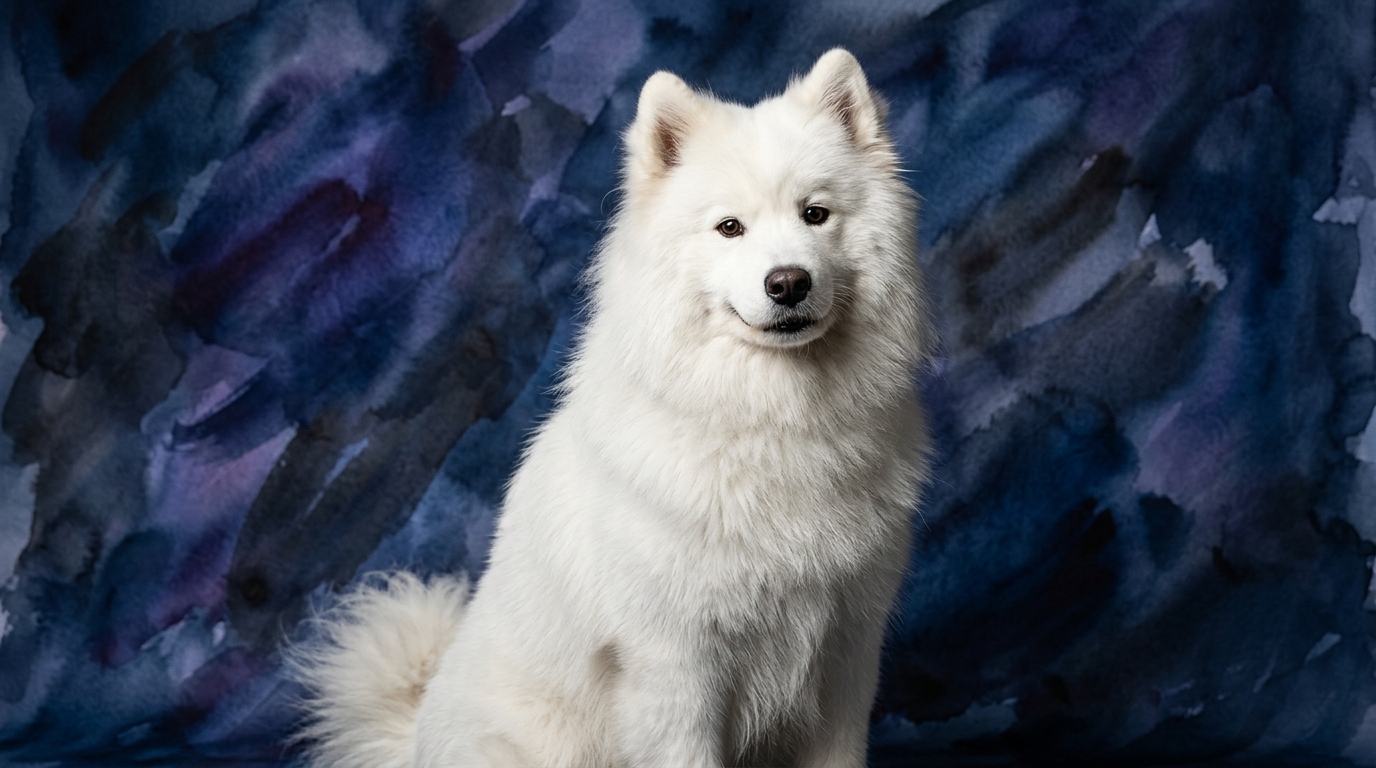
Side-by-Side IQ Profile: Samoyed
The Samoyed, a Working group dog ranked #33 by Coren, presents a balanced cognitive profile geared towards cooperative endeavors. Its Problem Solving is rated 3/5, demonstrating practical skills in real-world scenarios, such as navigating complex terrain while herding or figuring out how to open a gate, but they aren't typically driven by solving abstract puzzles without a clear cooperative goal.
Training Speed for the Samoyed is 3/5; they learn new commands and routines at a steady pace, often motivated by positive reinforcement and a desire to engage, though their independent streak means consistency is key to solidifying behaviors. Its Social Intelligence truly shines at 5/5, possessing an exceptional ability to interpret human body language, tone of voice, and emotional states, responding with empathy and forming profound, reciprocal bonds within their family unit, making them highly intuitive companions. The breed's Instinctive Drive is 4/5, featuring strong, cooperative drives for herding, pulling, and guarding, historically rooted in working alongside humans in harsh Arctic conditions, translating to a desire for purpose and shared activity. Finally, their Memory stands at 3/5, exhibiting a good working memory for routines, learned commands, and the faces and temperaments of familiar individuals, contributing to their adaptability and consistent behavior in established environments.
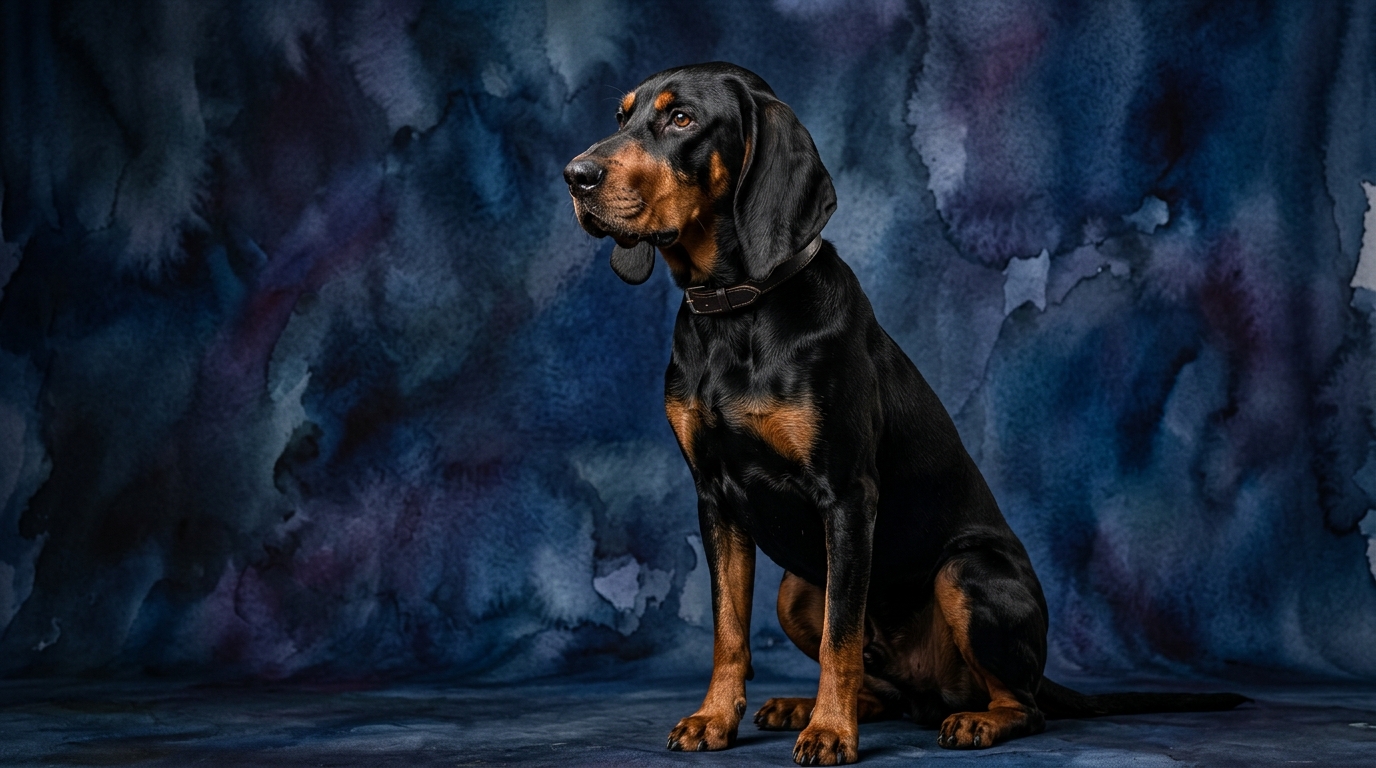
Side-by-Side IQ Profile: Black and Tan Coonhound
The Black and Tan Coonhound, a Hound group dog not ranked by Coren, showcases a cognitive profile deeply specialized in scent work and independent pursuit. Its Problem Solving is rated 3/5, primarily applying its skills in the field, meticulously unraveling complex scent trails, navigating dense undergrowth, and overcoming physical obstacles to locate quarry, a highly specialized form of cognitive effort.
Training Speed for the Coonhound is 3/5; they learn at a moderate rate but can be challenging due to its independent nature and high distractibility when a compelling scent is present, requiring patient, consistent, and reward-based methods to keep its attention. Its Social Intelligence is 3/5; while affectionate with its family, the Coonhound often expresses its social bonds through more subtle gestures, valuing its individual pursuits, and may not always seek constant human interaction or readily interpret nuanced social cues compared to more people-centric breeds. The breed's Instinctive Drive is 3/5, dominated by an overwhelmingly powerful and persistent drive to track scent, which can be all-consuming and supersede other learned behaviors or commands once engaged, reflecting its deep-seated hunting heritage. Its Memory is 3/5, possessing a functional memory for established routines, familiar environments, and especially for significant scent patterns, which is crucial for its primary role as a tracker, allowing it to recall and follow complex olfactory information.
Where the Samoyed Wins Cognitively
The Samoyed's cognitive prowess in social understanding is a clear advantage, scoring 5/5 in Social Intelligence compared to the Coonhound's 3/5. They possess an uncanny ability to read human emotions, intentions, and subtle cues, making them highly empathetic and intuitive partners. This isn't merely about being affectionate; it's a deep-seated capacity for reciprocal communication and cooperative engagement, honed over centuries of working in close partnership with humans. Their ability to anticipate needs and respond appropriately fosters a profound bond that few breeds can match, making them exceptional companions in daily life and collaborative tasks.
Furthermore, the Samoyed's Instinctive Drive, rated 4/5, is intrinsically linked to cooperation and teamwork, which is a cognitive win over the Coonhound's 3/5 drive. Their historical roles in herding reindeer, pulling sleds, and guarding encampments demanded a willingness to work *with* their human handlers towards a common goal. This drive manifests as a desire for shared purpose and contribution to the 'pack' (family) efforts, making them naturally more inclined to engage in directed activities and respond positively to guidance, contrasting sharply with the independent pursuit characteristic of the Coonhound.
Where the Black and Tan Coonhound Wins Cognitively
While its general Problem Solving is rated 3/5, the Black and Tan Coonhound exhibits a highly specialized and sophisticated form of cognitive problem-solving when on a scent trail. This involves an intricate mental mapping of complex olfactory information, the ability to discern a specific target scent from a myriad of competing odors, and persistent, methodical navigation through varied terrain to follow a trail. This unique intellectual tenacity, focused entirely on olfactory puzzles, is a cognitive strength unmatched by breeds whose drives are less singularly focused. It's a testament to evolutionary specialization.
Though its Instinctive Drive is rated 3/5, the Coonhound's particular manifestation of this drive—its relentless, almost obsessive commitment to a scent—represents a cognitive 'win' in its specific domain. This isn't a broad drive, but a deep, unyielding focus that allows it to maintain concentration on a trail for hours, ignoring distractions that would deter other dogs. This singular-minded determination, while sometimes challenging for owners in terms of recall, is a profound cognitive asset for its historical purpose, enabling it to perform scent detection tasks with unparalleled endurance and dedication.
Which is Easier to Train and Why
The Samoyed is generally easier to train, despite both breeds sharing a 3/5 training speed rating. This advantage largely stems from the Samoyed's superior social intelligence (5/5 vs 3/5) and its ingrained history as a cooperative working dog. Samoyeds are inherently motivated to please their human companions and thrive on social interaction, making them more receptive to direction and eager to engage in training as a bonding activity. Their desire to work *with* their people means they often look to their handler for guidance, seeking approval and understanding, which translates to greater attentiveness and pliability during training sessions. They view training as a shared endeavor.
The Black and Tan Coonhound, while certainly capable of learning, presents more distinct training challenges due to its independent nature and overwhelming scent drive. Its social intelligence, while sufficient for forming family bonds, doesn't translate into the same eagerness for cooperative work as the Samoyed. A Coonhound's nose often dictates its priorities; once it catches an interesting scent, its focus can become singularly absorbed, making it incredibly difficult to redirect even with high-value rewards. Training a Coonhound requires immense patience, consistency, and an understanding that its primary motivation isn't necessarily human approval but the compelling pursuit of a trail, often requiring creative methods to harness its natural instincts.
Suited for Active vs. Relaxed Owners
The Samoyed is ideal for active owners who genuinely enjoy engaging with their dog in a variety of cooperative activities and integrating them fully into family life. These dogs thrive on consistent mental stimulation and physical exercise that involves their human family, whether it's long walks, hiking, dog sports like agility or carting, or even just regular, structured playtime and advanced training sessions. Their strong need for social interaction means they are not content to be left alone for extended periods and excel with owners who can provide consistent companionship and purpose.
The Black and Tan Coonhound is best suited for active owners who specifically appreciate and can accommodate a powerful, independent scent drive. This means owners prepared for extensive outdoor exercise, preferably in securely fenced areas or on long leash walks where the dog can fully engage its nose without risk. Activities like tracking, scent work, or even just long, meandering rambles through varied terrain are essential for their physical and mental well-being. While they can be calm and relaxed indoors, their outdoor needs are significant and non-negotiable, requiring an owner who understands, respects, and can fulfill their profound hunting instincts.
The Verdict
If you seek a highly social, cooperative, and engaged canine partner who thrives on shared activities and deep family integration, the Samoyed's blend of cooperative drive and exceptional social intelligence makes it an ideal choice.
Opt for the Black and Tan Coonhound if you appreciate an independent spirit, are equipped to manage a powerful scent drive, and can provide ample opportunities for focused nose work and extensive outdoor exploration.
🧠 Find Your Pet's IQ Score
Our Pet IQ Lab assessment covers 25+ tests across 5 cognitive dimensions — personalized to your breed.
Take the Full IQ Test →Frequently Asked Questions
Do Samoyeds shed a lot?
Yes, Samoyeds are known for their dense double coats and shed considerably, especially during seasonal changes, requiring regular grooming to manage loose fur and prevent matting.
Are Black and Tan Coonhounds good with children?
Black and Tan Coonhounds can be good with children, often displaying a patient and tolerant demeanor, but their size and boisterous play style mean supervision is always recommended with very young children.
Which breed is more vocal?
Both breeds can be vocal, but in different ways; Samoyeds are known for their 'Sammy smile' and various vocalizations like howling and 'talking,' while Black and Tan Coonhounds are famous for their deep, resonant baying when on a trail or alerting.