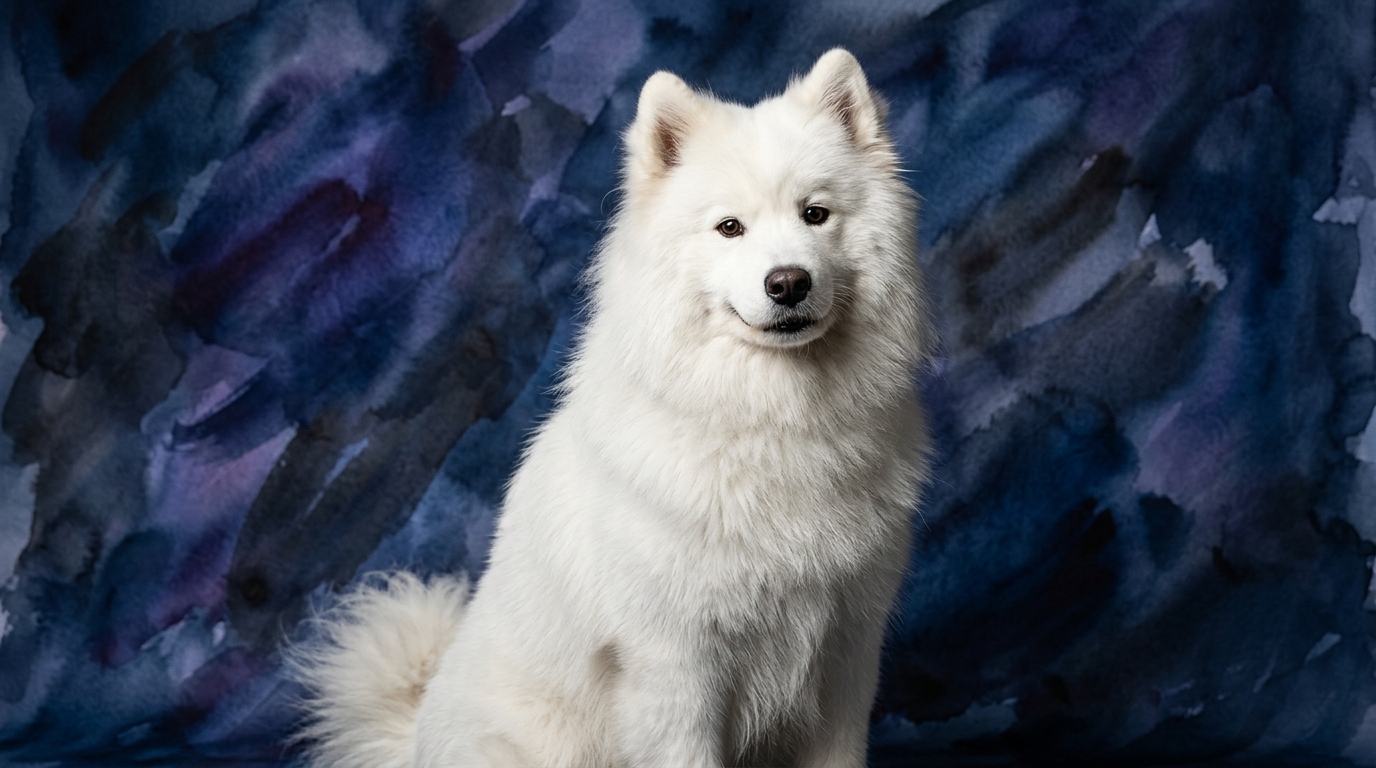
Side-by-Side IQ Profile: Samoyed
**Problem Solving (3/5):** Samoyeds demonstrate a practical problem-solving capacity, adept at learning sequences and routines necessary for their traditional sledding work or navigating a home environment. They can figure out how to open gates or retrieve toys but may not excel at abstract puzzles requiring sustained, independent thought outside their immediate interests. Their problem-solving often benefits from human guidance or social interaction.
**Training Speed (3/5):** These dogs possess a moderate training speed, capable of picking up commands and tricks with consistency and positive reinforcement. While not the quickest to master complex sequences, their desire to please their human companions and their social engagement helps them learn steadily. However, their independent spirit means they can sometimes prioritize their own agenda over immediate obedience.
**Social Intelligence (5/5):** A hallmark of the Samoyed, their social intelligence is exceptional. They are highly attuned to human emotions, intentions, and social cues, thriving on interaction and forming strong bonds with family members. This acute awareness makes them excellent communicators within a social structure, often seeking to engage and cooperate, making them responsive to human companionship and social learning.
**Instinctive Drive (4/5):** Samoyeds exhibit a strong instinctive drive rooted in their heritage as working sled dogs. This manifests as a desire to pull, a moderate prey drive for small animals, and a need for purpose-driven activity. Their instincts are often channeled into physical exertion and cooperative tasks, reflecting a drive to contribute within a group context rather than purely individual pursuit.
**Memory (3/5):** Their memory serves them well in remembering commands, routines, and the layout of their environment. They can recall specific people and places over time, which aids in their social interactions and daily life. However, their memory might be less specialized or tenacious compared to breeds with a primary focus on intricate sensory recall, such as following a complex scent trail over hours.
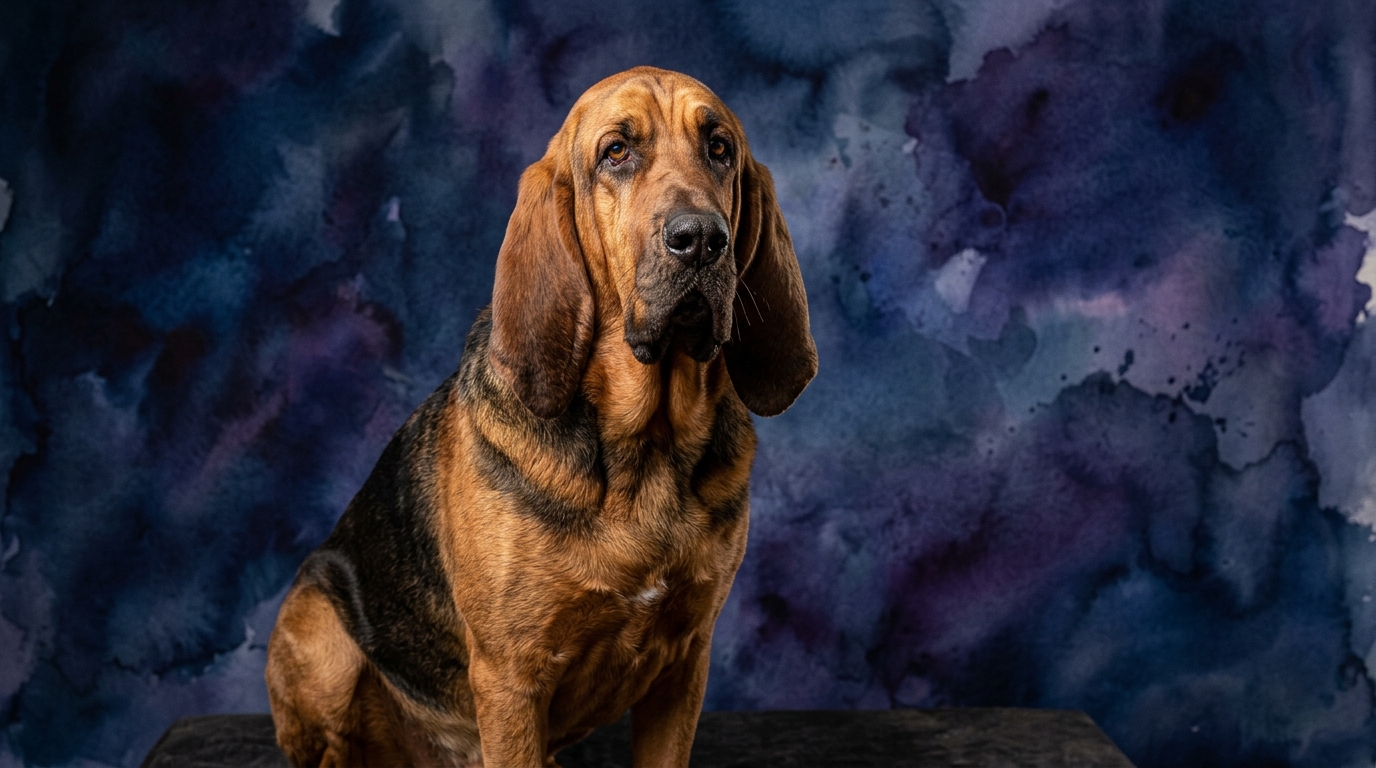
Side-by-Side IQ Profile: Bloodhound
**Problem Solving (5/5):** The Bloodhound excels in problem-solving, particularly when the 'problem' involves tracking. Their entire cognitive architecture is geared towards dissecting and interpreting complex scent information, which is a highly sophisticated form of problem-solving. They can follow incredibly faint and old trails, navigating environmental obstacles and distractions with focused determination, demonstrating an unparalleled ability to process and act upon sensory data to achieve a goal.
**Training Speed (1/5):** Bloodhounds are often perceived as slow to train, not due to a lack of capacity, but because their overwhelming instinctive drive to track often overrides human commands. Their single-minded focus on scent means that conventional obedience training can be a significant challenge, requiring immense patience and understanding from their handlers. They learn best when training is integrated with their natural inclinations, rather than against them.
**Social Intelligence (2/5):** While affectionate with their families, Bloodhounds possess a lower social intelligence score in the context of human-centric interaction. They are not as attuned to subtle human cues or as driven by social cooperation as some other breeds. Their focus is often outward, on the environment and its scents, rather than inward, on human emotional states or social dynamics. This doesn't mean they are antisocial, but their primary cognitive engagement lies elsewhere.
**Instinctive Drive (5/5):** The Bloodhound's instinctive drive is supremely powerful and singularly focused on scent tracking. This drive is so profound it defines their existence, compelling them to follow a trail relentlessly, often to the exclusion of all else. This isn't just a hobby; it's a deep-seated compulsion that dictates much of their behavior and cognitive effort.
**Memory (5/5):** Bloodhounds exhibit an extraordinary memory, specifically for scent. They can remember, process, and differentiate between a multitude of scents, recalling specific trails even after significant time has passed. This specialized memory is crucial for their tracking prowess, allowing them to hold complex scent patterns in their minds while actively searching, making them unparalleled in their field.
Where Samoyed Wins Cognitively
The Samoyed's cognitive strengths shine brightest in social settings and cooperative endeavors. Their perfect 5/5 social intelligence means they are exceptionally adept at understanding human communication, responding to subtle cues, and integrating themselves harmoniously into a family unit. This makes them highly responsive to collaborative tasks and social learning, where their desire to engage with their people fuels their cognitive effort. Unlike the Bloodhound, whose focus is often external and independent, the Samoyed's mind is wired to interact, making them more adaptable to varied social dynamics and quicker to grasp human expectations through social context. Their moderate problem-solving and memory, while not extreme, are well-balanced with their social acumen, allowing them to navigate complex social situations and learn routines that foster group cohesion.
Where Bloodhound Wins Cognitively
The Bloodhound’s cognitive superiority is undeniably in the realm of specialized sensory processing and problem-solving related to their powerful scenting abilities. With a 5/5 in both Problem Solving and Memory, specifically for scent, they possess an unmatched capacity to interpret, follow, and remember intricate olfactory data. Their cognitive processes are deeply engaged in dissecting a trail, discerning subtle shifts in scent, and mentally mapping a path through complex environments, a feat of problem-solving that surpasses most other breeds. Their relentless 5/5 instinctive drive ensures they apply this cognitive power with extreme focus and persistence, allowing them to sustain high-level mental effort on a tracking task for hours, undeterred by distractions that would overwhelm other dogs.
Which is Easier to Train and Why
When considering ease of training, the Samoyed generally presents a more cooperative experience compared to the Bloodhound. The Samoyed's 3/5 Training Speed, coupled with their exceptional 5/5 Social Intelligence, means they are often eager to please and receptive to learning commands through positive reinforcement and interaction. They value human connection and respond well to praise, making them more inclined to engage in structured training sessions. While they possess an independent streak that can sometimes make them selective listeners, their desire for companionship often overrides this. In contrast, the Bloodhound's 1/5 Training Speed reflects their profound, singular instinctive drive. Their nose often dictates their actions, making them notoriously challenging for conventional obedience training. A Bloodhound might understand a command perfectly, but if a compelling scent is present, their overwhelming drive to follow it will often take precedence over human instruction. Training a Bloodhound requires immense patience, creativity, and a willingness to work with, rather than against, their powerful scenting instincts, often integrating tracking activities into their learning.
Which Suits Active Owners vs Relaxed Owners
For owners seeking an active, engaged companion who thrives on shared experiences, the Samoyed is often the more suitable choice. Their 4/5 instinctive drive translates into a need for regular exercise and mental stimulation that can be easily integrated into an active human lifestyle, such as hiking, jogging, or dog sports. Their high social intelligence means they genuinely enjoy participating in family activities and being included in daily routines, making them ideal for owners who want a dog that is an active social partner. Conversely, a 'relaxed' owner might find a Samoyed's energy and vocal nature challenging without sufficient outlets. The Bloodhound, while appearing stoic, requires a specific kind of active owner. They are not suited for relaxed owners who cannot accommodate their extreme 5/5 instinctive drive for tracking. While they may seem calm indoors, their mental and physical needs revolve around engaging their nose. Owners must be prepared for long, focused scent work sessions or regular opportunities for tracking, which can be physically demanding and mentally consuming. They are not dogs that thrive on casual walks; their activity needs are intense and specialized, requiring an owner dedicated to harnessing their unique talents.
The Verdict
The Samoyed is the ideal companion for those valuing social engagement, cooperative learning, and a balanced, responsive dog for varied family activities.
The Bloodhound is the profound choice for owners fascinated by specialized sensory problem-solving and an unparalleled drive for a singular purpose, prepared to dedicate significant effort to their unique tracking needs.
🧠 Find Your Pet's IQ Score
Our Pet IQ Lab assessment covers 25+ tests across 5 cognitive dimensions — personalized to your breed.
Take the Full IQ Test →Frequently Asked Questions
Is a Bloodhound difficult to train for basic obedience?
Yes, Bloodhounds can be particularly challenging for basic obedience due to their overwhelming scent drive and independent nature. Their focus on following a trail often overrides human commands, requiring exceptional patience and consistency in training.
Do Samoyeds require a lot of mental stimulation?
Samoyeds do require consistent mental stimulation to prevent boredom, often thriving on social interaction, puzzle toys, and learning new commands. Their moderate problem-solving and training speed mean they enjoy engaging their minds in cooperative activities with their owners.
What makes a Bloodhound's memory so exceptional?
A Bloodhound's memory is exceptional primarily in its capacity to recall and differentiate complex scent profiles, crucial for their tracking work. This specialized memory allows them to retain intricate olfactory information over long periods and distances, enabling them to follow faint trails with remarkable accuracy.