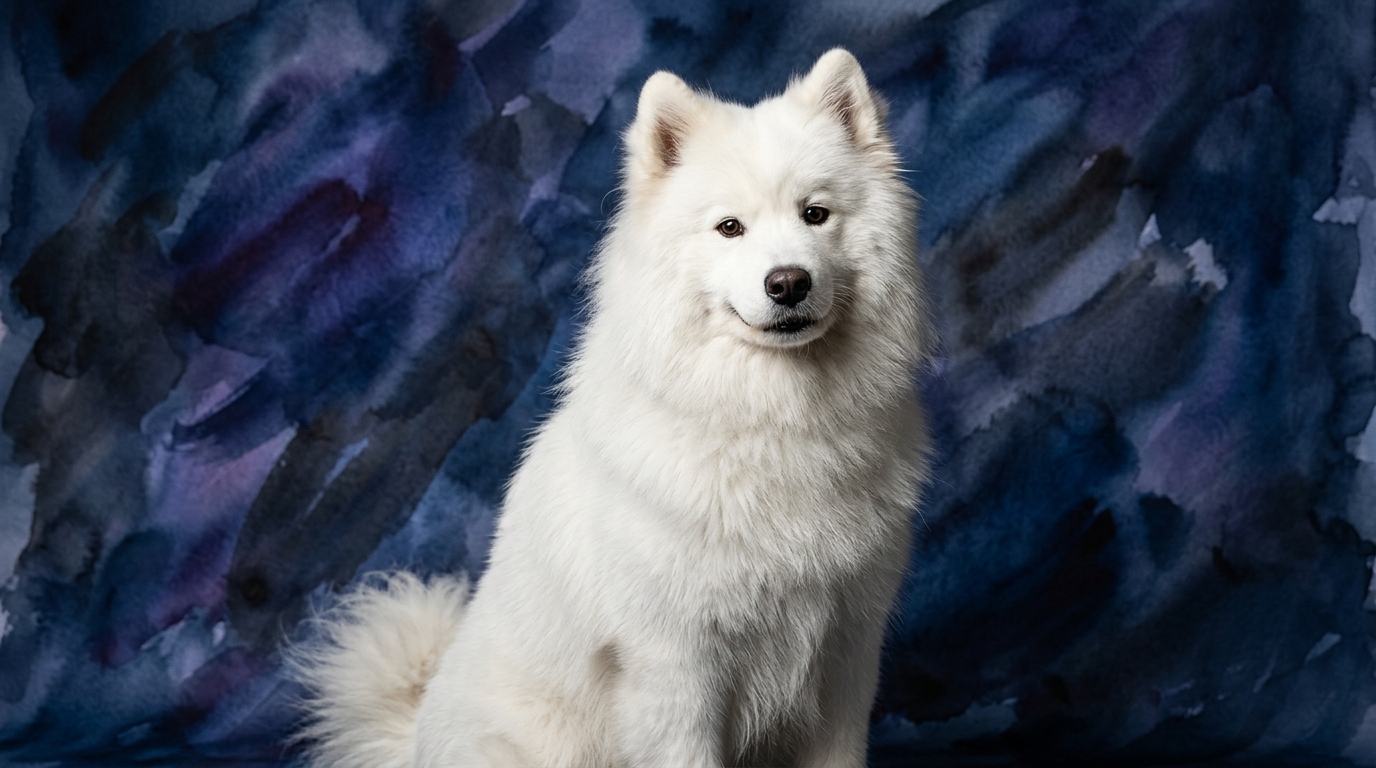
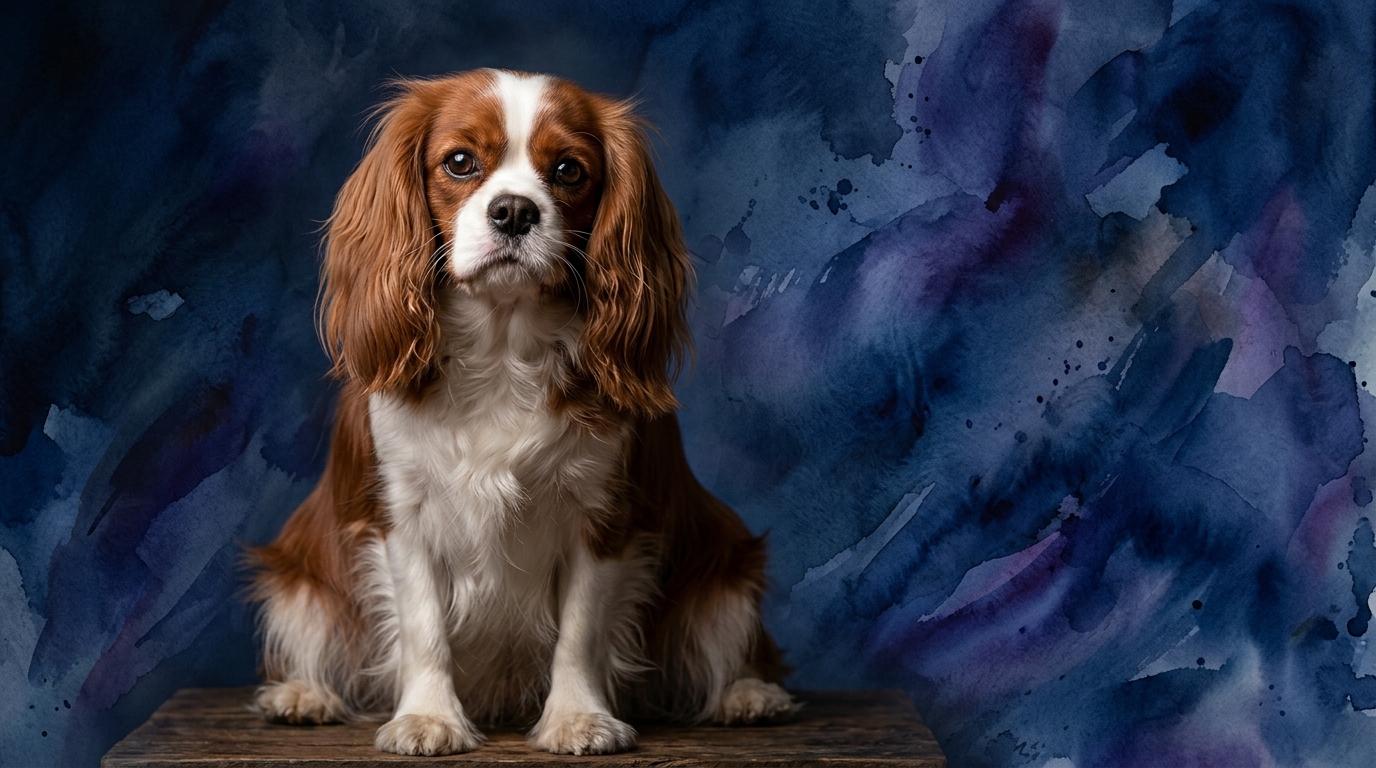
Side-by-Side Cognitive Profile
To understand the cognitive nuances of these two charming breeds, we first examine their individual IQ dimensions. The Samoyed, a Working group dog, holds a Coren rank of #33, while the Cavalier King Charles Spaniel, from the Toy group, is ranked #44. These rankings hint at differences, but a deeper dive into their specific cognitive scores provides a clearer picture of their mental aptitudes.
Both breeds demonstrate a moderate capacity for Problem Solving, scoring 3/5. This indicates they can navigate moderately complex situations and learn to overcome minor environmental challenges, such as figuring out how to retrieve a toy from under furniture or learning a multi-step routine, though they are not typically master strategists. They possess enough cognitive flexibility to adapt to daily routines and learn new tricks that involve sequential steps, requiring some guidance and repetition for mastery.
In terms of Training Speed, both the Samoyed and the Cavalier are on par with a score of 3/5, signifying a moderate pace of learning new commands and routines. They are receptive to instruction and can form associations between commands and actions effectively, but neither is known for lightning-fast acquisition of complex tasks on the first few tries. Consistent, positive reinforcement is key to solidifying their understanding and ensuring reliable responses.
A shared pinnacle for both breeds is their Social Intelligence, where each scores a perfect 5/5. This exceptional ability means both the Samoyed and the Cavalier are profoundly attuned to human emotions, body language, and social cues. They are highly empathetic, often anticipating their owner's moods and adjusting their behavior accordingly, making them deeply connected and intuitive companions. This dimension underscores their strong bond-forming capabilities and their desire for harmonious interaction within their family unit.
Here lies a significant cognitive divergence: Instinctive Drive. The Samoyed scores 4/5, reflecting a robust internal compass guiding behaviors rooted in their working heritage, such as pulling, herding, and exploring. This drive means they possess a strong innate motivation for purposeful activities and can be quite persistent in pursuing these urges. The Cavalier's 3/5 indicates a present but less intense instinctive drive; while they might chase a squirrel or enjoy a scent trail, these urges are generally not as dominant or compelling as in the Samoyed, allowing for a more relaxed, companion-focused disposition.
Finally, both breeds exhibit a moderate Memory capacity, scoring 3/5. They are capable of retaining learned commands, routines, and experiences over time, remembering their training, familiar people, and places. However, they might not possess the exceptional recall of breeds with higher scores in this dimension, meaning regular reinforcement helps keep their learned behaviors sharp and accessible.
Where the Samoyed Wins Cognitively
The Samoyed's cognitive profile reveals a distinct advantage in its Instinctive Drive, scoring 4/5 compared to the Cavalier's 3/5. This robust internal motivation is a direct legacy of their Arctic working heritage, where they were bred for herding reindeer, pulling sleds, and guarding. Cognitively, this translates into a strong intrinsic desire for purposeful activity and problem-solving that aligns with these innate urges. A Samoyed often demonstrates a keen focus and persistence when engaged in tasks that tap into their drive, such as scent work, agility, or even complex trick training that mimics practical challenges. Their minds are wired to seek engagement and contribute, meaning they don't just learn tasks; they often approach them with a thoughtful determination. This higher drive means they thrive on consistency and structured challenges, utilizing their mental energy to navigate obstacles or follow intricate commands, and can become bored or restless if their cognitive needs are not met through regular, stimulating activities.
Where the Cavalier King Charles Spaniel Wins Cognitively
While the Cavalier King Charles Spaniel's individual cognitive scores don't numerically surpass the Samoyed's in specific dimensions, their slightly lower Instinctive Drive (3/5) can be interpreted as a distinct cognitive advantage within the context of a companion animal. This reduced innate compulsion for 'work' means their cognitive resources are less frequently diverted by strong, independent urges to herd, pull, or explore autonomously. Instead, their mental energy is predominantly channeled into their exceptional Social Intelligence (5/5), making them profoundly attuned to human interaction and emotional states. Their cognitive strength lies in their profound capacity for empathy and their seamless integration into family life, often anticipating their human's needs for comfort or quiet interaction. They excel at 'reading the room' and adapting their behavior to create a harmonious domestic environment, making them incredibly adaptable and emotionally responsive companions who prioritize connection above all else.
Which Is Easier to Train and Why
Despite both breeds scoring an identical 3/5 in Training Speed, suggesting a moderate pace of learning new commands, the *experience* of training can differ significantly due to their behavioral predispositions. The Cavalier King Charles Spaniel, rooted in the Toy group and possessing a slightly lower Instinctive Drive (3/5), often approaches training with an eager-to-please attitude. Their intense focus on their human companions, driven by their perfect 5/5 Social Intelligence, means they are typically highly motivated by praise, affection, and food rewards, making them very responsive to positive reinforcement. They tend to be less distracted by environmental stimuli that might trigger a strong innate response, allowing for more focused and compliant training sessions. Their primary goal is often to maintain harmony and connection with their owner, which translates into a willingness to cooperate.
The Samoyed, conversely, while equally capable of learning (3/5 Training Speed), brings a higher Instinctive Drive (4/5) and a Working group heritage to the training process. This means they are often more independent thinkers, sometimes evaluating commands against their own internal motivations or what they perceive as a more interesting, instinctually rewarding task. While they are not stubborn, their focus can be split between their handler and their environment, especially if something triggers their innate desire to chase, dig, or herd. Training a Samoyed requires more consistent engagement, variety, and often, tapping into their drive for purposeful activity to keep them mentally invested. Therefore, while both learn, the Cavalier might present fewer 'willful' moments rooted in strong, independent drives, making the overall training journey feel more straightforward for a novice owner.
Which Suits Active Owners vs. Relaxed Owners
The Samoyed, with its robust Working group classification and higher Instinctive Drive (4/5), is unequivocally suited for active owners who can provide consistent, high-energy engagement. These dogs thrive when given regular opportunities for vigorous exercise, such as long hikes, runs, or participation in dog sports like agility, canicross, or skijoring, which directly tap into their natural inclinations for pulling and endurance. Their cognitive makeup demands a lifestyle that accommodates their need for purposeful activity and mental stimulation; a sedentary environment can quickly lead to boredom, frustration, and the manifestation of undesirable behaviors stemming from unfulfilled drives. Owners must be prepared to integrate their Samoyed into an active routine, providing outlets for both their physical prowess and their thoughtful, engaged minds.
In stark contrast, the Cavalier King Charles Spaniel, belonging to the Toy group and possessing a lower Instinctive Drive (3/5), is an ideal match for more relaxed owners or families seeking a devoted, adaptable companion. Their primary cognitive strength lies in their exceptional Social Intelligence (5/5) and their profound desire for close companionship, making them perfectly content with moderate daily walks, engaging playtime in the home or yard, and ample cuddle time on the sofa. While they certainly benefit from regular mental enrichment through short training sessions and puzzle toys, their overall mental and physical needs are far less demanding than those of a working breed. They are perfectly happy to be a constant, comforting presence, adapting well to apartment living or quieter suburban homes where their primary role is that of a devoted family member rather than a working companion.
The Verdict
Choose a Samoyed if you are an active individual or family seeking a mentally robust companion eager for purposeful activities and consistent engagement, thriving on tasks that leverage their working dog heritage and higher instinctive drives. They will flourish in an environment that provides ample physical and cognitive challenges to keep their thoughtful minds occupied.
Opt for a Cavalier King Charles Spaniel if you desire a devoted, adaptable companion content with a more relaxed lifestyle, prioritizing social interaction and comfort over strenuous activity or complex tasks. Their gentle nature and exceptional social attunement make them ideal for owners seeking a calm, affectionate presence and a strong emotional bond.
🧠 Find Your Pet's IQ Score
Our Pet IQ Lab assessment covers 25+ tests across 5 cognitive dimensions — personalized to your breed.
Take the Full IQ Test →Frequently Asked Questions
Are Samoyeds difficult to train due to their working background?
While Samoyeds score 3/5 for training speed, their higher instinctive drive (4/5) means they can be more independent thinkers, requiring patient, consistent, and engaging training methods. They respond well to positive reinforcement that taps into their natural drives and desire for purposeful activity, rather than simply rote commands.
Do Cavaliers need a lot of mental stimulation?
Cavaliers have a moderate problem-solving score (3/5) and excel in social intelligence (5/5), meaning they enjoy mental engagement through interactive play, short training sessions, and puzzle toys, but their needs are less intense than working breeds. Their primary stimulation often comes from social interaction with their family, rather than complex tasks or extensive 'work'.
How does social intelligence differ between these breeds?
Both breeds score a perfect 5/5 in social intelligence, indicating they are highly attuned to human emotions and social cues, making them exceptionally empathetic companions. The difference lies in how this intelligence is expressed: Cavaliers often direct it towards constant companionship, while Samoyeds might integrate it with their desire for shared activities and partnership.