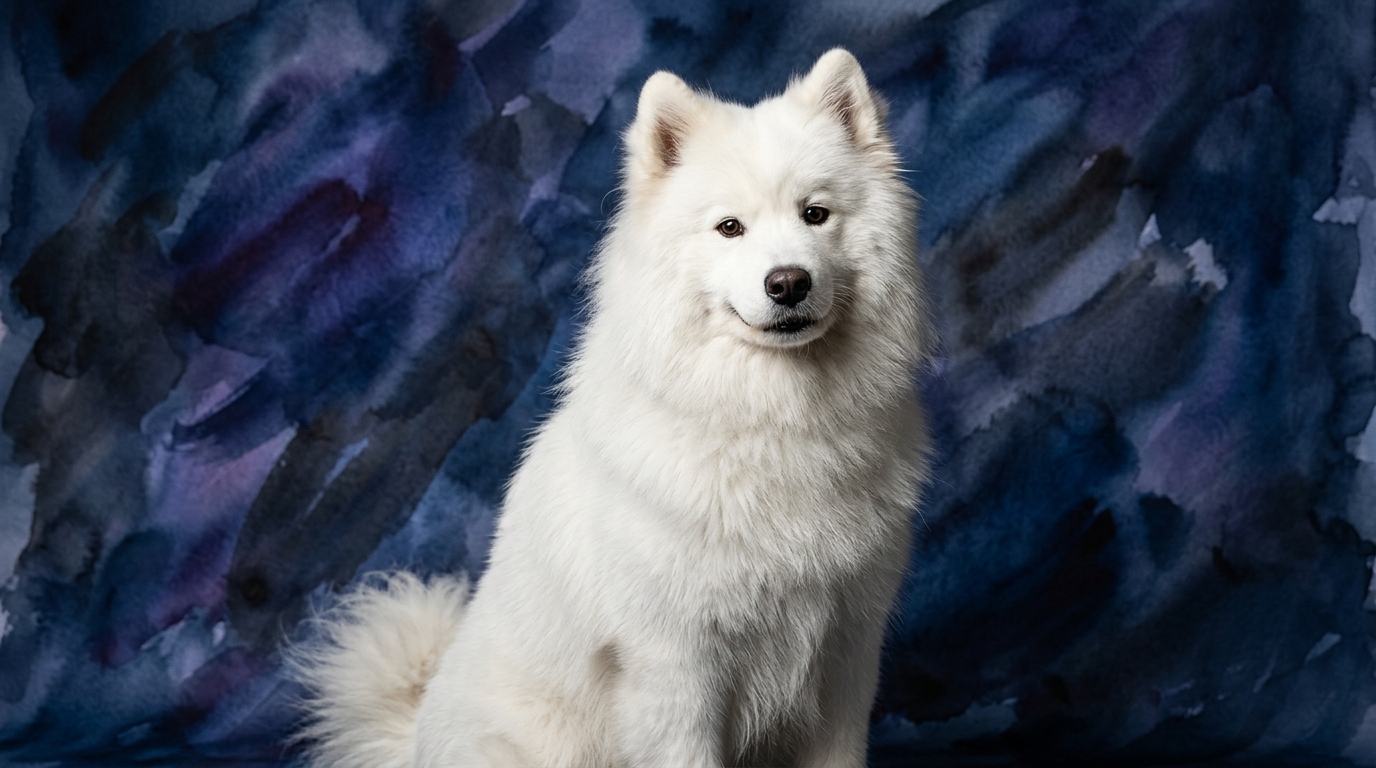
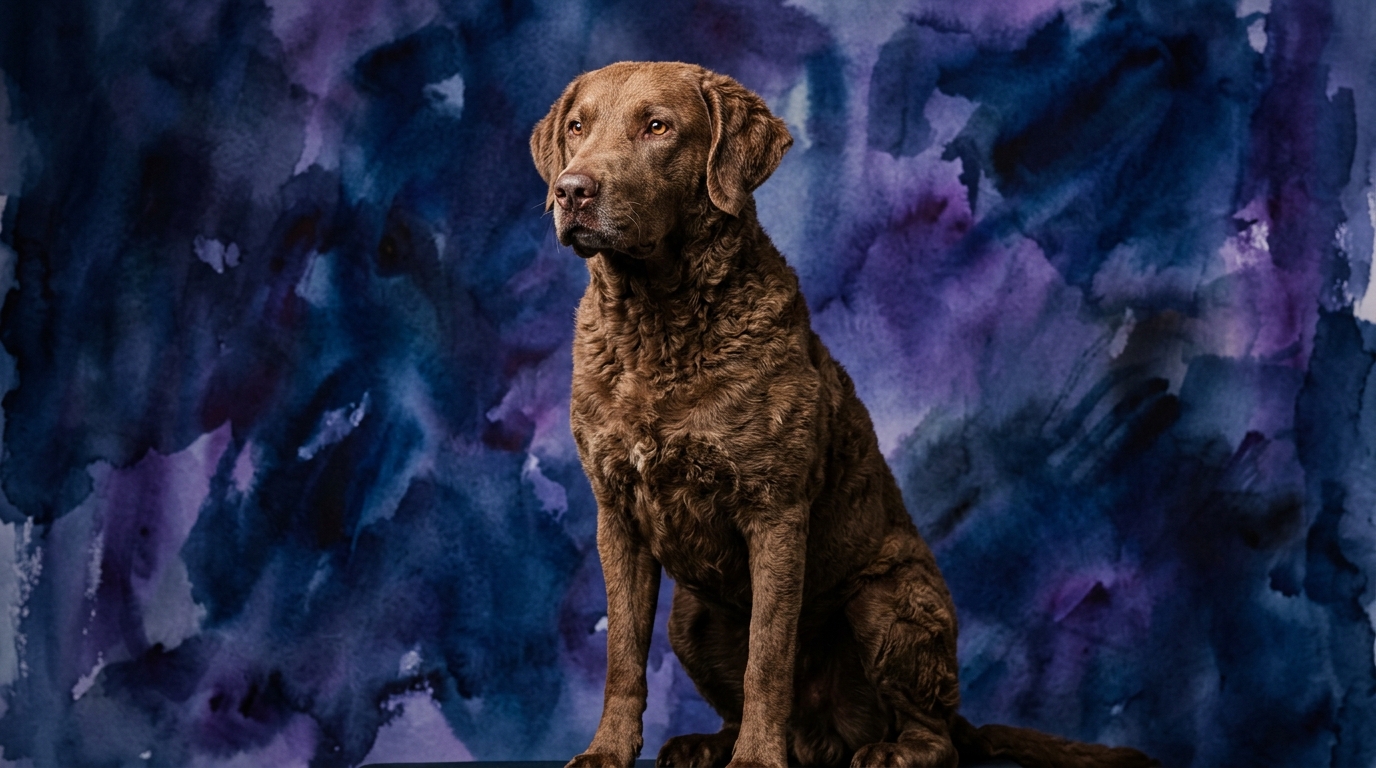
Side-by-Side Cognitive Profiles: Samoyed vs. Chesapeake Bay Retriever
The Cosmic Pet Pet IQ Lab employs a multi-dimensional framework to assess canine intelligence, moving beyond simplistic notions to explore specific cognitive strengths. While Dr. Stanley Coren's ranking places the Chesapeake Bay Retriever at an impressive #27 and the Samoyed at #33, these numbers represent a general measure of 'working and obedience intelligence' and don't fully capture the nuanced cognitive landscapes of these distinct breeds. Our deeper dive examines five critical dimensions: problem-solving, training speed, social intelligence, instinctive drive, and memory, revealing where each breed truly shines.
The Samoyed, a breed forged in the harsh Arctic, exhibits a unique cognitive blueprint. Their Problem Solving score of 3/5 indicates a capacity for independent thought, often preferring to figure things out on their own rather than waiting for human direction, a trait valuable for their original sled-pulling and herding roles. Training Speed, also at 3/5, suggests they can learn new commands but may require consistent, engaging methods to maintain focus and motivation. Where the Samoyed truly excels is in Social Intelligence, earning a perfect 5/5, reflecting their exceptional ability to read human emotions, form strong bonds, and adapt to social cues within their family unit. An Instinctive Drive of 4/5 points to a strong internal motivation, particularly for tasks related to their working heritage, while their Memory at 3/5 indicates a solid but not extraordinary recall for specific events or commands.
In contrast, the Chesapeake Bay Retriever, a robust water dog, presents a different set of cognitive strengths tailored for their retrieving tasks. Their Problem Solving score of 4/5 suggests a more direct and efficient approach to overcoming obstacles, often with a clear goal in mind, reflecting their need to navigate complex environments to retrieve game. A Training Speed of 4/5 indicates a quicker grasp of new commands and a strong desire to cooperate, making them generally more responsive to structured learning. Social Intelligence, at 3/5, suggests they are capable of forming strong bonds but might be less overtly expressive or universally friendly than some breeds, often reserving their deepest connections for their immediate family. Their Instinctive Drive, rated 3/5, is focused and task-oriented, primarily geared towards retrieving, while an impressive Memory score of 4/5 allows them to retain complex sequences and locations, crucial for successful hunting endeavors.
Where the Samoyed Wins Cognitively
The Samoyed’s preeminent cognitive strength lies in their exceptional Social Intelligence, scoring a perfect 5/5. This isn't merely about being 'friendly'; it signifies a profound capacity for empathy and attunement to human emotional states. A Samoyed is often acutely aware of their owner's mood, offering comfort or initiating play at just the right moment. This high social acumen makes them particularly adept at forming deep, nuanced relationships, often acting as sensitive companions who thrive on mutual understanding and interaction within their family circle. Their ability to integrate seamlessly into a household, understanding subtle cues and anticipating needs, is a distinct cognitive advantage.
Furthermore, while their Problem Solving is rated 3/5, it's a specific kind of problem-solving. Samoyeds often approach challenges with a degree of charming independent thought, a legacy of their working heritage where they needed to make decisions without constant human oversight. This isn't necessarily about speed but about ingenuity and a willingness to explore various solutions. Their 4/5 Instinctive Drive, often expressed as a desire to be part of family activities and 'work' alongside their people, further reinforces their ability to engage with their environment in a self-motivated, purposeful way, even if that 'work' is simply herding children or alerting to strangers.
Where the Chesapeake Bay Retriever Wins Cognitively
The Chesapeake Bay Retriever demonstrates a clear cognitive edge in practical problem-solving, scoring 4/5. Unlike the Samoyed's more independent, sometimes exploratory approach, the Chessie typically exhibits a direct, efficient, and task-oriented method. When faced with an obstacle, whether it's navigating dense cover to retrieve a dummy or understanding a multi-step command sequence, they are often quicker to identify and execute the most effective solution. This cognitive efficiency is a direct reflection of their sporting background, where speed and accuracy in retrieving are paramount.
Complementing their problem-solving prowess are their superior scores in Training Speed (4/5) and Memory (4/5). A Chessie's ability to quickly grasp and retain new commands and complex sequences is remarkable. They often require fewer repetitions to solidify a behavior and possess a robust recall for learned tasks, even after extended periods. This combination makes them exceptional students in structured training environments, capable of mastering intricate routines and maintaining a high level of performance. Their memory also extends to environmental details, allowing them to recall specific locations of retrieves or hazards, a crucial asset for a working retriever.
Ease of Training: Behavioral Differences
When considering ease of training, the Chesapeake Bay Retriever generally presents a more straightforward path for the average owner. Their 4/5 Training Speed and 4/5 Memory mean they absorb new commands rapidly and retain them effectively. They possess a strong desire to work cooperatively with their handler, often displaying a focused drive to please and succeed in tasks. This willingness to engage in structured learning, combined with their practical problem-solving skills, translates into a dog that typically responds well to traditional positive reinforcement methods and thrives on consistency.
The Samoyed, with a Training Speed of 3/5, requires a different approach. Their independent nature and strong instinctive drive (4/5) mean they can sometimes be more opinionated about what constitutes a worthwhile task. While they are certainly capable of learning, their training often benefits from creative, engaging, and highly motivating sessions that appeal to their social intelligence and desire for partnership. Owners might find that Samoyeds learn best when they feel like an active participant in the process, rather than simply a recipient of commands, and they may test boundaries more frequently due to their inherent self-reliance.
Lifestyle Match: Active Owners vs. Relaxed Owners
For truly active owners, particularly those involved in outdoor pursuits like hunting, hiking, or canine sports, the Chesapeake Bay Retriever is an excellent match. Their athleticism, combined with their focused instinctive drive and robust memory, means they excel in activities requiring stamina, purpose, and adherence to commands. They thrive on having a job to do and require substantial physical and mental stimulation to prevent boredom and channel their energy constructively. Their independence in the field doesn't translate to being a couch potato at home; they need consistent engagement.
The Samoyed, while also an active breed with a strong working heritage, offers a slightly different energetic profile that can suit a broader range of active owners. Their social intelligence means they deeply value companionship during activities, whether it's a brisk walk, a jog, or a game of fetch in the yard. They enjoy being part of family adventures but might not possess the same relentless, task-oriented drive as the Chessie. Owners who enjoy regular, engaging outdoor activities that incorporate their dog as a valued partner, and who appreciate a dog that is equally content to cuddle after a good run, might find the Samoyed's balance of activity and social connection more appealing. They are not suited for truly 'relaxed' owners who prefer minimal interaction, as their social needs are paramount.
The Verdict
Choose a Samoyed if you prioritize a deeply empathetic, socially attuned companion who thrives on mutual interaction and offers a charmingly independent approach to life, and you are prepared for engaging, positive reinforcement training.
Opt for a Chesapeake Bay Retriever if you seek a highly trainable, focused, and efficient partner for active, task-oriented pursuits, valuing their quick learning and reliable memory for structured activities.
🧠 Find Your Pet's IQ Score
Our Pet IQ Lab assessment covers 25+ tests across 5 cognitive dimensions — personalized to your breed.
Take the Full IQ Test →Frequently Asked Questions
Are Samoyeds difficult to train due to their independence?
Samoyeds aren't inherently difficult, but their independence (Problem Solving 3/5, Training Speed 3/5) means they respond best to engaging, positive reinforcement methods that make them feel like a partner. Consistency and creativity are key to harnessing their strong instinctive drive.
How do their social needs differ?
Samoyeds (Social Intelligence 5/5) are highly social and thrive on deep family bonds, often being acutely aware of human emotions. Chesapeake Bay Retrievers (Social Intelligence 3/5) are devoted to their families but tend to be more reserved with strangers and less overtly expressive in social contexts.
Which breed is better for first-time dog owners?
The Chesapeake Bay Retriever's higher Training Speed (4/5) and Memory (4/5) might make them a slightly more forgiving choice for first-time owners willing to commit to consistent, structured training. Samoyeds require an owner who understands their independent streak and is prepared for more creative, patient training approaches.