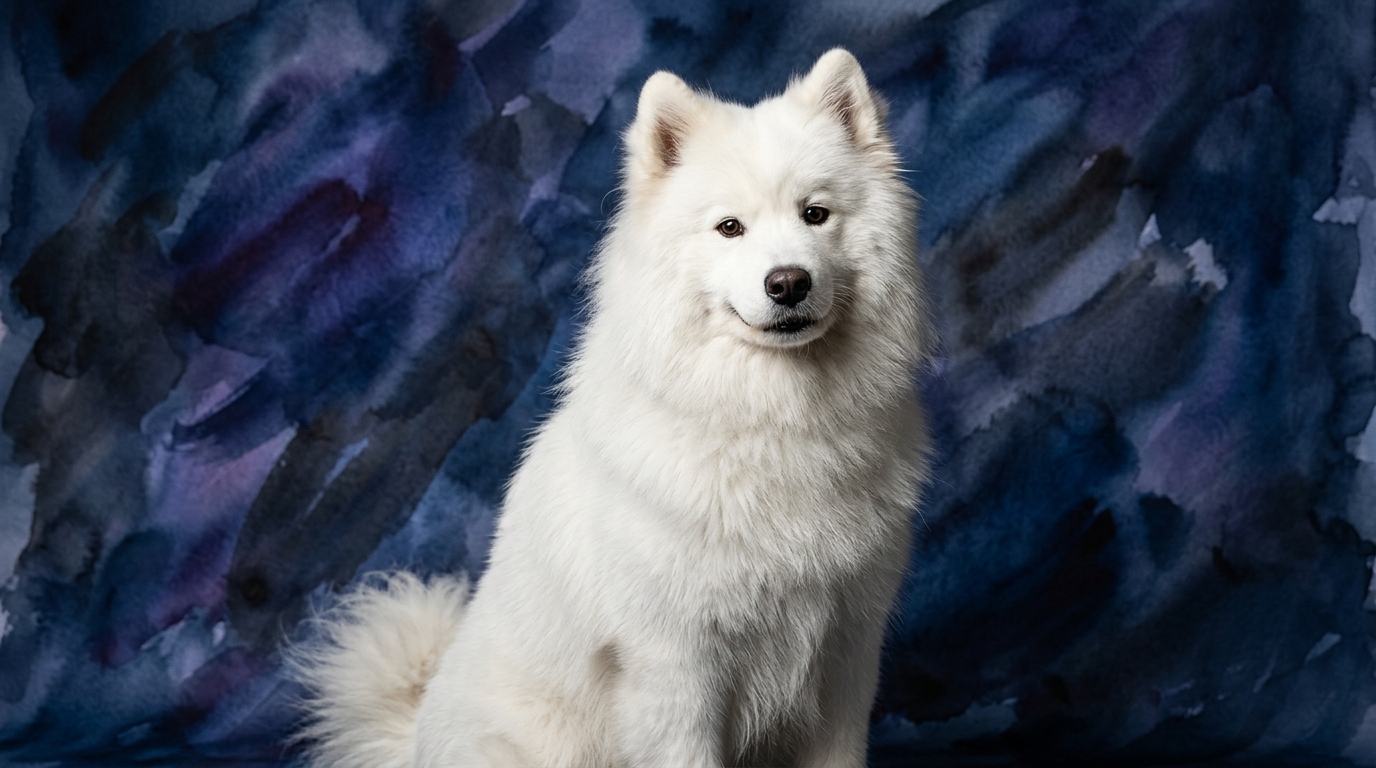
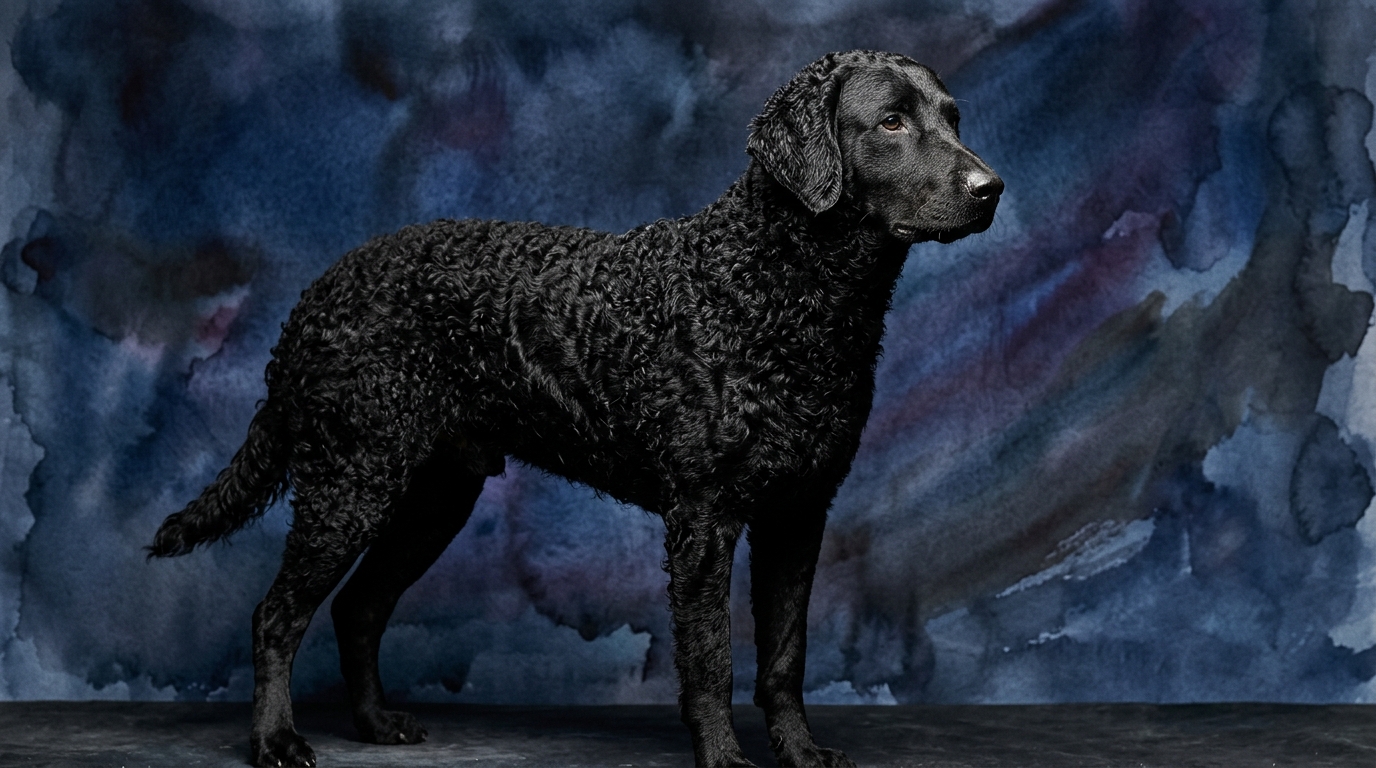
Side-by-Side Cognitive Profiles
The Cosmic Pet Pet IQ Lab employs a five-dimensional framework to assess canine cognition, offering a granular view beyond general rankings. For the Samoyed, belonging to the Working group and holding a Coren rank of #33, its profile reveals a moderate Problem Solving capacity (3/5), a moderate Training Speed (3/5), an exceptional Social Intelligence (5/5), a substantial Instinctive Drive (4/5), and a moderate Memory (3/5). These scores paint a picture of a dog deeply connected to its human companions and driven by purpose.
Conversely, the Curly-Coated Retriever, a member of the Sporting group with a Coren rank of #41, presents a different cognitive signature. It shares a moderate Problem Solving ability (3/5) and Training Speed (3/5) with the Samoyed. However, its Social Intelligence (3/5) and Instinctive Drive (3/5) are rated as moderate, while its Memory (4/5) stands out as a particular strength. This profile suggests a dog that excels at retaining information, albeit with a more independent social approach.
To elaborate on each dimension: For the Samoyed, Problem Solving at 3/5 means they often benefit from guidance in novel situations. Training Speed at 3/5 indicates a steady learning pace with consistent reinforcement. Their Social Intelligence at 5/5 highlights a profound ability to understand human emotions and foster cooperative bonds. Instinctive Drive at 4/5 signifies a strong urge for purposeful activity, like pulling or herding. Memory at 3/5 means they retain learned behaviors, though occasional refreshers are useful. For the Curly-Coated Retriever, Problem Solving at 3/5 also suggests reliance on learned strategies or direction. Training Speed at 3/5 necessitates patient, consistent methods. Social Intelligence at 3/5 points to a more independent, less overtly people-pleasing demeanor. Instinctive Drive at 3/5 primarily focuses on retrieving tasks. Memory at 4/5 denotes an impressive ability to retain complex information and routines over time.
Where the Samoyed Shines Cognitively
The Samoyed's cognitive brilliance truly emerges in its exceptional Social Intelligence (5/5). This isn't just about friendliness; it's a deep-seated capacity for empathy, an intuitive understanding of human moods, and an innate desire for cooperation. A Samoyed can often sense a family member's distress, adapting its behavior to offer comfort or solicit engagement. This high social attunement makes them incredibly responsive to human cues, fostering strong, reciprocal bonds that are central to their well-being. They thrive on being integral members of their human 'pack,' often seeking to participate in family activities.
Coupled with their substantial Instinctive Drive (4/5), the Samoyed's social intelligence makes them formidable partners in shared endeavors. This drive isn't merely physical; it's a mental need for purpose and engagement. Whether it's hiking alongside their person, participating in dog sports, or even pulling a sled, a Samoyed's drive, when channeled cooperatively, reinforces their bond. They are not dogs content to merely observe; they actively seek to contribute and engage, making them highly interactive companions who flourish when given a 'job' that involves their human.
Where the Curly-Coated Retriever Excels Cognitively
The Curly-Coated Retriever's standout cognitive strength lies in its impressive Memory (4/5). This superior retention ability means that once a Curly learns a command, a sequence of actions, or a routine, it tends to stick. This makes them highly reliable for tasks requiring consistent execution, from complex obedience sequences to intricate agility courses where precise patterns must be remembered. For owners who enjoy teaching a wide repertoire of commands or engaging in activities that build upon learned skills, the Curly's memory is a significant asset, ensuring that training efforts yield lasting results.
This strong memory also translates into consistency in daily life. A Curly-Coated Retriever is likely to remember household rules, established boundaries, and training protocols with less frequent reinforcement than a dog with a lower memory score. While their Training Speed (3/5) is moderate, their ability to recall what they've learned efficiently compensates, allowing them to build a robust foundation of knowledge over time. This makes them excellent candidates for advanced training where long-term retention of detailed information is crucial.
Training Aptitude: Which is Easier and Why?
Both the Samoyed and the Curly-Coated Retriever share a moderate Training Speed (3/5), indicating that neither is exceptionally quick or slow to grasp new concepts; consistency and positive reinforcement are paramount for both. However, their differing cognitive profiles influence the *approach* to training and the *nature* of the challenges. The Samoyed's high Social Intelligence (5/5) means they are often eager to cooperate and please, especially if training feels like a shared, engaging activity. Yet, their strong Instinctive Drive (4/5) and moderate Problem Solving (3/5) can lead to independent thinking or distraction. They might 'negotiate' a command or pursue a more interesting scent if not adequately motivated or if the task doesn't align with their innate drives. Training a Samoyed benefits from making learning a collaborative game and leveraging their desire for companionship.
The Curly-Coated Retriever's superior Memory (4/5) offers a distinct advantage in training. Once a command is established, it tends to be reliably retained, reducing the need for constant refreshers. This makes building a complex behavioral repertoire more efficient. Their moderate Social Intelligence (3/5) suggests they might be less motivated by pure 'people-pleasing' and respond more effectively to clear, consistent commands and tangible rewards. While they may not offer the same overt enthusiasm for collaboration as a Samoyed, their capacity for remembering specific instructions makes them highly capable of structured obedience and task completion. Their moderate Instinctive Drive (3/5) means they are less likely to be independently driven by strong, self-directed pursuits that can derail a training session, making them generally more focused on the task at hand once engaged.
Tailoring to Lifestyles: Active vs. Relaxed Owners
Choosing between these breeds often comes down to matching their cognitive and behavioral needs with an owner's lifestyle. The Samoyed is best suited for active owners who can meet their substantial physical and social requirements. Their exceptional Social Intelligence means they thrive on constant companionship and deep family involvement; they are not dogs to be left alone for extended periods. Their robust Instinctive Drive demands consistent outlets such as long walks, hikes, dog sports, or even carting. Owners prepared to integrate their Samoyed into nearly all aspects of their lives, providing both mental stimulation and ample social interaction, will find a devoted and engaging companion.
The Curly-Coated Retriever also suits active owners, particularly those who enjoy structured outdoor activities like retrieving, swimming, or competitive dog sports. Their impressive memory makes them excellent partners for intricate training regimes and consistent routines. While active, their moderate social intelligence means they might tolerate more independent time than a Samoyed, though they still require significant daily engagement. They may not demand constant interaction but benefit immensely from consistent training and adventurous outings that tap into their sporting heritage, providing a fulfilling partnership for owners who appreciate a capable, task-oriented canine companion.
The Verdict
Opt for a Samoyed if you seek an exceptionally social and cooperative companion, thriving on deep family bonds and eager to engage in shared, purposeful activities where their keen social awareness can flourish.
Consider a Curly-Coated Retriever if you value a dog with impressive memory for complex training, appreciating consistency and structure, and are prepared to engage them in active, task-oriented pursuits where their learned skills will shine.
🧠 Find Your Pet's IQ Score
Our Pet IQ Lab assessment covers 25+ tests across 5 cognitive dimensions — personalized to your breed.
Take the Full IQ Test →Frequently Asked Questions
Do Samoyeds or Curly-Coated Retrievers adapt better to new environments?
Samoyeds, with their high social intelligence, often adapt well to new environments when accompanied by their trusted human companions, using their social cues to navigate change. Curly-Coated Retrievers, while adaptable, might rely more on familiar routines and benefit from consistent structure during transitions due to their strong memory.
Which breed is more prone to independent thinking during tasks?
The Samoyed, with its strong instinctive drive and moderate problem-solving, can exhibit more independent thinking, sometimes finding their own solutions or pursuing their own interests if not adequately engaged. The Curly-Coated Retriever, while not purely subservient, tends to stick more closely to learned commands due to their superior memory.
How does 'Instinctive Drive' differ between these two breeds?
The Samoyed's Instinctive Drive (4/5) is a broad, deep-seated need for purpose and engagement, often manifesting in pulling, herding, or general active participation with their 'pack.' The Curly-Coated Retriever's Instinctive Drive (3/5) is more specifically geared towards their retrieving heritage, focusing on tasks like fetching and water work, though still requiring an outlet.