Side-by-Side IQ Profile: Samoyed
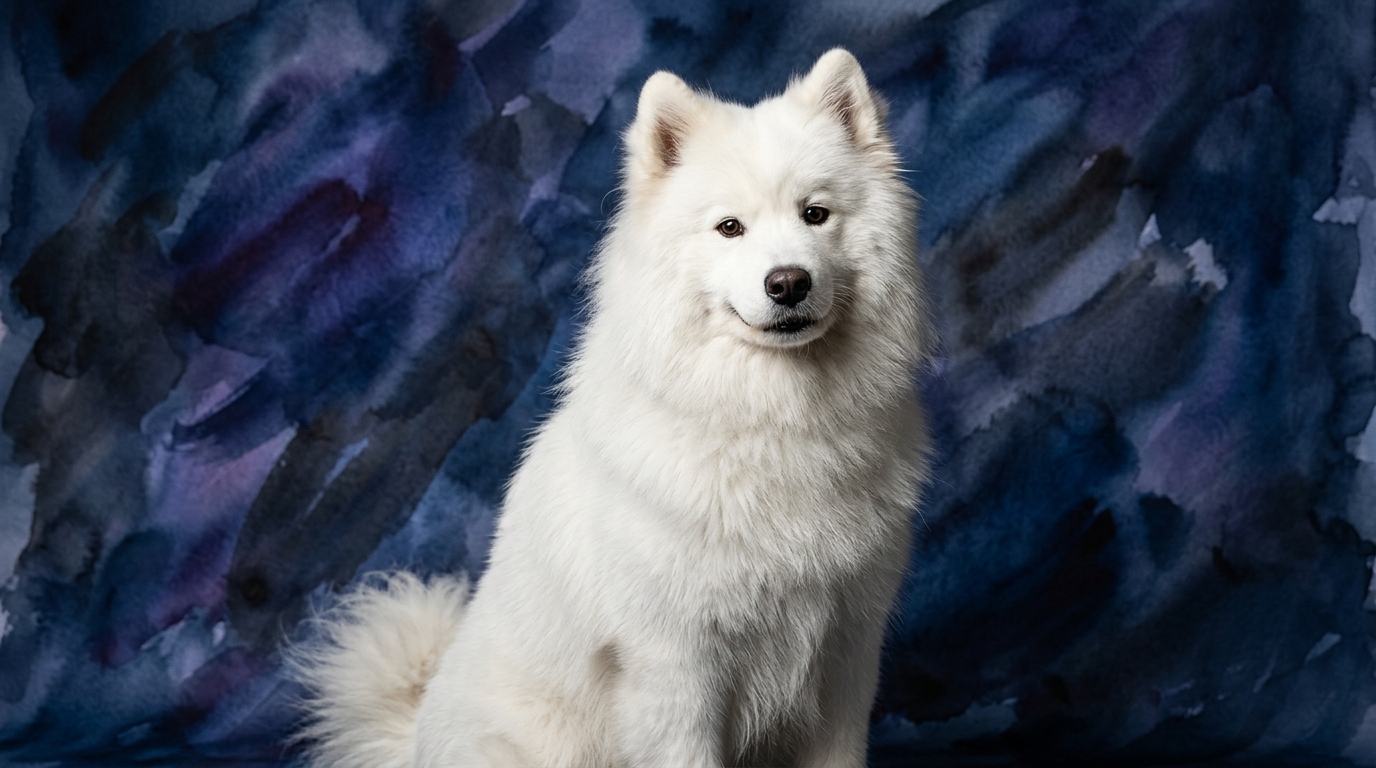
The Samoyed, a breed forged in Siberia for herding and sled-pulling, possesses a cognitive profile geared for cooperative work. Its problem-solving (3/5) and training speed (3/5) are moderate, indicating a dog that learns steadily with consistent guidance. The Samoyed's exceptional social intelligence (5/5) is its hallmark, reflecting a deep ability to understand human cues, form strong bonds, and thrive on companionship, making them highly attuned to family dynamics. An instinctive drive of 4/5 points to a robust internal motivation for diverse tasks from its working lineage. Memory, at 3/5, provides a solid recall for commands and experiences, fitting its role.
Side-by-Side IQ Profile: English Foxhound
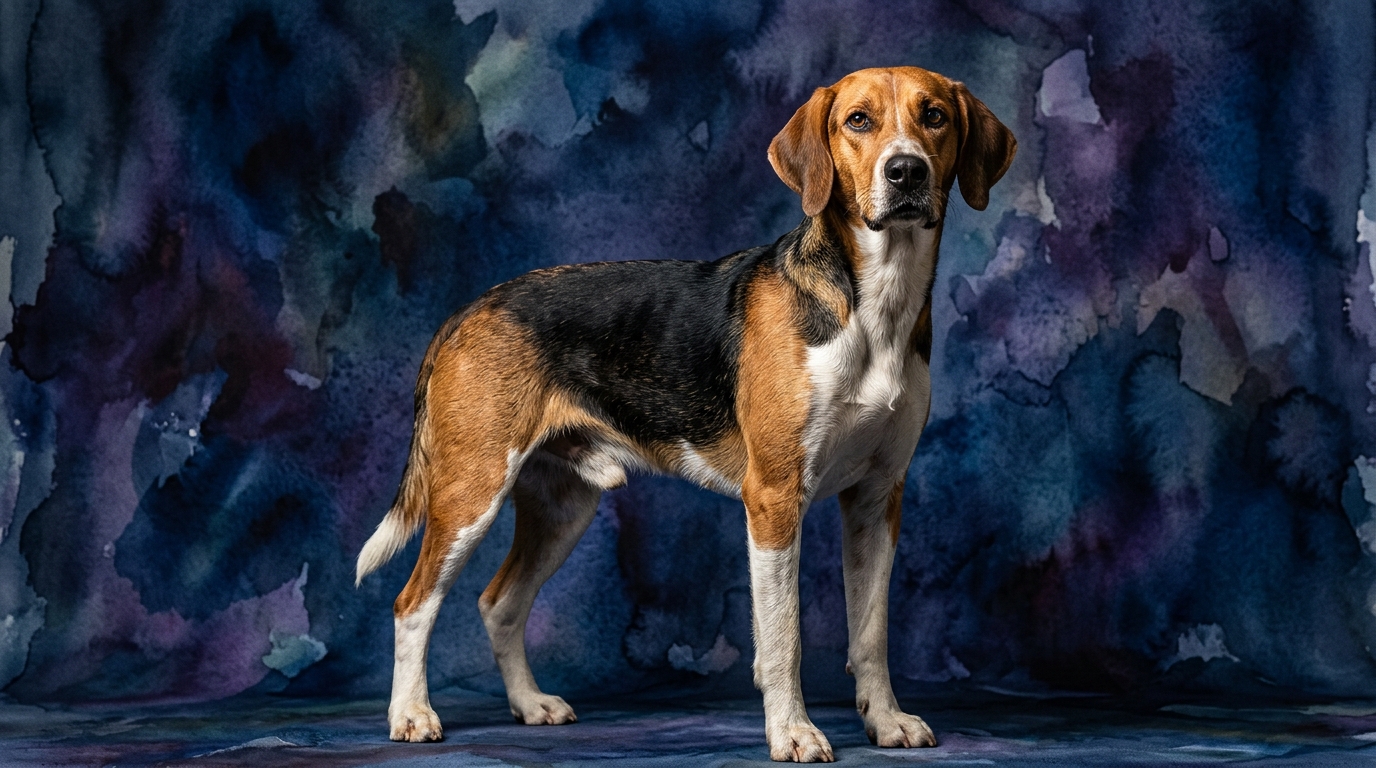
The English Foxhound, bred for relentless pursuit of game, exhibits a cognitive makeup optimized for independent, scent-driven hunting. Its problem-solving (3/5) and training speed (3/5) are practical, focused on navigating terrain and tracking rather than abstract puzzles, learning with repetition. The Foxhound's social intelligence, at 3/5, is lower than the Samoyed's, showing less inherent drive for human social cues and more for its innate hunting instincts. Its instinctive drive (3/5) is powerful but singularly concentrated on scent work and the chase. Memory, also 3/5, ensures effective recall of trails and hunting patterns.
Where Samoyed Wins Cognitively
The Samoyed’s cognitive strengths shine in cooperative contexts. Its exceptional social intelligence (5/5) is a clear advantage, enabling precise interpretation of human emotions and intentions. This makes a Samoyed remarkably responsive to subtle owner cues, eager to please and maintain harmony. They are empathetic companions, often anticipating needs or offering comfort. Furthermore, their stronger instinctive drive (4/5) compared to the Foxhound's (3/5) offers versatile motivation for various tasks beyond specialized hunting. This drive, combined with high social intelligence, means a Samoyed is often more motivated by the *act of working with* its human, excelling in advanced obedience, agility, or therapy work where deep connection is paramount. Their 3/5 problem-solving is often applied in collaboration, figuring out shared goals.
Where English Foxhound Wins Cognitively
While the English Foxhound doesn't boast higher numerical scores, its intelligence is uniquely optimized for its specialized purpose, granting it distinct advantages within its domain. Its 3/5 instinctive drive, though numerically lower, is laser-focused on scent tracking and pursuit, making it an unparalleled expert in its field. This single-minded dedication, paired with 3/5 problem-solving, ensures it excels at deciphering complex scent trails and navigating challenging environments with unwavering determination, often ignoring distractions. This focused cognitive landscape means the Foxhound is less reliant on constant social validation, allowing it to immerse fully in its sensory world. Its moderate social intelligence (3/5) fosters an independence crucial for a dog working far from its handler, reducing proneness to separation anxiety. For owners valuing unwavering dedication to a specific, instinct-driven task, the Foxhound's specialized cognitive framework is a definitive win.
Which is Easier to Train and Why
For average owners, the Samoyed generally offers a more straightforward training experience, despite both breeds having a 3/5 training speed. The Samoyed's superior social intelligence (5/5) is the key differentiator. This innate desire to connect and please means a Samoyed is highly motivated by praise, attention, and shared activity, making them more receptive to learning. They keenly observe human body language, facilitating communication. While possessing a strong instinctive drive (4/5), this can be channeled into constructive activities like pulling or agility, strengthening the human-dog bond. Conversely, the English Foxhound's lower social intelligence (3/5) and strong, independent hunting drive (3/5) complicate training. A Foxhound is less driven by human approval and more by its powerful olfactory world. Once on a scent, its focus is absolute, making redirection a significant hurdle. Capable of learning, their motivation often needs to be more tangible (e.g., high-value treats), and their independence demands greater patience and consistency, especially in distracting environments.
Which Suits Active Owners vs Relaxed Owners
For active owners seeking a canine adventure partner, the Samoyed is a highly suitable choice. Its 4/5 instinctive drive, rooted in sledding and herding, means it thrives on physical and mental stimulation, requiring consistent exercise like long walks, runs, or dog sports. Their high social intelligence (5/5) ensures they genuinely enjoy participating in family activities and being an integral part of an active lifestyle, not content to be left alone. The English Foxhound also demands substantial activity due to its hunting lineage, but its needs are singularly focused on endurance and scent work, requiring vast spaces to run and opportunities to engage its nose. Neither breed is ideal for truly relaxed owners without significant lifestyle adjustments. However, for a dedicated owner with slightly less intensity, the Samoyed’s adaptability and desire for companionship might be marginally more manageable than the Foxhound's relentless, scent-driven quest. The Foxhound, with its 3/5 social intelligence, might tolerate a relaxed owner if exercise needs are met, but it won't be as socially engaged.
The Verdict
Choose a Samoyed if you seek a highly social, cooperative, and empathetic companion eager to integrate into family life and participate in varied activities. Their strong bond-forming capacity and versatile working drive make them excellent partners for active owners who prioritize companionship and shared experiences.
Choose an English Foxhound if you are an owner dedicated to providing ample space and opportunities for its powerful, independent scent-driven instincts to flourish, perhaps even engaging in hunting or extensive tracking sports. Their focused cognitive profile suits those who appreciate a dog with singular purpose and a degree of self-sufficiency.
🧠 Find Your Pet's IQ Score
Our Pet IQ Lab assessment covers 25+ tests across 5 cognitive dimensions — personalized to your breed.
Take the Full IQ Test →Frequently Asked Questions
Are Samoyeds difficult to train?
Samoyeds have a training speed of 3/5, indicating they learn at an average pace. Their high social intelligence (5/5) means they are generally eager to please and responsive to positive reinforcement, which can make them seem easier to train for owners who prioritize connection and cooperation.
How much exercise does an English Foxhound need?
English Foxhounds, with their 3/5 instinctive drive for hunting, require significant and consistent exercise. They need long, vigorous runs and opportunities to engage their powerful sense of smell, ideally in secure, open spaces, to satisfy their endurance and tracking instincts.
Which breed is better with children?
The Samoyed, with its 5/5 social intelligence, tends to be more naturally attuned to family dynamics and gentle with children, thriving on companionship and interaction. The English Foxhound, while generally amiable, has a lower social intelligence (3/5) and a more independent nature, meaning it might be less instinctively engaged with children's play and more focused on its own pursuits.