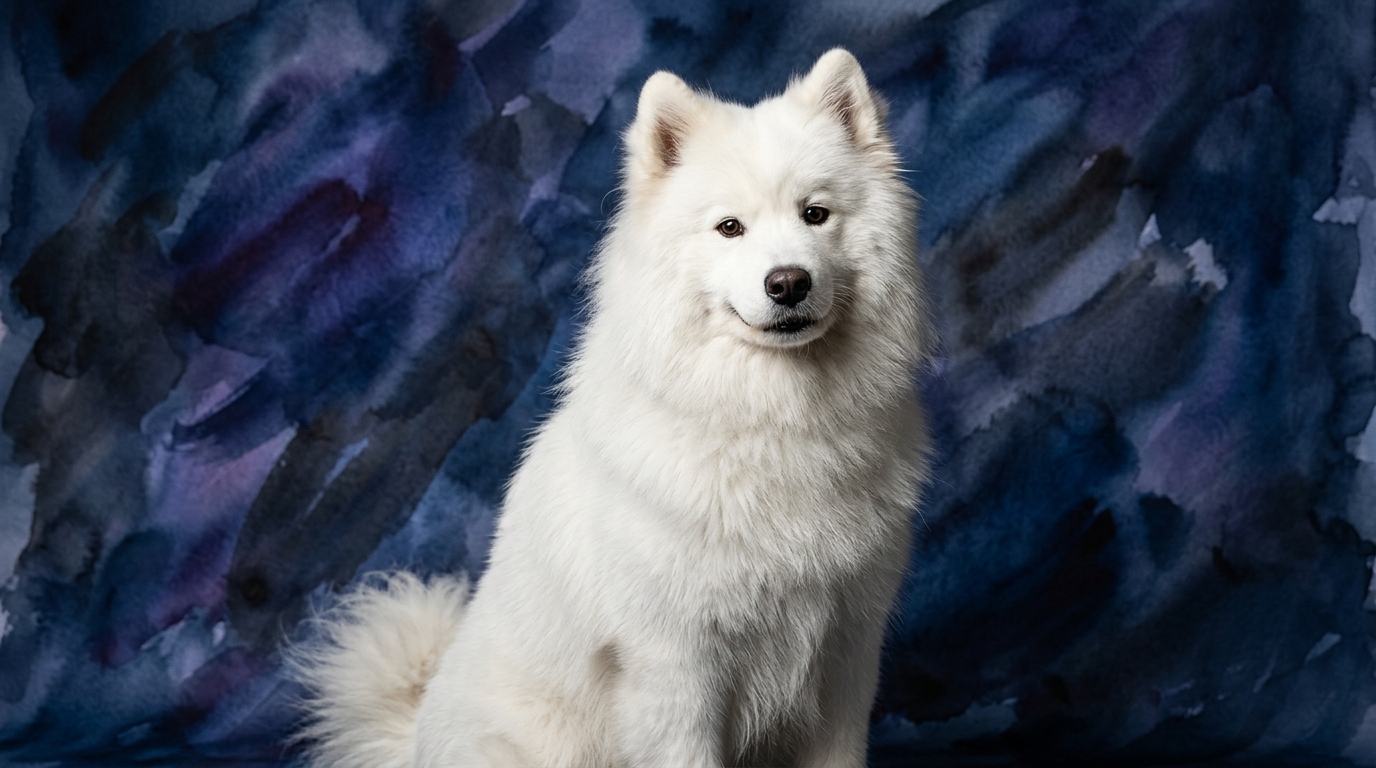
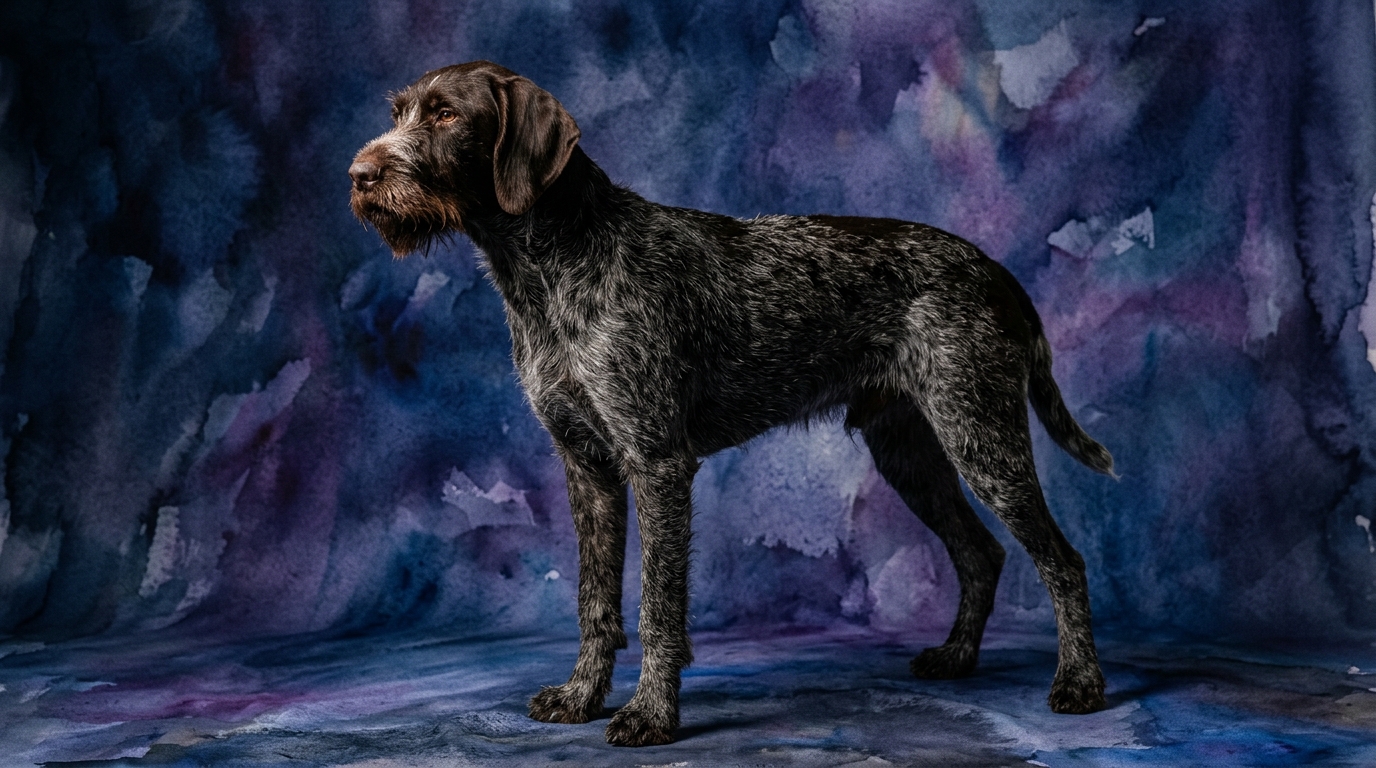
Side-by-Side Cognitive Profiles: Samoyed vs. German Wirehaired Pointer
The Cosmic Pet Pet IQ Lab provides a nuanced view of canine cognition across five key dimensions. For the Samoyed, their Problem Solving is rated at 3/5, indicating an ability to navigate familiar challenges but perhaps less inclination for independent, novel strategizing. Their Training Speed also stands at 3/5, meaning they learn new commands and routines at a moderate pace, often thriving with patient, consistent, and positive reinforcement. Where Samoyeds truly shine is in Social Intelligence, scoring a perfect 5/5, reflecting an exceptional capacity for understanding human emotions, forming deep bonds, and integrating seamlessly into family dynamics. Their Instinctive Drive is strong at 4/5, rooted in their heritage of herding reindeer and pulling sleds, manifesting as a desire for purpose and activity. Finally, their Memory is 3/5, allowing them to retain learned behaviors and routines effectively but perhaps not excelling at recalling highly complex, multi-step sequences over extended periods.
In contrast, the German Wirehaired Pointer presents a different cognitive blueprint. Their Problem Solving is rated higher at 4/5, suggesting a greater aptitude for independently assessing situations and figuring out solutions, a critical trait for their hunting responsibilities. Correspondingly, their Training Speed is also 4/5, indicating they generally pick up new instructions and tasks relatively quickly, often driven by a strong desire to work and please their handler. The GWP's Social Intelligence is 3/5; while capable of forming strong bonds, their focus often leans towards a working partnership rather than the pure empathetic companionship seen in the Samoyed. Their Instinctive Drive is 3/5, specifically channeled towards hunting tasks such as pointing, retrieving, and tracking, rather than a broad spectrum of physical exertion or social roles. Their Memory, at 4/5, enables them to recall intricate sequences of commands, retrieve specific scent profiles, and remember past field experiences with impressive accuracy, vital for successful and complex hunting endeavors.
Where the Samoyed's Cognition Excels
The Samoyed's cognitive strengths lie profoundly in their social and cooperative abilities. Their perfect 5/5 in Social Intelligence is a standout feature, positioning them as masters of interpersonal connection. This isn't merely about being friendly; it reflects an innate capacity to read and respond to human cues, anticipate needs, and offer comfort. This makes them profoundly intuitive companions, often seeming to understand their owners on a deeper, almost empathic level. For families seeking a dog that integrates deeply into their emotional landscape, offering both affection and subtle communication, the Samoyed's cognitive framework is exceptionally well-suited.
Furthermore, their Instinctive Drive, rated 4/5, while not always directed at complex problem-solving in an abstract sense, is highly focused on purposeful physical activity and cooperative tasks. This drive is not simply about boundless energy; it's about a desire to be engaged in a shared effort, whether it's pulling a sled, participating in dog sports, or simply accompanying their human on long walks with a sense of shared purpose. Their historical role as herders and sled dogs means they process tasks best when they can work alongside, rather than independently of, their human partners. This collaborative cognitive style makes them excellent team players in family life.
Where the German Wirehaired Pointer's Cognition Shines
The German Wirehaired Pointer's cognitive advantages are rooted in their independent problem-solving and robust memory, traits meticulously developed for demanding hunting environments. Their 4/5 rating in Problem Solving indicates a dog capable of assessing complex situations, such as tracking a scent through varied terrain or locating fallen game, and formulating effective strategies on their own. This isn't about rote learning but about applying intelligence to novel, dynamic challenges in the field, making them adaptable and resourceful when faced with unexpected obstacles.
Complementing their problem-solving ability is their superior Memory, also rated 4/5. For a GWP, remembering specific commands, the layout of a hunting ground, or the location of a hidden retrieve is crucial. This strong memory allows them to build a comprehensive mental map of their environment and tasks, leading to consistent and reliable performance. Their higher Training Speed (4/5) works in tandem with these traits, allowing them to quickly absorb and apply new information and techniques, which is invaluable for a dog expected to master a wide array of hunting skills and respond reliably under pressure. These cognitive attributes make the GWP an exceptional partner for tasks requiring precision, recall, and independent decision-making.
Training Dynamics: Which Breed is Easier?
When considering ease of training, the German Wirehaired Pointer generally presents a more straightforward path for owners, largely due to their higher Training Speed (4/5) and Problem Solving (4/5). GWPs are often highly motivated by purpose and cooperation with their handler, quickly grasping new commands and understanding the 'why' behind them. Their behavioral differences manifest in a strong desire to please and a focused work ethic; they are eager to engage in structured learning and excel at repetitive tasks once the objective is clear. This makes them responsive to consistent training methods and capable of mastering complex sequences of commands with relative speed.
The Samoyed, with a Training Speed of 3/5 and Problem Solving of 3/5, requires a different approach. While certainly trainable, they might learn at a more deliberate pace and sometimes display an independent streak, a remnant of their working past where they made decisions in vast, open spaces. Their cognitive style means they might question the necessity of a command if it doesn't immediately align with their understanding or natural instincts. Training a Samoyed often requires more patience, positive reinforcement, and making learning feel like a fun, collaborative game rather than a strict regimen. While they respond beautifully to social interaction, their inherent desire for partnership means they need to feel like an active participant in the training process, not just a recipient of commands.
Suitability for Active vs. Relaxed Owners
The choice between a Samoyed and a German Wirehaired Pointer also hinges significantly on an owner's lifestyle. For active owners seeking a dog to join them in rigorous outdoor pursuits and mentally stimulating activities, the German Wirehaired Pointer is an excellent match. Their Problem Solving (4/5) and Instinctive Drive (3/5, highly focused on task) mean they thrive on challenges like scent work, field trials, agility, or extensive hikes where they can put their keen senses and independent thought to use. They require consistent engagement and a 'job' to feel fulfilled, making them ideal for individuals who are equally active and enjoy structured, goal-oriented activities with their canine companion.
The Samoyed, while possessing a strong Instinctive Drive (4/5) for activity, often channels this into more cooperative and social endeavors. They are fantastic companions for active owners who enjoy long walks, jogs, or even sledding/skijoring, but their cognitive strength in Social Intelligence (5/5) means they also value deep connection and family participation. They are less about independent problem-solving in the field and more about shared experiences. For owners who are active but also prioritize a highly social, emotionally attuned companion who thrives on being an integral part of daily family life, even during relaxed moments, the Samoyed is a superb fit. They can adapt to some relaxed moments, provided their exercise and social needs are consistently met.
The Verdict
Choose a Samoyed if you prioritize a deeply social, empathetic companion who thrives on cooperative activities and being an integral part of family life, understanding that their training requires patience and positive engagement.
Opt for a German Wirehaired Pointer if you are an active owner seeking a versatile, independent problem-solver for demanding outdoor activities and structured training, valuing their quick learning and focused work ethic.
🧠 Find Your Pet's IQ Score
Our Pet IQ Lab assessment covers 25+ tests across 5 cognitive dimensions — personalized to your breed.
Take the Full IQ Test →Frequently Asked Questions
How do Samoyed and GWP differ in their approach to new situations?
Samoyeds (Problem Solving 3/5) tend to approach new situations with a preference for guidance and collaboration, often looking to their human for cues. German Wirehaired Pointers (Problem Solving 4/5) are more inclined to independently assess and strategize, leveraging their keen senses and past experiences to navigate novel challenges.
Which breed is better for competitive dog sports requiring complex routines?
For competitive dog sports requiring complex routines and precise recall, the German Wirehaired Pointer (Training Speed 4/5, Memory 4/5) generally holds an advantage. Their quicker learning and robust memory make them adept at mastering intricate sequences and performing reliably under pressure, which is crucial in such events.
Is one breed more prone to separation anxiety based on their IQ profile?
Based on their IQ profiles, the Samoyed's exceptional Social Intelligence (5/5) suggests a greater potential for separation anxiety if their strong need for companionship and connection is not adequately met. The GWP (Social Intelligence 3/5), while forming bonds, might be more resilient to solitude as their drive is often task-oriented rather than purely social.