Side-by-Side IQ Profile: Samoyed vs. Greyhound
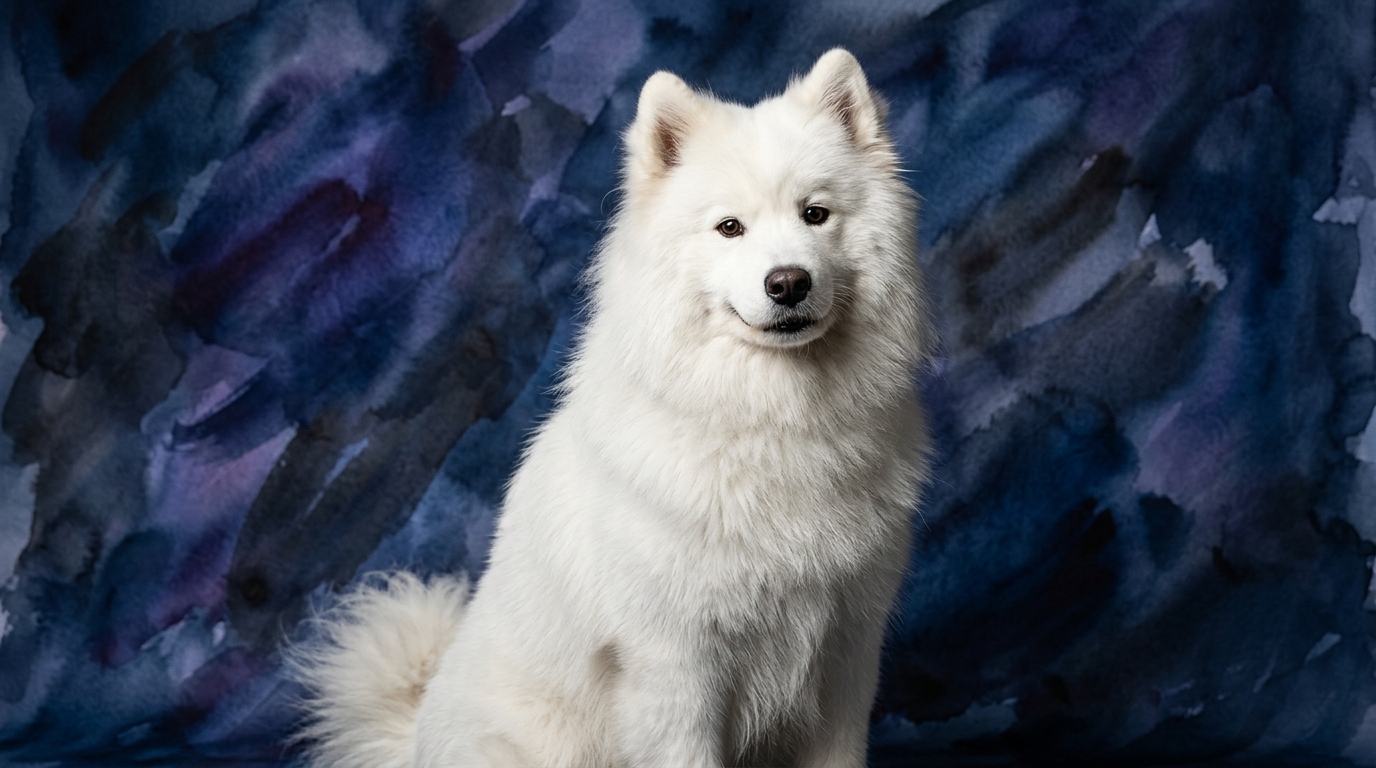
The Cosmic Pet Pet IQ Lab employs a five-dimensional framework to assess canine cognition, offering a granular view into mental strengths. For the Samoyed, a Working breed ranked #33 by Coren, its profile shows problem-solving at 3/5, training speed at 3/5, social intelligence at a remarkable 5/5, instinctive drive at 4/5, and memory at 3/5. This suggests a dog capable of moderate independent thought and learning, deeply attuned to social cues, and possessing a strong inherent drive for purpose.
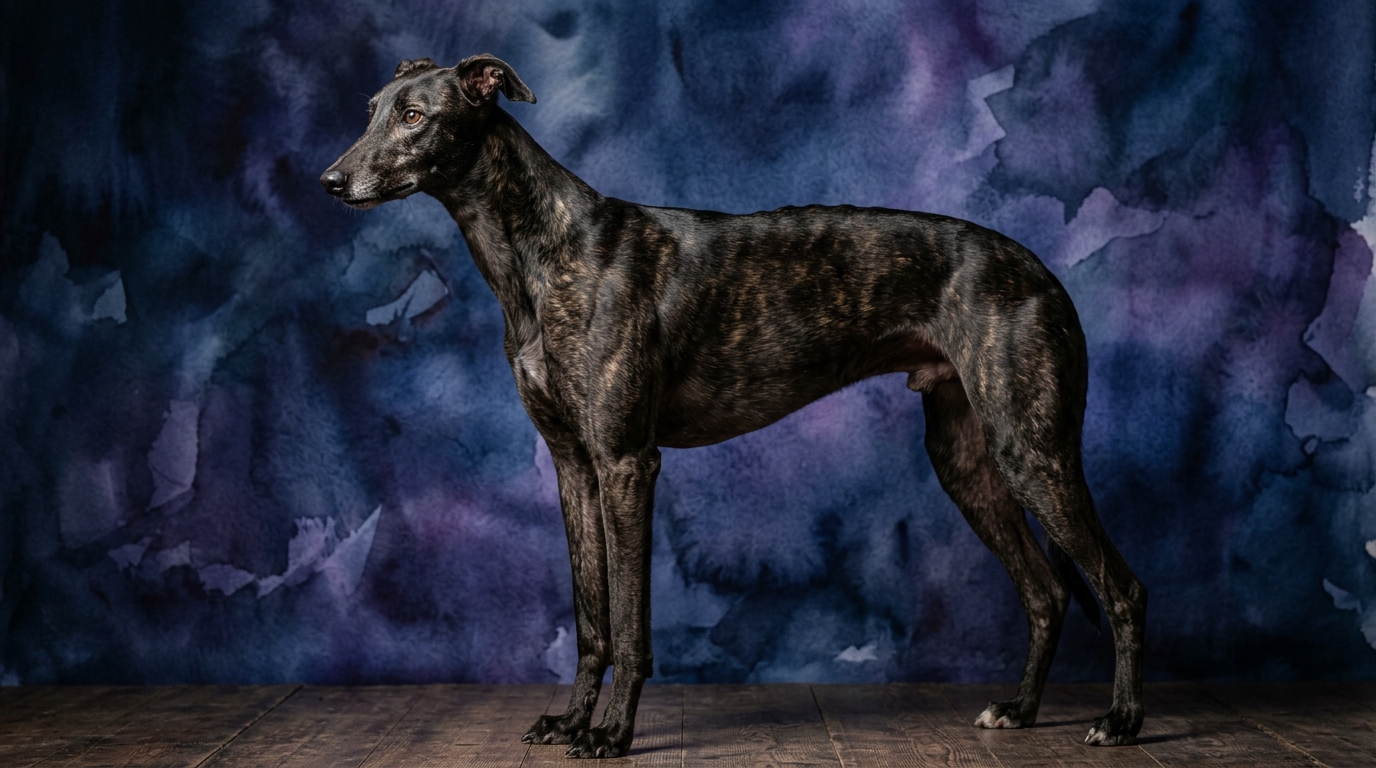
In contrast, the Greyhound, a Hound breed ranked #46, presents a different cognitive blueprint. Its problem-solving also stands at 3/5, but training speed is a lower 2/5. Social intelligence registers at 3/5, while its instinctive drive is an exceptional 5/5, and memory matches the Samoyed at 3/5. This profile indicates a breed with a powerful, focused natural inclination, moderate independent problem-solving skills, and a more self-reliant approach to social interaction and learning.
Where the Samoyed Wins Cognitively
The Samoyed truly shines in the realm of social intelligence, earning a perfect 5/5 score. This translates into an exceptional capacity for understanding human emotions, subtle body language, and forming deep, reciprocal bonds with their human companions. Their historical role as close working partners with nomadic peoples fostered a profound attunement to group dynamics and cooperation, making them highly responsive to social cues. This cognitive strength allows them to seamlessly integrate into family life, often anticipating needs or reacting appropriately to shifts in household mood, creating a highly interactive and empathetic relationship.
Furthermore, the Samoyed's moderate training speed of 3/5, while not top-tier, places it above the Greyhound in terms of how quickly it generally grasps new commands and concepts. Coupled with their high social intelligence, this means they are often more inclined to engage in collaborative learning, viewing training as a shared activity rather than a mere set of instructions. Their moderate problem-solving (3/5) often manifests in creative solutions within a social context, such as figuring out how to gain attention or navigate complex household routines to achieve a desired outcome, often involving human interaction.
Where the Greyhound Wins Cognitively
The Greyhound's undisputed cognitive strength lies in its instinctive drive, scoring an unparalleled 5/5. This intense drive is primarily rooted in their ancient purpose as sight hounds, bred for the pursuit of fast-moving prey. This isn't merely a physical attribute; it represents a sophisticated cognitive system for rapid perception, spatial reasoning at high speeds, and an unwavering focus on a moving target. Their problem-solving (3/5) in this context is highly specialized: instantly calculating optimal trajectories, anticipating prey movement, and making split-second decisions to maximize capture success, all while maintaining incredible speed. This specialized cognitive function makes them masters of the chase, demonstrating a mental acuity uniquely adapted for their historical role.
While their training speed is lower, the Greyhound's memory (3/5) is on par with the Samoyed, suggesting they retain learned behaviors and routines effectively once established. This consistency can be a quiet cognitive advantage; once a Greyhound understands a command or a household rule, they tend to adhere to it reliably. Their moderate social intelligence (3/5) means they form deep, though perhaps less overtly expressive, bonds with their chosen humans. This manifests as a calm, affectionate companionship rather than the more effusive interaction of a Samoyed, requiring owners to appreciate their more understated expressions of connection.
Which Is Easier to Train and Why
When considering ease of training, the Samoyed generally presents a more straightforward path for the average owner, primarily due to its superior social intelligence (5/5) and moderate training speed (3/5). Samoyeds are inherently cooperative and eager to please their human companions, leveraging their strong social bond to understand and respond to cues. Their ability to read human intentions and body language makes communication during training more fluid; they often anticipate what is desired and are motivated by positive reinforcement that strengthens their social connection. While they can possess an independent streak typical of working breeds, their underlying desire to work with their people makes them receptive to consistent, engaging training methods, and they typically learn new commands within a reasonable number of repetitions.
The Greyhound, with its lower training speed (2/5) and moderate social intelligence (3/5), often requires a different approach and a greater degree of patience. Their profound instinctive drive (5/5) for chasing can make external stimuli incredibly distracting, sometimes overriding a command if a squirrel or similar “prey” appears. Greyhounds are often described as independent thinkers; they learn, but they may need more repetitions to fully internalize a command, and they might weigh the immediate reward of following a human cue against their own strong internal motivations. Training a Greyhound often benefits from short, positive, and highly rewarding sessions that respect their sometimes sensitive nature and independent spirit. Owners must understand that a Greyhound's “slowness” to train isn't a lack of mental capacity, but rather a different motivational structure and a focus on specialized cognitive tasks.
Which Suits Active Owners vs. Relaxed Owners
The Samoyed's cognitive profile, particularly its instinctive drive of 4/5 and moderate problem-solving, makes it an excellent match for active owners who relish engaging in shared activities. These dogs thrive on purpose and mental stimulation, whether it's participating in dog sports like agility or carting, going on long hikes, or learning complex trick sequences. Their high social intelligence means they genuinely enjoy these activities with their people, fostering a strong partnership. An owner who understands the Samoyed's need for both physical exertion and cognitive challenges will find a highly rewarding companion, as neglecting these aspects can lead to boredom and potentially undesirable behaviors.
Conversely, the Greyhound, despite its unparalleled instinctive drive (5/5) for bursts of speed, often surprises people with its suitability for more relaxed owners once its specific exercise needs are met. While they absolutely require opportunities to gallop freely in a secure area, these intense sprints are often short-lived. Indoors, Greyhounds are renowned “45-mph couch potatoes,” content to lounge for hours. Their moderate social intelligence and independent nature mean they are less demanding of constant human interaction than a Samoyed, often happy to simply be in the same room. For owners who enjoy quiet companionship, a dog that doesn't constantly demand a “job,” but can still participate in exhilarating short bursts of activity, the Greyhound offers a unique balance.
The Verdict
If you seek a highly interactive, cooperative canine partner who thrives on deep social connection, moderate mental challenges, and enjoys participating in shared activities that engage both mind and body, choose a Samoyed.
If you appreciate an independent spirit, can provide outlets for intense bursts of speed in a safe environment, and desire a calm, affectionate presence indoors once their unique exercise requirements are met, choose a Greyhound.
🧠 Find Your Pet's IQ Score
Our Pet IQ Lab assessment covers 25+ tests across 5 cognitive dimensions — personalized to your breed.
Take the Full IQ Test →Frequently Asked Questions
How does social intelligence impact daily life with a Samoyed vs. Greyhound?
A Samoyed's 5/5 social intelligence means they are highly attuned to family dynamics, often seeking interaction and understanding human cues readily, making them very involved companions. A Greyhound's 3/5 social intelligence suggests they form deep bonds but are generally more independent and less overtly demonstrative, often content to observe and enjoy quiet companionship.
What kind of mental stimulation do Samoyeds need, given their IQ profile?
Given their 3/5 problem-solving and 4/5 instinctive drive, Samoyeds benefit greatly from activities that provide a sense of purpose and moderate mental challenge. This includes training for dog sports, puzzle toys, learning new tricks, and engaging in "work" like pulling a cart or carrying a backpack on walks, all of which leverage their cooperative nature.
Are Greyhounds difficult to train because of their lower training speed score?
Greyhounds aren't necessarily difficult, but their 2/5 training speed means they require more patience, consistency, and highly motivating rewards than breeds with faster training speeds. Their strong instinctive drive can also make them easily distracted, so training benefits from short, positive sessions in low-distraction environments, focusing on building a strong, trust-based relationship.