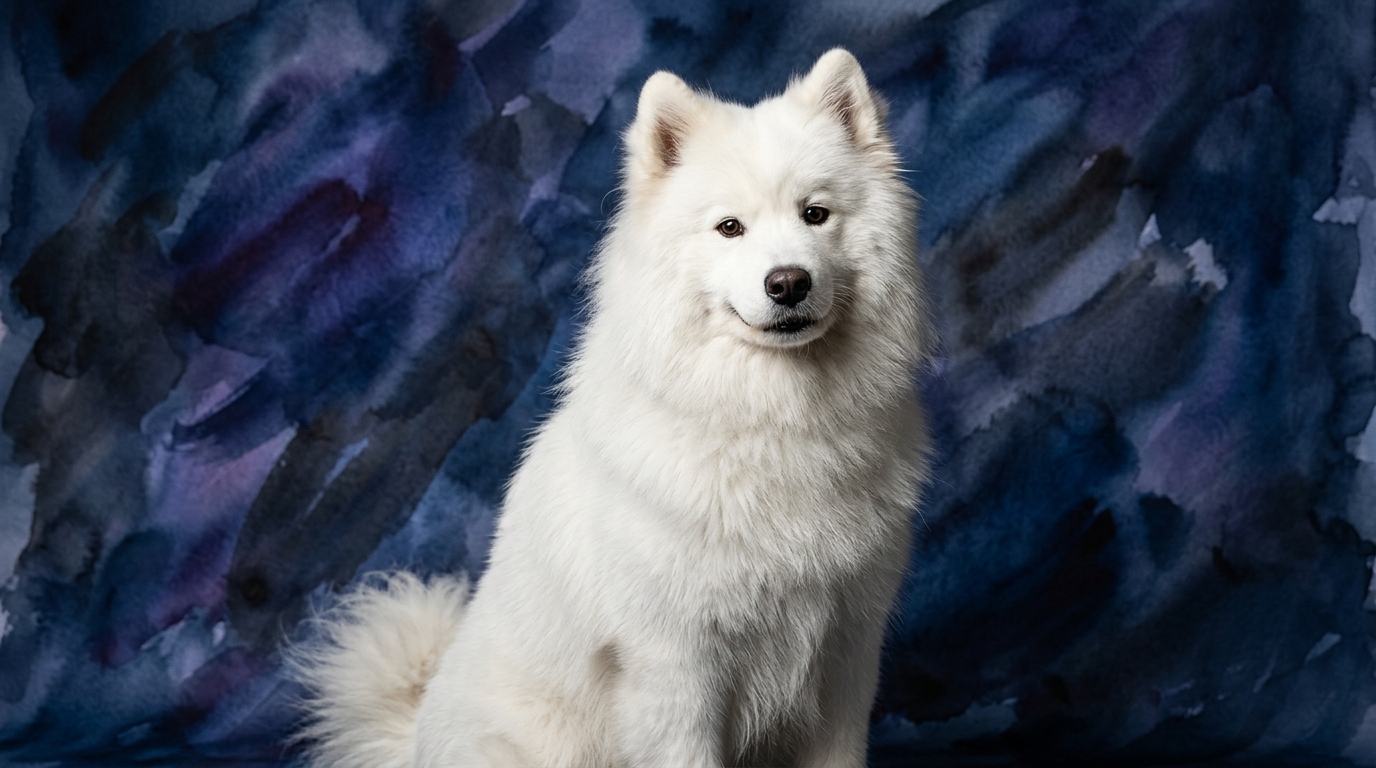
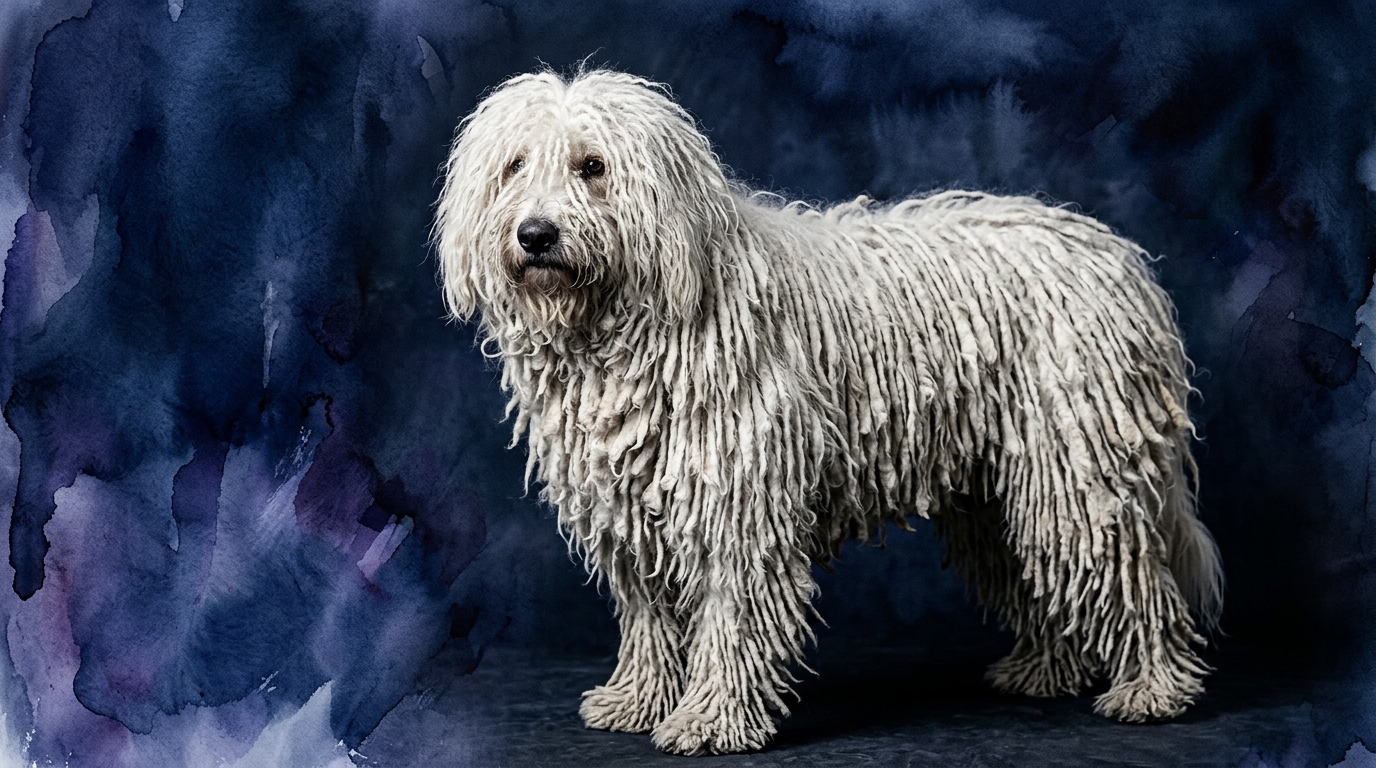
Side-by-Side Cognitive Profiles: Samoyed vs. Komondor
Delving into the cognitive makeup of these two working breeds highlights their specialized mental architectures. The Samoyed, ranked #33 on Coren's intelligence scale, presents a profile geared towards cooperative engagement and social attunement. Its Problem Solving is rated at 3/5, indicating a capacity for moderately complex tasks often with human guidance. Training Speed also stands at 3/5, suggesting a steady learning pace that benefits from consistency. Where the Samoyed truly shines is in Social Intelligence, earning a perfect 5/5, reflecting an exceptional ability to understand and connect with human emotions and cues. Its Instinctive Drive is strong at 4/5, favoring collaborative work like pulling or herding, while Memory is a solid 3/5 for retaining learned experiences.
The Komondor, positioned at #67 on Coren's scale, showcases a cognitive design optimized for independent guardianship. Its Problem Solving matches the Samoyed at 3/5, but this often manifests as self-reliant decision-making in its protective role rather than human-directed tasks. Training Speed is also 3/5, yet its learning is often filtered through its inherent purpose, requiring patience and understanding of its independent streak. Social Intelligence for the Komondor is 3/5; it forms deep, protective bonds with its immediate family but remains reserved and discerning with outsiders, a crucial trait for a guardian. Its Instinctive Drive, also 3/5, is singularly focused on vigilance and protection, not collaborative ventures. Memory holds at 3/5, functional for its territory and routine but less for arbitrary commands.
Where the Samoyed Wins Cognitively
The Samoyed's standout cognitive strength lies in its exceptional Social Intelligence (5/5). This breed's profound capacity for understanding and responding to human emotions and social cues is unparalleled by the Komondor. A Samoyed can often anticipate a family member's mood or intentions, making them remarkably empathetic companions. Their ability to integrate seamlessly into complex family dynamics, reading subtle body language and vocal inflections, allows them to participate actively in household life in a way the more reserved Komondor does not. This high social acumen translates into a dog that genuinely seeks and thrives on interaction, offering a unique layer of companionship. Furthermore, their Instinctive Drive (4/5) for cooperative work, whether it's pulling a sled or participating in agility, showcases a cognitive preference for partnership that outshines the Komondor's more solitary guardian focus. They are motivated by shared activity and purpose, demonstrating a cognitive framework built around collaboration.
Where the Komondor Wins Cognitively
The Komondor's cognitive advantages are rooted in its ancient purpose as a livestock guardian, manifesting in a distinct form of independent Problem Solving (3/5) and a highly specialized Instinctive Drive (3/5). While its Problem Solving score matches the Samoyed, the *nature* of this problem-solving is different; Komondors are adept at assessing threats to their flock or territory and devising solutions autonomously, without direct human command. This self-reliance in critical situations, often involving complex environmental assessment and threat management, is a cognitive trait refined over centuries. Their Instinctive Drive is singularly focused on vigilance and protection, a deep-seated cognitive program that prioritizes the safety of their charges above all else. This translates into an unwavering, independent judgment in real-world scenarios, a cognitive strength that allows them to operate effectively without constant human oversight. Their Social Intelligence (3/5), though lower than the Samoyed's, is perfectly suited to their role, allowing them to form deep, protective bonds with their family while maintaining a discerning distance from perceived outsiders, a crucial cognitive filter for a guardian breed.
Trainability: Samoyed vs. Komondor
Assessing trainability between these two breeds reveals a nuanced picture, largely influenced by their core motivations and social predispositions. The Samoyed, with its high Social Intelligence (5/5) and cooperative Instinctive Drive (4/5), generally presents as the easier breed to train for a wide range of tasks and obedience. Their strong desire to please and participate in human activities means they are often eager students, responding well to positive reinforcement and social praise. Their training speed (3/5) is steady, and their motivation is frequently tied to shared engagement, making training sessions enjoyable and productive. While they can exhibit an independent streak, it's typically manageable within a consistent, reward-based framework.
In contrast, the Komondor’s independent Problem Solving (3/5) and Instinctive Drive (3/5) for guardianship make training a different endeavor. They learn commands at a similar pace (Training Speed 3/5) but process instructions through the lens of their protective purpose. A Komondor might understand a command but choose not to execute it if it conflicts with their perceived duty or if they see no immediate utility. Their social intelligence, while strong within their core family unit, doesn't extend to a general eagerness to please humans outside of their specific guardian role. Training a Komondor requires immense patience, understanding of their inherent independence, and a willingness to demonstrate the practical value of a command from their perspective. They are not as inherently biddable as the Samoyed, requiring an owner to earn their cooperation rather than simply commanding it.
Lifestyle Match: Active vs. Relaxed Owners
The choice between a Samoyed and a Komondor based on owner activity levels largely comes down to the *type* of activity and the desired interaction. Active owners who enjoy collaborative pursuits, such as hiking, jogging, sledding, agility, or extensive playtime, will find the Samoyed to be an exceptional match. Their strong Instinctive Drive (4/5) for working alongside humans, coupled with their high Social Intelligence (5/5), means they thrive on shared experiences and mental stimulation through engagement. They require regular, engaging activity to prevent boredom and channel their energy productively, making them ideal for individuals or families who want a canine partner in their adventures. A relaxed owner, however, might find the Samoyed's energy and constant need for social interaction overwhelming without a dedicated commitment to their mental and physical exercise.
Conversely, the Komondor is better suited for owners who prioritize a vigilant, independent guardian presence over constant collaborative activity. While Komondors certainly need regular exercise to maintain physical health, their Instinctive Drive (3/5) is geared towards patrolling and observation rather than high-intensity, structured sports. They are content with a routine that allows them to survey their territory and fulfill their guardian role. Relaxed owners, particularly those with ample secure outdoor space and a need for a protective presence, might find the Komondor’s reserved nature and self-sufficiency more fitting. They are not generally dogs that demand constant interactive play or training sessions once their foundational training is established. An active owner seeking a dog for competitive sports might find the Komondor's independent nature less responsive, while a relaxed owner without a strong guardian need might struggle with its territorial instincts.
The Verdict
Choose a Samoyed if you seek an empathetic, highly social companion eager for collaborative activities and responsive training, thriving on shared experiences with its family.
Opt for a Komondor if you need an independent, vigilant guardian capable of autonomous problem-solving and content with a more reserved, protective role within a secure environment.
🧠 Find Your Pet's IQ Score
Our Pet IQ Lab assessment covers 25+ tests across 5 cognitive dimensions — personalized to your breed.
Take the Full IQ Test →Frequently Asked Questions
Do Samoyeds need more mental stimulation than Komondors?
Samoyeds, with their high social intelligence and cooperative drive, generally thrive on more varied and interactive mental stimulation that involves their human family. Komondors, while intelligent, are often stimulated by their guardian duties and territory observation, requiring a different *type* of mental engagement, less focused on human-directed games.
Can a Komondor be trained for obedience competitions like a Samoyed?
While a Komondor can certainly learn obedience, their independent nature and guardian instincts mean they typically approach obedience training with a different mindset than a Samoyed. Samoyeds, driven by social engagement, often excel in competitive obedience, whereas Komondors might see less inherent utility in performing repetitive tasks that don't directly relate to their protective role, making competition more challenging.
Which breed is better with children?
Samoyeds, with their exceptional social intelligence and gentle disposition, are generally very good with children, often forming strong, playful bonds. Komondors are fiercely protective of their family, including children, but their reserved nature and sheer size require careful supervision and socialization, especially with children outside their immediate family circle.