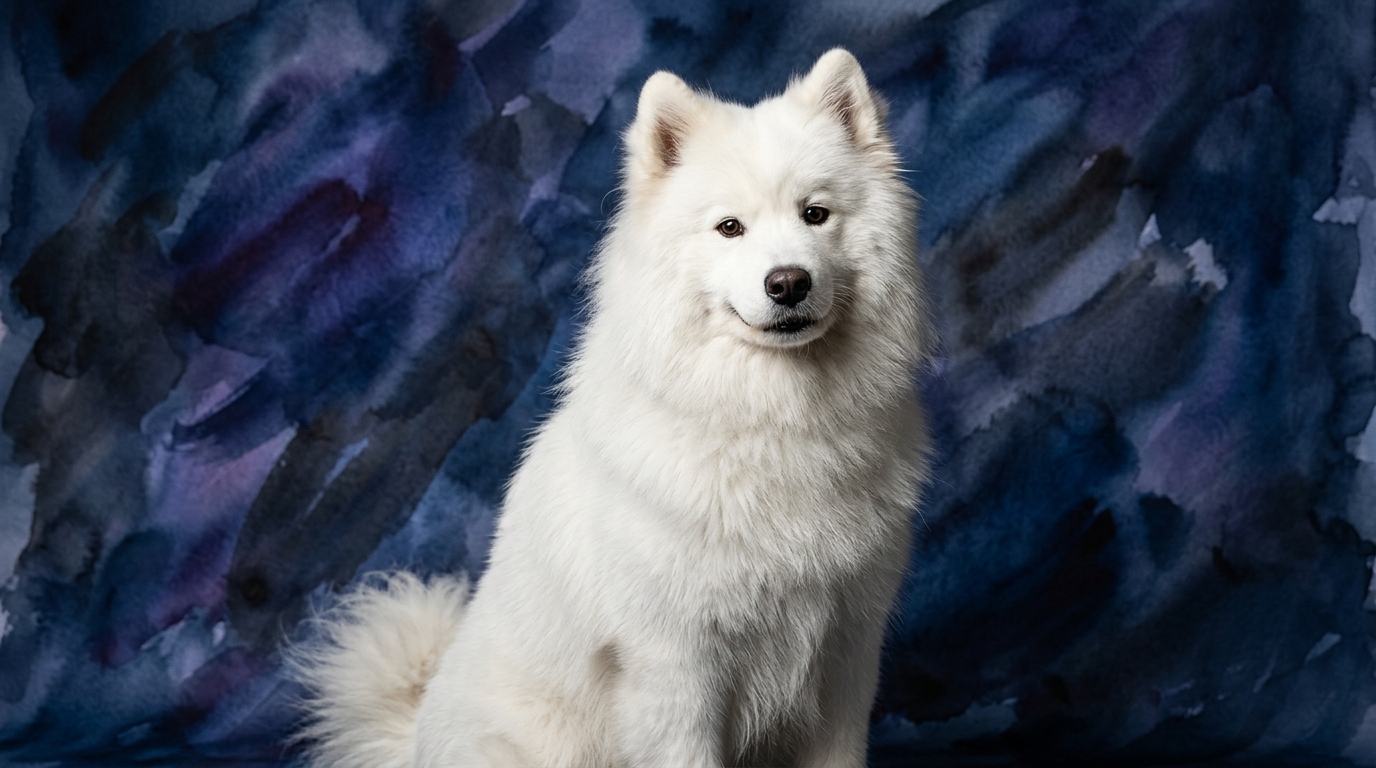
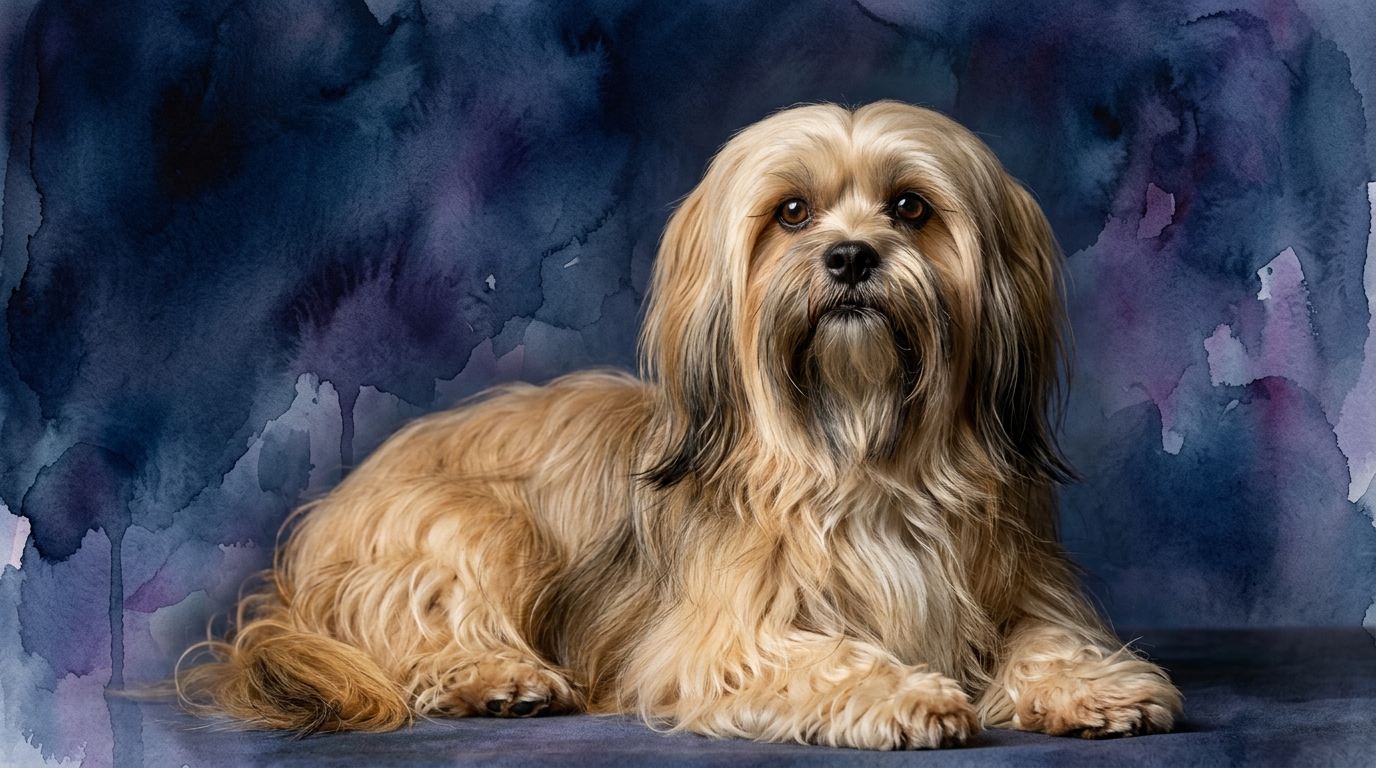
Side-by-Side Cognitive Profiles: Samoyed vs. Lhasa Apso
The Samoyed, a breed rooted in arctic work, ranks #33 on the Coren scale, reflecting a general aptitude for complex tasks. Our Pet IQ Lab assessment gives them 3/5 for both problem-solving and training speed, indicating a moderate capacity to navigate novel situations and grasp new commands. Where the Samoyed truly shines is in social intelligence, scoring a perfect 5/5, showcasing their profound ability to understand and respond to human cues and social dynamics. Their instinctive drive, at 4/5, points to a strong internal motivation for activity and purpose, while memory scores 3/5, allowing them to retain learned information consistently.
In contrast, the Lhasa Apso, an ancient sentinel from the Himalayas, holds a Coren rank of #68, placing them in a different cognitive category. Across the board, our Pet IQ Lab metrics show a consistent 3/5 for problem-solving, training speed, social intelligence, instinctive drive, and memory. This indicates a balanced cognitive profile where no single dimension dramatically overshadows others. Their problem-solving, training speed, and social intelligence are practical, adequate, and reserved, respectively, compared to the Samoyed's effusiveness. The Lhasa Apso's instinctive drive is moderate, and their memory serves them well for routine and learned behaviors.
Where the Samoyed's Cognition Excels
The Samoyed's most striking cognitive advantage lies in its social intelligence, scoring a 5/5. This isn't merely about friendliness; it signifies an exceptional capacity to read human emotions, intentions, and subtle body language. This profound understanding allows them to integrate seamlessly into family structures, anticipating needs and responding with empathy. For owners, this translates into a deeply connected companion, often initiating interactions and adapting behavior based on human mood, making them highly attuned partners.
Furthermore, the Samoyed's instinctive drive, rated at 4/5, gives them a distinct edge in tasks requiring sustained motivation and purpose. Descended from working dogs, they possess an inherent drive to engage with their environment and fulfill a “job,” whether that's pulling a sled, participating in dog sports, or simply engaging in vigorous play. While their problem-solving and training speed are on par with the Lhasa Apso, this higher internal drive means they are often more self-motivated to learn and apply themselves to challenges, especially when those challenges align with their natural inclinations for activity and collaboration.
Nuances in Lhasa Apso's Cognitive Strengths
While the Lhasa Apso’s cognitive scores are consistently 3/5, their unique strength isn't about outperforming the Samoyed in a direct head-to-head on every metric, but rather in the application of these balanced abilities. Their 3/5 social intelligence, for instance, translates into a discerning and independent nature. Unlike the Samoyed's eager-to-please social engagement, the Lhasa Apso forms deep bonds with its chosen few, displaying a subtle yet profound understanding of its inner circle without the overt need for constant validation. This independent social intelligence means they are less prone to separation anxiety and content with their own company, well-suited for households valuing a self-reliant companion.
The Lhasa Apso's moderate instinctive drive (3/5) also presents a cognitive advantage for specific lifestyles. While the Samoyed thrives on having a “job,” the Lhasa Apso's lower drive means they are less compelled by external tasks or the need for intense physical exertion to feel fulfilled. Their problem-solving (3/5) and memory (3/5) are adept at navigating their home, remembering routines, and understanding household rules, often with quiet persistence rather than boisterous enthusiasm. This allows them to excel in roles where watchful observation and subtle communication are valued over overt participation, showcasing a different kind of practical intelligence geared towards companionship and home guardianship.
Training Dynamics: Samoyed vs. Lhasa Apso
Both breeds share a 3/5 rating for training speed, suggesting they learn at a similar pace. However, the ease of training can differ significantly due to their other cognitive dimensions. The Samoyed's exceptional social intelligence (5/5) means they are often highly motivated by human interaction and praise. They are generally eager to please their owners, making them receptive to positive reinforcement methods. While they can have an independent streak, their desire to connect and collaborate often overrides stubbornness, making training cooperative and rewarding.
The Lhasa Apso, despite the same training speed score, presents a different training landscape. Their social intelligence (3/5) is more selective, and they are less inherently driven to please. This often translates into a need for more patience and consistency from their trainers. They are capable of learning, but they often require compelling reasons to comply, rather than simply seeking approval. Their moderate instinctive drive means they might not be as naturally enthusiastic about repetitive drills or physically demanding tasks. Training a Lhasa Apso involves understanding their independent nature, using high-value rewards, and making sessions engaging and relevant to their watchful disposition, rather than relying solely on social connection.
Ideal Lifestyles: Active Engagement vs. Relaxed Companionship
For owners seeking an active, engaged companion, the Samoyed is often the more fitting choice. Their 4/5 instinctive drive, coupled with their high social intelligence, means they thrive on participation in family activities, outdoor adventures, and structured “jobs.” This breed requires significant physical exercise and mental stimulation to prevent boredom and channel their natural working instincts. They excel in activities like hiking, running, dog sports, or even simply long, interactive play sessions in the yard. An owner who enjoys a dynamic, collaborative relationship and provides consistent engagement will find the Samoyed a joyful and fulfilling partner.
Conversely, the Lhasa Apso aligns well with more relaxed owners or those living in environments where intense physical exertion isn't a daily requirement. Their moderate instinctive drive (3/5) means they are generally content with moderate daily walks and indoor play. While they appreciate interaction, their lower social intelligence score indicates they are often more self-sufficient and do not demand constant attention or vigorous activity to feel content. They are perfectly happy to be a watchful presence, observing family life from a comfortable spot. Owners who appreciate an independent, resilient, and less demanding companion for quiet companionship will find the Lhasa Apso an excellent match.
The Verdict
Choose a Samoyed if you desire a highly social, driven, and collaborative partner for an active lifestyle, someone who thrives on shared adventures and deeply values human connection.
Opt for a Lhasa Apso if you prefer a more independent, discerning, and watchful companion who is content with a more relaxed pace and offers subtle, yet profound, loyalty.
🧠 Find Your Pet's IQ Score
Our Pet IQ Lab assessment covers 25+ tests across 5 cognitive dimensions — personalized to your breed.
Take the Full IQ Test →Frequently Asked Questions
Do Samoyeds need more mental stimulation than Lhasa Apsos?
Yes, generally. Samoyeds, with their higher instinctive drive and working heritage, thrive on consistent mental challenges like puzzle toys or new tricks. Lhasa Apsos also benefit from stimulation, but their needs are typically less intense, focusing more on routine and understanding their environment.
Is a Lhasa Apso's independence a sign of lower intelligence?
Not at all. A Lhasa Apso's independence, reflected in its 3/5 social intelligence, is a specific cognitive trait shaped by its history as a sentinel dog, valuing self-reliance and discernment. It signifies a different type of intelligence focused on observation and selective engagement.
How does the Coren rank correlate with the Pet IQ Lab scores for these breeds?
The Coren rank, placing Samoyeds at #33 and Lhasa Apsos at #68, provides a general measure of 'working and obedience intelligence.' Our Pet IQ Lab scores offer a granular view across five distinct cognitive dimensions, detailing specific strengths and tendencies like the Samoyed's high social intelligence or the Lhasa Apso's balanced profile.