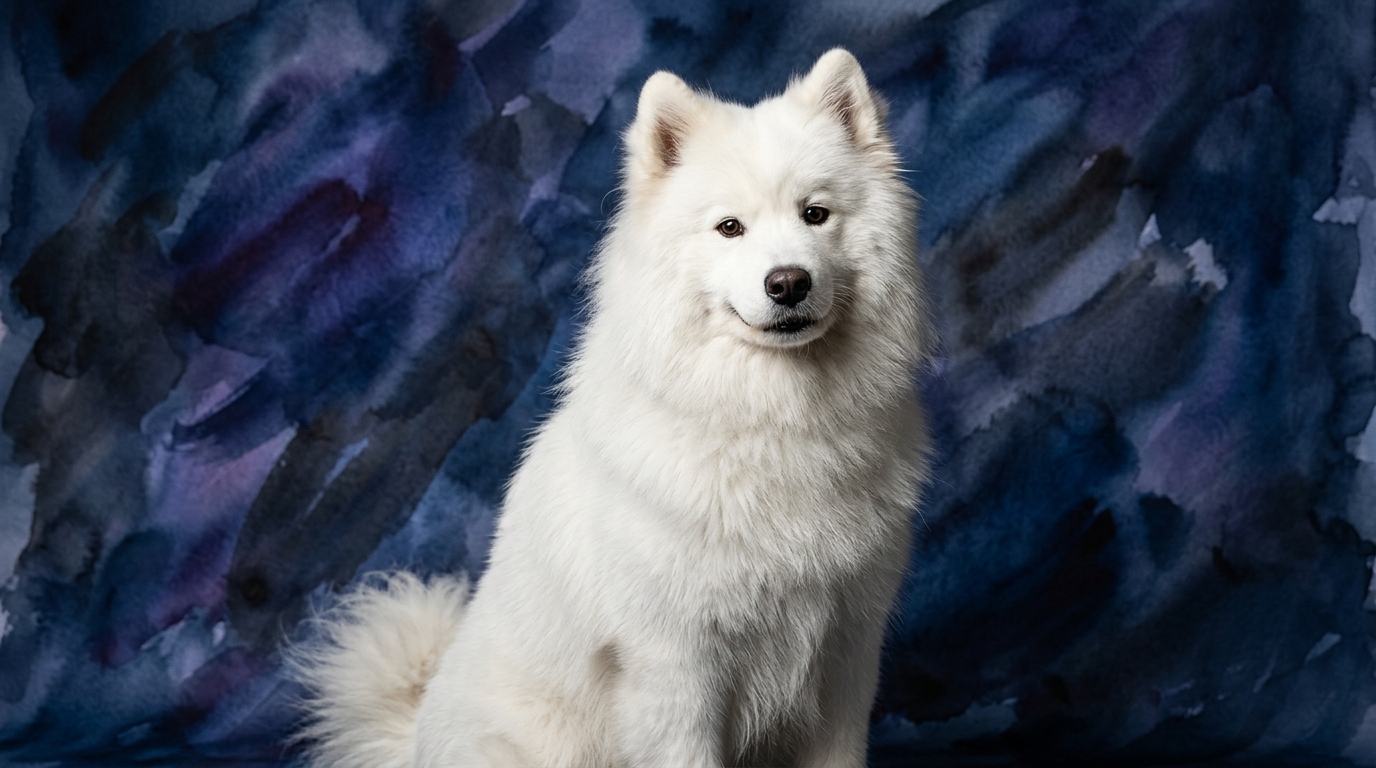
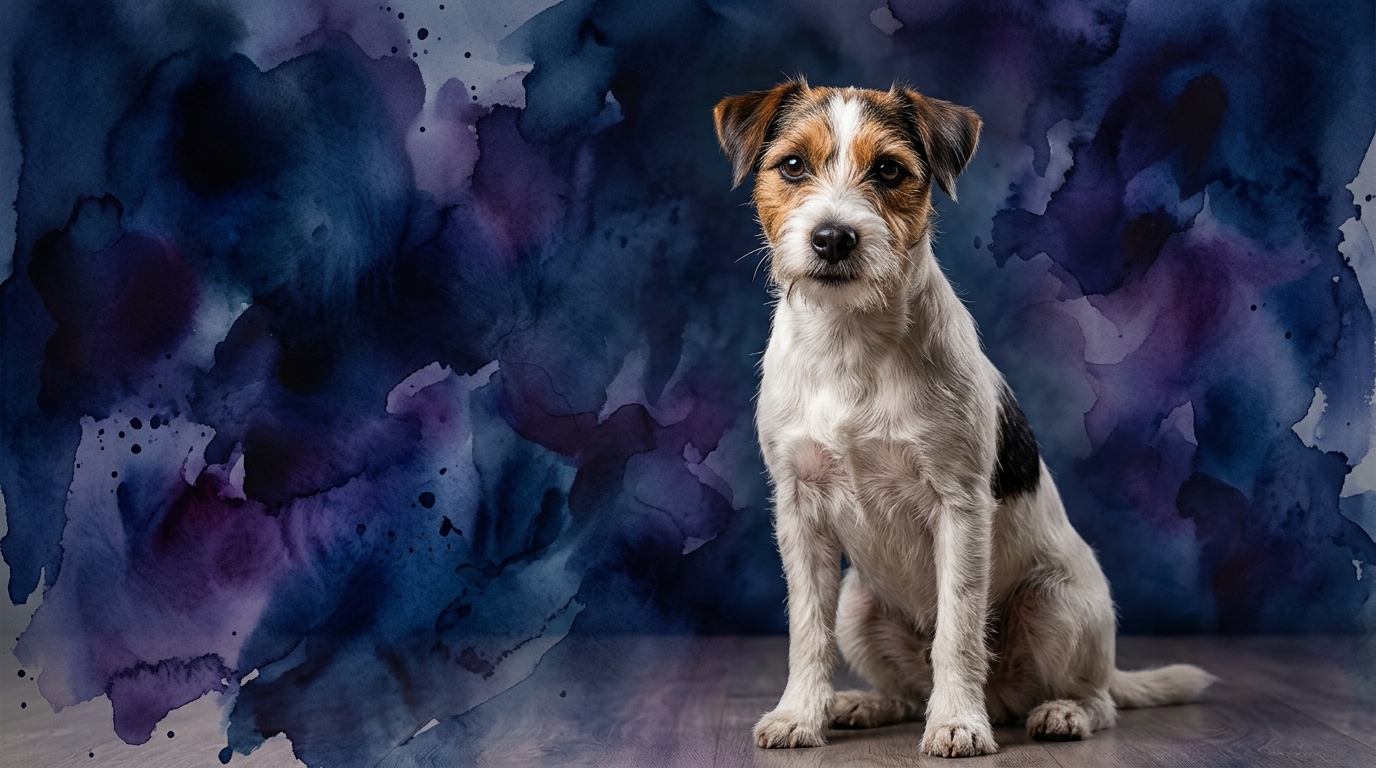
Side-by-Side IQ Profile: Samoyed vs. Parson Russell Terrier
The Cosmic Pet Pet IQ Lab assesses canine intelligence across five critical dimensions, revealing distinct mental landscapes for each breed. For the Samoyed, ranked #33 on the Coren scale for working intelligence, we observe a nuanced set of abilities.
Samoyed IQ Lab Scores: Problem Solving (3/5) indicates a capability to navigate complex situations and learn solutions, though often through observation and some charming deliberation. Training Speed (3/5) suggests they learn new commands at a moderate pace, often thriving with a strong, positive handler bond. Social Intelligence (5/5) is their standout trait, demonstrating exceptional empathy and understanding of human cues, making them deeply connected companions. Their Instinctive Drive (4/5) reflects their heritage for pulling and herding, manifesting as a strong need for purpose and activity. Memory (3/5) is solid, allowing them to recall routines, commands, and experiences effectively.
The Parson Russell Terrier, while not Coren-ranked, presents a different cognitive blueprint. Their scores reflect a tenacious, focused mind. Problem Solving (3/5) highlights their persistent nature in overcoming obstacles, often driven by curiosity and prey instinct. Training Speed (3/5) suggests a moderate learning curve, but their independent spirit demands engaging and varied methods to maintain focus. Social Intelligence (3/5) indicates they are friendly and can read basic human cues, though they are less overtly empathetic than some breeds. Their Instinctive Drive (3/5) is primarily geared towards hunting and digging, a specialized and intense focus. Memory (3/5) is reliable for commands and rewarding experiences, especially those linked to their inherent drives.
Where the Samoyed Wins Cognitively
The Samoyed's cognitive strengths distinctly outshine the Parson Russell Terrier's in the realm of social intelligence, scoring a perfect 5/5. This translates into an exceptional ability to understand and respond to human emotions, making them incredibly attuned companions who often anticipate their owner's needs and react with profound empathy. This high social IQ fosters deep, reciprocal bonds and makes them inherently cooperative within a family unit. Furthermore, their higher instinctive drive, rated 4/5, provides a broader capacity for diverse working roles beyond specific hunting tasks, allowing them to excel in activities like sledding, agility, or even therapy work where their gentle nature and attentiveness are assets. This comprehensive social awareness and versatile drive contribute significantly to their #33 Coren ranking, indicating a strong capacity for adaptive learning within a human social structure.
Where the Parson Russell Terrier Wins Cognitively
While individual cognitive dimension scores for the Parson Russell Terrier largely mirror the Samoyed’s, their unique advantage lies in the *application* of these traits. Their problem-solving ability (3/5) is often fueled by an indomitable tenacity and a focused, singular drive (3/5) geared towards specific goals, particularly those involving pursuit, exploration, and digging. This translates into a relentless determination to achieve what they set their minds to, whether it's figuring out a complex puzzle toy or locating a hidden scent. Their training speed (3/5), while moderate, benefits from their quick reflexes and eagerness for engaging tasks, especially when those tasks tap into their inherent terrier instincts. They might not be as broadly empathetic, but their focused drive makes them remarkably effective at tasks requiring sustained, independent effort and quick, decisive action, often with a fearless approach.
Which is Easier to Train and Why
Training a Samoyed generally proves more straightforward due to their exceptional social intelligence and strong desire to please their human companions. Their 5/5 social IQ means they are highly motivated by positive interaction and praise, actively seeking to understand and comply with human expectations. While their training speed is 3/5, their willingness to form deep bonds and work cooperatively often overrides initial learning plateaus, making them receptive to consistent, reward-based methods. They are less likely to intentionally defy commands once they grasp them, valuing the harmony of their social group and the positive reinforcement that strengthens their bond.
The Parson Russell Terrier, with a 3/5 social intelligence, tends to be more independent and less concerned with constant human approval. Their training speed is also 3/5, but their strong, specialized instinctive drive (3/5, focused on prey) can make them more easily distracted by environmental stimuli. Their inherent tenacity, while a strength in problem-solving, can also manifest as stubbornness in training if they don't perceive the value or fun in a command. They require a handler who is patient, consistent, and creative in making training sessions highly engaging and rewarding, often incorporating games that tap into their natural instincts to maintain focus. Behavioral differences include the Samoyed's tendency to lean into cooperation versus the Parson Russell's inclination to follow its nose or curiosity first, demanding more ingenuity from the trainer.
Which Suits Active Owners vs. Relaxed Owners
Both breeds demand a significant commitment to activity, but for distinct reasons. The Samoyed, with its 4/5 instinctive drive, thrives with active owners who can provide consistent mental and physical stimulation, such as long walks, hiking, or participation in dog sports like agility or sledding. Their high social intelligence also means they need owners who are present and enjoy interactive companionship, as they are not content to be left alone for extended periods. They suit owners who appreciate a dog deeply embedded in family life and who can channel their working heritage into purposeful activities, valuing shared experiences and gentle interaction.
The Parson Russell Terrier, while smaller, is a powerhouse of energy with a 3/5 instinctive drive that translates into a relentless need for vigorous exercise and mental challenges. They are ideal for highly active owners who enjoy outdoor adventures, competitive dog sports like earthdog trials, flyball, or agility, and who can provide structured outlets for their strong prey drive and curiosity. Relaxed owners might find the Parson Russell's boundless energy and independent nature overwhelming, as they require consistent engagement to prevent boredom-driven behaviors like digging or excessive barking. They need an owner who is as tenacious and energetic as they are, ready for daily adventures and consistent boundary setting.
The Verdict
Choose a Samoyed if you seek a deeply empathetic, highly social companion who thrives on strong family bonds and cooperative activities, and you're prepared for their need for consistent, purposeful engagement in a gentle, interactive manner.
Opt for a Parson Russell Terrier if you are an exceptionally active individual or family looking for a tenacious, spirited partner for high-energy pursuits and structured challenges, and you appreciate a dog with a strong, independent drive.
🧠 Find Your Pet's IQ Score
Our Pet IQ Lab assessment covers 25+ tests across 5 cognitive dimensions — personalized to your breed.
Take the Full IQ Test →Frequently Asked Questions
Do Samoyeds shed more than Parson Russell Terriers?
Yes, Samoyeds are known for their dense double coats and seasonal heavy shedding, requiring significant grooming to manage. Parson Russell Terriers, with their shorter coats (smooth or broken), shed moderately year-round but generally less than a Samoyed, and require less intensive grooming.
Are Parson Russell Terriers good with children?
Parson Russell Terriers can be good with older, respectful children who understand how to interact with an energetic dog. Their high energy and sometimes assertive nature mean they might be too boisterous for very young children, and supervision is always essential to ensure positive interactions.
What kind of mental stimulation do these breeds need?
Samoyeds benefit from interactive puzzle toys, obedience training, and roles that allow them to "work" alongside their family, leveraging their social intelligence and cooperative nature. Parson Russell Terriers thrive on problem-solving toys, scent work, agility, and activities that engage their strong prey drive and curiosity, requiring more independent mental challenges and consistent engagement.