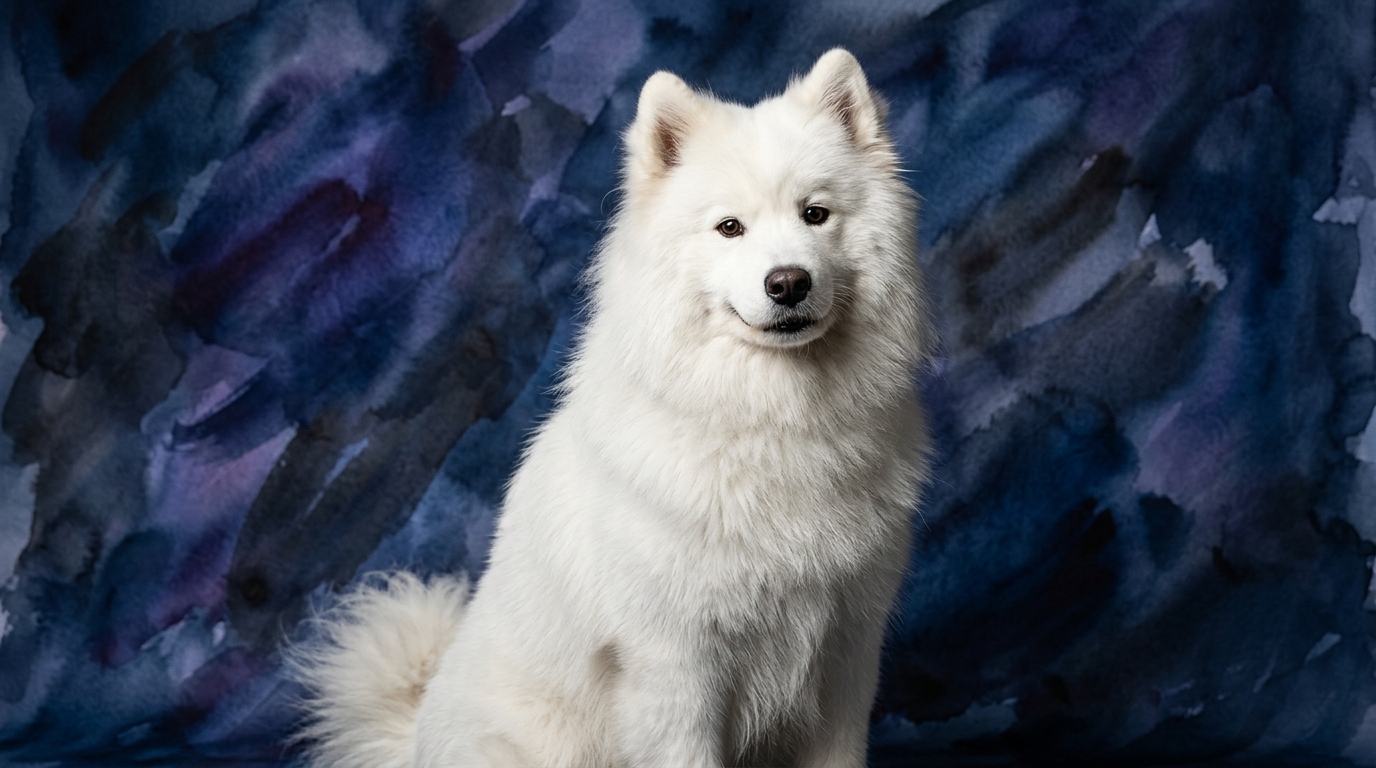

Side-by-Side Cognitive Profiles: Samoyed vs. Rat Terrier
The Samoyed, a member of the Working group, holds a Coren rank of #33, indicating a respectable capacity for learning and obedience. Their intelligence profile shows a Problem Solving score of 3/5, suggesting a moderate ability to navigate novel situations and figure things out. Training Speed is also rated at 3/5, meaning they grasp new commands at an average pace. Where Samoyeds truly distinguish themselves is in Social Intelligence, scoring a remarkable 5/5, reflecting their deep understanding of human cues and strong desire for companionship. Their Instinctive Drive, rated 4/5, speaks to their heritage as herders and sled pullers, while their Memory stands at 3/5, indicating an average retention of learned information.
In contrast, the Rat Terrier, a lively member of the Terrier group, does not appear on Coren's ranking, which is common for many breeds, yet their cognitive abilities are distinct. Across the board, the Rat Terrier scores 3/5 in Problem Solving, Training Speed, Social Intelligence, Instinctive Drive, and Memory. This consistent mid-range performance suggests a balanced, functional intelligence, particularly suited to their original purpose of pest control. While they may not exhibit the same depth of social understanding as a Samoyed, their scores indicate a capable and adaptable companion, ready to learn and react within their environment.
Where the Samoyed Shines Cognitively
The Samoyed's crowning cognitive achievement lies in their exceptional Social Intelligence, scoring a perfect 5/5. This isn't merely about friendliness; it signifies an acute ability to read human emotions, intentions, and body language. A Samoyed often seems to anticipate their owner's needs or moods, making them remarkably empathetic and cooperative partners in various activities. This deep social awareness translates into a profound bond and a highly responsive demeanor when engaged in shared tasks, leveraging their innate desire to be part of a 'pack' or family unit.
Furthermore, the Samoyed's Instinctive Drive of 4/5, while not the highest, is channeled differently than a terrier's. This drive is rooted in centuries of working alongside humans, pulling sleds, and herding reindeer. It manifests as a strong inclination towards purposeful activity and cooperative ventures. Their intelligence is geared towards understanding complex tasks within a team dynamic, exhibiting a persistence that is not solely self-serving but often aimed at achieving a common goal, making them excellent companions for activities like canine sports or service work that require collaborative effort and sustained focus.
Unpacking the Rat Terrier's Cognitive Strengths
While the Rat Terrier's scores are consistently 3/5, their cognitive strengths lie in the *application* of these abilities, shaped by their terrier heritage. Their Problem Solving at 3/5, for example, is often expressed through focused determination and ingenuity in specific tasks. Faced with a puzzle or a scent trail, a Rat Terrier will exhibit a tenacious, hands-on approach, quickly assessing and reacting to their environment to achieve their objective. This isn't about grand social schemes but about efficient, practical solutions to immediate, tangible problems, often independently.
The Rat Terrier's Instinctive Drive, also at 3/5, is a concentrated force geared towards their historical role. This drive fuels their intense focus and quick reflexes, making them exceptionally adept at tasks requiring vigilance and rapid response, such as agility courses or earth dog trials. Their memory, at 3/5, supports this by allowing them to quickly recall spatial layouts or learned sequences of actions related to their independent pursuits. This combination of focused problem-solving and instinctive drive makes them formidable and efficient in their chosen endeavors, even if those endeavors are less about human partnership and more about independent accomplishment.
Training Dynamics: Samoyed vs. Rat Terrier
When it comes to ease of training, both breeds share a Training Speed score of 3/5, indicating an average rate of learning new commands. However, the *experience* of training differs significantly due to their other cognitive traits. The Samoyed's superior Social Intelligence (5/5) means they are generally more eager to please and more attuned to human feedback. They thrive on positive reinforcement and the strong bond formed during training sessions, often viewing it as a cooperative game. Their working breed background means they are inherently receptive to direction, making them willing and engaged students, even if they don't grasp every concept instantly.
The Rat Terrier, with a Social Intelligence of 3/5 and a strong independent streak, can present a different training challenge. While they are certainly capable of learning new commands at an average pace, their motivation might stem less from a desire to please and more from the reward itself or the intrinsic enjoyment of the activity. Their tenacity, a hallmark of terriers, can sometimes translate into stubbornness if they don't see the immediate value or if they prefer to pursue their own interests. Consistent, engaging, and varied training methods, often incorporating games and scent work, are crucial to keep a Rat Terrier focused and motivated.
Lifestyle Match: Active Owners vs. Relaxed Owners
For active owners seeking a dynamic and highly interactive companion, the Samoyed is a compelling choice. Their Instinctive Drive of 4/5, coupled with their high Social Intelligence, means they flourish with consistent physical activity and mental engagement that involves their human family. Activities like hiking, running, sledding, or even complex obedience and agility courses where they work alongside their owner are ideal. They are not content to be mere spectators; they want to be integral participants in family adventures, making them less suitable for genuinely relaxed or sedentary households.
The Rat Terrier, while also an active breed, offers a slightly different profile for owners. Their Instinctive Drive of 3/5, combined with their independent nature, means they appreciate regular bursts of intense physical activity, but might be more content with periods of independent exploration or focused mental tasks. They can adapt to moderately active homes where they receive daily walks, playtime, and opportunities for problem-solving with puzzle toys or scent games. While they enjoy human company, they are often less demanding of constant interactive engagement than a Samoyed, making them potentially suitable for owners who are active but also appreciate a dog with a robust independent streak.
The Verdict
Choose a Samoyed if you seek a deeply communicative, cooperative, and highly engaged companion for shared adventures and collaborative pursuits, valuing their profound social bond.
Opt for a Rat Terrier if you appreciate an independent, tenacious partner who excels at focused tasks and requires consistent, creative training, thriving with an owner who respects their spirited autonomy.
🧠 Find Your Pet's IQ Score
Our Pet IQ Lab assessment covers 25+ tests across 5 cognitive dimensions — personalized to your breed.
Take the Full IQ Test →Frequently Asked Questions
Are Samoyeds good family dogs?
Yes, Samoyeds generally make excellent family dogs due to their exceptional Social Intelligence. They thrive on being part of the family unit, often forming strong bonds with all members and enjoying interactive play and shared activities.
Do Rat Terriers need a lot of exercise?
Rat Terriers are an active breed with a strong instinctive drive, meaning they require regular exercise to stay healthy and happy. This can include daily walks, vigorous playtime, and mental stimulation through games or training sessions, though they may be content with more independent activity than some working breeds.
Is one breed better for first-time dog owners?
Neither breed is typically recommended as an 'easy' first-time dog, as both require dedicated training and exercise. However, a Samoyed's high social intelligence can make them more forgiving and eager to please, while a Rat Terrier's independent nature might require a more experienced hand in consistent training and managing their terrier traits.