
Side-by-Side Cognitive Profiles
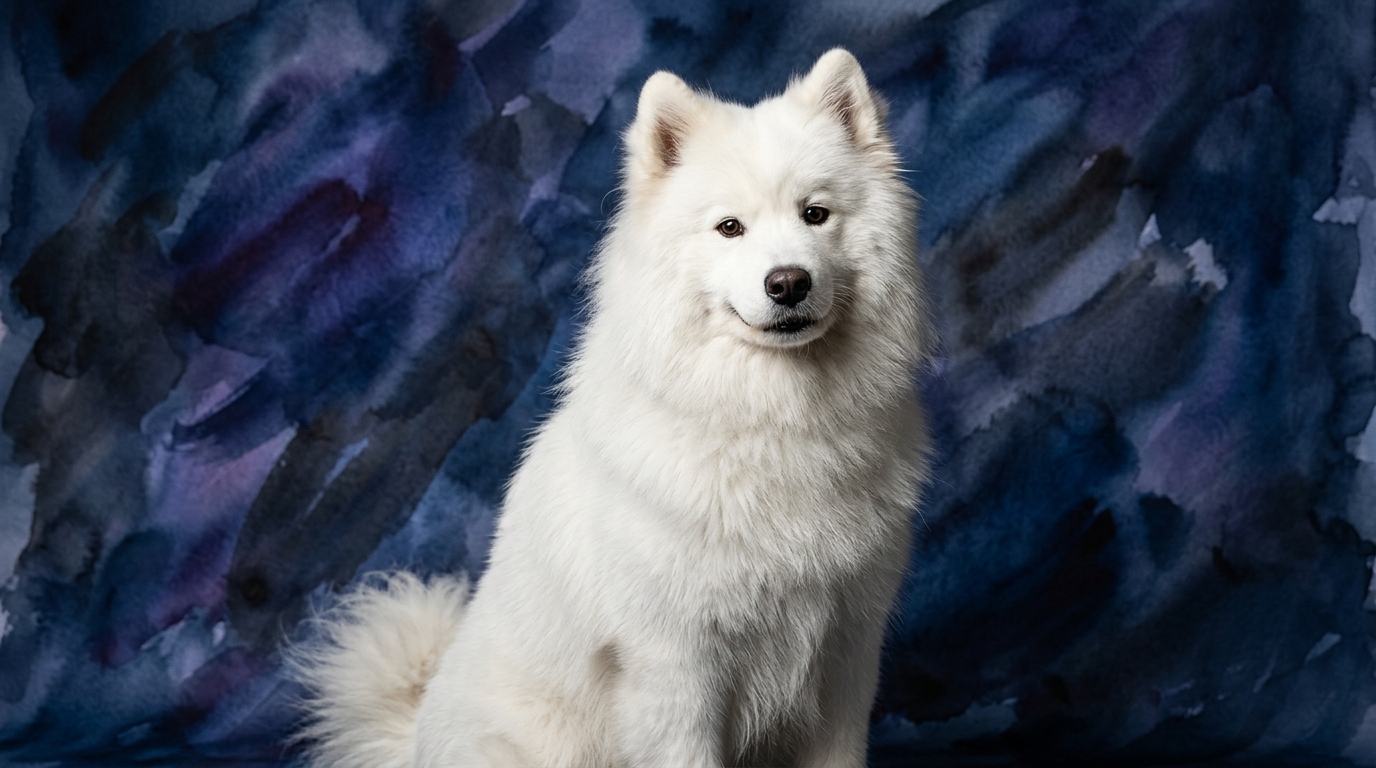
The Cosmic Pet Pet IQ Lab employs a five-dimensional framework to assess canine intelligence, offering a nuanced view beyond simple obedience. For the majestic Samoyed, this framework reveals a strong working dog heritage. Their Problem Solving is rated at 3/5, indicating an ability to navigate moderately complex situations and learn from experiences, but not necessarily an inclination for intricate puzzles. Training Speed also stands at 3/5, suggesting they grasp new commands at an average pace, requiring consistent and engaging methods rather than instant mastery. Where the Samoyed truly shines is in Social Intelligence, scoring an impressive 5/5, reflecting a profound capacity for understanding human cues, forming deep bonds, and often seeking interaction and cooperation. Their Instinctive Drive is a robust 4/5, a testament to their heritage as working sled dogs, implying strong intrinsic motivations related to their original purpose, such as pulling or herding, which can translate into a need for purposeful activity. Finally, their Memory is rated 3/5, indicating a solid ability to recall learned behaviors and routines over time.
In contrast, the Soft Coated Wheaten Terrier presents a more uniformly balanced cognitive profile. Across all five dimensions – Problem Solving, Training Speed, Social Intelligence, Instinctive Drive, and Memory – the Wheaten consistently scores 3/5. This consistent rating suggests a capable and adaptable intellect that doesn't exhibit extreme highs or lows in any single area. Their 3/5 in Problem Solving means they can certainly figure things out, but may not be driven by an intense desire to solve novel challenges independently. A 3/5 in Training Speed indicates they learn at a steady, average rate, responding well to patient, positive reinforcement. While their Social Intelligence at 3/5 is not as pronounced as the Samoyed's, they are still capable of forming meaningful bonds and understanding social cues, albeit perhaps with a touch more independence typical of terriers. Their Instinctive Drive at 3/5 is moderate, reflecting a terrier's natural zest and prey drive without the powerful, sustained working impetus of a sled dog. Lastly, their Memory at 3/5 ensures they retain information adequately for daily life and training.
Where the Samoyed Wins Cognitively
The Samoyed's cognitive strengths are most evident in its exceptional Social Intelligence (5/5) and strong Instinctive Drive (4/5). Their high social intelligence means Samoyeds possess an unparalleled ability to tune into human emotions and intentions, often anticipating desires or responding with remarkable empathy. This cognitive advantage makes them highly responsive to social cues, fostering a deep, almost intuitive connection with their families. They excel in activities requiring close partnership and understanding of nuanced human communication, making them excellent therapy dogs or family companions who seem to understand more than just words.
Furthermore, the Samoyed's robust Instinctive Drive (4/5) reflects a powerful internal motivation to engage in activities rooted in their heritage. This isn't just about physical energy; it's a cognitive drive to perform tasks, whether it's 'herding' family members, 'pulling' a cart in a fun activity, or simply needing a 'job' to feel fulfilled. This strong drive, when channeled appropriately, translates into a dog eager to participate in structured activities, demonstrating persistence and focus in tasks that align with their innate predispositions. Their cognitive processing is geared towards purpose and contribution, making them thrive when given opportunities to engage their minds in meaningful ways, which can be a significant advantage in certain dog sports or working roles.
Where the Soft Coated Wheaten Terrier Wins Cognitively
While the Soft Coated Wheaten Terrier might not boast scores as high as the Samoyed in specific categories, its consistent 3/5 across all dimensions translates into a unique cognitive advantage: balanced adaptability and tenacious practicality. Their Problem Solving at 3/5, combined with a moderate Instinctive Drive (3/5), means they approach challenges with a persistent, terrier-typical 'can-do' attitude, often finding practical solutions without excessive overthinking or the intense, focused drive of a working breed. This balanced approach makes them less prone to the high-intensity demands that can accompany very high instinctive drives, resulting in a more manageable and predictable cognitive companion for many households.
The Wheaten's cognitive 'win' also lies in its resilience and independent problem-solving within everyday contexts. While not scoring a 5/5 in social intelligence, their 3/5 allows for meaningful bonding without the potential for excessive dependence or manipulation sometimes seen in highly socially intelligent breeds. This independence, coupled with their moderate memory and training speed, means they are capable learners who retain information well enough for household manners and basic commands, but are also comfortable thinking for themselves when necessary. Their cognitive makeup lends itself to a dog that is self-assured and capable of entertaining itself, a valuable trait for owners seeking a companion that isn't constantly demanding direct interaction for mental stimulation.
Which is Easier to Train and Why
Assessing ease of training between these two breeds requires looking beyond just their identical 3/5 Training Speed scores. The Samoyed's higher Social Intelligence (5/5) means they are often highly motivated to please their human companions and are exceptionally adept at reading cues. This strong desire for connection can make them eager participants in training, as they value the cooperative aspect. However, their robust Instinctive Drive (4/5) can sometimes lead to independent decision-making, particularly if a strong instinct (like chasing a squirrel or vocalizing) overrides a learned command. While they understand what's expected, their independent streak and occasional 'selective hearing' mean training requires patience, consistency, and a deep understanding of their motivations to channel their drives effectively.
The Soft Coated Wheaten Terrier, with its 3/5 in both Training Speed and Social Intelligence, presents a different training dynamic. While they might not possess the Samoyed's intense desire to please, their moderate social intelligence still allows for effective communication and bonding. Their 3/5 Instinctive Drive, while lower than the Samoyed's, still carries a terrier's inherent tenacity and occasional stubbornness. This means Wheatens learn steadily, but might require more creativity and positive reinforcement to keep them engaged, as they can sometimes be more interested in exploring their environment than performing a specific command. They are capable learners, but their independent spirit means owners must be consistent and make training sessions fun and rewarding to maintain their focus, rather than relying on an inherent drive for cooperation.
Which Suits Active Owners vs. Relaxed Owners
For the truly active owner seeking a partner in adventure, the Samoyed's cognitive profile aligns well. Their 4/5 Instinctive Drive means they possess a deep-seated need for physical and mental engagement. These are dogs bred for endurance and purpose, and their cognitive fulfillment often comes from having a 'job' or participating in strenuous activities like hiking, running, or dog sports. Their high Social Intelligence (5/5) means they thrive on shared experiences and collaboration, making them excellent companions for owners who want to actively involve their dog in their lifestyle. A Samoyed with insufficient mental and physical outlets may become bored, potentially leading to vocalizations or destructive behaviors as their strong cognitive drives seek an outlet.
The Soft Coated Wheaten Terrier, while still an energetic breed, is generally better suited for owners who are active but perhaps not seeking the same intensity or sustained 'working' partnership as a Samoyed. Their consistent 3/5 scores across the board suggest a dog that enjoys activity and engagement but might not have the same profound, innate drive for a specific 'job.' They require regular exercise and mental stimulation to prevent boredom, but their needs are often met with daily walks, playtime in the yard, and interactive toys, rather than demanding several hours of high-impact activity. Their balanced cognitive profile makes them adaptable to a variety of active family lifestyles, appreciating engagement without the strong, specific cognitive demands of a traditional working breed.
The Verdict
Choose the Samoyed if you are an active owner seeking a highly social, deeply connected companion who thrives on shared purpose and has a strong cognitive drive for engagement and activity.
Opt for the Soft Coated Wheaten Terrier if you desire a balanced, adaptable, and independently capable companion who enjoys activity and engagement but offers a more consistently predictable cognitive profile.
🧠 Find Your Pet's IQ Score
Our Pet IQ Lab assessment covers 25+ tests across 5 cognitive dimensions — personalized to your breed.
Take the Full IQ Test →Frequently Asked Questions
Are Samoyeds good at learning tricks?
With a Training Speed of 3/5 and high Social Intelligence (5/5), Samoyeds are capable of learning many tricks, especially those that involve interaction and cooperation with their owner. Consistency and positive reinforcement are key to success.
Do Soft Coated Wheaten Terriers get bored easily?
With 3/5 in Problem Solving and Instinctive Drive, Soft Coated Wheaten Terriers do require regular mental and physical stimulation to prevent boredom. They enjoy interactive play and moderate activity to keep their minds engaged.
Which breed is more prone to independent thinking?
While both breeds exhibit some independence, the Samoyed's 4/5 Instinctive Drive can lead to more pronounced independent decision-making, particularly when driven by strong innate urges. The Wheaten's more balanced profile (3/5 across the board) suggests a capable but less intensely driven independence.