
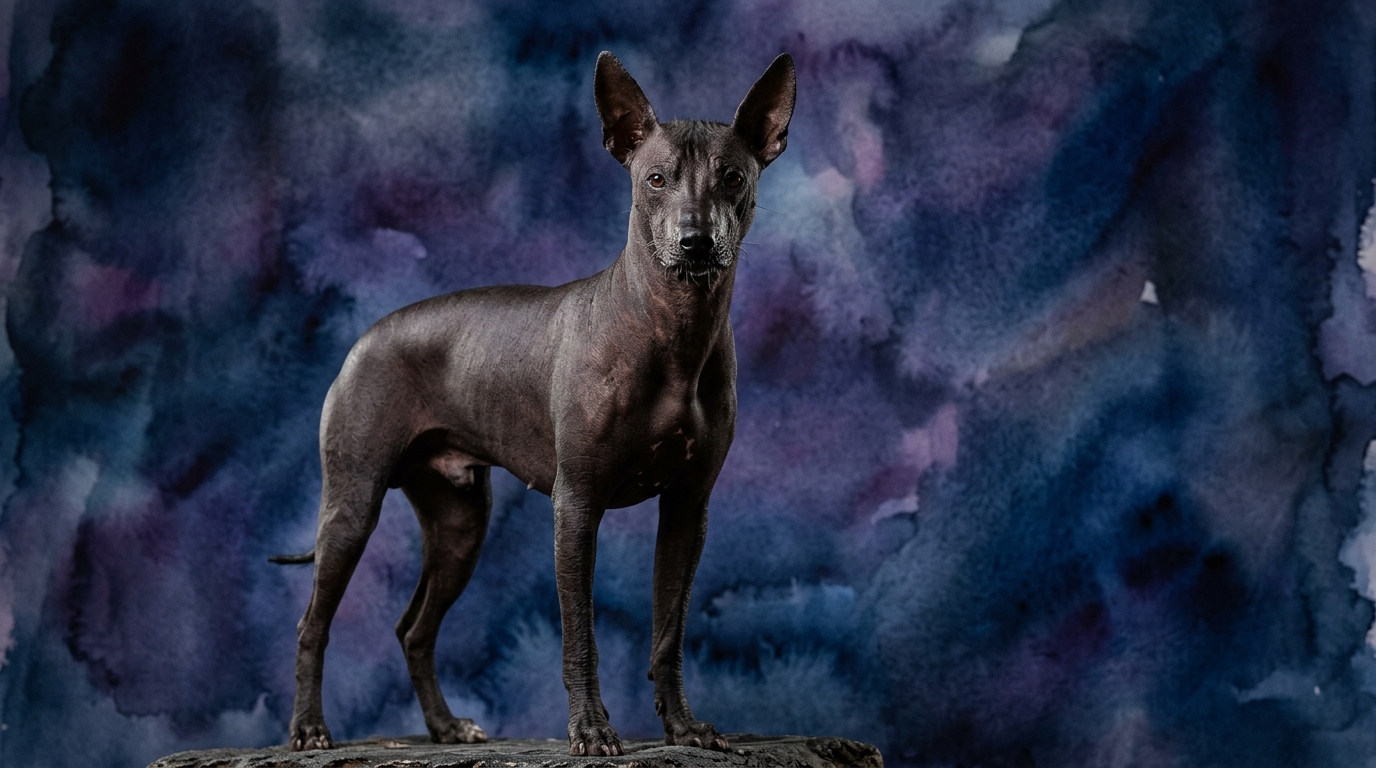
Side-by-Side IQ Profile: Schipperke vs. Xoloitzcuintli
The Schipperke, an alert 'little captain,' exhibits a distinctive cognitive blueprint. Its Problem Solving ability is rated 5/5, indicating a strong capacity for independent thought and navigating complex situations. Training Speed also scores a perfect 5/5, suggesting rapid assimilation of new commands and routines. Social Intelligence, reflecting understanding of human cues, stands at 3/5, implying moderate yet functional social awareness. Instinctive Drive is rated 3/5, meaning a moderate level of inherent behavioral patterns. Finally, Memory is a standout at 5/5, highlighting an exceptional ability to recall experiences, training, and learned behaviors.
In contrast, the ancient Xoloitzcuintli presents a more balanced cognitive profile. Its Problem Solving aptitude is rated 3/5, indicating a competent but not pioneering approach to challenges. Training Speed also sits at 3/5, suggesting they learn at an average pace, requiring consistent instruction. Social Intelligence aligns with the Schipperke at 3/5, showing similar social engagement. Instinctive Drive is likewise rated 3/5, reflecting moderate inherent traits. Their Memory score of 3/5 suggests a solid, but not exceptional, capacity for retaining information.
Where the Schipperke Wins Cognitively
The Schipperke’s cognitive strengths truly shine in areas demanding quick uptake and independent thought. With a Problem Solving score of 5/5, this breed actively strategizes, whether accessing a forbidden treat or manipulating a puzzle toy. This isn't about brute force; it's mental agility to devise solutions, often requiring owners to be several steps ahead. Complementing this is its 5/5 Training Speed, meaning new commands are absorbed with impressive rapidity. A Schipperke can pick up complex sequences faster, often needing fewer repetitions to cement a behavior, making them highly responsive in obedience or agility. Furthermore, its 5/5 Memory ensures these learned solutions and commands are retained with remarkable fidelity. Once a Schipperke learns something, it tends to stick, allowing them to build a vast repertoire of behaviors and understandings, mastering intricate routines and remembering past experiences vividly.
Where the Xoloitzcuintli Wins Cognitively
While the Xoloitzcuintli’s cognitive scores are moderate, this signifies a different mental architecture, excelling in specific contexts. Its 3/5 scores across dimensions suggest a self-contained dog, less overtly driven by external stimuli. Where a Schipperke might actively seek to solve a puzzle, a Xolo might calmly observe, processing information at a more measured pace. This balanced profile can translate into a profound sense of calm and a less demanding mental presence. Their moderate Problem Solving means they are less likely to constantly test boundaries or invent new mischief, offering a more predictable companion. The Xolo’s cognitive strengths manifest in serene observational skills and capacity for quiet companionship, where a less intense mental energy contributes to its overall placid demeanor. This breed often excels in environments where a dog's role is a comforting, steady presence, valuing stability and routine over novelty and challenge. They demonstrate quiet competence, learning and remembering reliably without the intense mental 'buzz' of a more driven breed.
Which is Easier to Train and Why
Given their profiles, the Schipperke is easier to train in terms of speed and complexity. Its 5/5 Training Speed means it grasps new commands with remarkable efficiency. An owner can often teach a Schipperke a new trick in a single session, refining it later. This rapid learning curve links to its high Problem Solving (5/5) and exceptional Memory (5/5); they understand the connection between cue, action, and reward, retaining it long-term. Their eagerness to engage mentally translates into enthusiastic training participation. In contrast, the Xoloitzcuintli, with its 3/5 Training Speed, requires a more patient approach. While capable, a Xolo processes information and forms associations at a measured pace. Their moderate Problem Solving and Memory mean they may not connect dots as quickly or retain information with the same immediate permanence. Xolos are known for independence, which can appear as stubbornness; they may disengage if training lacks immediate value. Thus, while both are trainable, the Schipperke offers a significantly faster and often more rewarding experience for owners seeking quick results and advanced skill acquisition.
Which Suits Active Owners vs. Relaxed Owners
Cognitive differences strongly dictate which owner type thrives with each breed. The Schipperke, with its high Problem Solving and Memory, paired with moderate Instinctive Drive, is ideal for active owners who enjoy mental engagement and structured activities. These dogs crave intellectual stimulation and respond well to consistent training, dog sports, or complex puzzle games. An owner channeling the Schipperke's sharp mind will find an incredibly responsive companion. They want to participate, analyze, and learn. Their moderate social intelligence means they appreciate family but aren't clingy, balancing independence and companionship. Conversely, the Xoloitzcuintli, with its uniformly moderate cognitive scores, suits relaxed owners appreciating a calmer, self-sufficient presence. While enjoying walks, their mental energy is less demanding; they don't constantly seek problems to solve, preferring routine and family comfort. A relaxed owner valuing quiet companionship and a dog less inclined to constant mental tasks will find the Xolo's placid demeanor a perfect match. Their moderate social intelligence means affection for family but reservation with strangers, fitting homes valuing intimate bonds. They are content with comfort and steady presence, excellent for those seeking a less mentally intense partner.
The Verdict
Choose a Schipperke if you are an engaged owner who thrives on mental challenges, enjoys consistent training, and seeks a quick-witted companion for dog sports or intricate learning. Its sharp intellect and rapid learning curve make it a rewarding partner for those willing to channel its abundant mental energy.
Opt for a Xoloitzcuintli if you prefer a calmer, more independent companion that offers a steady, affectionate presence without constant demands for mental stimulation. Its balanced cognitive profile suits a relaxed home environment where routine and quiet companionship are valued over high-intensity activities.
🧠 Find Your Pet's IQ Score
Our Pet IQ Lab assessment covers 25+ tests across 5 cognitive dimensions — personalized to your breed.
Take the Full IQ Test →Frequently Asked Questions
Does a Schipperke's high problem-solving ability make it prone to mischief?
Yes, a Schipperke's 5/5 problem-solving score means they are adept at figuring things out, which can sometimes translate into outsmarting owners or finding ways to access forbidden items. Consistent mental stimulation and secure environments are crucial to channel this cognitive strength constructively.
Is the Xoloitzcuintli's moderate memory score a disadvantage in training?
A Xolo's 3/5 memory score means they learn at an average pace, requiring consistent repetition and patience during training. It's not a disadvantage but rather an indication that owners should expect a more gradual learning curve compared to breeds with higher memory retention, focusing on clear, positive reinforcement.
How does the social intelligence rating of both breeds impact their family life?
Both breeds share a 3/5 social intelligence rating, suggesting they understand human cues and integrate into family dynamics competently, but aren't excessively people-pleasing or overly dependent. They form strong bonds with their immediate family but may exhibit a reserved or independent demeanor, especially with strangers, valuing their personal space.