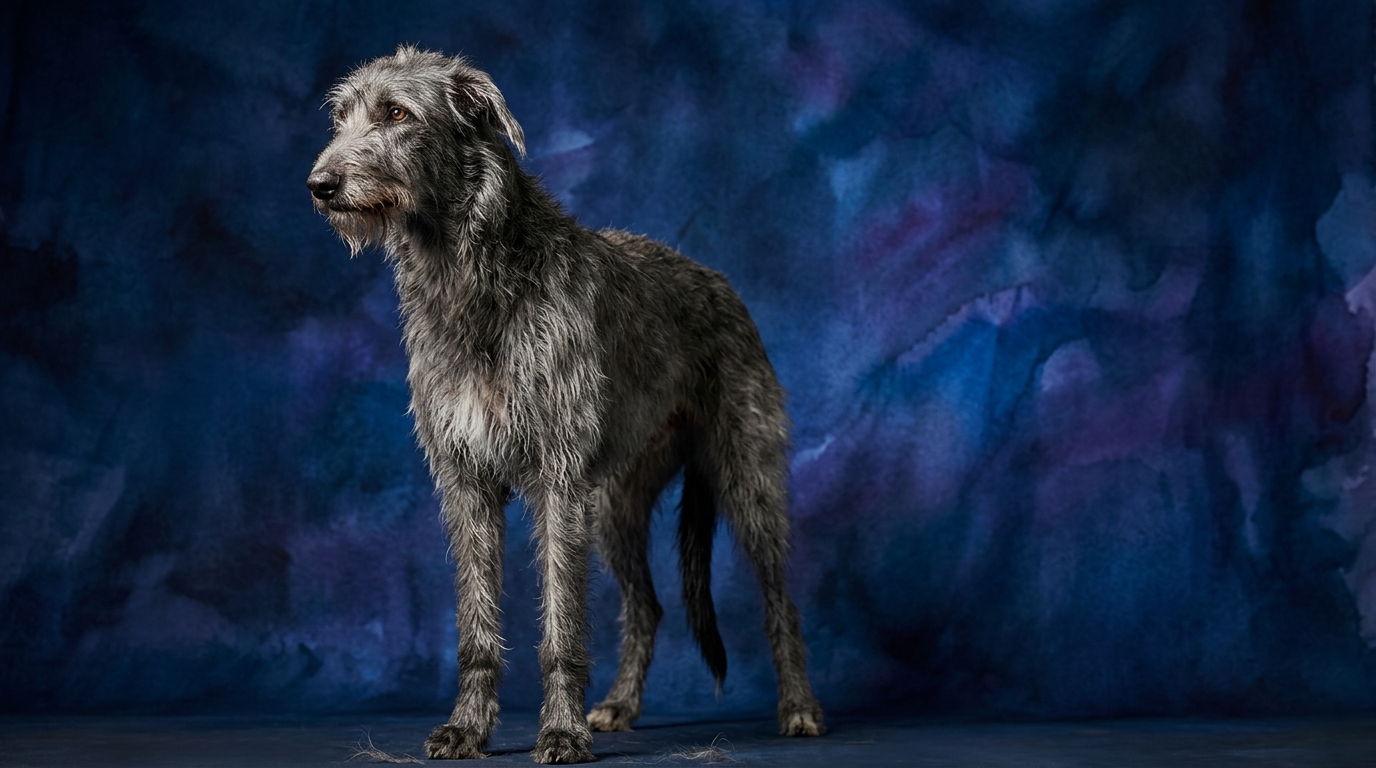
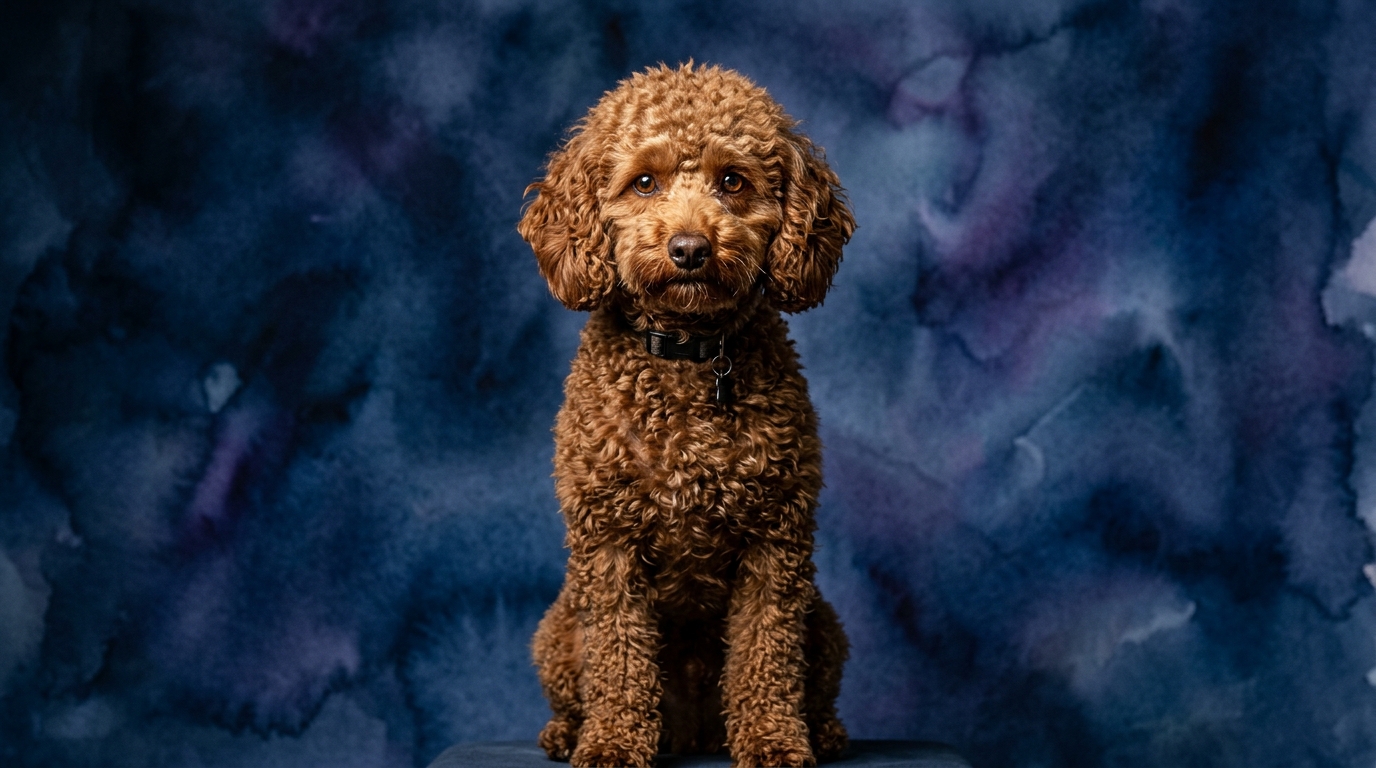
Side-by-Side IQ Profile: Scottish Deerhound vs. Miniature Poodle
The Cosmic Pet Pet IQ Lab evaluates canine cognition across five key dimensions, offering a nuanced look at how different breeds process information and interact with their world. For the Scottish Deerhound and Miniature Poodle, these profiles reveal both shared traits and striking divergences in their mental aptitudes.
The Scottish Deerhound, an ancient breed originating from Scotland, scores a consistent 3/5 across all five cognitive dimensions: problem-solving, training speed, social intelligence, instinctive drive, and memory. This indicates a balanced, practical intellect, geared towards their historical role as independent hunters of deer. Their cognitive strengths are often expressed in real-world scenarios rather than abstract challenges, reflecting a mind attuned to the nuances of a chase and environmental assessment.
In contrast, the Miniature Poodle, a breed with a rich history as a water retriever and companion, presents a different cognitive blueprint. They achieve an impressive 5/5 in problem-solving, training speed, and memory, while scoring 3/5 in social intelligence and instinctive drive. This profile points to a highly adaptable and eager-to-learn mind, capable of rapid information processing and retention, making them exceptionally versatile and responsive.
Delving deeper, a Deerhound's problem-solving at 3/5 means they are adept at navigating complex outdoor environments and making swift, autonomous decisions during a pursuit, relying on keen observation and instinct. Their training speed (3/5) suggests they learn effectively but may require more nuanced motivation than constant repetition, reflecting their independent spirit. Social intelligence (3/5) indicates a deep, though often reserved, connection with their family, while their instinctive drive (3/5) is strongly tied to their sighthound heritage of chase. Their memory (3/5) is functional, retaining routines and important information, but perhaps not complex sequences with the same tenacity as some breeds.
The Miniature Poodle's 5/5 in problem-solving signifies a dog that actively seeks out and enjoys mental challenges, readily figuring out puzzle toys or complex sequences of actions. Their training speed (5/5) is exceptional, allowing them to grasp new commands and behaviors with remarkable alacrity. A social intelligence score of 3/5, similar to the Deerhound, means they are perceptive and form strong bonds, though their expression of this may be more outwardly demonstrative. Their instinctive drive (3/5) manifests as a strong desire for interactive play and retrieving, rooted in their water dog past. Crucially, their memory (5/5) is outstanding, enabling them to recall vast repertoires of learned behaviors over extended periods.
Where the Scottish Deerhound Excels Cognitively
While the Miniature Poodle generally outscores the Deerhound in several categories, the Scottish Deerhound possesses distinct cognitive advantages rooted in their specialized history. Their problem-solving, though rated 3/5, is uniquely suited to independent decision-making in dynamic, large-scale environments. They demonstrate a sophisticated ability to read terrain, anticipate prey movement, and adapt their strategy on the fly during a chase, a form of practical intelligence that doesn't translate directly to solving human-designed puzzles.
The Deerhound's instinctive drive, also rated 3/5, is a finely tuned instrument for pursuit. This isn't just about chasing; it involves a complex cognitive process of visual tracking, distance judgment, and an inherent understanding of how to efficiently cover ground. Their ability to switch from calm repose to explosive action, processing vast amounts of visual information in an instant to initiate a chase, represents a specialized form of cognitive agility that few breeds possess.
Furthermore, their social intelligence, while not numerically higher, often manifests as a dignified perceptiveness. Deerhounds are not overtly expressive, but they are deeply attuned to the emotional states and routines of their close family members, offering quiet, empathetic companionship. This subtle, understated form of social cognition allows them to integrate seamlessly into a household, providing a calm, reassuring presence without demanding constant attention.
Where the Miniature Poodle Shines Cognitively
The Miniature Poodle's cognitive strengths are broad and versatile, making them stand out in areas of complex learning and adaptability. Their 5/5 scores in problem-solving and memory mean they excel at abstract thought, quickly understanding the logic behind new tasks and retaining that knowledge with impressive longevity. This allows them to master intricate sequences, learn numerous commands, and even generalize concepts to novel situations, demonstrating a flexible and analytical mind.
Their exceptional training speed, also a 5/5, is a testament to their eagerness to engage and their rapid processing capabilities. Poodles don't just learn quickly; they actively seek out opportunities to learn and interact, thriving on mental challenges and positive reinforcement. This makes them highly responsive to instruction and capable of quickly picking up new skills, from basic obedience to advanced dog sports.
The Poodle's cognitive versatility extends beyond formal training; they are adept at adapting to various living situations and human lifestyles. Their ability to shift between roles, from a playful companion to a focused performer in competitive events, showcases a remarkable mental flexibility. This broad intellectual bandwidth allows them to thrive in diverse environments, constantly seeking mental engagement and interaction.
Training Dynamics: Deerhound vs. Poodle
When considering ease of training, the Miniature Poodle generally holds a distinct advantage. Their 5/5 scores in both training speed and problem-solving, combined with a natural desire to please and engage, mean they are typically quick to pick up new commands and eager to participate in training sessions. They thrive on positive reinforcement and mental stimulation, making them highly responsive pupils who enjoy the process of learning. Their excellent memory ensures that once a concept is understood, it is retained effectively, leading to consistent performance.
The Scottish Deerhound, with a 3/5 in training speed, requires a different, more patient approach. While capable of learning, their sighthound independence means they are not always motivated by the desire to please in the same way a Poodle might be. They can grasp concepts, but their focus may be fleeting, especially if a more compelling stimulus (like a squirrel) appears. Training a Deerhound often involves shorter, engaging sessions, making training feel like a game rather than a chore, and understanding that their recall, while trainable, might be superseded by their powerful instinctive drive in an open environment. Consistency, respect for their independent spirit, and strong positive reinforcement are key to successful Deerhound training, recognizing that their motivation comes from within rather than solely from external rewards.
Lifestyle Match: Active vs. Relaxed Owners
The Scottish Deerhound presents a unique paradox for owners: they are the quintessential 'couch potatoes' indoors but demand specific, intense bursts of activity outdoors. A relaxed owner who can provide access to a large, securely fenced area for daily galloping and chasing, allowing them to fulfill their instinctive drive, will find a Deerhound to be a calm, quiet, and low-maintenance companion within the home. However, owners must be active enough to consistently facilitate these specific physical outlets; simply walking them on a leash isn't sufficient for their sighthound needs. They are ideal for individuals who appreciate a serene indoor presence but are committed to providing dedicated, high-intensity exercise in appropriate spaces.
The Miniature Poodle, conversely, suits a different kind of active owner. While they don't require the same explosive speed as a Deerhound, they thrive on consistent daily exercise combined with substantial mental engagement. Their high problem-solving and memory scores mean they bore easily without intellectual stimulation, making them prone to developing undesirable behaviors if under-stimulated. Owners who enjoy teaching new tricks, participating in dog sports like agility or obedience, going on varied walks, and engaging in interactive games will find the Miniature Poodle a joyful and fulfilling partner. A 'relaxed' owner for a Poodle means someone who can commit to consistent mental enrichment and regular physical activity, preventing boredom and fostering their sharp intellect.
The Verdict: When to Choose Each Breed
The Verdict
Opt for the Scottish Deerhound if you seek a dignified, independent companion who offers quiet affection and requires specific outlets for their powerful sighthound instincts, such as secure, expansive areas for galloping. They thrive with owners who understand their subtle forms of communication and respect their calm, sometimes reserved, nature indoors, paired with a commitment to fulfilling their need for bursts of intense physical activity.
Select the Miniature Poodle if you seek a highly engaged, versatile companion eager to learn and participate in a wide array of activities, from advanced obedience to interactive games and tricks. They are best suited for owners who enjoy consistent mental stimulation and physical activity, and who will appreciate their quick wit, excellent memory, and responsive nature in training and daily life.
🧠 Find Your Pet's IQ Score
Our Pet IQ Lab assessment covers 25+ tests across 5 cognitive dimensions — personalized to your breed.
Take the Full IQ Test →Frequently Asked Questions
Are Scottish Deerhounds difficult to train because of their independent nature?
Scottish Deerhounds are capable of learning, but their sighthound independence means they require patient, consistent training with positive reinforcement and compelling motivation. They learn at a moderate pace, but their strong prey drive can make off-leash reliability challenging in unfenced areas.
Do Miniature Poodles need a lot of grooming due to their coat?
Yes, Miniature Poodles require regular grooming to maintain their non-shedding, curly coat, which can mat easily without proper care. This typically involves professional clipping every 4-6 weeks and daily brushing to prevent tangles and keep their skin healthy.
Which breed is better for a first-time dog owner looking for a trainable companion?
For a first-time owner prioritizing ease of training and responsiveness, the Miniature Poodle is generally a more straightforward choice due to their eagerness to learn and high training speed. The Scottish Deerhound's independence and specific exercise needs can be more challenging for novices.