Scottish Deerhound Cognitive Blueprint
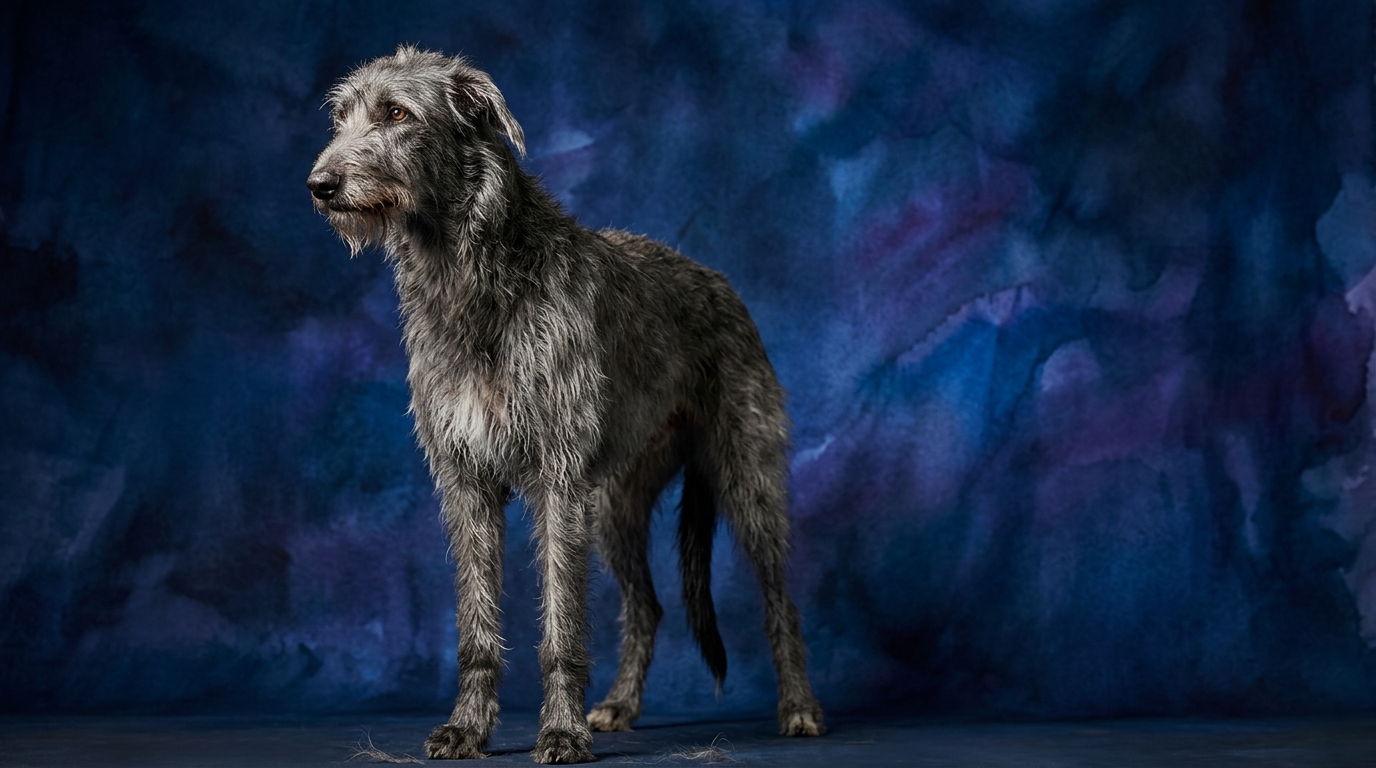
The Scottish Deerhound, a noble giant of the hound world, registers a 3/5 in Problem Solving. For this breed, this often translates to a practical cunning in navigating expansive outdoor environments, perhaps finding the most efficient path through varied terrain during a chase rather than intricate puzzle manipulation. Their Training Speed also sits at 3/5, indicating an ability to grasp commands, yet their independent sighthound nature means compliance is more about willing partnership than eager obedience, often requiring patient, consistent methods over repetitive drills.
Social Intelligence at 3/5 means Deerhounds are deeply attuned to their family's emotions, forming profound bonds, but they can be reserved with strangers and prefer quiet companionship over boisterous social interactions. Their Instinctive Drive, a robust 3/5, is primarily expressed through a powerful sight-based prey drive for large, fast-moving quarry, manifesting as an intense focus on anything resembling game. Finally, a Memory score of 3/5 suggests they retain learned behaviors and routines well, particularly those associated with their daily lives and established territory, remembering familiar routes and the whereabouts of their loved ones with quiet precision.
Pharaoh Hound Cognitive Blueprint
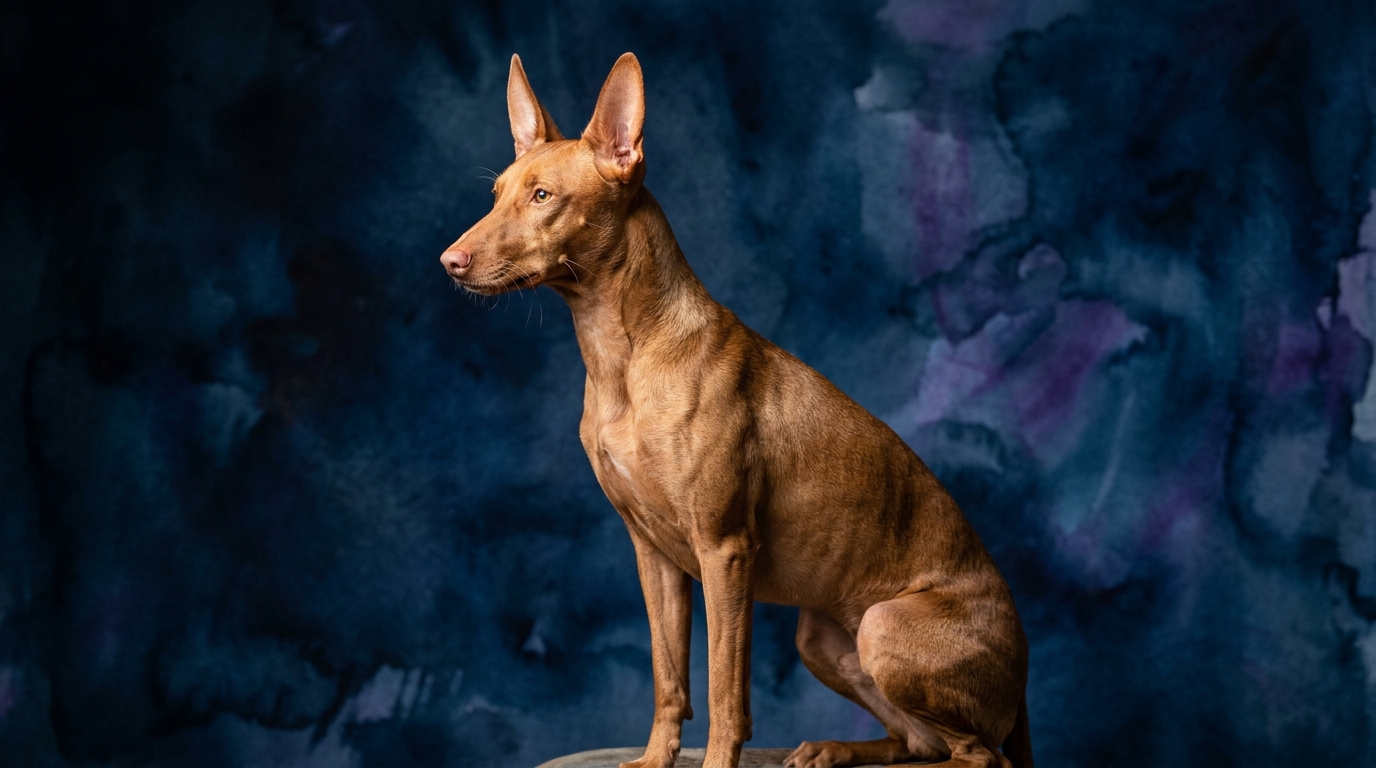
The elegant Pharaoh Hound, with its striking appearance, also scores 3/5 in Problem Solving. For them, this typically manifests as a cleverness in outmaneuvering small, swift prey, or a resourceful ingenuity in exploring their environment and finding ways past perceived barriers, reflecting their agile and inquisitive nature. Their Training Speed, also 3/5, indicates they learn quickly, but their sensitive and independent spirit means training thrives on positive reinforcement and engagement, with a potential for boredom if tasks lack novelty or purpose.
Social Intelligence at 3/5 highlights their affectionate and often communicative nature within their family, capable of expressing their understanding through their unique “blushing” and expressive body language, yet they might be wary or aloof with unfamiliar individuals. A 3/5 in Instinctive Drive means a potent sighthound prey drive, particularly for small, fast-moving objects, coupled with a strong urge to chase and explore, making secure containment crucial. Their Memory, also 3/5, suggests an excellent ability to recall complex lure coursing patterns, the location of interesting smells, or the routines of their household, demonstrating a sharp recall for things that pique their interest or are part of their established environment.
Where Scottish Deerhound Wins Cognitively
While both breeds share identical scores, the Scottish Deerhound’s cognitive strengths often shine in scenarios demanding calm perseverance and a deep, steady understanding of their environment. Their 3/5 problem-solving skill, when applied to navigating large, open spaces, allows them to efficiently process complex outdoor landscapes, making them adept at long, exploratory walks where they must assess terrain and potential paths. This is less about quick, reactive decisions and more about sustained, thoughtful engagement with their surroundings.
Furthermore, their 3/5 social intelligence often translates into an unparalleled ability to provide quiet, empathetic companionship. They excel at reading subtle human cues and offering a comforting, unobtrusive presence, making them particularly suited for individuals who appreciate a serene and deeply bonded canine partner capable of understanding without demanding constant interaction. Their memory, also 3/5, seems particularly attuned to recalling the nuances of familiar routines and the emotional states of their core family, providing a stable and predictable companionship that many find deeply reassuring. This reliability in remembering established patterns contributes to their reputation as a steadfast and noble companion.
Where Pharaoh Hound Wins Cognitively
The Pharaoh Hound, despite matching the Deerhound's scores, demonstrates cognitive advantages in areas requiring quick adaptability, keen observation, and an exploratory spirit. Their 3/5 problem-solving ability often manifests as a more agile and creative approach to immediate challenges, such as figuring out how to access an interesting new space or outsmarting a cunning toy. This quick-wittedness makes them excellent candidates for activities like lure coursing, where rapid assessment and reactive decision-making are paramount.
Their training speed, a 3/5, combined with their sensitive nature, means they respond exceptionally well to positive reinforcement and engaging, varied training sessions. They thrive on novelty and can quickly learn complex sequences of commands or tricks when presented in a fun, reward-based manner, often performing with an enthusiastic flair. Moreover, their 3/5 instinctive drive, while strong, can be channeled into focused, high-energy pursuits like agility or advanced obedience, where their natural quickness and desire to chase can be harnessed constructively. They often remember the intricacies of these fast-paced activities with remarkable accuracy, reflecting their sharp, context-specific memory. This combination makes them particularly rewarding for owners who enjoy interactive, dynamic engagement and can provide outlets for their sharp, inquisitive minds.
Which is Easier to Train and Why
Assessing which breed is “easier” to train, despite their identical 3/5 Training Speed scores, hinges significantly on their inherent behavioral differences and the owner's approach. The Scottish Deerhound, with its gentle, reserved demeanor and strong independent streak, requires a trainer who prioritizes patience, consistency, and a deep understanding of sighthound motivations. They are not typically “eager to please” in the way some working breeds are; instead, they respond best to clear, calm instruction and positive reinforcement that respects their thoughtful nature. Their training might feel slower not because they lack intelligence, but because they often weigh commands against their own internal motivations, especially if a tempting scent or visual stimulus is present.
Pharaoh Hounds, conversely, are often described as more sensitive and can be prone to boredom or “selective hearing” if training isn't engaging. While they learn quickly, their independence and high energy mean that repetitive drills can be counterproductive. They excel with positive reinforcement, clicker training, and short, fun sessions that leverage their natural curiosity and desire to chase. Their tendency towards mischief or “counter-surfing” might require more proactive management and boundary setting during their formative months. Ultimately, neither is inherently “easy” in the conventional sense, but the Deerhound demands quiet persistence, while the Pharaoh Hound thrives on enthusiastic, varied engagement to channel their quick wit and energy.
Which Suits Active Owners vs. Relaxed Owners
The cognitive profiles and inherent temperaments of these two breeds offer distinct fits for varying owner lifestyles. The Scottish Deerhound, while possessing a 3/5 instinctive drive that necessitates regular exercise, often aligns well with owners who appreciate a more relaxed, yet still active, daily routine. Their problem-solving and memory, while capable, are less about constant mental stimulation through complex tasks and more about thoughtful engagement with their environment during long, purposeful walks or quiet exploration. After their exercise needs are met, they are typically content to be serene companions indoors, making them suitable for individuals who enjoy a calm household but are committed to daily outdoor activity, perhaps in less urban environments. Their social intelligence fosters deep, quiet bonds, appealing to those who value a devoted, unobtrusive presence.
In contrast, the Pharaoh Hound, with its equally strong 3/5 instinctive drive and quick problem-solving, is generally better suited for active, engaging owners who can provide consistent outlets for their boundless energy and sharp minds. They thrive on structured activity like lure coursing, agility, or extensive off-leash exploration in secure areas. Their training speed and memory, when properly channeled, mean they enjoy learning new things and participating in interactive games. These dogs need more than just physical exercise; they require mental engagement to prevent boredom and potential mischief. Therefore, the Pharaoh Hound is an excellent match for owners who are equally energetic and eager to involve their dog in dynamic, stimulating activities, ensuring their quick wit and chasing instincts are constructively managed.
The Verdict
Opt for the Scottish Deerhound if you seek a noble, serene companion who offers deep, quiet companionship, and you are prepared for thoughtful, patient training, providing ample space for long, purposeful outdoor explorations.
Choose the Pharaoh Hound if you are an active, engaging owner ready to channel their quick wit and high energy into dynamic activities like lure coursing or agility, appreciating a communicative, playful, and highly observant partner.
🧠 Find Your Pet's IQ Score
Our Pet IQ Lab assessment covers 25+ tests across 5 cognitive dimensions — personalized to your breed.
Take the Full IQ Test →Frequently Asked Questions
Do Scottish Deerhounds or Pharaoh Hounds perform well in dog sports?
Both breeds, with their strong instinctive drives and physical capabilities, can excel in specific dog sports. Scottish Deerhounds often shine in lure coursing due to their powerful chase instinct for large objects, while Pharaoh Hounds, with their agility and quick problem-solving, can thrive in lure coursing, agility, and fast-paced obedience, enjoying the mental and physical challenge.
How do their social intelligence scores of 3/5 impact their family life?
A 3/5 social intelligence for both means they are attuned to family dynamics but express it differently. Scottish Deerhounds form deep, quiet bonds, often reserved with strangers, valuing serene companionship. Pharaoh Hounds are affectionate and communicative within their family, potentially more outwardly expressive, but may also be reserved with unfamiliar people.
Given their similar problem-solving scores, are they equally prone to mischief?
While both score 3/5, their mischief manifests differently. Scottish Deerhounds might use their problem-solving to find comfortable napping spots or navigate large areas independently. Pharaoh Hounds, with their quick wit and agility, might be more inclined to figure out how to open doors, counter-surf, or find escape routes if not sufficiently stimulated or securely contained, requiring proactive management.