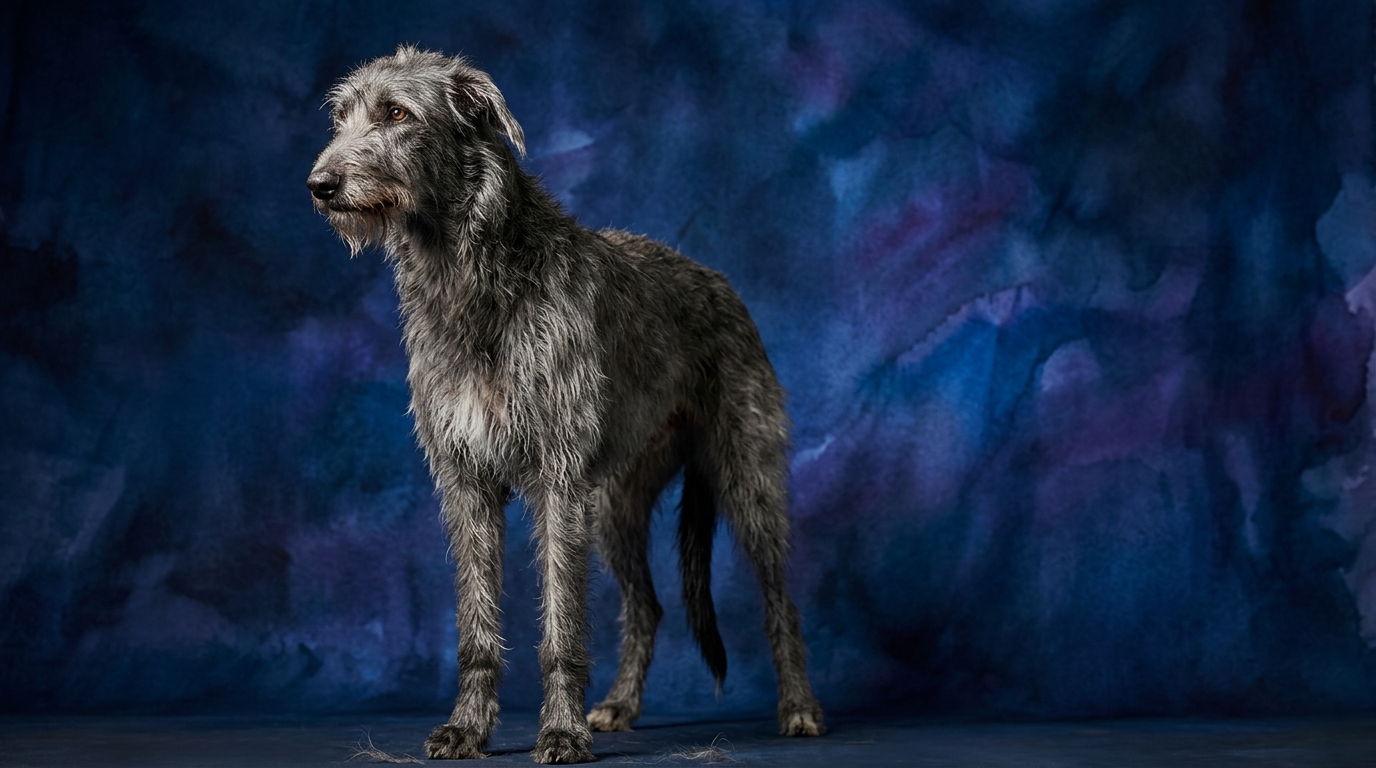
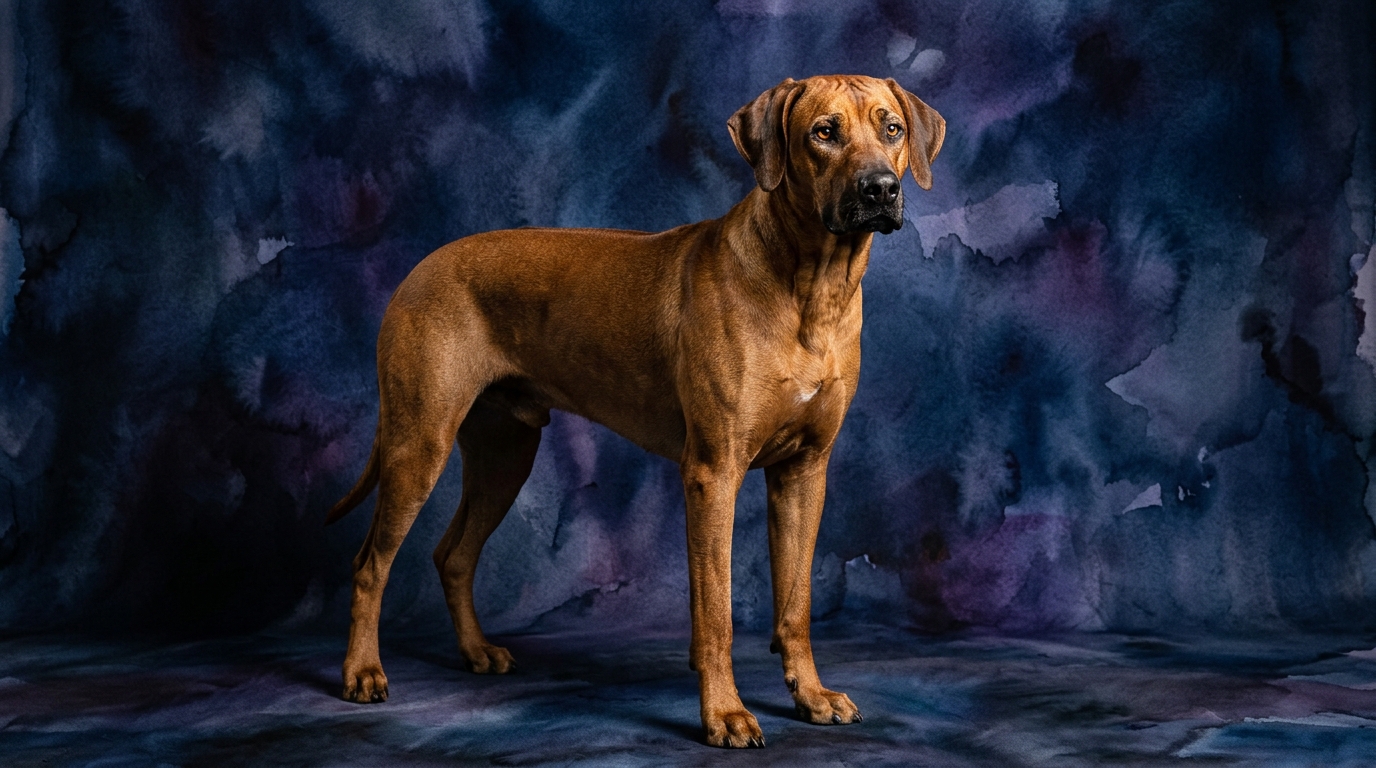
Side-by-Side IQ Profile: Scottish Deerhound vs. Rhodesian Ridgeback
At first glance, the Scottish Deerhound and the Rhodesian Ridgeback present a remarkably similar cognitive profile according to The Cosmic Pet Pet IQ Lab, each scoring 3 out of 5 across all five dimensions of intelligence. However, understanding what these scores mean within the context of each breed’s history reveals distinct applications of their mental faculties.
For the **Scottish Deerhound (Hound, Not Coren-ranked)**:
Problem Solving (3/5): Deerhounds show moderate aptitude for navigating novel situations, using keen senses and independent judgment, especially in tracking and coursing prey across varied terrain. Their problem-solving is largely self-directed, rooted in their original purpose.
Training Speed (3/5): These hounds learn commands at a moderate pace. Their independent sighthound nature requires consistent, patient, and engaging methods to maintain focus, rather than rote repetition.
Social Intelligence (3/5): Deerhounds display balanced social understanding, forming deep bonds with family. Generally gentle and polite, they interpret human moods but can be reserved with strangers.
Instinctive Drive (3/5): A powerful prey drive for fast-moving objects, vital for deer coursing, defines their sighthound heritage. This instinct requires mindful management in domestic settings.
Memory (3/5): Functional memory for commands, routines, and familiar places. They recall complex scent trails or visual cues, important for their historical role, but not exceptional recall for strict obedience.
For the **Rhodesian Ridgeback (Hound, Coren rank #52)**:
Problem Solving (3/5): Ridgebacks demonstrate moderate analytical thinking, often weighing situations before acting. This aids intelligent decision-making, whether assessing a threat or figuring out how to open a gate.
Training Speed (3/5): Learning new tasks occurs at a moderate speed. While they desire to please, their independent and strong-willed nature requires firmness, consistency, and positive reinforcement.
Social Intelligence (3/5): Ridgebacks exhibit moderate social awareness, deeply devoted to family and discerning with outsiders. They read human emotions well, acting as watchful guardians.
Instinctive Drive (3/5): A potent prey drive and strong protective instinct stem from their lion hunting heritage. This drive involves strategic engagement and defense, requiring thoughtful channeling.
Memory (3/5): Good memory for commands, routines, and experiences. They recall people, places, and learned behaviors effectively, aiding their roles as guardians and companions.
Where the Scottish Deerhound Wins Cognitively
Despite identical numerical scores, the Scottish Deerhound’s cognitive strengths shine in areas reflecting its history as a coursing hound in vast, open landscapes. Their problem-solving (3/5) excels at navigating complex, uneven terrain at high speeds, making split-second decisions to track and pursue fast-moving prey without direct human command. This requires a unique blend of visual processing, spatial reasoning, and independent judgment. Their memory (3/5) is likely finely tuned to recall intricate scent patterns or visual landmarks across expansive territories, a specialized recall distinct from obedience routines. This subtle, self-reliant cognitive style marks a nuanced advantage within their shared intelligence rating.
Where the Rhodesian Ridgeback Wins Cognitively
The Rhodesian Ridgeback, with its Coren rank of #52, demonstrates a cognitive profile excelling in vigilance, strategic protection, and direct responsiveness to human direction. Their problem-solving (3/5) often leans towards assessing and mitigating potential threats, requiring thoughtful evaluation of environmental cues and decision-making geared towards protection. Their social intelligence (3/5) is particularly strong in discerning friend from foe, making them adept at understanding nuanced social dynamics. This translates into a highly protective nature that requires sophisticated reading of behavior. Their memory (3/5) is well-suited for retaining complex rules related to guarding boundaries. Their higher Coren ranking suggests inherent biddability and a greater capacity to understand and consistently execute human commands.
Which is Easier to Train, and Why?
When considering ease of training, the Rhodesian Ridgeback generally holds a slight edge over the Scottish Deerhound, primarily due to its Coren ranking of #52. This ranking suggests Ridgebacks tend to understand new commands in fewer repetitions and obey the first command more consistently. While both score 3/5 in training speed, the Ridgeback's historical role as a guardian and hunting companion often required a higher degree of responsiveness and cooperation. They can be strong-willed, but their underlying desire to be part of the 'pack' and their protective instincts often make them receptive to structured training that establishes clear boundaries and leadership.
In contrast, the Scottish Deerhound, as a sighthound bred for independent pursuit of game, possesses a more self-reliant and sensitive temperament. Their training requires immense patience, positive reinforcement, and a deep understanding of their independent nature. They might learn commands at a similar pace, but their inclination to follow their own instincts, particularly when a compelling visual stimulus is present, can make consistent obedience a greater challenge. Therefore, while both require dedicated effort, the Ridgeback's inherent biddability, as indicated by its Coren rank, often translates into a more straightforward training experience for a committed owner.
Which Suits Active Owners vs. Relaxed Owners?
The choice between these two hounds largely depends on the owner's lifestyle and their definition of 'active' or 'relaxed.' The Scottish Deerhound, despite its impressive size, is often described as a 'couch potato' indoors, suiting owners who appreciate calm companionship within the home. However, their active requirement is intense and specific: they need regular opportunities for full-speed, off-leash sprinting in a secure, expansive area. Their energy bursts are powerful but relatively short-lived. This makes them suitable for owners who might be relaxed day-to-day but are committed to providing dedicated, high-intensity exercise sessions a few times a week, perhaps with access to large private land or safe enclosed dog parks. They are less suited for owners who prefer long, endurance-based activities like continuous jogging.
The Rhodesian Ridgeback, on the other hand, demands more sustained physical and mental engagement. Their heritage as endurance hunters and guardians means they thrive on consistent, vigorous exercise, such as long runs, hikes, or structured dog sports. Their vigilant nature also means they require mental stimulation and purposeful activities to prevent boredom and destructive behaviors. Therefore, Ridgebacks are better suited for truly active owners who enjoy daily, extended outdoor adventures and are prepared to integrate their dog into a dynamic lifestyle, rather than owners who seek only short bursts of activity followed by long periods of rest.
The Verdict
Choose the Scottish Deerhound if you seek a gentle, calm companion indoors who is content with regular, intense, short bursts of off-leash running in a secure, large area, and you appreciate a more independent, sensitive canine personality.
Opt for the Rhodesian Ridgeback if you lead a consistently active lifestyle, can provide daily vigorous exercise and mental challenges, and desire a loyal, protective, and more biddable companion with a strong guarding instinct.
🧠 Find Your Pet's IQ Score
Our Pet IQ Lab assessment covers 25+ tests across 5 cognitive dimensions — personalized to your breed.
Take the Full IQ Test →Frequently Asked Questions
Do both breeds have a strong prey drive?
Yes, both the Scottish Deerhound and Rhodesian Ridgeback possess a moderate yet potent instinctive drive, rated 3/5. The Deerhound's drive is primarily visual, focused on chasing fast-moving objects, while the Ridgeback's drive encompasses both chase and a strategic protective instinct from its hunting heritage.
Are Scottish Deerhounds and Rhodesian Ridgebacks good family dogs?
Both breeds can be excellent family dogs with proper socialization and training. Scottish Deerhounds are gentle and affectionate with their families, while Rhodesian Ridgebacks are fiercely loyal and protective. Supervision with very young children is always recommended due to their size and potential for accidental bumps.
How much grooming do these breeds require?
The Scottish Deerhound has a wiry coat that benefits from weekly brushing and occasional hand-stripping to maintain its texture. The Rhodesian Ridgeback has a short, dense coat that requires minimal grooming, typically just weekly brushing to remove loose hair and keep it healthy.