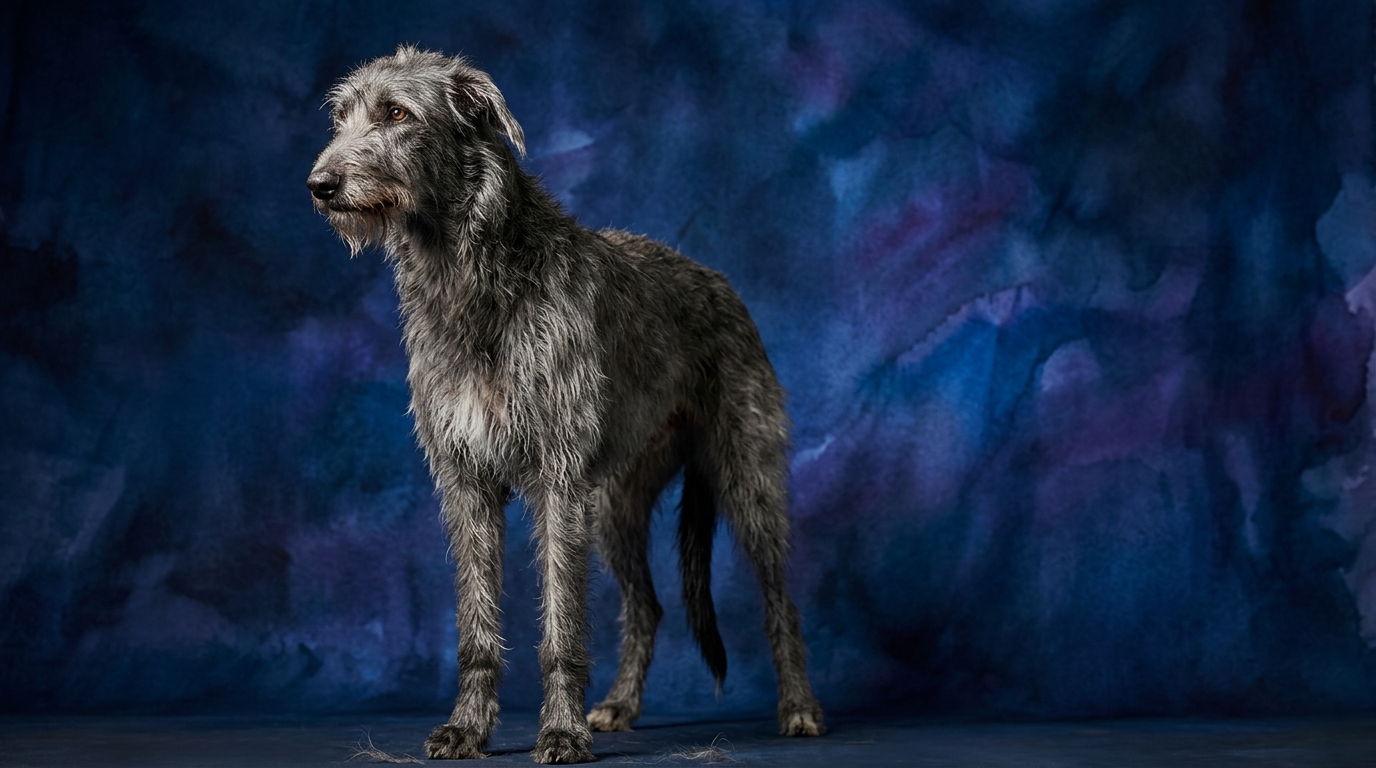
Side-by-Side IQ Profile: Scottish Deerhound
Problem Solving 3/5: This score reflects the Deerhound's deliberate approach to challenges, historically linked to pursuing large game. Their problem-solving involves sustained focus and strategic navigation of terrain, emphasizing methodical thought over impulsive action when facing complex situations.
Training Speed 3/5: Deerhounds learn steadily, but their sighthound independence means they require patient, consistent methods. They respond best to positive reinforcement and clear motivation, absorbing information reliably without exhibiting extreme eagerness to please or lightning-fast command acquisition.
Social Intelligence 3/5: Deerhounds display a gentle social intelligence, forming deep, affectionate bonds with family and subtly sensing household moods. While polite with strangers, they prefer observation over effusive greetings, offering trust and comfort with quiet dignity once a connection is established.
Instinctive Drive 3/5: The Deerhound's drive is for sight-hunting large quarry, indicating a strong, persistent urge to chase distant, fast-moving objects. This ingrained trait requires secure environments but is characterized by sustained pursuit and stamina rather than explosive pouncing.
Memory 3/5: Deerhounds possess a reliable memory for routines, commands, and significant experiences. They retain house rules and favored routes, demonstrating sufficient recall for dependable companionship, though perhaps not for exceptionally intricate, multi-step tasks without consistent reinforcement.
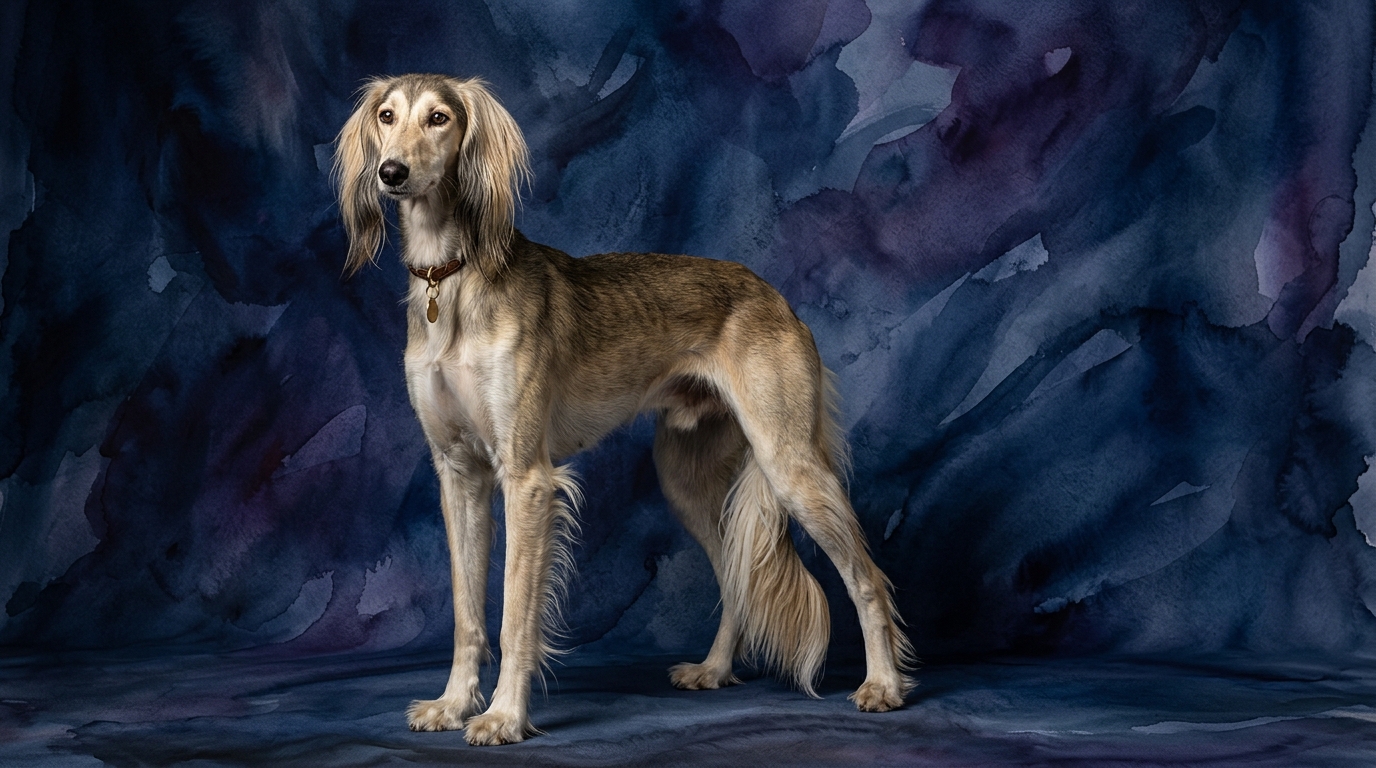
Side-by-Side IQ Profile: Saluki
Problem Solving 3/5: The Saluki's problem-solving, also 3/5, is characterized by rapid assessment and agile decision-making, vital for intercepting quick, smaller prey. Their approach favors reactive brilliance and opportunistic execution, adept at navigating complex environments at speed.
Training Speed 3/5: Salukis learn at a moderate pace, but their independent and sometimes whimsical nature demands engaging, varied training. They pick up cues quickly when motivated but may choose to comply based on perceived value, requiring creative consistency from their handler.
Social Intelligence 3/5: Salukis exhibit a refined social intelligence, devoted to their inner circle yet often reserved with strangers. They value personal space and subtle companionship, understanding social dynamics within their trusted group, with affection often expressed in a dignified, earned manner.
Instinctive Drive 3/5: The Saluki's drive is a powerful impulse for sight-hunting small, swift game. This manifests as explosive bursts of speed and unwavering focus on prey, a profound inclination requiring careful management through secure fencing and leashed walks.
Memory 3/5: Salukis demonstrate solid memory for their environment, routines, and trusted individuals, recalling commands and boundaries effectively when consistently applied. This 3/5 ensures confident navigation and learning from experience, though their independent streak can lead to selective application.
Where Scottish Deerhound Wins Cognitively
Despite identical scores, the Scottish Deerhound subtly excels in cognitive areas demanding sustained focus and methodical analysis. Their 3/5 problem-solving leans towards strategies for long-duration pursuits, requiring them to remember complex visual cues over extended periods. This suggests an edge in tasks needing endurance of mental effort, like tracking an intricate lure course without losing concentration. Their social intelligence, also 3/5, often manifests as a more overtly empathetic understanding of human emotions, making them exceptionally attuned to family dynamics and subtle shifts in household atmosphere, offering a uniquely comforting presence.
Where Saluki Wins Cognitively
The Saluki, with matching 3/5 scores, demonstrates a cognitive advantage in areas demanding lightning-fast processing and agile decision-making. Their problem-solving is characterized by rapid assessment and immediate action, crucial for intercepting quick, evasive prey. This translates to an edge in tasks requiring quick reflexes and adaptability, such as swiftly changing direction during a chase. Their instinctive drive, while equally 3/5, is coupled with a remarkable capacity for explosive bursts of energy and keen visual acuity, showcasing a superior ability in immediate environmental scanning and target acquisition from vast distances.
Which Is Easier to Train and Why
Determining which of these sighthounds is 'easier' to train is nuanced, as both carry a 3/5 training speed score, highlighting their inherent independence. The Scottish Deerhound, while independent, often responds well to a calm, consistent, and patient approach, valuing the bond with their handler. They are generally more willing to engage in repetitive tasks if motivated fairly, and their gentle nature means they are less likely to push boundaries aggressively. In contrast, the Saluki's identical training speed is often complicated by their independent and sometimes capricious nature. They learn quickly but can be selective in their obedience, frequently requiring more creative motivation and varied sessions to prevent boredom, often demonstrating a more willful streak demanding exceptional patience.
Which Suits Active Owners vs. Relaxed Owners
For active owners, both breeds offer athleticism, but with different expressions. The Saluki, with its explosive speed and intense, brief exercise needs, thrives with owners providing safe, off-leash running in secure areas. Their bursts of energy are intense, perfect for owners appreciating high-velocity activity, though indoors they are often calm. The Scottish Deerhound requires sustained, moderate activity like long walks or hikes, making them ideal for owners enjoying extended outdoor adventures. For relaxed owners, the Deerhound might be marginally more adaptable due to their calmer indoor demeanor, provided consistent daily walks. The Saluki, while a couch potato indoors, absolutely needs that outlet for explosive speed, making them less suitable for genuinely relaxed owners unable to commit to specific bursts of high-intensity activity.
The Verdict
Choose a Scottish Deerhound if you appreciate a gentle, empathetic companion who offers quiet devotion and a more deliberate, thoughtful approach to life, and if you can provide opportunities for long, consistent exercise. They are well-suited for owners who value a calm indoor presence paired with impressive outdoor stamina and a dog subtly attuned to family emotions.
Opt for a Saluki if you are captivated by a dog with regal independence, lightning-fast reflexes, and bursts of incredible speed, and if you are prepared to provide secure outlets for their intense, short-duration exercise needs. They are ideal for owners who appreciate a reserved yet affectionate companion and can navigate a charmingly willful personality.
🧠 Find Your Pet's IQ Score
Our Pet IQ Lab assessment covers 25+ tests across 5 cognitive dimensions — personalized to your breed.
Take the Full IQ Test →Frequently Asked Questions
Do Scottish Deerhounds or Salukis make good family pets?
Both breeds can be wonderful family pets, particularly with older, respectful children. Scottish Deerhounds are known for their gentle and patient nature, often forming deep bonds with all family members. Salukis, while devoted to their families, tend to be more reserved and may prefer a quieter home, often choosing one or two favorite people for closer interaction.
How much exercise do these sighthounds require daily?
Scottish Deerhounds need consistent, moderate exercise, typically including at least one long walk or jog daily for 60-90 minutes, along with secure yard time. Salukis require opportunities for explosive, high-speed running, ideally in a securely fenced area for 30-60 minutes daily, but are typically quite calm indoors otherwise. Both benefit from mental stimulation.
Are Scottish Deerhounds and Salukis prone to specific behavioral challenges?
Both sighthounds share a strong prey drive, necessitating secure fencing and leashed walks to prevent chasing perceived prey. Their independence can sometimes be misinterpreted as stubbornness in training; consistency and positive reinforcement are key. Salukis can be more prone to separation anxiety if left alone for extended periods, while Deerhounds might exhibit more reservedness with new people.