Side-by-Side IQ Profile
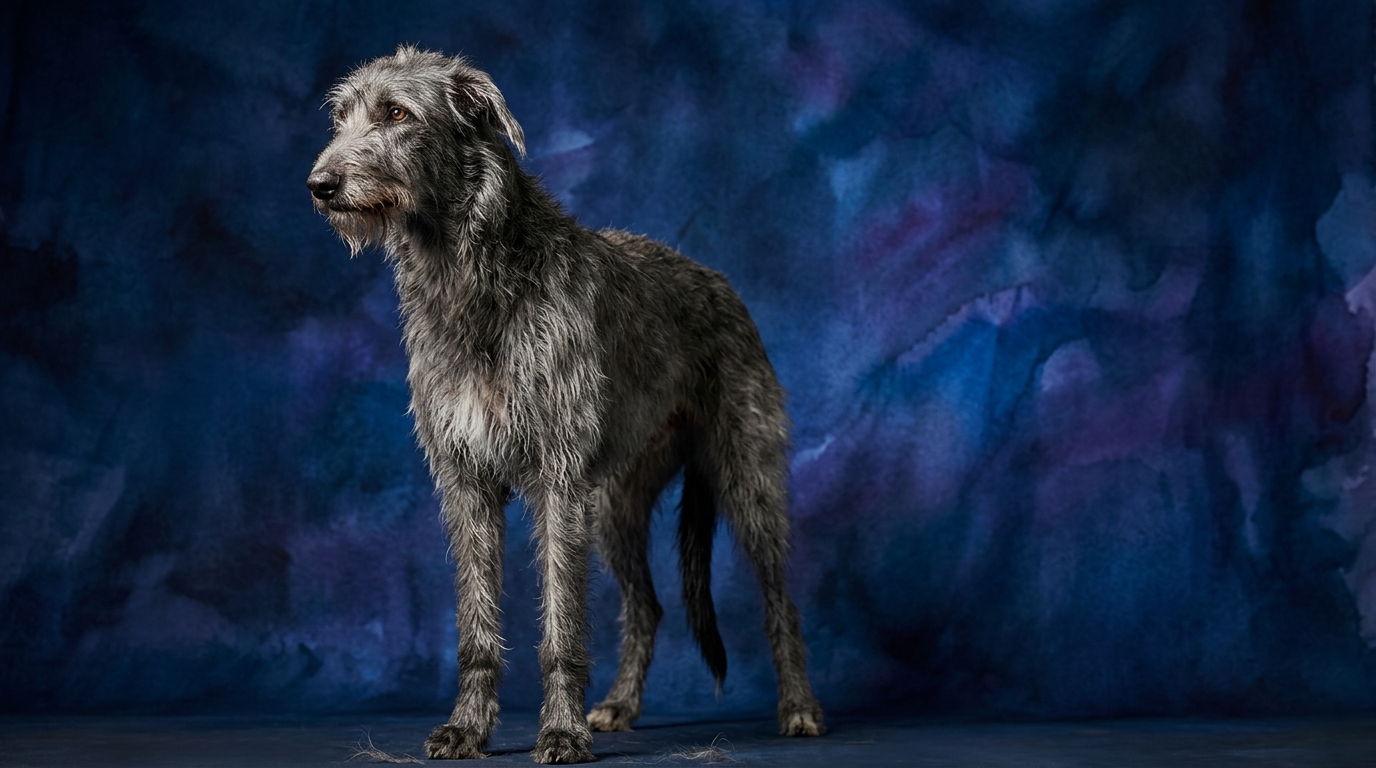
The Scottish Deerhound, a majestic sighthound, registers a 3/5 in Problem Solving, indicating an ability to navigate familiar environments and tackle straightforward obstacles, though they often prefer to resolve issues in their own independent fashion rather than follow complex, multi-step human directives. Their Training Speed, also 3/5, suggests they learn commands with consistent, patient reinforcement; however, their deep-seated sighthound instincts mean a compelling visual stimulus can momentarily override learned behaviors, requiring understanding and persistence from their trainers. Social Intelligence at 3/5 means they are observant of human moods and household dynamics, typically reserved with strangers but forming profound, quiet bonds with their family. Instinctive Drive, rated 3/5, is powerfully geared towards chasing moving objects, a focused and inherent drive demanding appropriate outlets. Finally, their Memory, also 3/5, enables them to retain routines, learned commands, and spatial information, contributing to their reliable understanding of their world.
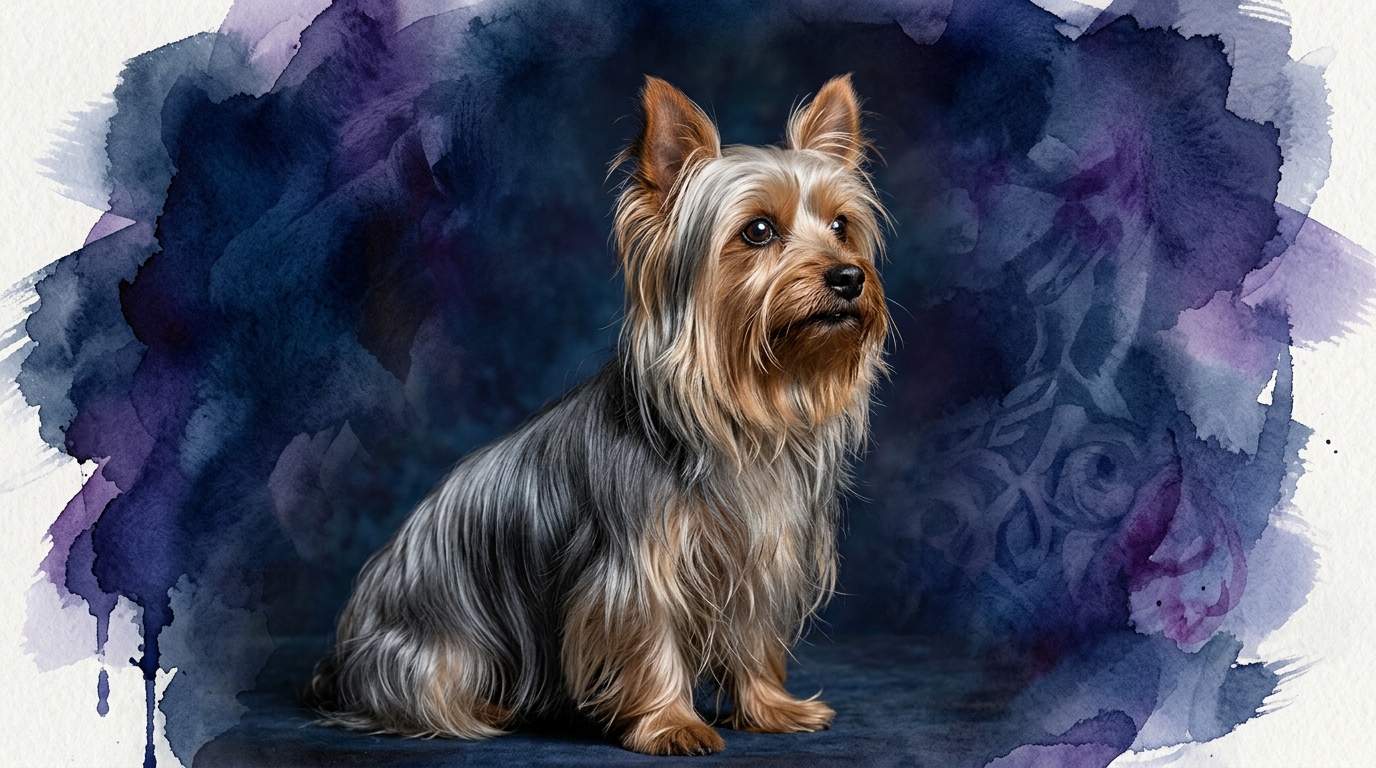
The spirited Silky Terrier, a tenacious toy breed, also scores 3/5 in Problem Solving, demonstrating resourcefulness in finding hidden items or navigating small spaces, often with persistent effort characteristic of the terrier group. Their Training Speed, a 3/5, means they grasp new commands readily, but their lively and sometimes opinionated nature necessitates engaging, highly motivating methods to sustain focus, as they can quickly lose interest if not adequately challenged or rewarded. Social Intelligence at 3/5 reflects their perceptiveness of human cues and emotions, often resulting in an outwardly expressive and interactive presence within the family, keen to participate in daily life. Their Instinctive Drive, rated 3/5, manifests as classic terrier behaviors like digging, chasing small prey, and vigilant territorial alerting, showcasing a focused and determined natural inclination. Their Memory, also 3/5, ensures excellent recall for favored people, learned behaviors, and the location of resources, highlighting their good associative capabilities.
Where Scottish Deerhound Wins Cognitively
Despite both breeds having similar cognitive scores, the Scottish Deerhound's unique heritage grants them specific cognitive advantages rooted in their sighthound purpose. Their Problem Solving, while 3/5, is particularly adept at spatial reasoning across expansive environments, allowing them to process visual information over vast distances with remarkable efficiency. This enables them to map and remember large outdoor spaces, crucial for their historical role in pursuit. Furthermore, their measured temperament often translates into a calm, considered approach when encountering novel, non-threatening environmental changes, such as a new large garden ornament; they tend to assess with quiet observation rather than immediate, frantic alarm, showcasing a different kind of cognitive processing compared to a more excitable breed. Their instinctive drive also means they excel at independent decision-making during pursuit, relying on their own judgment to track and react, rather than requiring constant human direction.
Where Silky Terrier Wins Cognitively
The Silky Terrier, with its terrier spirit and compact size, demonstrates distinct cognitive strengths that differentiate it from its larger counterpart, even with similar baseline scores. Their 3/5 Problem Solving shines particularly in confined or complex indoor environments; they are adept at figuring out how to open cabinets, retrieve toys from tight spaces, or navigate intricate furniture arrangements, showcasing impressive resourcefulness. This persistence, driven by their terrier tenacity, translates into a relentless focus on "nuisance" tasks like digging under a fence or persistently trying to dislodge a toy from under a sofa, highlighting a unique kind of determined problem-solving. Moreover, their 3/5 Social Intelligence, combined with a generally more outgoing disposition typical of many toy breeds, often allows them to adapt more readily to varied social settings in bustling urban environments, processing new human and canine social cues with quick, if sometimes vocal, reactions.
Which is Easier to Train and Why
Both the Scottish Deerhound and Silky Terrier possess a 3/5 Training Speed, yet the practicalities of training them diverge significantly due to their inherent temperaments and drives. The Silky Terrier can appear quicker to learn new tricks and commands initially, fueled by their eagerness for interaction and a desire to be involved; however, their spirited terrier nature means distractions can easily sidetrack them, and they may decide a task isn't worth their effort without high-value rewards and dynamic, engaging methods. Training a Silky often feels like a lively game, requiring consistent enthusiasm from the owner. Their smaller size also provides a physical advantage, making them easier to manage and guide during training sessions.
Conversely, training a Scottish Deerhound demands a deep understanding of their independent sighthound temperament. They are not inherently disobedient, but their powerful instincts to chase can override commands if a compelling visual stimulus appears. Their learning process often requires more patience, consistency, and a calm, trust-building approach rather than just quick rewards. Training success hinges on fostering a strong, respectful bond, often leveraging their desire for quiet companionship as motivation. While they will learn fundamental obedience, it's typically on their own thoughtful timeline. Their impressive size means early, consistent training is crucial for safe management, as physical redirection becomes challenging with an adult Deerhound. Therefore, while neither is "easy" in a simplistic sense, the Silky Terrier might offer quicker initial progress with fun-based training, whereas the Deerhound requires a more philosophical, patient, and bond-centric approach for steady, reliable results.
Which Suits Active Owners vs. Relaxed Owners
The suitability of these breeds for active versus relaxed owners is heavily influenced by their physical and cognitive needs. The Scottish Deerhound, despite its often calm and dignified demeanor indoors, is fundamentally a sighthound built for explosive speed and requires significant, regular bursts of vigorous exercise. An active owner who enjoys lengthy walks, provides secure opportunities for off-leash running in expansive, safe areas, or participates in activities like lure coursing, will find their Deerhound's physical needs are met, preventing restlessness and channelizing their instinctive drive. A more relaxed owner might find it challenging to provide the necessary physical outlet, potentially leading to a frustrated or unfulfilled companion.
The Silky Terrier, while energetic, has exercise requirements that are generally more adaptable to various lifestyles and smaller living spaces. Daily brisk walks, vigorous indoor play sessions, and consistent mental stimulation through puzzle toys or training are usually sufficient to satisfy their needs and channel their instinctive drive. An active owner can easily integrate a Silky into many outdoor adventures, but a more relaxed owner can also provide a fulfilling life, provided they commit to consistent daily engagement and mental challenges within the home and neighborhood. Their cognitive profile, emphasizing resourcefulness and social interaction, makes them thrive on being involved in daily family activities, regardless of the intensity of outdoor activity, as long as basic physical and mental needs are met.
The Verdict
Choose the Scottish Deerhound if you appreciate a majestic, independent companion who thrives on quiet companionship indoors but requires dedicated bursts of vigorous exercise in safe, expansive environments, and you are prepared for a calm, consistent training approach.
Choose the Silky Terrier if you desire a spirited, tenacious, and highly interactive companion who enjoys being at the center of family life, thrives on engaging play and mental challenges, and whose exercise needs are met with daily walks and indoor games.
🧠 Find Your Pet's IQ Score
Our Pet IQ Lab assessment covers 25+ tests across 5 cognitive dimensions — personalized to your breed.
Take the Full IQ Test →Frequently Asked Questions
Do Scottish Deerhounds and Silky Terriers have different learning styles?
While both have a 3/5 training speed, their innate drives influence their learning. Deerhounds, as sighthounds, respond well to training that respects their independence and leverages their desire for companionship, often needing more patience. Silky Terriers, being terriers, benefit from engaging, game-based training that channels their tenacity and eagerness into productive learning.
How does their social intelligence manifest differently?
Both score 3/5, indicating good social awareness. The Scottish Deerhound typically exhibits a more reserved and observant social intelligence, deeply attuned to their family but often quiet with strangers. The Silky Terrier tends to be more outwardly expressive and lively in their social interactions, often keen to participate in household activities and vocal about their observations.
Are there specific mental enrichment activities better suited for each breed?
For the Scottish Deerhound, activities that engage their visual tracking skills, like lure coursing or "find it" games in open spaces, are excellent. Silky Terriers benefit from puzzle toys that challenge their problem-solving and persistence, scent work, and agility training that allows them to use their quick reflexes and small stature.