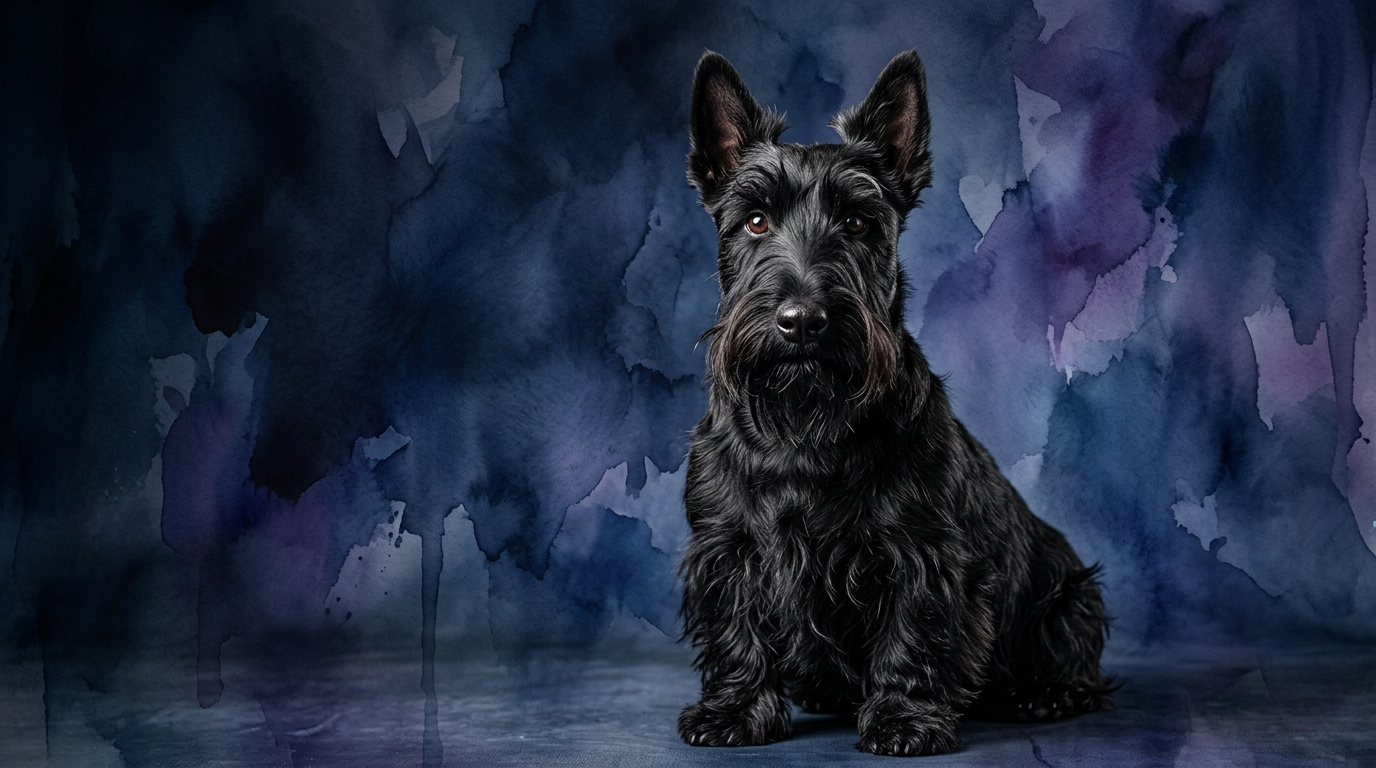
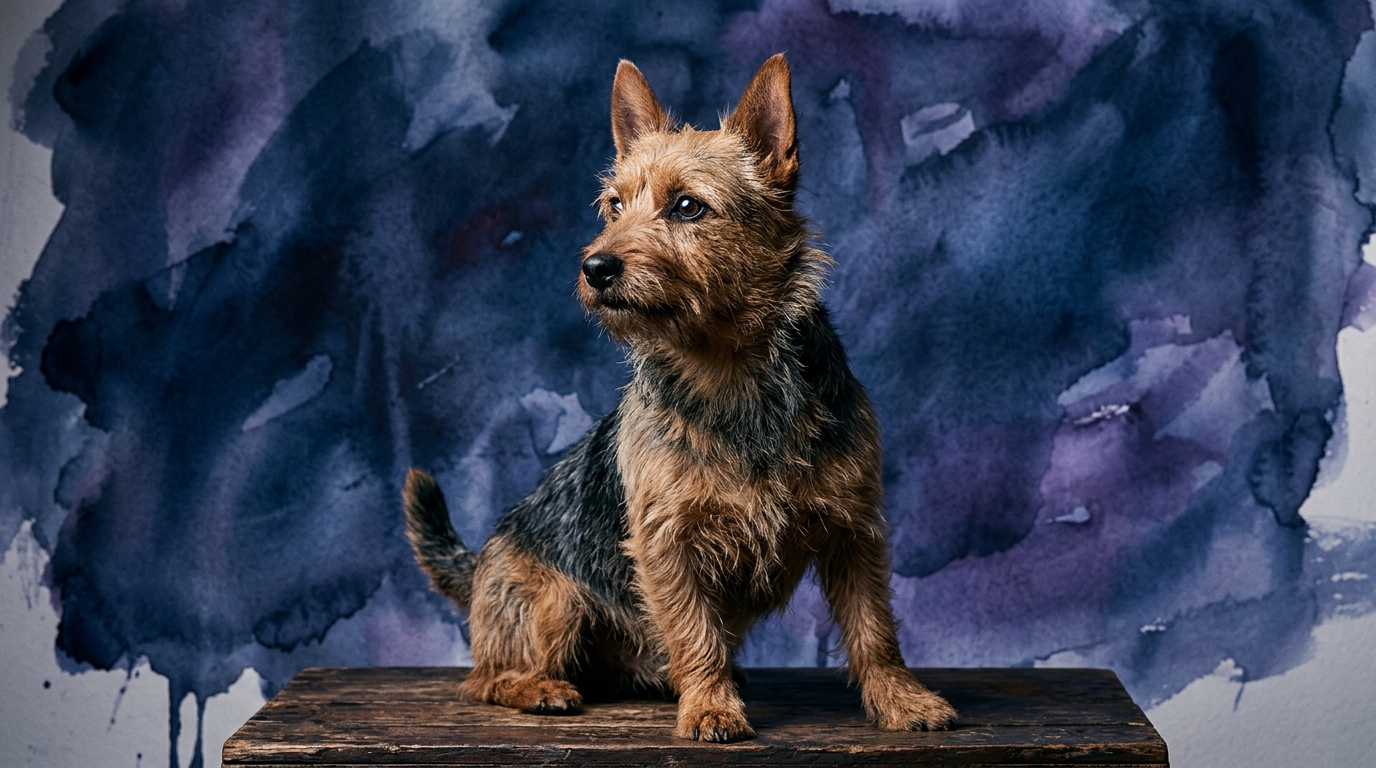
Side-by-Side Cognitive Profile: Scottish Terrier vs. Australian Terrier
The Cosmic Pet Pet IQ Lab assesses canine intelligence across five key dimensions, providing a granular view of a breed's cognitive strengths. For both the Scottish Terrier and the Australian Terrier, each dimension registers a score of 3/5, indicating a solid, functional level of cognitive ability. However, understanding what a '3' means for each breed requires looking beyond the number to their inherent predispositions and historical functions.
In Problem Solving (3/5), the Scottish Terrier typically displays a tenacious, independent approach. Their solutions often stem from a deep-seated determination to overcome obstacles, especially when a reward or perceived 'prey' is involved, demonstrating a focused, persistent form of ingenuity. The Australian Terrier, also at 3/5, tends towards a more adaptable and observant form of problem-solving; they are quick to assess new situations and often find creative ways to navigate their environment or achieve a desired outcome through exploration and trial-and-error.
Training Speed (3/5) for the Scottish Terrier reflects their capacity to learn commands, though often at their own discretion. Their independent nature means they absorb information effectively but require consistent, engaging methods to ensure enthusiastic compliance. The Australian Terrier, with the same 3/5, generally exhibits a good aptitude for learning new cues and routines. Their eagerness to please and generally cooperative spirit can make training sessions feel productive, provided they are kept stimulating and positive.
Social Intelligence (3/5) in Scottish Terriers is often expressed through a discerning loyalty. They form profound bonds with their core family, understanding complex household dynamics and subtle human cues, but can be reserved or aloof with outsiders. For the Australian Terrier, a 3/5 suggests a balanced social acumen; they are typically outgoing and friendly, adept at reading human emotions and adapting their interactions across various social contexts, from playful family engagement to cautious introductions.
Instinctive Drive (3/5) is a hallmark of both terriers. The Scottish Terrier's score points to a robust prey drive, a strong territorial instinct, and an inclination to dig, rooted in their history as formidable hunters of vermin. The Australian Terrier’s 3/5 drive showcases their versatile farm dog heritage, encompassing a keen prey instinct, vigilant watchfulness, and a natural curiosity for exploration, often harmonized with their desire for companionship.
Finally, Memory (3/5) for both breeds indicates a reliable capacity to retain learned behaviors, routines, and past experiences. Scottish Terriers remember commands and social interactions well, which underpins their consistent, albeit sometimes selective, responses. Australian Terriers similarly demonstrate solid recall, allowing them to build effectively on previous training and adapt to recurring situations with ease.
Where the Scottish Terrier Cognitively Excels
While both breeds share identical IQ scores, the Scottish Terrier’s cognitive strengths often lie in its profound independence and unwavering resolve. Their Problem Solving at 3/5 is less about rapid adaptation and more about determined, focused execution. A Scottie confronted with a puzzle toy or a perceived burrow will apply a persistent, almost relentless effort, often ignoring distractions until their objective is achieved. This singular focus, born from generations of solitary hunting, gives them an edge in tasks requiring sustained mental grit and self-directed problem-solving.
The Scottish Terrier also demonstrates a unique depth in its Social Intelligence (3/5). While not overtly demonstrative with everyone, their discerning nature means they develop an acute understanding of their chosen human companions. They excel at reading subtle emotional shifts within their inner circle, often providing quiet, steadfast companionship based on a deep, intuitive bond. This isn't a broad social charm, but rather a profound, specific connection that reveals a highly tuned sensitivity to their closest relationships.
Furthermore, their Memory (3/5) is particularly strong for routines and the 'rules' of their household, even if their application of those rules can be selective. A Scottish Terrier will remember where the best sunbeam is at certain times of day, the exact spot where a treat might have been dropped, or the pattern of their owner's comings and goings, showcasing a detailed recall of their environment and daily patterns.
Where the Australian Terrier Cognitively Shines
The Australian Terrier, with its consistent 3/5 scores, often outshines in areas requiring adaptability and a more outwardly engaging cognitive style. Their Problem Solving (3/5) is characterized by a quick wit and an eagerness to experiment, making them adept at navigating novel situations or learning complex sequences of actions. They are less likely to get 'stuck' on a single approach and more inclined to try different strategies until they find success, a testament to their versatile working background.
In terms of Social Intelligence (3/5), the Australian Terrier often exhibits a broader, more approachable understanding of social cues. They are generally more outwardly expressive and keen to interact, making them excellent at integrating into diverse social settings, whether with new people or other animals. Their ability to quickly gauge moods and adjust their behavior accordingly allows them to form connections more readily and smoothly navigate varied social landscapes.
Their Instinctive Drive (3/5), while strong, often presents with a more balanced and redirectable quality compared to the Scottie. The Australian Terrier's natural curiosity and desire to participate in family activities can make their inherent drives easier to channel into constructive outlets like agility or scent work. This balance allows their cognitive energy to be more broadly distributed, making them responsive to a wider range of stimuli and activities beyond purely prey-driven pursuits.
Training Aptitude: Which Breed Offers a Smoother Experience?
When considering ease of training, both breeds present unique challenges and rewards, despite their identical 3/5 Training Speed. The Scottish Terrier, with its well-documented independent nature, often requires a trainer with patience and a deep understanding of terrier psychology. While they are capable of learning a wide array of commands, their willingness to perform them consistently hinges on strong motivation and the perception of a worthwhile exchange. They respond best to positive reinforcement, short, engaging sessions, and a trainer who can make learning feel like their idea. Their Coren ranking of #65 suggests a capacity for obedience, but their innate stubbornness means an owner must work to earn their consistent cooperation, often leading to a slower initial uptake of compliance.
The Australian Terrier, while possessing typical terrier pluck, generally presents a smoother training experience for many owners. Their 3/5 Training Speed is often complemented by a more eager-to-please disposition and a strong desire to be involved with their human companions. They tend to be more responsive to cues and more consistent in their performance once a behavior is learned, especially if training is kept fun and interactive. Their adaptability in problem-solving also translates to a quicker understanding of new tasks. While they still require consistency and firm guidance to prevent unwanted terrier behaviors, their inherent sociability and willingness to engage can make the training journey feel more collaborative and less like a constant negotiation.
Matching Cognitive Styles to Lifestyles: Active vs. Relaxed Owners
The cognitive profiles of these terriers suggest they can thrive in both active and more relaxed environments, but their specific needs differ. For active owners, the Australian Terrier often presents a more straightforward match. Their adaptable problem-solving and generally balanced instinctive drive make them excellent candidates for dog sports like agility, flyball, or obedience trials, where their quickness and willingness to engage can truly shine. They enjoy varied activities and are generally eager to explore new environments, making them ideal companions for hiking, brisk walks, or regular trips to the dog park.
Conversely, while not a couch potato, the Scottish Terrier’s cognitive leanings might better suit a relaxed owner who appreciates a dog with a profound sense of self and a more independent streak. Their strong problem-solving, focused on specific objectives, means they appreciate structured, quality mental stimulation rather than constant, high-octane activity. A Scottie thrives on scent work, puzzle toys, or 'hunting' games in a secure yard. They are content with regular, purposeful walks and then settling into a comfortable spot, observing their domain. Their deep social intelligence makes them devoted companions for owners who value quiet companionship and a dog that is deeply attuned to their inner circle, rather than constantly seeking external engagement.
The Verdict
Choose the Scottish Terrier if you appreciate a deeply loyal, discerning companion with an independent mind, who excels at persistent, self-directed problem-solving and offers profound, quiet companionship.
Opt for the Australian Terrier if you seek an adaptable, outgoing companion eager to engage in diverse activities, displaying a nimble problem-solving style and a more overtly cooperative spirit in training.
🧠 Find Your Pet's IQ Score
Our Pet IQ Lab assessment covers 25+ tests across 5 cognitive dimensions — personalized to your breed.
Take the Full IQ Test →Frequently Asked Questions
Do Scottish Terriers and Australian Terriers have the same intelligence?
According to The Cosmic Pet Pet IQ Lab, both breeds score 3/5 across all five cognitive dimensions. However, their intelligence manifests differently, with the Scottish Terrier showing more independent problem-solving and discerning social bonds, while the Australian Terrier displays greater adaptability and outward engagement.
Which breed is easier to house train, Scottish Terrier or Australian Terrier?
Both terriers can be consistent with house training with patience. The Australian Terrier's generally more eager-to-please nature might make the process feel slightly smoother, while the Scottish Terrier's independence requires a very consistent and motivating approach to establish routines.
Are these terriers good for first-time dog owners?
While both breeds are spirited terriers, the Australian Terrier's more adaptable and generally cooperative disposition might make them a slightly more manageable choice for a committed first-time owner. Scottish Terriers, due to their independent and strong-willed nature, often benefit from an owner with some prior dog experience or a strong commitment to consistent, positive training methods.