Side-by-Side IQ Profile: Digging Deeper Than the Numbers
While both the Scottish Terrier and Basset Hound register a consistent 3/5 across all five cognitive dimensions in The Cosmic Pet Pet IQ Lab, their expression of these abilities is profoundly shaped by their breed heritage and intended purpose. This parity in scores does not imply identical minds, but rather a similar *level* of capability channeled through very different instincts and motivations. Understanding these distinctions is crucial for truly appreciating their individual cognitive strengths.
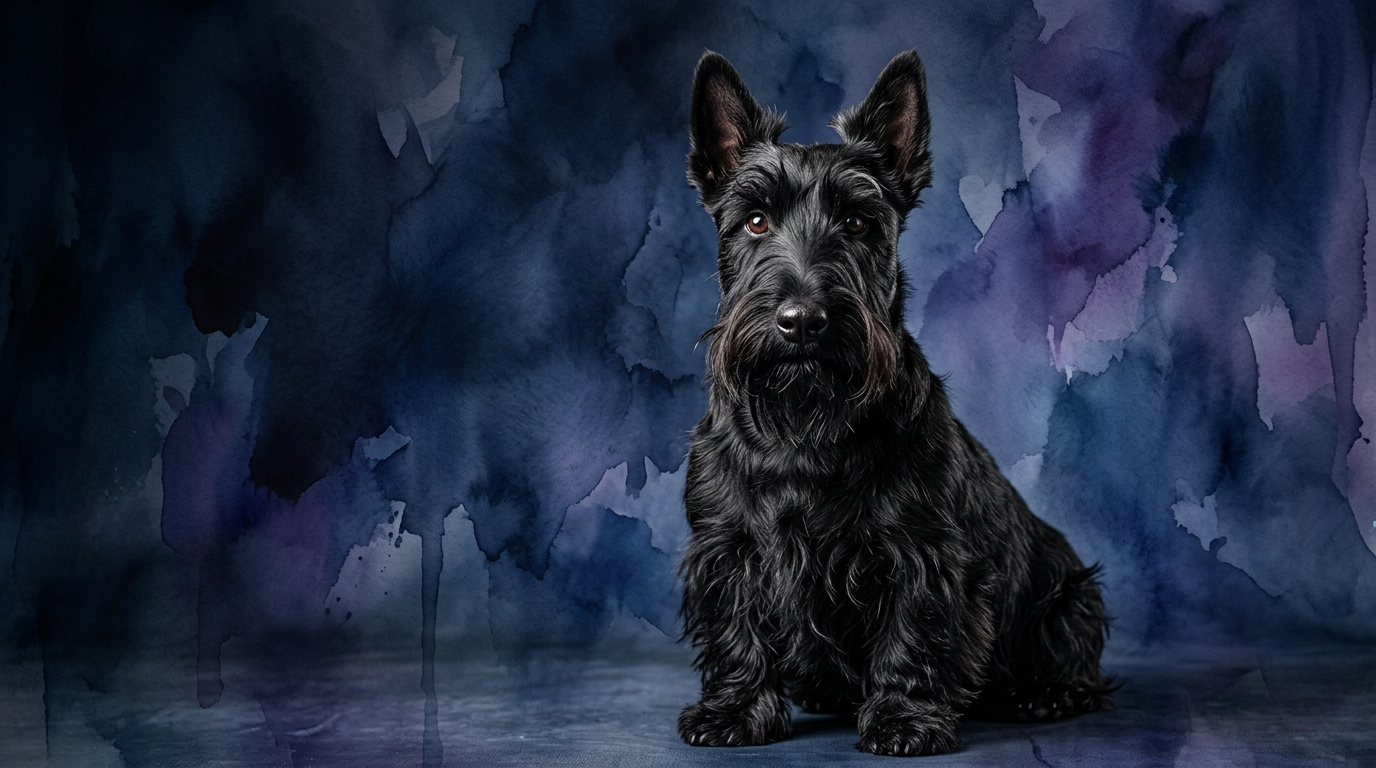
The Scottish Terrier, ranking #65 on the Coren scale, presents a cognitive profile rooted in its terrier lineage. Its Problem Solving at 3/5 manifests as a determined, resourceful approach to obstacles, particularly those related to hunting and navigating tight spaces. Training Speed, also 3/5, indicates they can learn commands effectively, though their independent spirit often means they require compelling motivation. Social Intelligence at 3/5 reflects their strong bond with family while often maintaining a reserved demeanor with strangers. Their Instinctive Drive, a robust 3/5, is centered on prey drive, digging, and tenacious pursuit. Finally, Memory at 3/5 allows them to retain routines and learned behaviors, even if their strong will sometimes makes them appear selective in their recall.
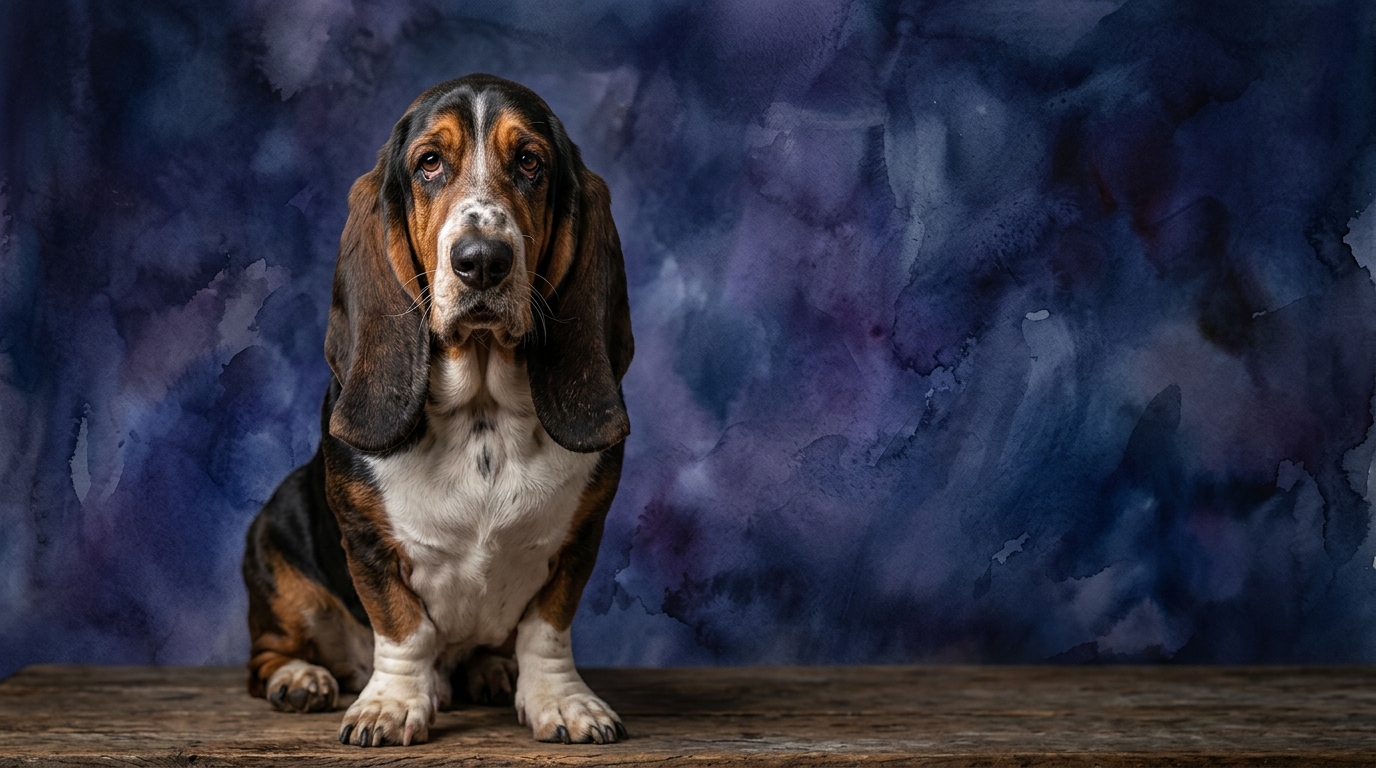
Conversely, the Basset Hound, with a Coren ranking of #71, interprets the same 3/5 scores through the lens of a scent hound. Their Problem Solving at 3/5 is overwhelmingly olfactory, focusing on intricate scent discrimination and trail following. Training Speed at 3/5 means they are capable learners, but their powerful, often distracting, scent drive can make direct obedience a patience test. Social Intelligence at 3/5 shines through their amiable, patient nature with family, though their attention can be singularly focused on a compelling scent. Their Instinctive Drive, a potent 3/5, is almost entirely dedicated to tracking and following a scent trail with unwavering persistence. Memory at 3/5 is particularly strong for scent patterns and geographical locations associated with good smells, alongside daily routines.
Where the Scottish Terrier Excels Cognitively
The Scottish Terrier's cognitive prowess truly shines in scenarios demanding decisive, independent action and tenacious problem-solving beyond pure scent work. Their 3/5 Problem Solving score, when viewed through their terrier temperament, means they are adept at figuring out how to access desired areas, whether it's outsmarting a gate latch or locating a hidden toy. This isn't about intricate planning, but rather a persistent, trial-and-error resourcefulness, often involving digging or nudging. Their historical role required quick, self-reliant decisions in a burrow, and this translates into a dog that can adapt rapidly to novel physical challenges in their environment.
Furthermore, their 3/5 Instinctive Drive, while powerful, is more generalized than the Basset's. This allows for a broader application of their cognitive energy. A Scottie might use their memory (3/5) to recall the sequence of events leading to a treat, or their social intelligence (3/5) to manipulate a situation for attention, demonstrating a more varied cognitive toolkit for everyday domestic challenges. They exhibit a sharp, quick-wittedness in navigating their human world, often seeking out engagement and mental stimulation rather than passively waiting for it.
Where the Basset Hound Excels Cognitively
The Basset Hound's cognitive strengths are undeniably rooted in their extraordinary olfactory capabilities. Their 3/5 Problem Solving score is almost entirely channeled into intricate scent analysis. They can differentiate between faint, overlapping scents, follow a cold trail for miles, and mentally reconstruct a complex path purely through smell. This is a form of cognitive mapping and sustained focus that is unparalleled, requiring immense concentration and a sophisticated interpretation of sensory data. While a Scottie might solve a physical puzzle, a Basset solves an invisible, aromatic one.
Their 3/5 Instinctive Drive, dedicated to tracking, also underpins a unique form of cognitive endurance. A Basset can maintain focus on a single, compelling task (following a scent) for extended periods, ignoring visual and auditory distractions that might deter other breeds. This sustained mental effort, combined with their excellent memory (3/5) for scent trails, allows them to 'read' a landscape in a way few other dogs can. Their patience and methodical approach, while sometimes perceived as slowness, are in fact hallmarks of their highly specialized, deliberate cognitive process.
Training Dynamics: Independence vs. Olfactory Focus
Both breeds register a 3/5 for Training Speed, indicating that neither is inherently 'easy' nor 'difficult' to train in a universal sense, but rather presents distinct challenges. The Scottish Terrier's training dynamic is shaped by its independent, often stubborn nature. They are intelligent enough to understand commands and routines (Memory 3/5), but their strong will and self-directed problem-solving (Problem Solving 3/5) mean they often require a clear 'what's in it for me?' motivation. Consistent, positive reinforcement, engaging training sessions, and patience are key. They might directly 'test' boundaries, requiring an owner to be firm and fair.
The Basset Hound's training journey, while also a 3/5 for speed, is complicated by their all-consuming scent drive (Instinctive Drive 3/5). They can learn, but an interesting smell will almost always take precedence over a human command. This leads to what owners often describe as 'selective hearing.' Training requires extreme patience, a low-distraction environment, and often incorporating scent work into the training itself to capture their focus. Unlike the Scottie who might actively defy, the Basset might simply become cognitively unavailable, completely engrossed in an olfactory world. Success with both breeds hinges on understanding their core motivators and adapting training methods accordingly.
Lifestyle Suitability: Spirited Engagement vs. Scented Strolls
Considering their cognitive and behavioral profiles, the Scottish Terrier and Basset Hound appeal to different types of owners. The Scottish Terrier, with its spirited independence and determined problem-solving, is well-suited for owners who appreciate a feisty, engaged companion. They thrive with structured playtime, mental puzzles that mimic their historical 'work,' and consistent, stimulating walks. Their bursts of energy and desire for interaction mean they fit best with active owners who enjoy direct engagement and can provide varied mental challenges, rather than just physical exercise. They need owners who can appreciate their strong personality and channel their terrier drive positively.
The Basset Hound, conversely, is an ideal companion for owners seeking a more relaxed pace, but one that still accommodates profound mental stimulation through scent work. Their moderate exercise needs include leisurely, consistent walks where they can indulge their powerful nose (Instinctive Drive 3/5). While calm indoors, they absolutely require dedicated 'nose time' outdoors. They suit owners who enjoy the methodical exploration of a scent trail, appreciate a patient and amiable presence, and are prepared for the occasional single-minded pursuit of an interesting odor. They are perfect for those who prioritize quiet companionship and are willing to engage their dog's primary cognitive strength: scent.
The Verdict
Choose a Scottish Terrier if you desire a spirited, independent companion who thrives on mental challenges, direct engagement, and a strong-willed personality, and you are ready to provide consistent stimulation and boundary setting.
Opt for a Basset Hound if you appreciate a patient, amiable, scent-driven companion, enjoy leisurely walks focused on olfactory exploration, and seek a dog that offers calm companionship once their instinctive drives are satisfied.
🧠 Find Your Pet's IQ Score
Our Pet IQ Lab assessment covers 25+ tests across 5 cognitive dimensions — personalized to your breed.
Take the Full IQ Test →Frequently Asked Questions
Do Scottish Terriers and Basset Hounds have similar problem-solving abilities?
While both breeds score 3/5 in problem solving, their methods differ significantly. Scottish Terriers are resourceful in physical and environmental challenges, often using tenacity and direct action, whereas Basset Hounds excel at complex olfactory problem-solving, deciphering intricate scent trails.
Which breed is easier to house train, given their intelligence scores?
Neither breed is inherently 'easier' for house training, as both have independent streaks. Scottish Terriers can be stubborn but learn routines with consistency, while Basset Hounds can be easily distracted by scents, requiring vigilant supervision and a highly structured approach to avoid accidents.
Are Basset Hounds less active than Scottish Terriers?
Basset Hounds typically have a more relaxed physical activity requirement compared to the bursts of energy seen in Scottish Terriers. However, Bassets require significant mental engagement through scent-based activities, which is a different form of 'activity' than the Scottie's need for interactive play and varied stimulation.