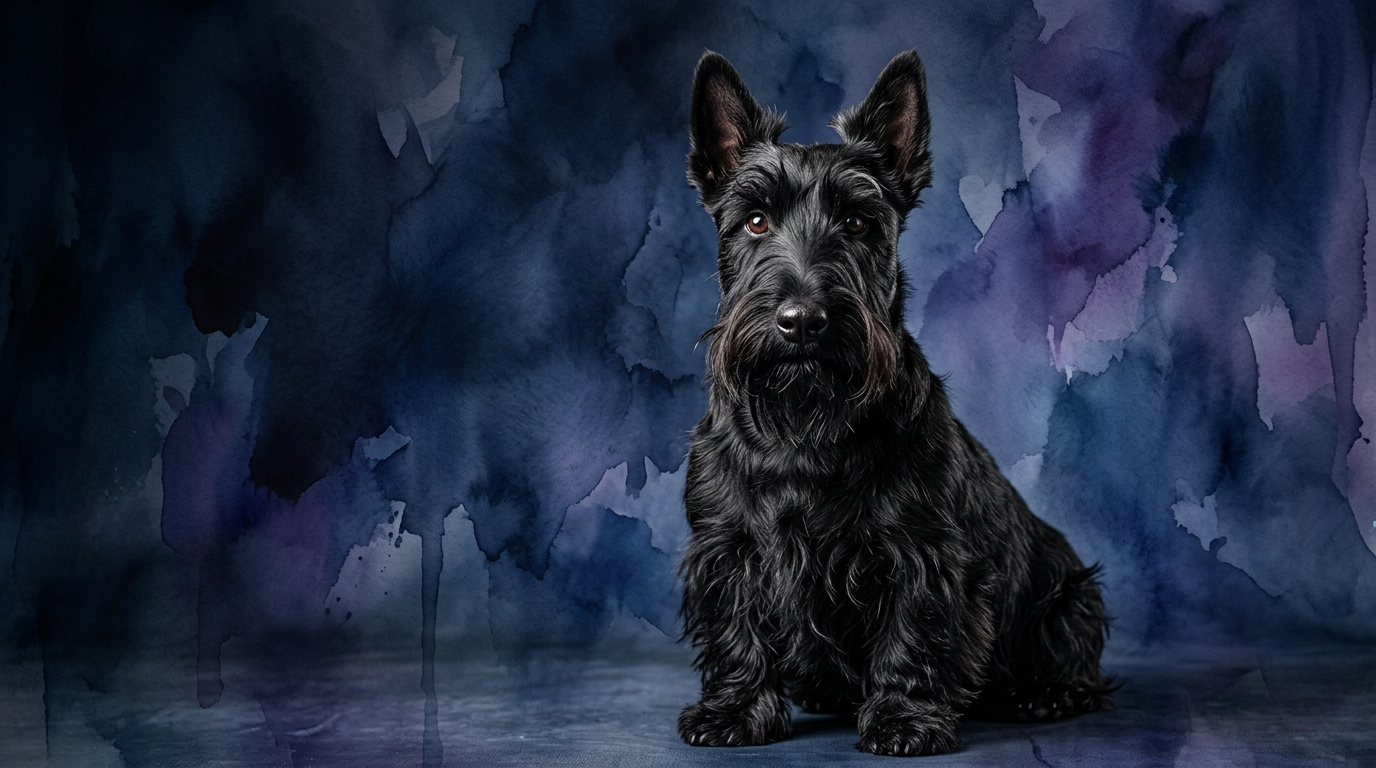
Side-by-Side Cognitive Profile: Scottish Terrier
The Scottish Terrier, a breed with a historical role as a tenacious hunter of vermin, exhibits a specific cognitive blueprint. Their Problem Solving at 3/5 speaks to an independent resourcefulness, often manifested in devising strategies to outwit prey or navigate complex underground environments, rather than solving human-contrived puzzles. Training Speed, also at 3/5, indicates they are capable learners, but their inherent terrier stubbornness means consistency and positive reinforcement are paramount for retaining commands. Social Intelligence at 3/5 suggests a discerning nature; they form deep bonds with their chosen family but can be reserved with strangers, reading social cues with a watchful eye. Their Instinctive Drive, a robust 3/5, is rooted in their prey drive and determination, a persistent energy channeled into exploration or play. Finally, Memory at 3/5 ensures they recall learned behaviors, routines, and experiences, contributing to their predictable yet independent character.
Notably, the Scottish Terrier holds a Coren rank of #65, placing it among breeds capable of understanding new commands with 25-40 repetitions and obeying them 30% of the time or better on the first command. This ranking reflects a certain level of working intelligence and responsiveness to human direction, even amidst their notable independence. Their cognitive makeup is geared towards self-sufficiency and focused determination, traits essential for their original purpose.
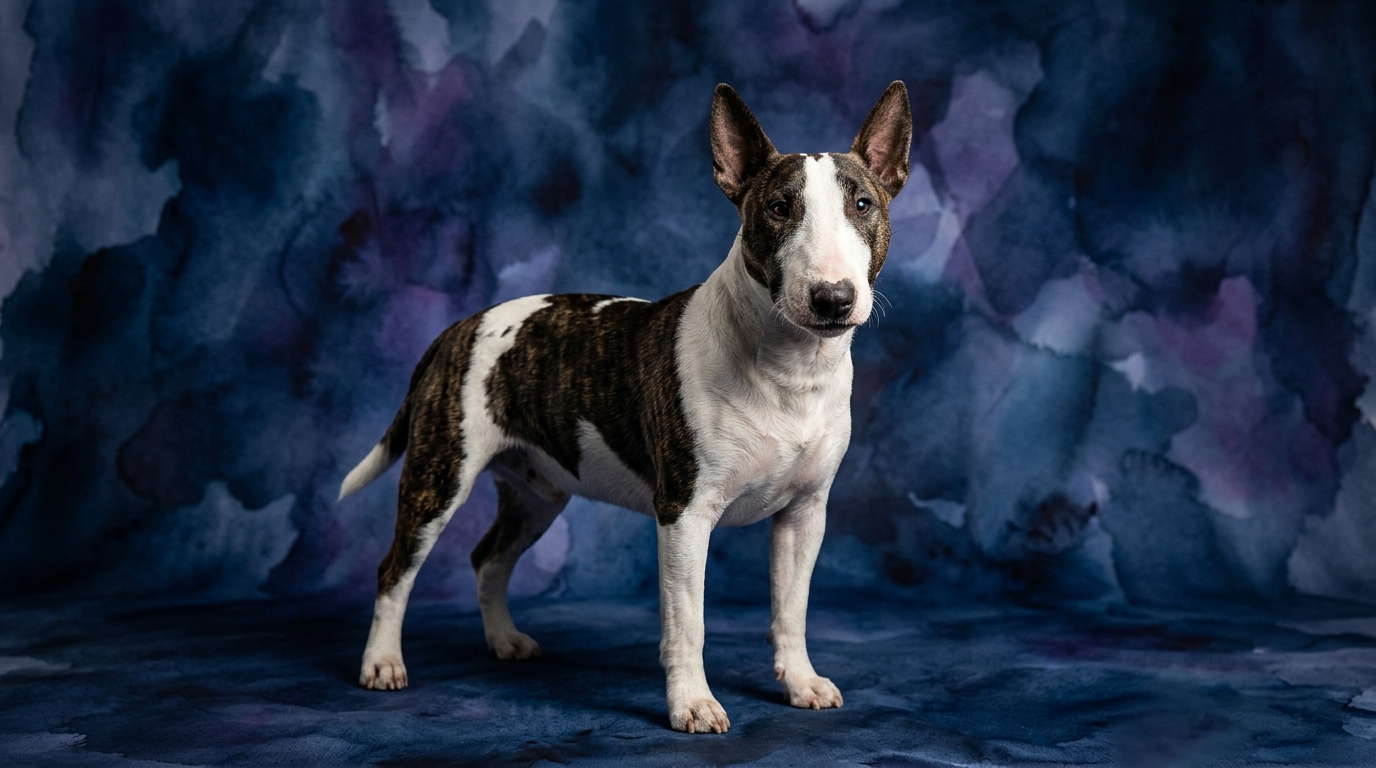
Side-by-Side Cognitive Profile: Miniature Bull Terrier
The Miniature Bull Terrier, originally bred for sport and later as a companion, possesses a cognitive profile that, on paper, mirrors the Scottie's, yet manifests distinctively. Their Problem Solving at 3/5 often presents as a clever, sometimes mischievous, ingenuity in navigating their environment or achieving desired outcomes, often involving creative workarounds rather than direct obedience. Training Speed at 3/5 means they grasp concepts quickly, but their strong will and playful distractions can make consistent application of training a nuanced endeavor, requiring patience and engaging methods. Social Intelligence at 3/5 for the Mini Bull Terrier typically expresses as a boisterous, affectionate connection with their family, coupled with a confident, sometimes assertive, approach to new people or situations, reading intentions with a bold curiosity. Their Instinctive Drive, also 3/5, is channeled into robust play, unwavering determination, and a strong protective instinct towards their loved ones. Memory at 3/5 underlines their ability to remember commands, routines, and social interactions, shaping their unique personality and ensuring they recall both good and bad experiences.
Unlike the Scottish Terrier, the Miniature Bull Terrier is not included in Coren's ranking of dog intelligence. This absence does not imply a lack of cognitive ability, as their individual IQ scores are identical to the Scottie's. Instead, it might reflect a breed whose intelligence is expressed through a less conventional obedience, prioritizing their own strong will and playful nature over strict adherence to human directives, even when they understand them perfectly well. Their cognitive style is marked by spirited engagement and a unique brand of cleverness.
Where the Scottish Terrier Excels Cognitively
While their core IQ scores align, the Scottish Terrier's cognitive strengths often shine in areas demanding independent thought and focused persistence. Their problem-solving, rated 3/5, is frequently applied to self-directed tasks, such as meticulously investigating a scent trail or strategizing how to retrieve a favored toy from a tricky spot without direct human intervention. This reflects a breed that thrives on mental challenges where they can apply their innate resourcefulness and tenacity, often showcasing a methodical approach to obstacles.
Furthermore, their social intelligence, also 3/5, often manifests as a keen discernment, allowing them to form exceptionally deep, loyal bonds with their primary caregivers while maintaining a dignified reserve with others. This focused social connection means they are adept at understanding the nuances of their family's emotional states, offering subtle comfort or companionship without needing constant overt engagement, valuing quality over quantity in social interactions.
Where the Miniature Bull Terrier Excels Cognitively
The Miniature Bull Terrier, with its identical 3/5 scores, demonstrates cognitive strengths particularly in dynamic, interactive problem-solving and robust social engagement. Their problem-solving often involves a more physical and creative approach, such as cleverly manipulating objects to get what they want or devising playful ways to engage their owners, showcasing a spirited ingenuity that can be both entertaining and challenging. This cleverness is often accompanied by a strong will, making them adept at finding alternative routes to their goals.
This breed's instinctive drive, rated 3/5, is particularly powerful when channeled into vigorous play or structured activities, where their boundless energy and unwavering determination can be fully expressed. Their social intelligence, while also 3/5, often manifests as a more overtly affectionate and exuberant personality, making them exceptionally engaging companions who actively seek interaction and possess a confident, sometimes comedic, approach to social situations, often breaking the ice with their distinctive charm and bold presence.
Trainability: Real Behavioral Differences
Despite both breeds scoring 3/5 for Training Speed, the practical experience of training can differ due to their distinct motivations and behavioral traits. The Scottish Terrier, with its Coren rank of #65, suggests a historical inclination towards understanding and executing human commands, even if their independence requires consistent, patient methods. Their problem-solving often leans towards self-reliance, meaning they might initially question the necessity of a command, but once convinced of its value or rewarded appropriately, they can be remarkably reliable. Training success often hinges on tapping into their desire for companionship and their structured nature, utilizing positive reinforcement to build a strong working relationship.
In contrast, the Miniature Bull Terrier, while equally capable of learning new commands at a 3/5 speed, often presents a greater challenge in consistent execution due to their spirited, sometimes mischievous, nature and strong will. Their problem-solving might involve finding creative ways to avoid unwanted tasks, and their social intelligence, while affectionate, can be accompanied by a playful stubbornness. Effective training for a Mini Bull Terrier requires engaging games, clear boundaries, and an owner who can consistently outwit their clever antics, transforming training into a rewarding mental exercise rather than a rigid chore. Their willingness to comply is often tied to their mood and the perceived fun of the task.
Matching Cognitive Style to Owner Lifestyle
For owners seeking a companion that balances activity with periods of calm contemplation, the Scottish Terrier often proves an ideal match. While they appreciate regular walks and opportunities to explore scents, their independent nature means they are often content to observe and relax indoors once their exercise needs are met. They thrive with owners who enjoy a quiet evening and appreciate a dog that can entertain itself with a puzzle toy or a good nap nearby. Their social intelligence lends itself to a more reserved companionship, valuing quality time over constant interaction, making them suitable for individuals or families who prefer a less demanding social dynamic, yet still desire a loyal presence.
Conversely, the Miniature Bull Terrier is better suited for active owners who relish a spirited, energetic companion. Their robust instinctive drive and playful problem-solving abilities mean they require substantial mental and physical stimulation to prevent boredom and channel their energy constructively. They flourish in environments where they can engage in vigorous play, participate in dog sports, or join owners on outdoor adventures. Owners who thrive on interactive play and can provide consistent engagement will find the Mini Bull Terrier an incredibly rewarding and entertaining partner, fitting seamlessly into a lively household that can match their zest for life.
The Verdict
Choose a Scottish Terrier if you appreciate a dignified, independent companion that forms deep, discerning bonds and excels in self-directed problem-solving, valuing quiet companionship and consistent routines.
Opt for a Miniature Bull Terrier if you seek a spirited, robust companion who thrives on energetic play, interactive challenges, and possesses a confident, sometimes mischievous, charm.
🧠 Find Your Pet's IQ Score
Our Pet IQ Lab assessment covers 25+ tests across 5 cognitive dimensions — personalized to your breed.
Take the Full IQ Test →Frequently Asked Questions
Do Scottish Terriers and Miniature Bull Terriers have the same intelligence?
While both breeds score 3/5 across our specific IQ dimensions—problem-solving, training speed, social intelligence, instinctive drive, and memory—their application and manifestation of these traits differ significantly due to their distinct histories and temperaments. The raw scores are identical, but their cognitive styles are unique, leading to different behavioral expressions.
Which breed is easier to live with for a first-time dog owner?
For a first-time owner, the Scottish Terrier might present a slightly less challenging experience due to their more reserved nature and predictable routine, provided the owner is prepared for their independent streak and consistent training. The Miniature Bull Terrier's spirited energy and strong will often require a more experienced hand to guide their exuberance and ensure consistent training, as they can be quite demanding.
How do their instinctive drives differ, given both are 3/5?
Both breeds possess a 3/5 instinctive drive, but its focus varies significantly. The Scottish Terrier's drive is often geared towards independent investigation, scent work, and a strong prey instinct, characteristic of its hunting heritage. The Miniature Bull Terrier's drive, while also persistent, is frequently channeled into robust play, social interaction, and a bold, protective confidence directed towards their family and territory.